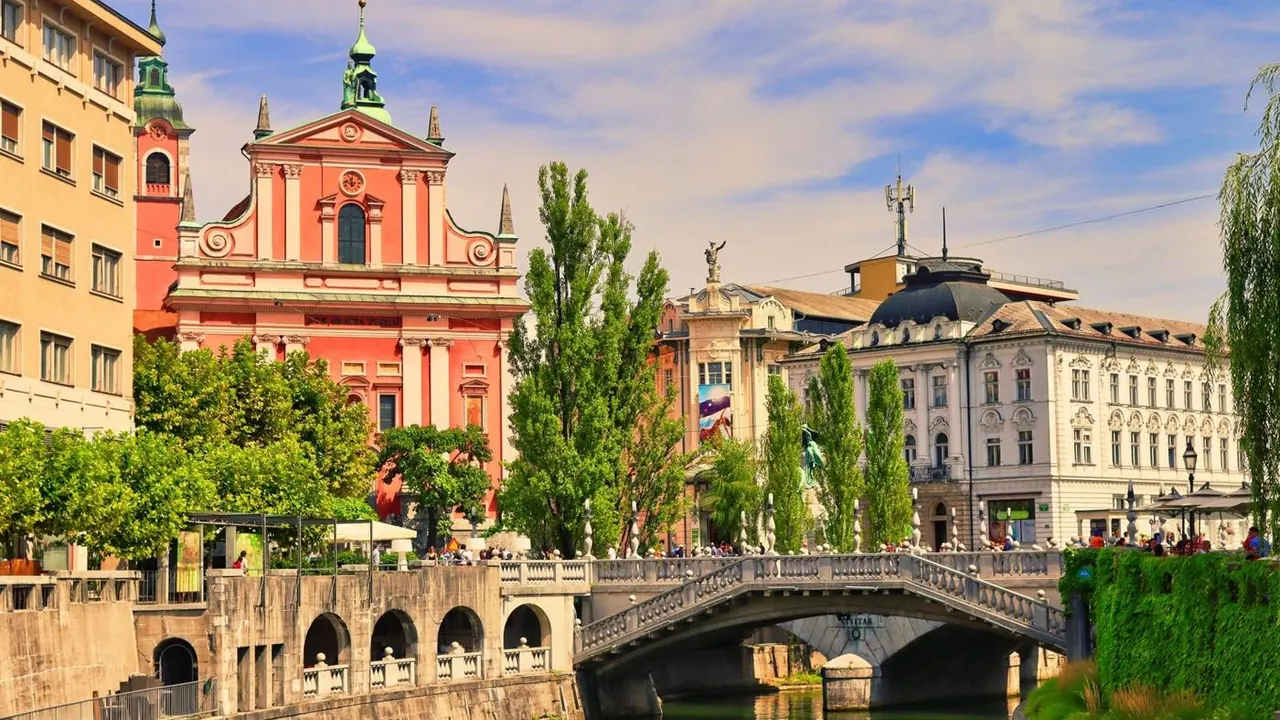
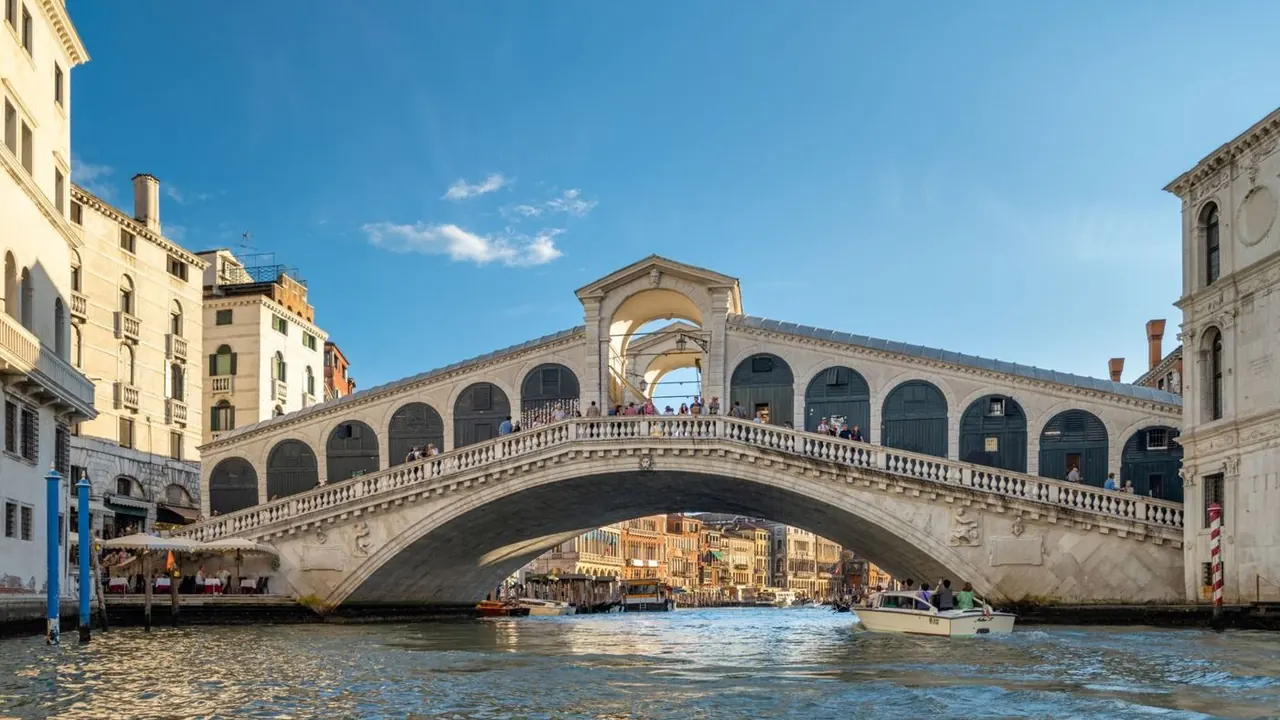
Photos: Ljubljana by detait, Pexels License; Venice by David Vives, Pexels License.
Ljubljana or Venice?
Our verdict in twelve categories, each scored against the same fixed benchmark cities, and the climate month by month, so you can choose for your trip.
Choose Ljubljana for
- nature and the outdoors
- prices
- nightlife
Ljubljana suits a slower, longer trip where the city is a base rather than the whole point. The centre is quiet and quickly seen, so most days go on mountains, lakes and caves, and evenings end with a drink by the river. Choose it if you would rather spend on a good bottle of Slovenian wine than on a hotel room, or if you want to combine a capital with a wider tour of a small country.
Choose Venice for
- culture and sights
- beaches
- shopping
For art, architecture and history, Venice has no rival here. It rewards travellers who like to walk slowly, get lost and fill each day with churches, galleries and perhaps a night at the opera, with Padua and Verona as easy extras by train. Know what it asks in return: a high price for a bed, crowds on the main routes, quiet nights and steps on every bridge. It works best for adults and older children over a few days to a week.
Scoreboard
Twelve categories on one fixed scale from 0 to 100. The shaded stretch is the gap between the two.
Your match
Pick a travel style or drag the sliders, and both match scores follow your weighting.
Too close to call, 2 points apart
Wins on nature and the outdoors and prices with your weighting.
Wins on culture and sights and beaches with your weighting.
What matters to you?
Category by category
What the scores mean for a trip.
Beaches & swimming
Venice has the edge simply because the Lido is a short boat ride away, with long stretches of fine sand and shallow, warm water that suit children, even if it is greenish and lined with cabanas. Ljubljana has no sea at all. Swimming there means the Sava, Lake Bled or the colder, clearer Bohinj.
Ljubljana's nearest coast, at Piran and Izola, is about an hour and a half away and offers mostly concrete and pebbles. Neither city is a beach destination, but in Venice a beach afternoon fits easily into a sightseeing day.
Food & drink
The two are close, with Venice slightly ahead, but they eat in very different ways. Venice is at its best standing at a bacaro counter with cicchetti and a spritz, or over lagoon seafood such as cuttlefish risotto. It also has a long trail of mediocre tourist restaurants around San Marco to avoid.
Ljubljana is heartier and more inland: Carniolan sausage, štruklji and jota at gostilna inns, Alpine cheeses at the Central Market, and a strong wine list from Vipava and Brda, including orange wines. It is more reliable than Venice but narrower, and a week exhausts it.
Culture & sights
This is where Venice pulls far ahead. The whole city is a monument, from the Basilica and Doge's Palace to the palazzi of the Grand Canal, and its art runs from Titian in the Frari to the Guggenheim and the Biennale. Even its small parish churches hold masterpieces.
Ljubljana's appeal is a single coherent cityscape: Plečnik's bridges, colonnades and library, a baroque and Secession old town and the castle on its hill. It is charming to walk, but its museums are modest, and it fills two or three days where Venice could fill a fortnight.
Nightlife
Neither is a party city, but Ljubljana keeps going later. Students fill the terraces along both banks of the Ljubljanica, and Metelkova's scruffy clubs run into the small hours at weekends. Venice peaks at aperitivo time on the Fondamenta della Misericordia and Campo Santa Margherita, then falls quiet around midnight. Its compensation is a silent late walk along dark canals.
Nature & outdoors
Ljubljana wins easily. Forested hills start at Tivoli Park, locals climb Šmarna Gora before work, and the Kamnik-Savinja Alps, with the herders' huts on Velika Planina, are about 40 minutes away. The Julian Alps, Triglav National Park and the Vintgar gorge are about an hour out and the Postojna and Škocjan caves lie in the karst to the south-west. Rafting on the Soča is further west, a drive of closer to two hours.
In Venice the outdoors means the lagoon: herons and flamingos around Torcello, kayaking or Venetian rowing, and flat cycling along the Pellestrina sea walls. The Euganean and Prosecco hills offer gentle walks, but real mountains are more than two hours away.
Day trips
Both are excellent bases, and Venice is slightly the richer. Fast trains reach Padua in half an hour and Verona and Vicenza soon after, and Murano, Burano and Torcello make a day out without leaving the lagoon.
Ljubljana's trips are more about landscape and small towns: Bled, Škofja Loka, Predjama Castle built into its cliff and the mining town of Idrija, with Piran, Trieste and Zagreb as further options. A car helps more here, since Slovenia's trains are slow.
Good for families
Ljubljana is the easier choice with small children. Its flat, car-free centre works with pushchairs, Tivoli Park has playgrounds, and the castle funicular, the Dragon Bridge and the puppet theatre all appeal to young children. It runs out of attractions within a few days, though.
Venice thrills children with boats and glass-blowing on Murano, and the Lido is a gentle beach. In practice, stepped bridges, summer crowds, heat and a lack of parks make it better suited to a short stay with older children.
Getting around
Both are walking cities, and Ljubljana is the simpler of the two. Everything in its pedestrianised centre is about 20 minutes apart on flat ground, with bike-share and electric shuttles if needed.
Venice is also car-free, but its alleys twist and dead-end at canals, and its many stepped bridges are hard work with luggage. The vaporetto adds slow but scenic travel along the Grand Canal and out to the islands, which Ljubljana's buses cannot rival.
Shopping & style
Venice offers much more to shop for. Murano glass, Burano lace, papier-mâché masks, marbled paper and furlane slippers come from real workshops in Dorsoduro and Castello, and the big fashion names line Calle Larga XXII Marzo. You need an eye for the imported fakes on the main routes.
Ljubljana is small-scale: honey, pumpkin-seed oil and coastal salt from the market, Idrija lace, gingerbread hearts, a Sunday flea market on the embankment and a few boutiques on Trubarjeva.
Affordability
Ljubljana is much the cheaper stay. Inns serve set lunch menus, local wine is fairly priced, sights cost little and you will barely spend on transport. Its old-town hotels do get expensive in July and August.
Venice is among the dearest places to sleep in Italy, and water buses, café tables on the piazza and church entries all add up. Cicchetti at the bar, a room in a quieter sestiere or in Mestre, and a winter visit soften the cost.
Live music & performing arts
Venice has the bigger name in La Fenice, where Verdi and Rossini premiered works and which runs a full season of opera, ballet and concerts. The Biennale festivals and Vivaldi concerts in churches add to that, though many of those concerts are routine.
Ljubljana's offer is solid for its size: the Philharmonic, the National Opera and Ballet, Cankarjev dom, and the summer festival in Plečnik's Križanke courtyard. It also has more rock, jazz and alternative music, much of it at Metelkova.
Wellness & relaxation
The two are level, and in both cases calm comes from the city's pace rather than its spas. Ljubljana's quiet streets and riverside cafés sit within about an hour of Slovenia's many thermal spa towns. Venice relies on palazzo hotel spas and on Abano Terme's hot mud near Padua, and its stillness depends on staying in Castello, Cannaregio or Giudecca, away from the crowds at San Marco.
When should you go?
Pick your month. The climate figures are measured averages, not a forecast.
Ljubljana in July
Venice in July
Daytime high, °C
Rainfall in the month, mm
Where the figures come from
Venice has no rain gauge within 25 km of the centre, so its rainfall comes from a gridded climate dataset read at the city rather than from a gauge further away.
Venice's sunshine is measured 26 km from the centre, at Treviso / S. Angelo.
Temperature and rainfall are climate normals, averaged over the years shown. Ljubljana: 1991-2020 normals, Ljubljana / Bezigrad (1.9 km from centre). Venice: 1991-2020 normals, Venezia / Tessera (6.7 km from centre).
Both cities are at their best in late spring and early autumn, when the streets are pleasant for walking. In high summer Venice is the hotter and more humid of the two, reaching about 30°C in July and August, and that is also when the Adriatic off the Lido is warmest, around 26°C, with June and September still fine for a swim. Ljubljana peaks at around 28°C and stays a little fresher, which suits hiking in the nearby Alps.
Ljubljana is the wetter city all year, and its rain is heaviest in autumn, with about 159mm in September and October close behind, while Venice stays drier and sunnier through winter. Winters inland are colder too: Ljubljana sits around 4°C by day in December and January, with little sunshine, so Venice is the better choice for a winter city stay.
Which traveller are you?
On a culture and arts trip, Venice is the clear choice. The palaces of the Grand Canal, the Accademia, Tintoretto's Scuola Grande di San Rocco and an opera night at La Fenice offer far more than Plečnik's Ljubljana, which you will have seen in two or three days.
For an outdoors trip, pick Ljubljana. Šmarna Gora and Tivoli's forested hills start at the edge of town, and Triglav National Park, the Soča rapids and the Kamnik-Savinja Alps are close. Venice offers kayaking on the lagoon and flat cycling, and not much else.
On a trip with a tight budget, Ljubljana goes much further. Set lunch menus at the inns, fairly priced local wine and a centre you can cross on foot keep spending down, while Venice charges heavily for rooms, water buses and entry to its churches.
Before you go
| Measure | Ljubljana | Venice |
|---|---|---|
| Official language | Slovene | Italian |
| Currency | Euro (EUR) | Euro (EUR) |
| Sockets | CF230 V, 50 Hz | CFL230 V, 50 Hz |
| Driving side | Right | Right |
| Time zone | UTC+1, UTC+2 in summer | UTC+1, UTC+2 in summer |
| Emergency number | 112 | 112 |
| Elevation | 309 m | 2 m |
| Main airport | Ljubljana Jože Pučnik Airport (LJU)20 km from centre32 non-stop destinations | Venice Marco Polo Airport (VCE)7 km from centre103 non-stop destinations |
| Public holidays this year | 21 days | 13 days |
By the numbers
| Measure | Ljubljana | Venice |
|---|---|---|
| City population | 284,293 | 250,369 |
| People per km² | 1,736 | 602 |
| Museums within 10 km | 14 | 52 |
| UNESCO World Heritage sites within 50 km | 3 | 5 |
| Swim season, months above 21 °C | - | 4 months |
Where else could you go?
Every comparison below shares a destination with this one, so you can follow Ljubljana or Venice somewhere new.