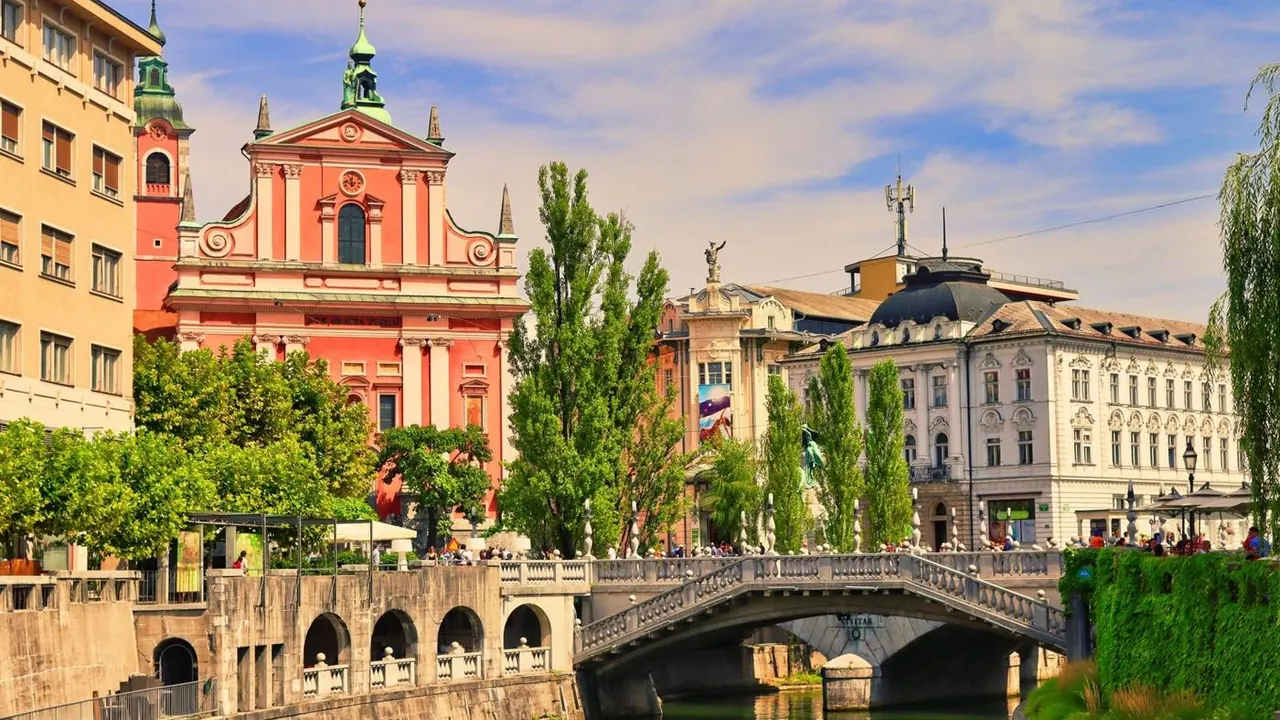
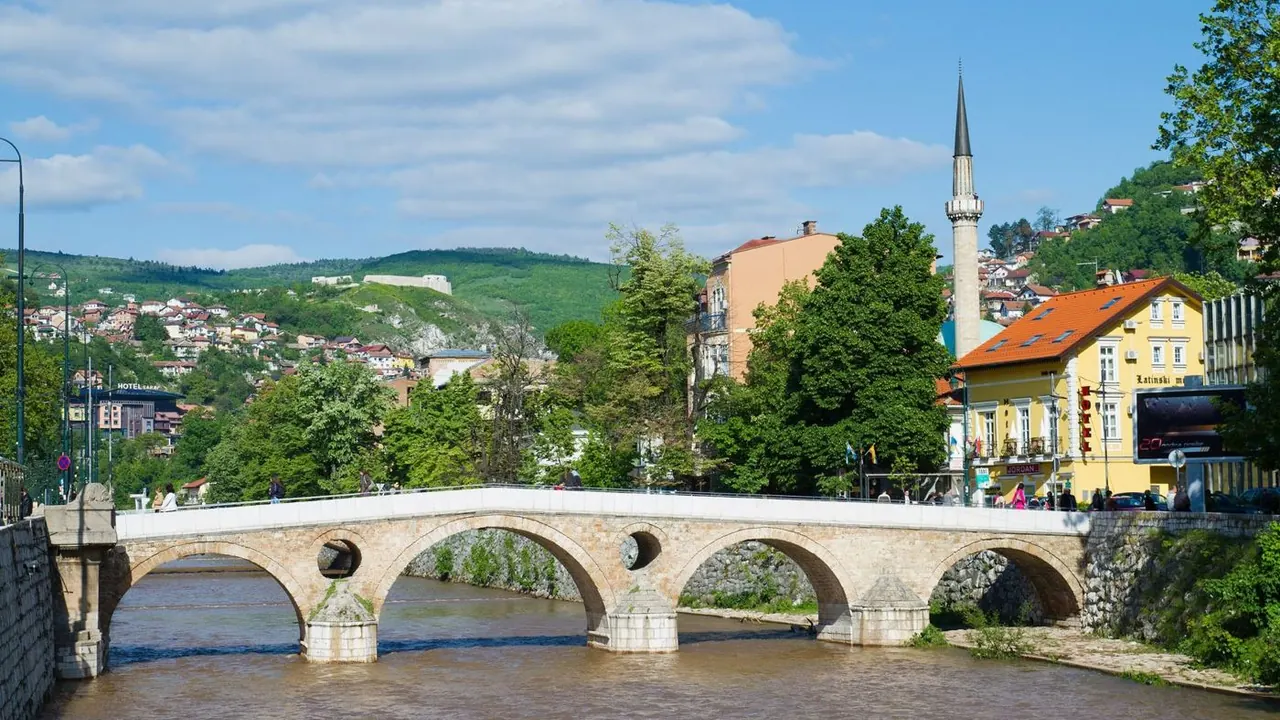
Photos: Ljubljana by detait, Pexels License; Sarajevo by Tumi-1983, CC0.
Ljubljana or Sarajevo?
Our verdict in twelve categories, each scored against the same fixed benchmark cities, and the climate month by month, so you can choose for your trip.
Choose Ljubljana for
- beaches
- day trips
- families
Ljubljana suits travellers who want an easy, green base for seeing a whole small country. The car-free centre is simple to walk with children, Bled, the Julian Alps and the Piran coast are all within a day's reach, and it is easy to fit in an evening at the opera or the Philharmonic. It is the calmer and more polished of the two, though rooms in summer cost noticeably more.
Choose Sarajevo for
- prices
- culture and sights
- shopping
Pick Sarajevo if history and a strong sense of place matter more to you than comfort. In a few streets the Ottoman bazaar gives way to Austro-Hungarian avenues, with mosques, cathedrals and a synagogue close together, and the city tells the story of the 1990s siege with real force. Money goes much further here, the food and coffee are distinctive, and the Olympic mountains are close. Day trips mean slow roads, though, and the city does less for small children.
Scoreboard
Twelve categories on one fixed scale from 0 to 100. The shaded stretch is the gap between the two.
Your match
Pick a travel style or drag the sliders, and both match scores follow your weighting.
Too close to call, 2 points apart
Wins on beaches and day trips with your weighting.
Wins on prices and culture and sights with your weighting.
What matters to you?
Category by category
What the scores mean for a trip.
Beaches & swimming
Neither is a swimming destination, but water is easier to reach from Ljubljana. Lake Bled is about an hour away and the Slovenian coast at Piran around an hour and a half, close enough for a long day out, even though the shore there is concrete platforms and pebble rather than sand.
From Sarajevo the Adriatic is about three hours away, too far for a day trip. Swimming in summer means cold mountain rivers, Jablanica lake or a pool, so if you want the sea, add a few days on the coast at the end.
Food & drink
The two are close, so the difference is one of character. Sarajevo cooks Ottoman-Balkan food: ćevapi in somun bread from the grills of Baščaršija, burek sold by weight, and Bosnian coffee taken slowly with rahat lokum. Ljubljana's cooking is Alpine and Central European, with Carniolan sausage, štruklji and jota, and a riverside market full of cheese and pumpkin-seed oil.
Ljubljana's real strength is wine: Vipava, Brda and orange wines by the glass along the river. In Sarajevo the evening drink is more likely to be fruit rakija. Both cuisines are narrow, and neither city offers much international cooking.
Culture & sights
Sarajevo has the denser and more moving set of sights. A short walk takes you from the Ottoman bazaar and the Gazi Husrev-beg Mosque to Austro-Hungarian avenues, two cathedrals and the Old Synagogue. The Latin Bridge, the Tunnel of Hope and the War Childhood Museum link the city to 1914 and to the siege of the 1990s.
Ljubljana is gentler and more of a piece: Plečnik's bridges, colonnades and library, an old town of baroque and Secession buildings, and the castle on its hill. Its museums are pleasant rather than essential, and two or three days are enough to see it.
Nightlife
Neither city is made for a big night out, and they are close. Ljubljana's evenings are spent on terraces along the Ljubljanica, and Metelkova's scruffy clubs are the one real late-night draw. Sarajevo goes out in café-bars that get louder after dark and cellar bars around Ferhadija, where drinks are cheap and the night often ends over rakija rather than on a dancefloor.
Nature & outdoors
Both cities have serious mountains on the doorstep, so the difference is in style. From Ljubljana, the Julian Alps and Triglav National Park are about an hour away, with well-trodden hiking, the Vintgar gorge, rafting on the Soča and the karst caves at Postojna and Škocjan.
Sarajevo's mountains start at the edge of the Old Town, where a cable car climbs Trebević. The Olympic slopes of Jahorina and Bjelašnica offer more dependable skiing than the small resorts near Ljubljana. The trails are wilder and less clearly marked, and Lukomir above the Rakitnica canyon rewards anyone who wants remoteness.
Day trips
Ljubljana has the wider and easier choice. Slovenia is small and the city sits in the middle of it, so Bled, Škofja Loka, Predjama Castle, Idrija and Piran are all short trips. Trieste and Zagreb are within reach too, and buses and trains serve the main places.
Sarajevo has one outstanding trip: Mostar, reached by a scenic train through the Neretva gorge, with Konjic, Blagaj and Počitelj nearby. Beyond that, Travnik and the bridge at Višegrad mean slow, winding roads, and most outings work best by car or on a tour.
Good for families
Ljubljana is the easier city with children, even though it has no aquarium or theme park either. The flat, mostly car-free centre, a puppet theatre whose shows need no language, a hands-on science centre and Tivoli's lawns fill two or three relaxed days.
Sarajevo welcomes children warmly, with pigeons at the Sebilj, the Trebević cable car and carriage rides to Vrelo Bosne. Its main sights are about war, though, the hillside streets are steep, and smoke from the grills and winter smog are hard on small lungs.
Getting around
In Ljubljana you hardly need transport at all. The old town, the market, the museums and Tivoli Park are within about 20 minutes' walk of each other, the centre is largely pedestrianised, and a bike-share scheme covers the flat districts. Sarajevo's flat core is walkable too, and its historic tram line runs the length of the valley to Ilidža.
Away from that one tram corridor, though, Sarajevo means steep steps, a bus network that is hard for a visitor to follow, and taxis for the airport, the tunnel and the mountains. Ljubljana's weak spot is the slow railway for trips out of the city, where intercity buses work better.
Shopping & style
Sarajevo gives shopping more of a sense of place, and nearly all of it is in Baščaršija. Coppersmiths still hammer coffee sets on Kazandžiluk, and the Bezistan and nearby lanes sell kilims, slippers and filigree jewellery, though much of it is souvenir stock.
Ljubljana is quieter. Its best buys are honey, pumpkin-seed oil, Idrija lace and finds from the Sunday flea market on the embankment, plus a few design boutiques around Trubarjeva. Neither city has a luxury quarter.
Affordability
Sarajevo is much cheaper. Street food, coffee, trams, taxis and museum entry all cost little, and comfortable central guesthouses are priced well below Western European levels.
Ljubljana is mid-priced for Europe. Set lunch menus and a walkable centre keep daily costs reasonable, but central rooms are expensive in summer, so staying further out or avoiding July and August makes a bigger difference there.
Live music & performing arts
Ljubljana has the fuller formal programme. The Slovenian Philharmonic, the National Opera and Ballet and Cankarjev dom put on concerts all year, and in summer the Ljubljana Festival fills Plečnik's Križanke courtyard.
Sarajevo's National Theatre and Philharmonic offer less, and its stage life comes alive mainly at the MESS theatre festival in autumn and the jazz festival in November. What it has that Ljubljana does not is sevdah, the melancholy Bosnian love songs you can hear in traditional restaurants.
Wellness & relaxation
The two are level here. What differs is where the warm water is. Ljubljana has no bathing tradition of its own, just a large water park with saunas on the eastern edge and a few hotel spas, so for mineral pools you drive about an hour to one of Slovenia's thermal spa towns. Its calm is in the centre itself, which is quiet, green and largely free of cars, with long afternoons at cafés along the Ljubljanica.
Sarajevo has its thermal springs inside the city. Ilidža, used since Roman times, is at the end of the tram line, and the shaded streams of Vrelo Bosne are close by for a slow walk afterwards. The historic hammam no longer works as a bath, though, and outside Ilidža and the hotel spas there is little bathing culture.
When should you go?
Pick your month. The climate figures are measured averages, not a forecast.
Ljubljana in July
Sarajevo in July
Daytime high, °C
Rainfall in the month, mm
Temperature and rainfall are climate normals, averaged over the years shown. Ljubljana: 1991-2020 normals, Ljubljana / Bezigrad (1.9 km from centre). Sarajevo: 1991-2020 normals, Sarajevo-Bejelave (2 km from centre).
The two cities have almost the same temperatures through the year. Winter highs are around 4°C, April, May, September and October are comfortable for walking, and July and August peak near 28°C, warm but rarely too hot for sightseeing. Neither is a beach destination in any season, though high summer is warm enough for swimming in nearby rivers and lakes.
The rain is what sets them apart. Ljubljana is much wetter, especially in autumn, with around 159mm in September, so its best time is late spring and high summer, which is also its sunniest stretch. Sarajevo is drier all year and keeps more sunshine into October and November, so autumn is the better bet there. In winter, though, smog can settle in its valley.
Which traveller are you?
On a trip on a tight budget, Ljubljana means planning around the cost of a bed: come outside July and August or stay beyond the old town. In Sarajevo you can stay central, eat out freely and still afford the train to Mostar.
On a family trip with young children, Ljubljana lets you plan short, unhurried days on foot, with a rest at the hotel in between and Bled for when the city runs out. Sarajevo works better with older children, who can take in its history and its hills.
For a culture and arts trip, Ljubljana suits someone who likes a day of architecture rounded off with a booked evening at the opera or a summer concert. Sarajevo is the stronger pick for sights that stay with you, so allow a day for its meeting of faiths and another for the siege.
Before you go
| Measure | Ljubljana | Sarajevo |
|---|---|---|
| Official language | Slovene | Croatian, Serbian, Bosnian |
| Currency | Euro (EUR) | Convertible Mark (BAM) |
| Sockets | CF230 V, 50 Hz | CF230 V, 50 Hz |
| Driving side | Right | Right |
| Time zone | UTC+1, UTC+2 in summer | UTC+1, UTC+2 in summer |
| Emergency number | 112 | 112 |
| Elevation | 309 m | 518 m |
| Main airport | Ljubljana Jože Pučnik Airport (LJU)20 km from centre32 non-stop destinations | Sarajevo International Airport (SJJ)7 km from centre38 non-stop destinations |
| Public holidays this year | 21 days | 8 days |
By the numbers
| Measure | Ljubljana | Sarajevo |
|---|---|---|
| City population | 284,293 | 275,524 |
| People per km² | 1,736 | 1,947 |
| Museums within 10 km | 14 | 25 |
| UNESCO World Heritage sites within 50 km | 3 | 1 |
Where else could you go?
Every comparison below shares a destination with this one, so you can follow Ljubljana or Sarajevo somewhere new.