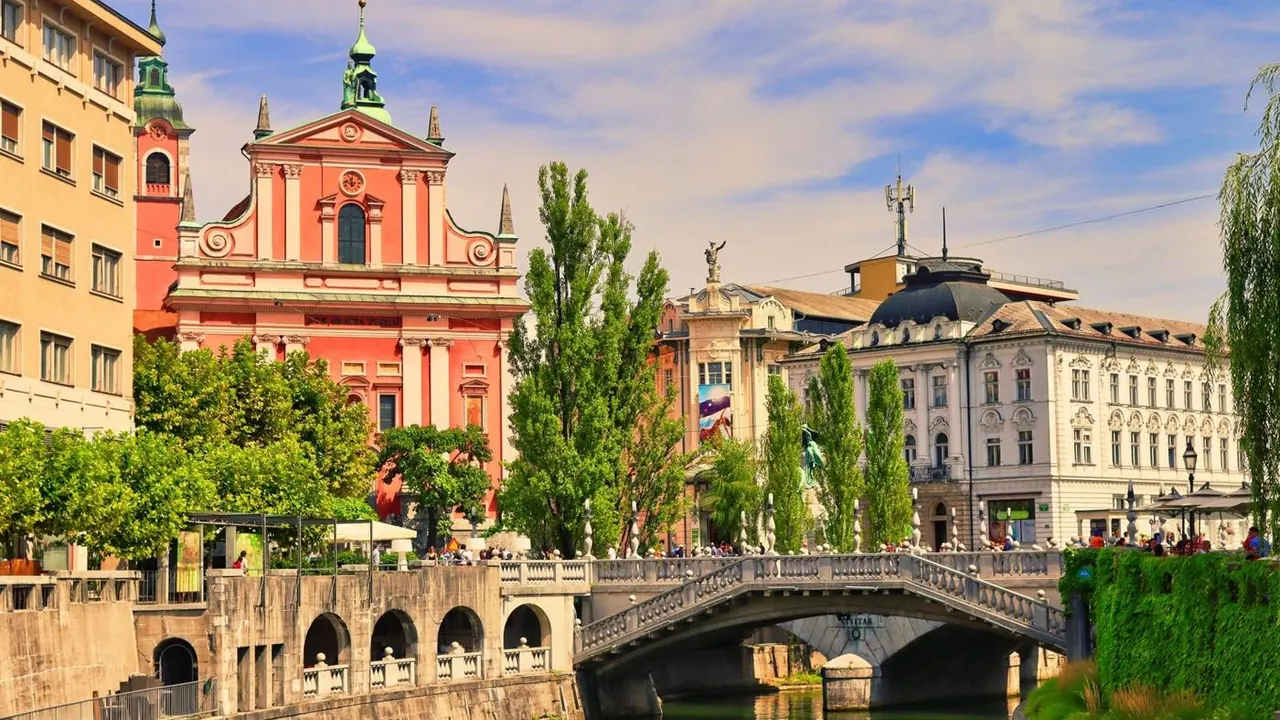
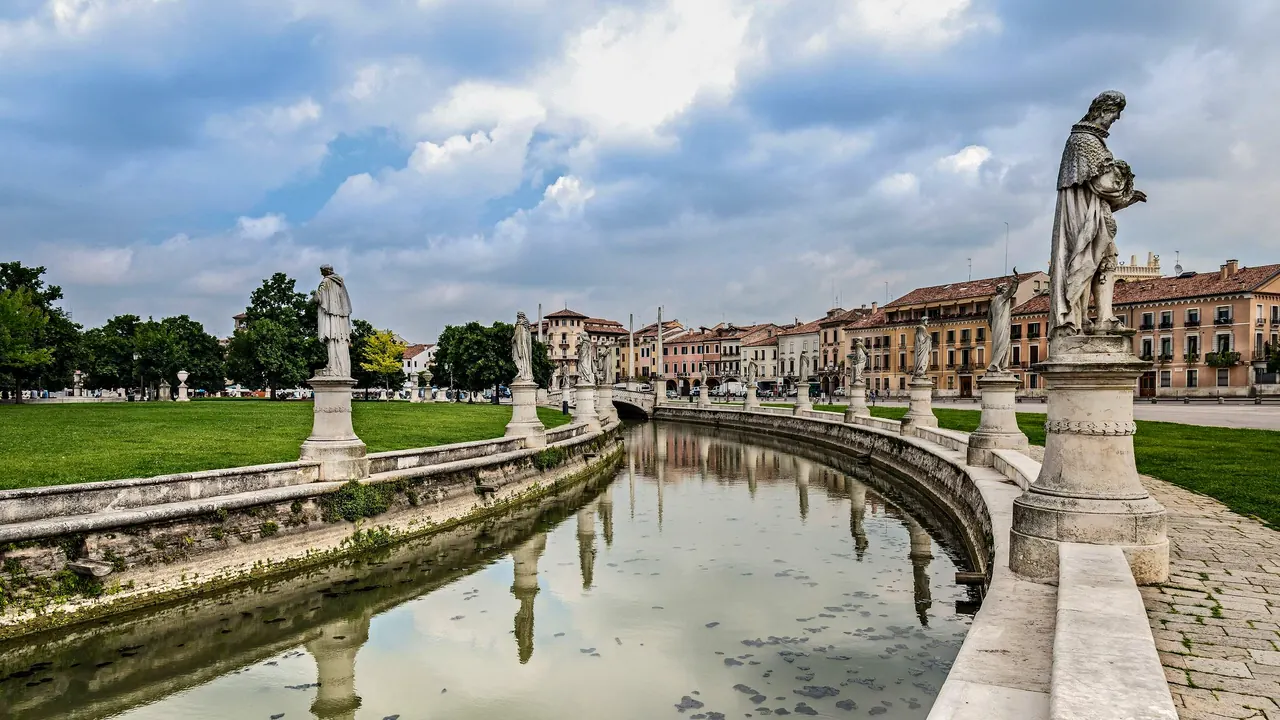
Photos: Ljubljana by detait, Pexels License; Padua by Didier Descouens, CC BY-SA 4.0, cropped.
Ljubljana or Padua?
Our verdict in twelve categories, each scored against the same fixed benchmark cities, and the climate month by month, so you can choose for your trip.
Choose Ljubljana for
- nature and the outdoors
- families
- live music and the arts
Ljubljana suits travellers who want a small, calm capital with real mountains on the doorstep. The Julian Alps, Lake Bled, the Soča valley and the karst caves are all within easy reach, and the car-free centre is gentle on families with young children. Add a sound concert and opera life, and it makes a good base for an active, unhurried week in which the countryside matters as much as the city.
Choose Padua for
- wellness
- culture and sights
- day trips
Choose Padua for art and for a base in the heart of the Veneto. Giotto's Scrovegni Chapel and the city's fresco cycles carry more artistic weight than anything in the Slovenian capital, and fast trains put Venice, Vicenza, Verona and Bologna within a short ride. The thermal pools of Abano Terme, just outside town, are the place to rest your feet after a day of trains and churches.
Scoreboard
Twelve categories on one fixed scale from 0 to 100. The shaded stretch is the gap between the two.
Your match
Pick a travel style or drag the sliders, and both match scores follow your weighting.
Wins on nature and the outdoors and families with your weighting.
Wins on wellness and culture and sights with your weighting.
What matters to you?
Category by category
What the scores mean for a trip.
Beaches & swimming
Neither city is on the coast, but Padua has the easier day at the sea. Sottomarina and the Lido of Venice offer real sand about an hour away, and the shallow, calm water suits small children, even if the shore is lined with rows of umbrellas.
From Ljubljana the Slovenian coast is further off, and Piran and Izola have mostly concrete platforms and pebbles. Summer swimming there tends to mean the Sava or the Alpine lakes, with Bled warm enough in July and colder Bohinj the clearer and more beautiful of the two.
Food & drink
Padua eats a little better, mainly because food is woven into its daily routine. The morning markets in Piazza delle Erbe and Piazza della Frutta, bigoli with duck sauce and baccalà, and the evening spritz with small bites in the squares give the city a fuller food culture.
Ljubljana is more modest at the table, with hearty štruklji, žganci and Carniolan sausage in its gostilna inns. It makes up ground with wine: orange wines from the west and bottles from Brda and Vipava, poured by the glass on the riverbank.
Culture & sights
Padua has the deeper sights. Giotto's Scrovegni frescoes changed European painting, and the UNESCO-listed fresco cycles, Donatello's work at the Basilica of Saint Anthony and the anatomical theatre in Palazzo Bo add up to an art city of real weight.
Ljubljana's interest lies in the whole townscape rather than its contents. Plečnik's bridges, colonnades and library, the baroque old town and the castle on its hill make for lovely wandering, but its museums are solid rather than essential, and two or three days are enough.
Nightlife
The two are close, and both suit a sociable evening more than a big night. What differs is the setting. In Ljubljana people drink on terraces along the Ljubljanica embankments, and Metelkova's scruffy squat clubs give it one genuinely late, alternative scene at weekends.
Padua's evening starts earlier and centres on the aperitivo, with crowds standing over spritz glasses in the squares around the Palazzo della Ragione, then wine bars in the old ghetto. Its few clubs sit out of town, and both cities go quiet once the students leave.
Nature & outdoors
Ljubljana is far ahead. Forest begins at Tivoli Park, Šmarna Gora is a before-work climb, and within about an hour lie Velika Planina's high pastures, Triglav National Park and the Vintgar gorge. Further west, and a longer day out, the emerald Soča is the place for rafting and kayaking, while small ski resorts are within reach in winter.
Padua's outdoors is gentler and further away. The volcanic Euganean Hills offer vineyard trails and good road cycling, and the Brenta towpaths make easy flat rides, but proper mountain walking on Monte Grappa or the Asiago plateau means an hour and a half's drive.
Day trips
Both are good bases, but Padua is outstanding. Venice is under half an hour by train, close enough to visit several times, and Vicenza, Verona, Treviso, Ferrara and Bologna all lie within about an hour on fast trains. The Brenta villas and the walled towns of Este and Montagnana are closer still.
Ljubljana's excursions are more about scenery: Bled's island church, Predjama Castle in its cliff, Škofja Loka and the coast at Piran. Trieste and Zagreb add variety, but the smaller places are easier with a car.
Good for families
Ljubljana is the friendlier city for children. Beyond its flat, car-free centre it has things they remember: the funicular up to the castle, the dragons on the Dragon Bridge, a zoo on Rožnik hill, a hands-on science centre and a puppet theatre whose shows need no language.
Padua is just as safe and easy with a pushchair, and children are welcome in any trattoria, but its sights are frescoes and churches. Beyond running around Prato della Valle, families usually rely on day trips to Gardaland, Lake Garda or the beach.
Getting around
Getting around is equally easy in both, with every main sight about twenty minutes' walk apart in a largely pedestrianised core. Ljubljana relies on feet, bike share and electric shuttles, with no tram, and for trips out intercity buses beat the slow trains. Padua has a tram from the station to Prato della Valle, arcades that shelter you from sun and rain, and a main-line station that makes going without a car easy.
Shopping & style
Padua offers a bit more to browse. The arcaded streets towards the station carry Italian fashion and shoe shops, university bookshops and independent boutiques, and the delicatessens under the Palazzo della Ragione are ideal for cheese and Euganean wine to take home.
Ljubljana is smaller still, best for local produce such as honey, pumpkin-seed oil, coastal salt and Idrija lace, with a Sunday flea market on the embankment and a few design shops on Trubarjeva. Neither replaces Venice or Milan for serious fashion.
Affordability
Overall costs are about the same, but the money goes in different places. In Ljubljana the main expense is a room, since summer hotels in the old town cost much the same as in Western Europe, while set lunch menus and cheap sights keep the rest of the bill down.
Padua's hotels are its bargain, a calmer and cheaper bed than Venice for touring the region, though rooms get dearer during trade fairs and graduation weeks. The Scrovegni Chapel and the main museums charge normal entry fees.
Live music & performing arts
Ljubljana offers more for a night of music. The Slovenian Philharmonic, the National Opera and Ballet, a year-round programme at Cankarjev dom and the summer Ljubljana Festival in Plečnik's Križanke courtyard give a city of its size a full calendar, even if most theatre is in Slovene.
Padua's offer is smaller: plays and some opera at Teatro Verdi, and chamber concerts in the Sala dei Giganti and the Basilica. Its real advantage is being close to La Fenice in Venice and the summer Arena in Verona.
Wellness & relaxation
Padua has the stronger hand. Abano Terme and Montegrotto Terme, about 12km away, form one of Europe's largest thermal districts, with hot springs, mud treatments dating to Roman times and spa hotels that take day visitors, easily reached after a morning of sightseeing.
Ljubljana has no bathing tradition of its own beyond a water park sauna and hotel spas. Its restfulness comes from quiet, green streets and long riverside afternoons, while Slovenia's thermal spa towns need a drive of up to an hour.
When should you go?
Pick your month. The climate figures are measured averages, not a forecast.
Ljubljana in July
Padua in July
Daytime high, °C
Rainfall in the month, mm
Where the figures come from
Padua's temperatures are measured 35 km from the centre, at Treviso / Istrana.
Padua has no rain gauge within 25 km of the centre, so its rainfall comes from a gridded climate dataset read at the city rather than from a gauge further away.
Padua's sunshine is measured 36 km from the centre, at Treviso / S. Angelo.
Temperature and rainfall are climate normals, averaged over the years shown. Ljubljana: 1991-2020 (sunshine 1981-2010, rainfall 1981-2010) normals, Ljubljana / Bezigrad (1.9 km from centre). Padua: 1991-2020 normals, Treviso / Istrana (35.4 km from centre).
Ljubljana has the colder, wetter climate of the two. Winter days reach only about 4°C, and summer is warm rather than hot, peaking near 28°C in July and August. Rain is heavy in early summer and again in autumn, with June and October each bringing over 170mm, so July, the sunniest month, and late May are the most reliable times for hiking and lake swims. Spring and early autumn are pleasant for walking the streets between showers.
Padua sits lower on the plain and runs warmer all year. Its winters are milder and drier, though often foggy, but July and August climb to about 31°C with humid air that makes midday sightseeing hard work. In those months the nearby Adriatic reaches around 26°C, warm enough for easy beach days. For walking the city, April, May and late September to October are the gentlest months, with more sunshine than Ljubljana gets through winter.
Which traveller are you?
On an outdoors trip, Ljubljana is the clear choice. Šmarna Gora rises at the city's edge, and the Julian Alps, the Kamnik-Savinja Alps, the Soča rapids and the Postojna caves are all close, where Padua's flat plain offers mostly gentle hills and towpaths.
For a culture and arts trip, Padua wins on the strength of Giotto's Scrovegni frescoes, the Basilica of Saint Anthony and the old anatomical theatre, with Venice and Vicenza a short train ride away. Ljubljana's appeal lies in its Plečnik cityscape rather than great collections.
On a relaxing and wellness trip, Padua has the thermal district of Abano and Montegrotto twelve kilometres away, with hot mineral pools and mud treatments open to day visitors. Ljubljana's calm riverside pace is restful, but its spa towns mean a drive.
Before you go
| Measure | Ljubljana | Padua |
|---|---|---|
| Official language | Slovene | Italian |
| Currency | Euro (EUR) | Euro (EUR) |
| Sockets | CF230 V, 50 Hz | CFL230 V, 50 Hz |
| Driving side | Right | Right |
| Time zone | UTC+1, UTC+2 in summer | UTC+1, UTC+2 in summer |
| Emergency number | 112 | 112 |
| Elevation | 309 m | 12 m |
| Main airport | Ljubljana Jože Pučnik Airport (LJU)20 km from centre32 non-stop destinations | Venice Marco Polo Airport (VCE)39 km from centre103 non-stop destinations |
| Public holidays this year | 21 days | 13 days |
By the numbers
| Measure | Ljubljana | Padua |
|---|---|---|
| City population | 284,293 | 206,496 |
| People per km² | 1,736 | 2,220 |
| Museums within 10 km | 14 | 29 |
| UNESCO World Heritage sites within 50 km | 3 | 5 |
| Swim season, months above 21 °C | - | 4 months |
Where else could you go?
Every comparison below shares a destination with this one, so you can follow Ljubljana or Padua somewhere new.