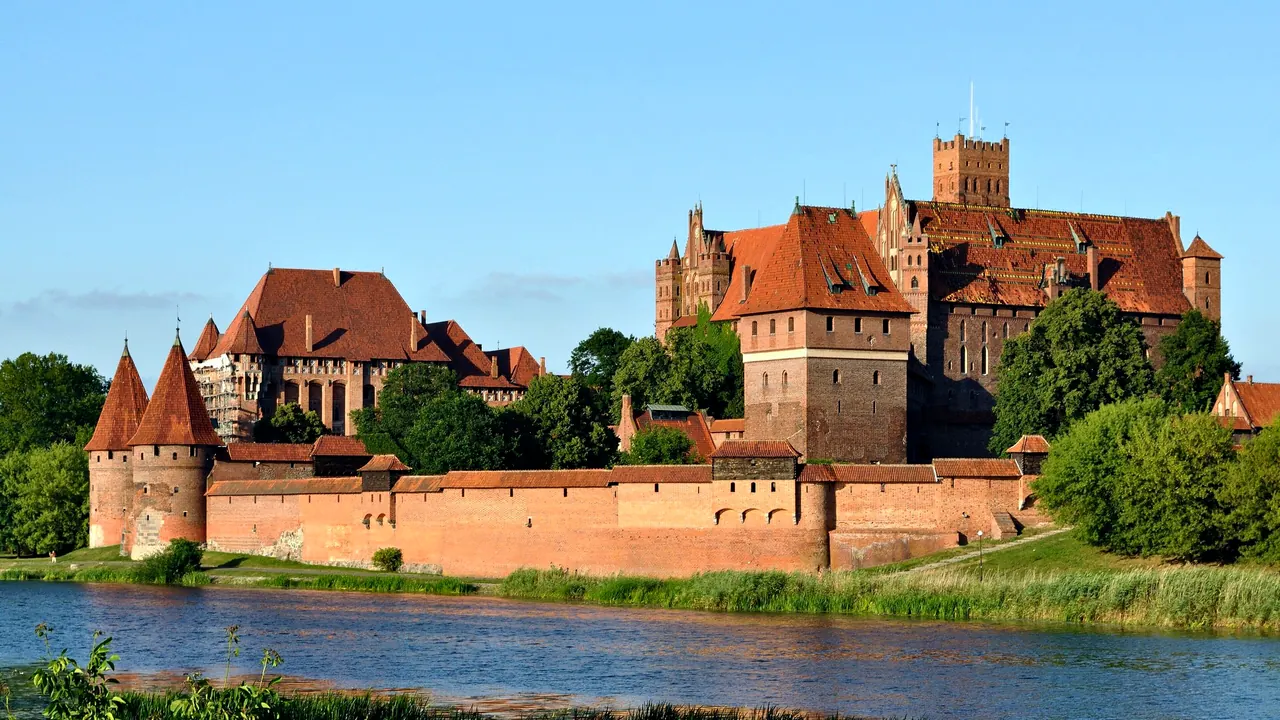
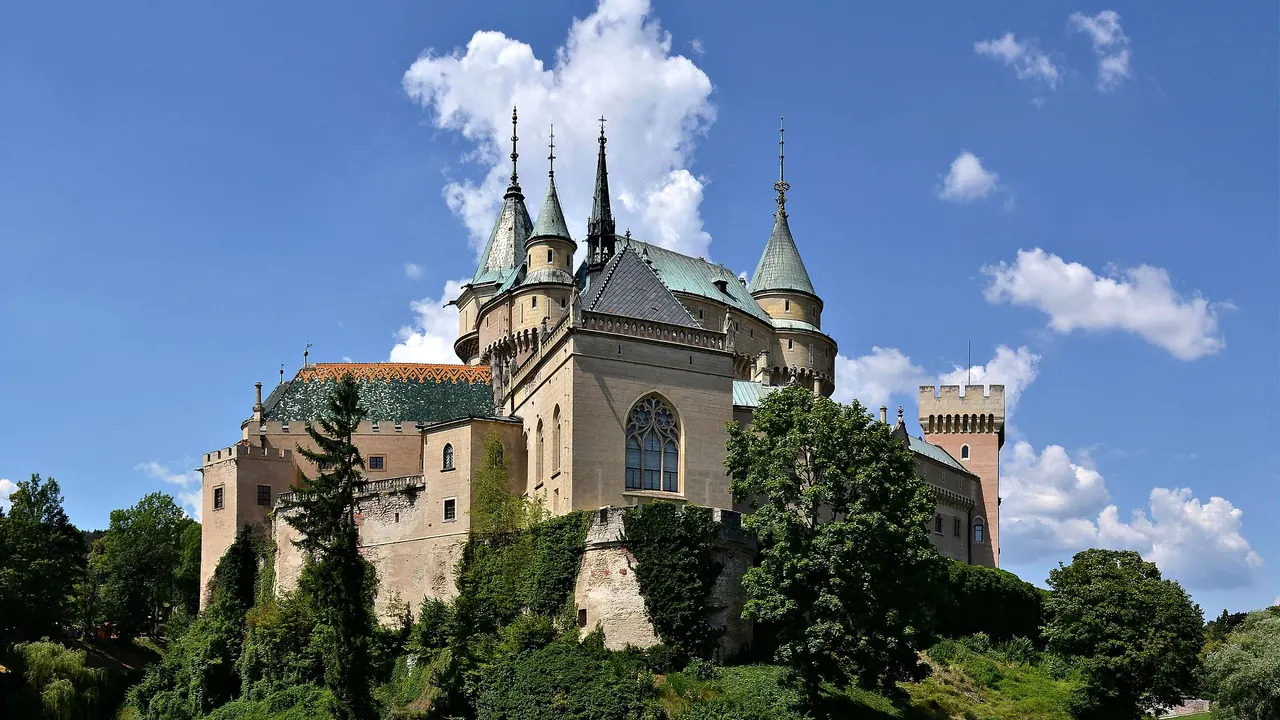
Photos: Poland by DerHexer, derivative work by Carschten, CC BY-SA 3.0, cropped; Slovakia by Pudelek, CC BY-SA 3.0, cropped.
Poland or Slovakia?
Our verdict in twelve categories, each scored against the same fixed benchmark cities, and the climate month by month, so you can choose for your trip.
Choose Poland for
- nightlife
- beaches
- live music and the arts
Poland is the better pick for a varied trip built around cities. Krakow, Warsaw, Gdansk and Wroclaw give you major sights, affecting museums, late nights and good concerts, and fast trains link them. Add the Baltic sand or the Masurian Lakes in summer and you get far more range than a single region could offer, at prices that stay kind to the wallet.
Choose Slovakia for
- wellness
- nature and the outdoors
Slovakia suits travellers who would rather slow down than tick off cities. Its strengths are the mountains, the castle towns and above all its spas. You can soak at Piešťany or in the thermal pools of Liptov, walk in the High Tatras and Slovak Paradise, then drive between Spiš and Banská Štiavnica. The distances are short, but you need a car, and the evenings are quiet.
Scoreboard
Twelve categories on one fixed scale from 0 to 100. The shaded stretch is the gap between the two.
Your match
Pick a travel style or drag the sliders, and both match scores follow your weighting.
Wins on nightlife and beaches with your weighting.
Wins on wellness and nature and the outdoors with your weighting.
What matters to you?
Category by category
What the scores mean for a trip.
Beaches & swimming
Poland at least has a coast. It is a long strip of pale sand and dunes running from the Hel Peninsula past Leba to the pier at Sopot, but the Baltic is cool and the season short. The Masurian Lakes are a warmer alternative inland. It makes for a pleasant summer week rather than a warm-water trip.
Slovakia is landlocked, so swimming means reservoirs and lakes such as Zemplínska šírava, Liptovská Mara and the Senec lakes near Bratislava. They are fine for a hot afternoon, but they are not a reason to go.
Where in Poland: Hel Peninsula, Leba and the Slowinski coast, Sopot, Masurian Lakes
Where in Slovakia: Zemplínska šírava, Senec, Liptov
Food & drink
Both cuisines are hearty mountain and farm cooking, but Poland gives you more to explore. Its milk bars are an easy way into everyday food, Warsaw ranges from modern tasting menus to Vietnamese cooking, and Krakow's Kazimierz and the market squares of Wroclaw and Gdansk keep eating interesting from city to city.
Slovakia's plates are simpler: bryndzové halušky, smoked sheep's cheese bought at Liptov farms and filling meals in log-built roadside inns. Its real strength is wine, with crisp whites from the Small Carpathian villages and sweet Tokaj from the south-east.
Where in Poland: Warsaw, Krakow, Wroclaw, Gdansk
Where in Slovakia: Bratislava, Small Carpathians wine route, Liptov, Slovak Tokaj
Culture & sights
Poland has much more weight here. Krakow alone has Wawel, the Cloth Hall and Kazimierz within a walk of each other. Warsaw adds its rebuilt Old Town and museums such as POLIN and the Warsaw Rising Museum, and Gdansk, Wroclaw and Torun are each worth a stop.
Slovakia's heritage is smaller in scale and scattered across the countryside. It includes the ruins of Spiš Castle, the great wooden altar at Levoča, Bardejov's square and the steep mining town of Banská Štiavnica. These reward a slow drive, but there are no big museums to anchor a visit.
Where in Poland: Krakow, Warsaw, Gdansk, Wroclaw
Where in Slovakia: Spiš and Levoča, Banská Štiavnica, Bardejov, Bratislava
Nightlife
Going out is one of the widest gaps between the two. Poland has several student cities that stay up late. Krakow has hundreds of vaulted cellar bars and Kazimierz's courtyards, Warsaw has electronic nights in post-industrial spaces and summer bars on the Vistula, and Wroclaw and the Gdansk-Sopot coast fill up in summer.
Slovakia's nightlife is mostly confined to Bratislava's old town and Košice's main street. The Tatra and spa resorts are quiet by late evening.
Where in Poland: Krakow, Warsaw, Wroclaw, Gdansk and Sopot
Where in Slovakia: Bratislava, Košice
Nature & outdoors
This is close, and partly the same landscape: the Tatras and the Pieniny raft gorge straddle the border. Slovakia holds the larger, higher share of the Tatras, with Slovak Paradise's ladders, Malá Fatra's gorges and the ice caves close by. Its ranges are compact enough that one base covers several of them.
Poland adds lowlands that Slovakia does not have: the bison of Bialowieza Forest, sailing on the Masurian Lakes, the shifting Slowinski dunes and the empty Bieszczady ridges. These are spread far apart, though, so you need more travel to see them.
Where in Poland: Tatra Mountains, Masurian Lakes, Bialowieza Forest, Bieszczady
Where in Slovakia: High Tatras, Slovak Paradise, Malá Fatra, Low Tatras
Day trips
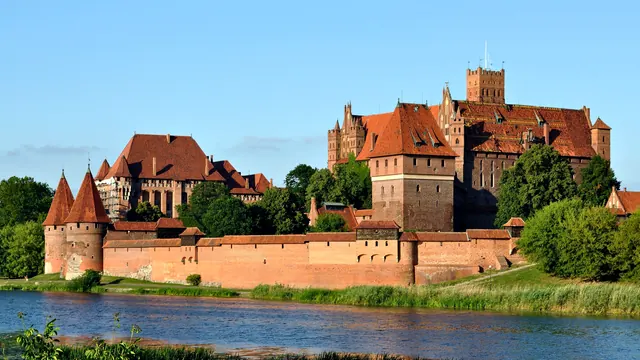
Poland's bases have stronger outings. From Krakow you can reach the Auschwitz-Birkenau memorial, the Wieliczka salt mine and Zakopane, from Gdansk the vast brick castle at Malbork, and from Wroclaw the timber Peace Churches.
Slovakia does well from two hubs. Bratislava has the Small Carpathian wine villages and Vienna about an hour away, and Poprad has Levoča, Kežmarok and Spiš Castle. Beyond those, you soon run into lesser towns.
Where in Poland: Krakow, Gdansk, Wroclaw, Warsaw
Where in Slovakia: Bratislava, Poprad and Spiš, Banská Bystrica
Good for families
Poland has more big attractions for children. There is a major theme park at Zator near Krakow, Warsaw's hands-on Copernicus Science Centre, and the bronze dwarfs to hunt for around Wroclaw. Summers by the Baltic or a Masurian lake round out a family trip.
Slovakia builds its family days outdoors instead. Liptov and the High Tatras have thermal water parks that stay open all winter, and there are short walks to mountain lakes, Bojnice's castle and zoo, and the children's railway near Košice. It has no theme park on that scale.
Where in Poland: Krakow, Warsaw, Wroclaw, Baltic coast
Where in Slovakia: Liptov, High Tatras, Bojnice, Košice
Getting around
Poland is easier to tour without a car. Fast intercity trains run from Warsaw to Krakow in about two and a half hours and to Gdansk in a little under three, and Warsaw, Krakow, Wroclaw and Gdansk all have dense tram networks, with a metro in Warsaw as well. The long north-to-south run from Gdansk to Krakow is worth breaking in Warsaw or Torun. You only really need a car for the Masurian Lakes, the Bieszczady and Bialowieza.
Slovakia has one scenic main line, running up the Váh valley to Žilina, Poprad and Košice, plus the little electric railway through the Tatra villages. Away from that line, buses are slow and infrequent. Many of the castles and wooden churches are only practical by car, on winding roads.
Where in Poland: Krakow, Warsaw, Gdansk, Wroclaw
Where in Slovakia: Bratislava, Váh valley rail line, High Tatras
Shopping & style
Neither is a fashion destination, but Poland has more to buy. You can find Baltic amber set in silver on Gdansk's Mariacka Street and in Krakow's Cloth Hall, blue-patterned Boleslawiec stoneware, and Warsaw's malls and luxury labels.
Slovakia's best buys are rustic: Modra's majolica pottery and wine from its cellars, textiles with Čičmany's white geometric patterns, and braided cheese straight from Liptov dairies.
Where in Poland: Gdansk, Krakow, Warsaw, Boleslawiec
Where in Slovakia: Modra, Bratislava, Čičmany, Liptov
Affordability
Both are easy on the budget, and Poland is a little easier. Its milk bars, cheap trains and good-value hotels in Krakow, Wroclaw, Lublin and Torun take some beating, with Warsaw and the peak-season resorts the dearer exceptions.
Slovakia is at its cheapest in the east, in Košice, Bardejov and the guesthouses of Banská Štiavnica. Bratislava and the best-known Tatra resorts in season cost noticeably more.
Where in Poland: Krakow, Wroclaw, Lublin, Torun
Where in Slovakia: Košice, Bardejov, Banská Štiavnica, Liptov
Live music & performing arts
Poland offers far more for a music lover. Warsaw has the huge Grand Theatre, the National Philharmonic and summer Chopin recitals in Lazienki Park. Katowice and Wroclaw have fine modern concert halls, and Krakow has cellar jazz clubs.
Slovakia's formal scene is mostly the Slovak National Theatre and the Philharmonic's Reduta hall in Bratislava, where tickets are easy to get. Its distinctive offer is living folk music, best seen at the summer festival in Východná.
Where in Poland: Warsaw, Krakow, Katowice, Wroclaw
Where in Slovakia: Bratislava, Košice, Východná
Wellness & relaxation
Slovakia comes out ahead here. Piešťany has a spa island and thermal mud, Trenčianske Teplice has a 19th-century Moorish-style bathhouse and a 1930s open-air pool, and in Liptov you can soak outdoors under the Tatras in any season.
Poland's uzdrowiska, such as Krynica-Zdroj and Ciechocinek with its salt-mist graduation towers, often feel like sanatoria. Its most enjoyable bathing is in the hot-spring pools of Podhale around Zakopane.
Where in Poland: Podhale and Zakopane, Krynica-Zdroj, Ciechocinek, Kolobrzeg
Where in Slovakia: Piešťany, Trenčianske Teplice, Liptov, Bardejovské Kúpele
When should you go?
Pick your month, and for a country the place in it. The climate figures are measured averages, not a forecast.
Where in Poland
Where in Slovakia
Warsaw (Poland) in July
Bratislava (Slovakia) in July
Daytime high, °C
Rainfall in the month, mm
Where the figures come from
Bratislava (Slovakia) has no rain gauge within 25 km of the centre, so its rainfall comes from a gridded climate dataset read at the destination rather than from a gauge further away.
Bratislava (Slovakia)'s sunshine is measured 56 km from the centre, at Wien / Hohe Warte.
Temperature and rainfall are climate normals, averaged over the years shown. Warsaw (Poland): 1991-2020 normals, Warszawa-Okecie (7.7 km from centre). Bratislava (Slovakia): 1991-2020 normals, Bratislava Ivanka (8.6 km from centre).
Both countries follow the same central European year: cold, dark winters with highs near freezing, a mild spring, and the warmest weather in July and August. Only Poland has a sea, and the Baltic off Gdansk reaches about 19°C at its warmest, so swimming there is really a July and August affair. Summer is also the wettest season in the mountains. Zakopane gets around 176mm of rain in July, and the Slovak side of the Tatras is wet too, so September is often the more settled month for hiking.
Bratislava runs slightly warmer than the Polish cities, reaching about 27°C in high summer against 25°C in Warsaw and Krakow. That makes May, June and September the most comfortable months for walking its old town. From December to February the Tatras on both sides of the border are under snow for skiing. That is when the thermal pools of Podhale and Liptov are at their best, while the cities are short on daylight.
Which traveller are you?
For a food and nightlife trip, Poland is the clear choice. You can eat pierogi in milk bars, do flavoured vodka tastings and visit Kazimierz's late food stands, then go on to Krakow's cellar bars and Warsaw's clubs. Slovakia's evenings mostly end in Bratislava's old-town pubs.
On a relaxing and wellness trip, Slovakia has the edge. Piešťany's spa island and mud treatments, the historic bathhouse at Trenčianske Teplice and the large thermal pools of Liptov under the Tatras make a restful week. Poland's spa towns feel more like sanatoria.
More comparisons
Each shares a side with Poland or Slovakia.
Where else could you go?
Set Poland or Slovakia against any other country.