Poland
Gdansk
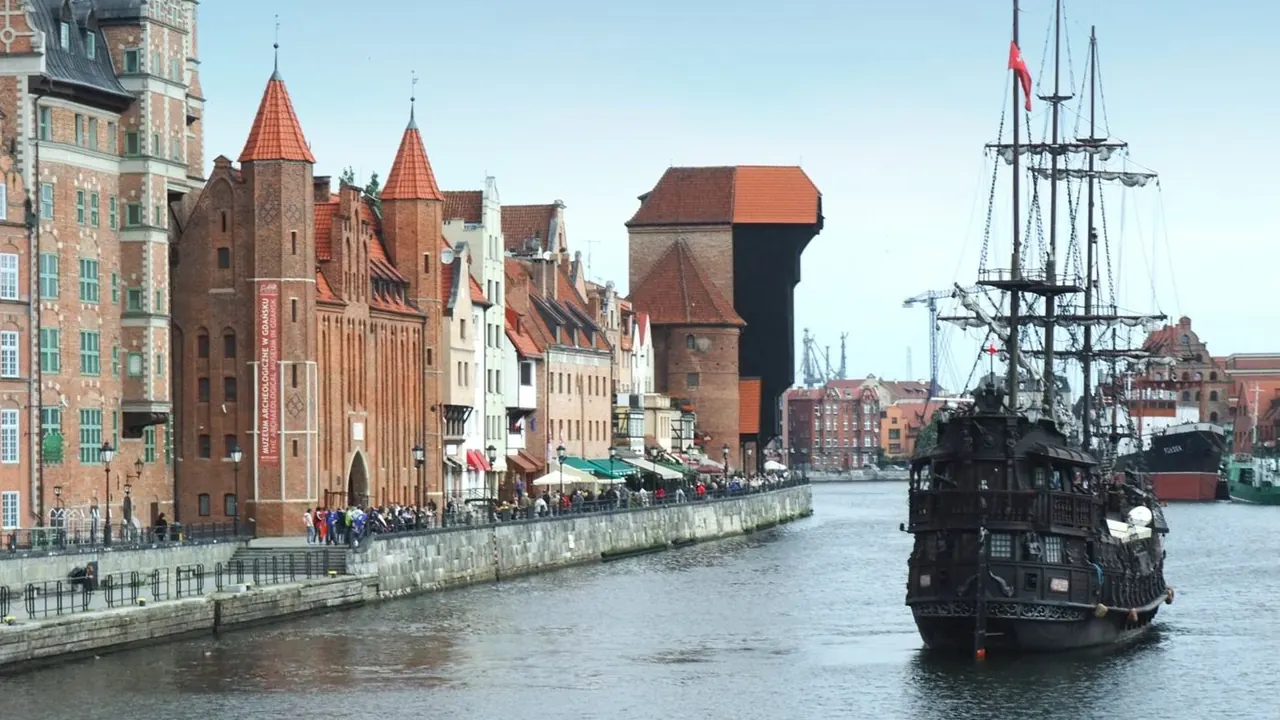
A galleon on the Motława below the old crane
- Getting around72
- Culture & sights68
- Affordable cities68
Photo: Nikater, CC BY-SA 3.0, cropped
Match
55
Every category weighted equally
- Beach & sun52
- Culture & arts58
- Food & nightlife55
- Family trip57
- Outdoors56
- Relax & unwind52
- Shopping & style54
- On a budget57
Gdansk in twelve categories
Our verdict on each, scored 0 to 100 against the same fixed benchmark cities, so a score means the same thing on every page.
Beaches & swimming. Scores 40 out of 100.
Food & drink. Scores 50 out of 100.
Culture & sights. Scores 68 out of 100.
Nightlife. Scores 52 out of 100.
Nature & outdoors. Scores 58 out of 100.
Day trips. Scores 62 out of 100.
Good for families. Scores 62 out of 100.
Getting around. Scores 72 out of 100.
Shopping & style. Scores 42 out of 100.
Affordability. Scores 68 out of 100.
Live music & performing arts. Scores 52 out of 100.
Wellness & relaxation. Scores 36 out of 100.
Gdansk category by category
Beaches & swimming
40The Baltic is closer than most visitors expect. Wide, pale sand runs almost without a break from Brzeźno and Jelitkowo to the beaches of Sopot, all reachable by tram or local train, and Stogi on the far side of the port is quieter and backed by pine woods. The sand is fine and the water is shallow and gentle, which suits children.
The catch is the sea itself. Even in a warm July or August it rarely gets much above 18-20°C, and the swimming season is a few summer weeks. Outside them the beaches are for walking. In summer, though, the whole Tricity goes to the shore, and a beach afternoon fits easily into a city stay. Further out, the Hel Peninsula has calmer bay water on one side and open sea on the other.
Food & drink
50Eating here is hearty and dependable rather than a reason to come. Pierogi, żurek sour rye soup, pork dishes and dumplings are everywhere, and the Baltic adds smoked and fried fish, herring in several forms and, from the Kashubian countryside, rustic cooking with potatoes, mushrooms and berries. Old-style milk bars still serve simple Polish canteen food very cheaply.
The Main Town along Długa and the riverside quay is full of restaurants aimed at visitors, so quality varies. Better meals tend to be found in Wrzeszcz, the shipyard area and in Sopot and Gdynia. Craft beer is taken seriously, flavoured vodkas and the gold-flecked Goldwasser liqueur are local traditions, and the cafés serve good cake and coffee.
Culture & sights
68Gdansk was a rich Hanseatic port, and its Main Town shows it: tall, narrow merchant houses along the Royal Way of Długa and the Long Market, the Neptune Fountain, Artus Court, the Golden Gate and the medieval crane on the Motława quay. Much of it was rebuilt after 1945 from ruins, carefully enough that it reads as a historic city. St Mary's, one of the largest brick churches in the world, dominates the skyline, and Mariacka Street is the prettiest corner.
The twentieth century is where the city is strongest. The Museum of the Second World War is one of the most serious anywhere, Westerplatte marks where the war began, and the European Solidarity Centre at the shipyard tells the story of the movement that ended communism. Oliwa Cathedral and its park add another quarter.
Nightlife
52Going out is spread across the Tricity rather than packed into the old town. The Main Town has pubs and cocktail bars for a quieter evening, Wrzeszcz has the student and local bars, and the old shipyard district has warehouse bars and club nights in post-industrial spaces.
In summer the centre of gravity moves to Sopot, where Monte Cassino street and the area around the pier fill with clubs and late bars, and the local trains carry people back and forth into the small hours. Outside the warm months the scene is much quieter and more local, a good night out but not one people travel for.
Nature & outdoors
58The city sits between the sea and a belt of forested hills. The Tricity Landscape Park climbs straight up behind Oliwa and Sopot, with beech woods, ravines and marked trails, and a coastal cycle path runs along the shore from Gdansk to Gdynia. To the west, the Kashubian lake district is rolling glacial country of lakes, forests and small farms, good for canoeing, cycling and walking about an hour away.
The Hel Peninsula is a long, thin spit of dunes and pines, and the sheltered Bay of Puck behind it is one of the best kitesurfing and windsurfing waters in the region. There are no mountains, and the cool, windy climate makes this mostly a late spring to early autumn destination outdoors.
Day trips
62The great day out is Malbork, the vast brick castle of the Teutonic Knights, about 35 minutes by train and one of the largest castles in the world. Sopot and Gdynia are part of the same urban strip and easy half-days, one an old seaside spa with a long wooden pier, the other a modernist port city built between the wars.
Further out, Pelplin has a huge Cistercian abbey, Frombork is the cathedral town where Copernicus worked, and the Kashubian villages offer folk museums and churches. Torun, with its intact Gothic old town, is about two hours away and makes a long but rewarding day. In summer, boats run to the Hel Peninsula and Westerplatte.
Good for families
62In summer this is an easy city with children. The beaches have shallow water and soft sand, the Oliwa zoo is large and set in forested hills, Gdynia has an aquarium on its pier and a hands-on science centre, and the Hevelianum in a hilltop fort in Gdansk offers interactive science displays. Boat trips on the river and to Westerplatte and the Sopot pier are simple treats.
The Main Town is flat, compact and largely pedestrian, and the city is calm and safe. Many of the main museums deal with war and are better suited to older children, and outside summer the cold and wind narrow the options to indoor attractions.
Getting around
72The historic centre is small, flat and mostly pedestrian, so the Main Town, the waterfront and the main museums are all on foot. Trams reach the beaches at Brzeźno and Jelitkowo and the shipyard area, and buses cover Westerplatte.
The backbone for visitors is the SKM commuter railway, which runs the length of the Tricity through Wrzeszcz, Oliwa and Sopot to Gdynia, and a rail link reaches the airport. Tickets and transfers are simple, and a car is unnecessary unless you head deep into Kashubia. The only effort is distance, as the three cities stretch along the coast for some 30km.
Shopping & style
42Amber is the one thing to shop for. Gdansk has been an amber city for centuries, and Mariacka Street and the riverside are lined with jewellers and workshops selling Baltic amber from simple beads to fine silver settings. Buy from established workshops rather than street stalls.
Beyond that the offer is ordinary: large malls, Polish fashion chains, Monte Cassino street in Sopot and a scattering of design shops. The long-running St Dominic's Fair, held each summer since the Middle Ages, fills the old town with stalls of crafts, antiques and food.
Affordability
68Gdansk is good value by European standards. Public transport is cheap, museum tickets are modest, and eating out, from milk bars to proper restaurants, costs well below Western Europe, with beer and coffee especially kind on the budget.
Rooms are the variable. In July and August, when Poles head for the coast, hotels in the Main Town and especially in Sopot fill and charge seaside rates. Visiting in late spring or early autumn gets the same city for noticeably less.
Live music & performing arts
52There is a proper season to attend. The Baltic Opera stages opera and ballet, the Polish Baltic Philharmonic plays in a converted power station on Ołowianka island, and the Gdansk Shakespeare Theatre, with an opening roof inspired by Elizabethan playhouses, hosts an annual Shakespeare festival. In Gdynia, a large musical theatre runs popular productions, though mostly in Polish.
Organ recitals in Oliwa Cathedral are a local tradition worth catching, and in summer Gdynia hosts one of the biggest rock and pop festivals in Central Europe. Outside these, live music is club gigs and jazz nights on a modest scale.
Wellness & relaxation
36There is no thermal or hammam tradition here. What wellness there is centres on Sopot, which was founded as a seaside spa resort in the nineteenth century and keeps that character in its grand shoreline hotels, many with spa and treatment floors. Gdansk itself has hotel spas, saunas and a few day spas, fine for an afternoon but not a reason to come.
The one real local bathing custom is morsowanie, winter sea dipping, when groups of locals wade into the icy Baltic on cold weekend mornings. The city's own pace helps a little. Outside July and August the Main Town is unhurried, and long cake-and-coffee afternoons come easily, though summer crowds along Długa break the calm.
When should you go?
Pick a month to see what it is like. The climate figures are measured averages, not a forecast.
Gdansk in July
Daytime high, °C
Rainfall in the month, mm
The whole year
Shaded against this city’s own year: the deepest cell is its best month for that figure and the palest its weakest.
Where the figures come from
Gdansk has no rain gauge within 25 km of the centre, so its rainfall comes from a gridded climate dataset read at the city rather than from a gauge further away.
Gdansk's sunshine is measured 55 km from the centre, at Elblag.
Temperature and rainfall are climate normals, averaged over the years shown. Gdansk: 1991-2020 normals, Gdansk-Rebiechowo (12.7 km from centre).
Before you go
| Measure | Gdansk |
|---|---|
| Official language | Polish |
| Currency | Zloty (PLN) |
| Sockets | CE50 Hz |
| Driving side | Right |
| Time zone | UTC+1, UTC+2 in summer |
| Emergency number | 112 |
| Elevation | 11 m |
| Main airport | Gdańsk Lech Wałęsa Airport (GDN)13 km from centre72 non-stop destinations |
| Public holidays this year | 14 days |
By the numbers
| Measure | Gdansk |
|---|---|
| City population | 487,834 |
| People per km² | 714 |
| Museums within 10 km | 34 |
| UNESCO World Heritage sites within 50 km | 2 |
| Swim season, months above 21 °C | None |
Compare Gdansk with
Every comparison with a written verdict behind it.