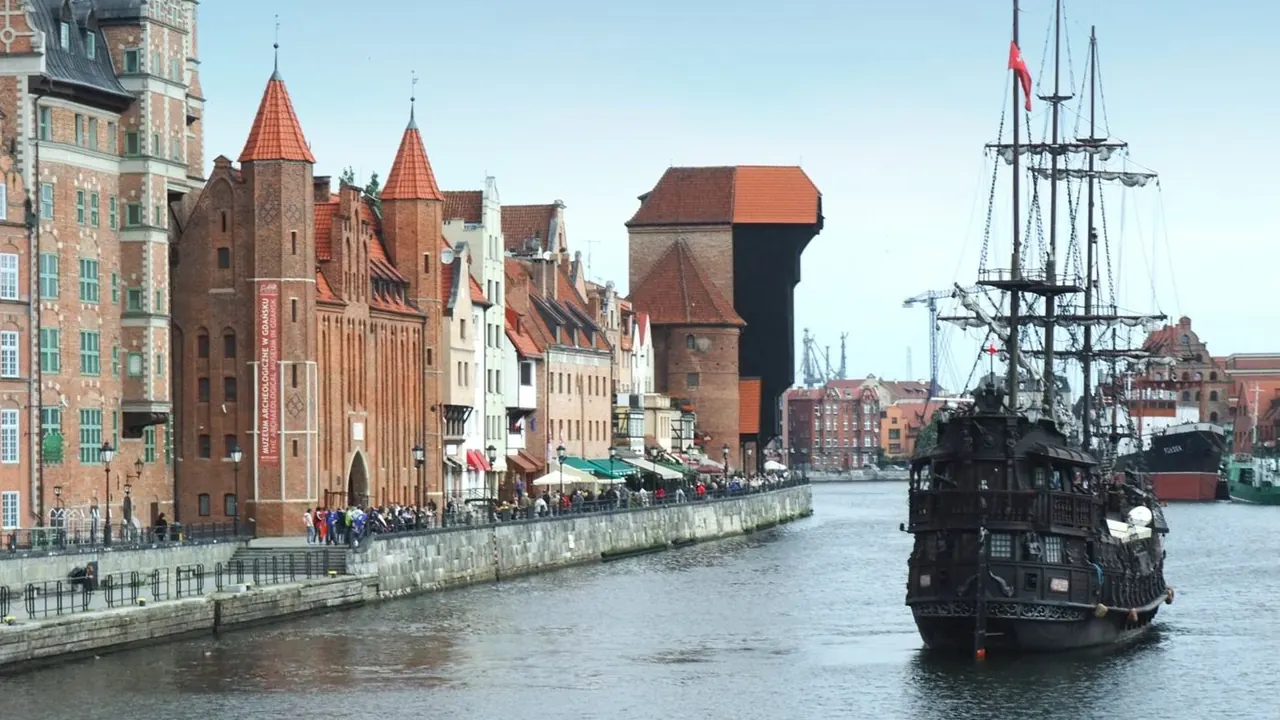
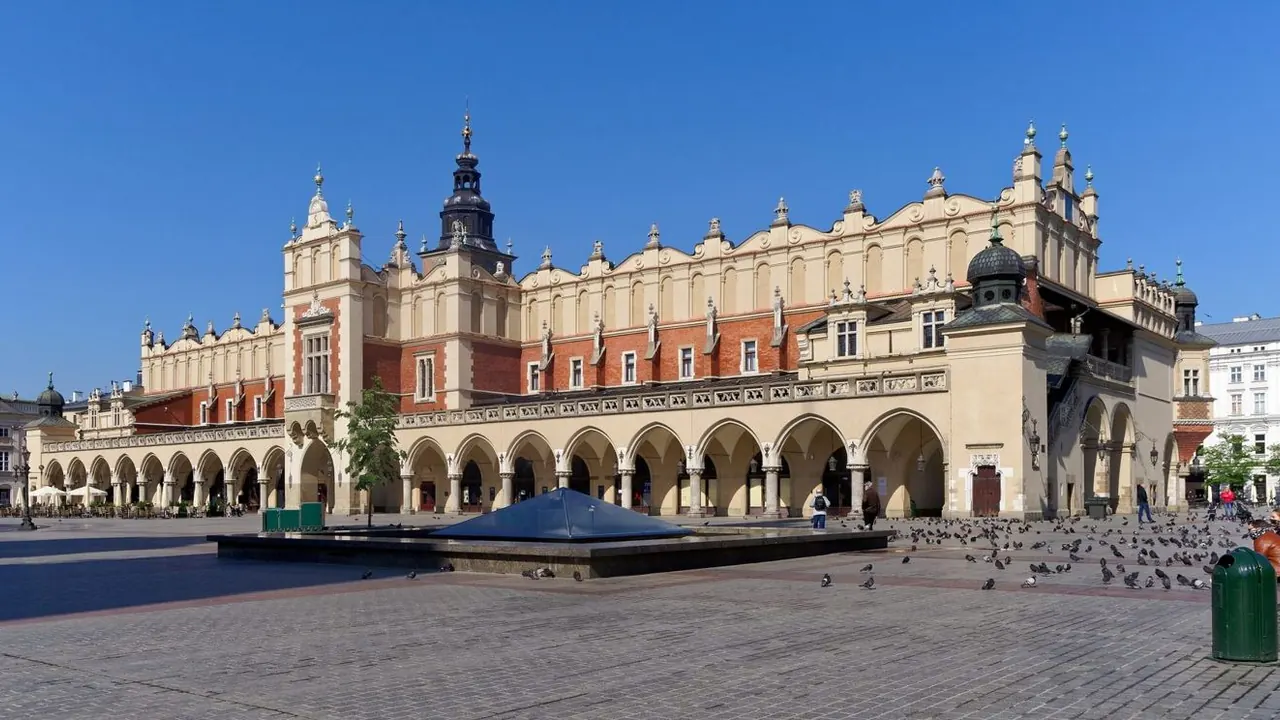
Photos: Gdansk by Nikater, CC BY-SA 3.0, cropped; Krakow by Jakub Hałun, CC BY-SA 4.0, cropped.
Gdansk or Krakow?
Our verdict in twelve categories, each scored against the same fixed benchmark cities, and the climate month by month, so you can choose for your trip.
Choose Gdansk for
- beaches
- families
Gdansk suits a traveller who wants the sea in the same trip as the city. It works best in summer, when a morning in the Main Town can end on the sand at Jelitkowo or in Sopot. Its strongest history is from the twentieth century: the outbreak of the Second World War at Westerplatte and the Solidarity strikes at the shipyard. The Tricity also gives a longer stay more room than a single old town would.
Choose Krakow for
- nightlife
- day trips
- culture and sights
Krakow is the better pick for a classic old-town break. Its medieval centre came through the war intact, Wawel and Kazimierz are within walking distance of each other, and the cellar bars stay busy all year. The Wieliczka salt mine and the Auschwitz-Birkenau memorial make it a natural base for anyone who wants to fill extra days with major excursions.
Scoreboard
Twelve categories on one fixed scale from 0 to 100. The shaded stretch is the gap between the two.
Your match
Pick a travel style or drag the sliders, and both match scores follow your weighting.
Wins on beaches and families with your weighting.
Wins on nightlife and day trips with your weighting.
What matters to you?
Category by category
What the scores mean for a trip.
Beaches & swimming
Gdansk has a real coastline almost on its doorstep. Pale, fine sand runs from Brzeźno and Jelitkowo to Sopot, Stogi is quieter and backed by pines, and the shallow water suits children. The Baltic stays cool, though, so swimming is limited to a few summer weeks, and for the rest of the year the beaches are for walking.
Krakow cannot offer anything similar. Its nearest substitute is Zakrzowek, a flooded quarry with turquoise water and fenced bathing areas in summer, and otherwise swimming means pools or the indoor water park.
Food & drink
Both cities serve the same hearty Polish staples, from pierogi and żurek to cheap milk-bar lunches, and neither is a trip for fine dining. What differs is the local accent. Gdansk adds the Baltic with smoked fish and herring, Kashubian country cooking and Goldwasser liqueur, and its better meals tend to be in Wrzeszcz and Sopot rather than on Długa.
In Krakow, more of the eating happens on the street: obwarzanek rings from carts, the produce market at Stary Kleparz and late-night zapiekanki from the round hall on Plac Nowy. The restaurants on the Main Square are mostly paying for the view.
Culture & sights
Krakow has the more complete historic city. Its medieval centre survived the war, so the Cloth Hall, St Mary's Basilica with the Veit Stoss altarpiece, and Wawel Hill with its royal tombs are the original buildings. Kazimierz and the Czartoryski Museum's Leonardo add depth.
The Main Town in Gdansk is a careful reconstruction of a Hanseatic port, handsome along the Royal Way but rebuilt after 1945. Where it pulls level is the twentieth century. The Museum of the Second World War, Westerplatte and the European Solidarity Centre tell a story Krakow's sights only partly cover.
Nightlife
Krakow is the better city for going out, and it stays that way all year. Students keep the brick-vaulted cellar bars of the Old Town busy past midnight, and Kazimierz's courtyards and vodka bars have the most character. The one downside is stag groups on weekends.
Nights out in Gdansk are spread across the Tricity, with quiet bars in the Main Town, student places in Wrzeszcz and warehouse club nights in the shipyard. The real buzz is in Sopot in summer, and in winter the scene shrinks to something local.
Nature & outdoors
Both cities are level on outdoor options, but the settings differ. Gdansk is a coastal place, with beech woods and ravines in the Tricity Landscape Park, a cycle path along the shore, the Kashubian lakes an hour inland and kitesurfing on the Bay of Puck. There are no mountains, though.
Krakow has the mountains, at a distance. The Tatras for alpine hiking and the Dunajec rafting gorge are each about two hours away, so they take a full day. Closer in, Ojcow's limestone valley and the Wolski Forest are gentler outings.
Day trips
Krakow has the stronger set of excursions. The Wieliczka salt mine is half an hour away, the Auschwitz-Birkenau memorial deserves a full day, and Zakopane and the Tatras, Wadowice and Kalwaria Zebrzydowska add several more days of options.
Gdansk has one outing just as good: Malbork's huge Teutonic castle, about 35 minutes by train. Beyond that, Sopot and Gdynia are easy half-days, while Torun, Frombork and Pelplin are rewarding but longer trips.
Good for families
With children the two are broadly level, and the right choice depends on the season. In summer Gdansk is hard to beat, with shallow sandy beaches, the forest zoo at Oliwa, Gdynia's aquarium and the Hevelianum's science displays in a hilltop fort. In cold, windy months the options narrow.
Krakow works year round. The fire-breathing dragon below Wawel and the Dragon's Den cave keep young children busy, the indoor water park is open all year, and Energylandia is about an hour away by car. Its cobbles are harder on pushchairs, and in both cities several major sights are better suited to older children.
Getting around
Gdansk spreads a visit along some 30km of coast, while Krakow keeps nearly everything in one walkable cluster. In Gdansk the Main Town, the waterfront and the main museums are on foot, but Oliwa, Sopot and Gdynia mean riding the SKM commuter line, and trams run out to the beaches at Brzeźno and Jelitkowo.
In Krakow the Old Town, Wawel, Kazimierz and Podgorze are a short walk apart, and trams fill the gaps. There is no metro, though, and the cobbles make slow going with wheeled luggage.
Shopping & style
Amber is the buy in both cities, but Gdansk is its home. The jewellers and workshops along Mariacka Street are the place to buy it, and in summer St Dominic's Fair fills the old town with crafts and antiques. Beyond amber, the choice is malls and Polish chains.
Krakow offers a little more variety. The medieval Cloth Hall sells amber, carved boxes and lace, Boleslawiec pottery is the classic thing to take home, and Kazimierz adds vintage shops and a weekend flea market on Plac Nowy.
Affordability
Both are cheap by Western European standards, with inexpensive beer, milk-bar lunches and public transport. The difference is when costs rise. In Gdansk, rooms in the Main Town and especially in Sopot reach seaside rates in July and August, so late spring and early autumn are much better value.
In Krakow, prices go up around the Main Square, on summer weekends and during the Christmas markets. Organised trips to the salt mine and Auschwitz cost more than going independently by train or bus.
Live music & performing arts
The two cities are close here, and both have proper seasons. Gdansk stands out for its venues: the Baltic Opera, the Philharmonic in a converted power station on Ołowianka, the Shakespeare Theatre with its opening roof, organ recitals in Oliwa Cathedral and a large summer rock festival in Gdynia.
Krakow is easier for an evening on impulse, with Chopin recitals in Old Town churches and palaces most nights, jazz in brick cellars, klezmer in Kazimierz and the Jewish Culture Festival in summer. In both cities, most theatre is in Polish.
Wellness & relaxation
Wellness is a side note in both cities, since neither has a tradition of thermal baths. In Gdansk it is about the sea. Sopot's grand shoreline hotels keep the spa-resort character the town was founded with in the nineteenth century, and in winter locals take part in morsowanie, wading into the icy Baltic on weekend mornings.
Krakow's options are more unusual. Salt-air therapy sessions run underground at Wieliczka, and the naturally hot pools of Podhale are about two hours south. Closer in, the Planty and the Vistula banks below Wawel are the places to slow down.
When should you go?
Pick your month. The climate figures are measured averages, not a forecast.
Gdansk in July
Krakow in July
Daytime high, °C
Rainfall in the month, mm
Where the figures come from
Gdansk has no rain gauge within 25 km of the centre, so its rainfall comes from a gridded climate dataset read at the city rather than from a gauge further away.
Gdansk's sunshine is measured 55 km from the centre, at Elblag.
Temperature and rainfall are climate normals, averaged over the years shown. Gdansk: 1991-2020 normals, Gdansk-Rebiechowo (12.7 km from centre). Krakow: 1991-2020 normals, Krakow (10.1 km from centre).
Both cities have a short warm season and cold, dark winters that hover around freezing, so for walking the streets late spring and early autumn are kinder than January. In Gdansk the sea is only worth swimming in during July and August, when it reaches about 19°C and daytime highs sit around 22°C. June and July are also its sunniest months, though July brings the most rain at 85mm.
Krakow is a few degrees warmer through the summer, with highs of about 25°C in July and August. Inland heat suits café terraces and riverbank evenings more than beach days. Its wettest stretch runs from May to July, with July close to 100mm, mostly in summer showers. In May and September both cities are mild enough for long days on foot, but only Gdansk turns cool and windy by the sea by October.
Which traveller are you?
On a beach and sun trip, Gdansk is the only real option. Wide sandy beaches run from Brzeźno to Sopot and are reached by tram or train, while Krakow is hours inland and has only a fenced quarry lake for swimming.
For a food and nightlife trip, Krakow is the stronger choice. Cheap cellar bars under the Old Town and late courtyards in Kazimierz keep going all year, and Plac Nowy's zapiekanki round off the night. Outside summer in Sopot, Gdansk goes noticeably quiet.
On a culture and arts trip, Krakow edges ahead with a medieval centre that survived the war, Wawel's royal castle and Leonardo's Lady with an Ermine. Gdansk is the better pick for twentieth-century history, with its Second World War museum and the Solidarity Centre.
Before you go
| Measure | Gdansk | Krakow |
|---|---|---|
| Official language | Polish | Polish |
| Currency | Zloty (PLN) | Zloty (PLN) |
| Sockets | CE50 Hz | CE50 Hz |
| Driving side | Right | Right |
| Time zone | UTC+1, UTC+2 in summer | UTC+1, UTC+2 in summer |
| Emergency number | 112 | 112 |
| Elevation | 11 m | 219 m |
| Main airport | Gdańsk Lech Wałęsa Airport (GDN)13 km from centre72 non-stop destinations | Kraków John Paul II International Airport (KRK)11 km from centre132 non-stop destinations |
| Public holidays this year | 14 days | 14 days |
By the numbers
| Measure | Gdansk | Krakow |
|---|---|---|
| City population | 487,834 | 804,237 |
| People per km² | 714 | 2,459 |
| Museums within 10 km | 34 | 113 |
| UNESCO World Heritage sites within 50 km | 2 | 4 |
| Swim season, months above 21 °C | None | - |
Where else could you go?
Every comparison below shares a destination with this one, so you can follow Gdansk or Krakow somewhere new.