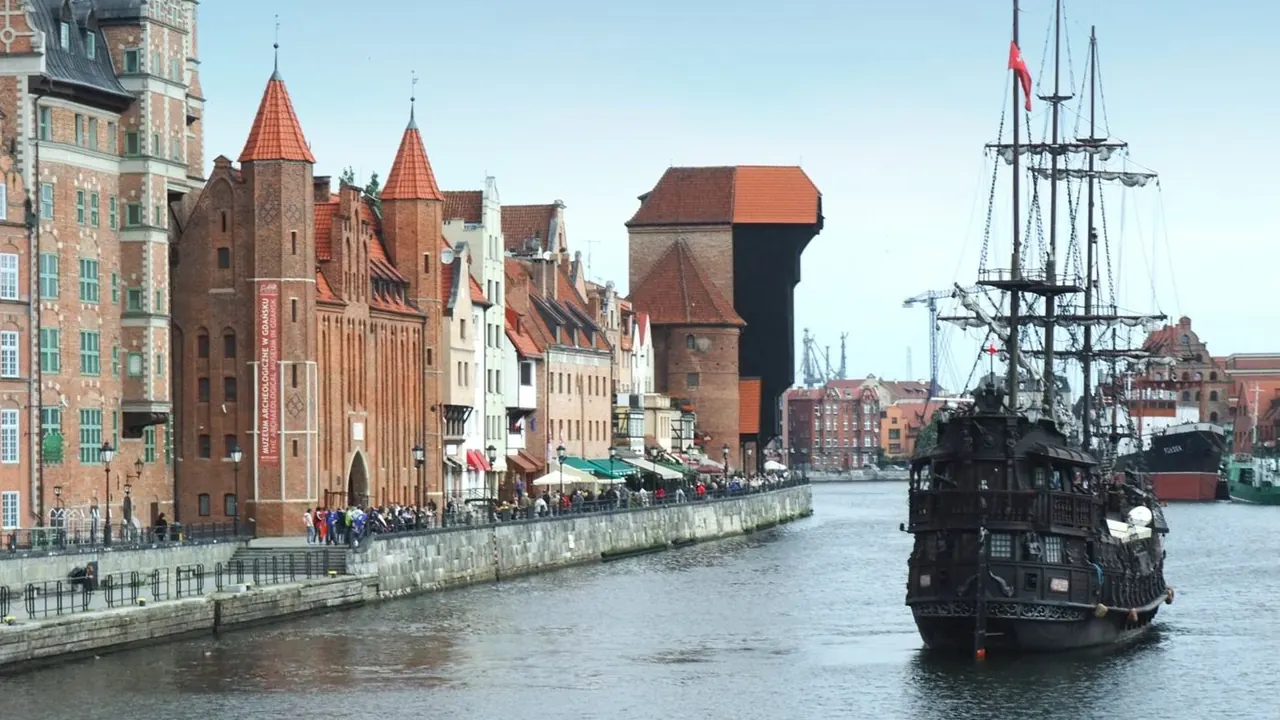
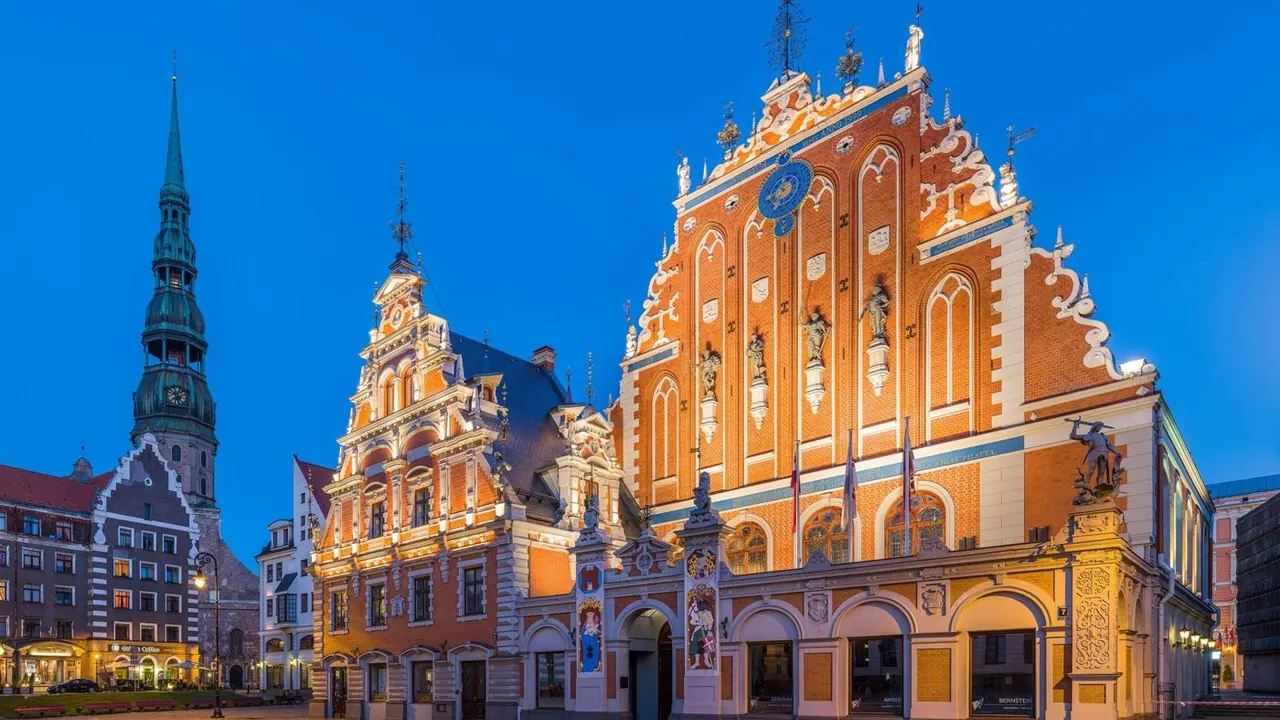
Photos: Gdansk by Nikater, CC BY-SA 3.0, cropped; Riga by Diliff, CC BY-SA 3.0, cropped.
Gdansk or Riga?
Our verdict in twelve categories, each scored against the same fixed benchmark cities, and the climate month by month, so you can choose for your trip.
Choose Gdansk for
- families
- prices
- getting around
Gdansk is the better pick for a family summer, for anyone drawn to twentieth-century history, and for travellers watching their spending. The Museum of the Second World War, Westerplatte and the European Solidarity Centre tell the story of how the war began and how communism ended, all within a short ride of each other. The beaches sit on the tram line, Sopot and Gdynia are one commuter train away, and children have a zoo, an aquarium and science centres to work through. Meals and drinks also go further here.
Choose Riga for
- wellness
- live music and the arts
- shopping
Riga makes more sense if you care about music, architecture and slow, restorative days. The opera house by the canal performs through the cold half of the year, the cathedral organ and the choral tradition run deep, and the Art Nouveau streets beyond the Old Town are a sight with few rivals. Jurmala's spa hotels, sulphur springs and the Latvian pirts sauna give a calm side to a city break that Gdansk can't really offer.
Scoreboard
Twelve categories on one fixed scale from 0 to 100. The shaded stretch is the gap between the two.
Your match
Pick a travel style or drag the sliders, and both match scores follow your weighting.
Too close to call, level with your weighting
Wins on families and prices with your weighting.
Wins on wellness and live music and the arts with your weighting.
What matters to you?
Category by category
What the scores mean for a trip.
Beaches & swimming
On the shore the two are close matches: fine pale sand, gently shelving water that suits small children, and a Baltic that only reaches about 18 to 20°C in high summer. Either way, a beach day is a summer extra rather than the point of the trip.
The difference is how the beach fits into the stay. In Gdansk, Brzeźno and Jelitkowo are on the tram line and the sand runs on towards Sopot, with pine-backed Stogi and the Hel Peninsula for quieter water. Riga's beach is Jurmala, a separate resort of wooden villas and dunes half an hour away by train, so going to the sea there is more of an outing.
Food & drink
Neither city is a food destination, and both have historic centres full of restaurants aimed at visitors. The cooking does differ in character. Gdansk serves Polish comfort food, with pierogi, żurek, herring and Kashubian potato dishes, and its old milk bars serve canteen food very cheaply. Goldwasser and flavoured vodkas are the local drinks.
Riga's best food experience is a place rather than a dish: the Central Market in its zeppelin hangars, with smoked eel, sprats, rye bread and pickles. The Quiet Centre adds restaurants built around foraged ingredients, and Black Balsam is the bitter local liqueur to try.
Culture & sights
Both are rebuilt or preserved Hanseatic ports with merchant houses and great brick churches, and both reward two or three days. Gdansk's real strength is the twentieth century. The Museum of the Second World War, Westerplatte and the Solidarity story at the shipyard give it a weight of history that few cities match, set against the Royal Way and the huge bulk of St Mary's.
Riga's distinction is architectural. Beyond its UNESCO-listed Old Town, the streets around Alberta iela are lined with hundreds of carved Art Nouveau facades, best enjoyed on a slow walk. The open-air ethnographic museum in the pine forest adds rural Latvia.
Nightlife
Both offer a decent night out without being a reason to travel, but the layout differs. In Gdansk, going out is spread along the coast: quiet bars in the Main Town, student bars in Wrzeszcz, warehouse club nights in the shipyard, and in summer the clubs of Sopot, with late trains running back.
Riga keeps it compact, with cellar bars and late clubs packed into the Old Town, which can turn loud with weekend groups. The calmer local evenings are found around Miera iela and on summer canal terraces.
Nature & outdoors
Gdansk's outdoors faces the sea. The wooded ravines of the Tricity Landscape Park climb straight up behind Oliwa and Sopot, the Kashubian lakes lie an hour inland, and the Bay of Puck behind Hel is one of the region's best waters for kitesurfing and windsurfing.
Riga looks inland instead, to rivers and bogs. The Gauja valley at Sigulda has red sandstone cliffs, caves and canoeing, at their best in autumn colour, and Kemeri's boardwalks cross a raised bog that is most atmospheric in early-morning mist. Neither has hills of any height, so in both this is walking, cycling and paddling country.
Day trips
Each has one grand excursion. From Gdansk it is Malbork, the vast Teutonic castle just over half an hour away by train. From Riga it is Rundale, a Baroque Rastrelli palace with French gardens that is best reached by road. Gdansk's options are a little easier without a car, with Gothic Torun, Copernicus's Frombork and summer boats to Hel.
Riga answers with Turaida castle at Sigulda and the small medieval town of Cesis. Beyond about two hours, its list of easy days out runs thin.
Good for families
Gdansk is better set up for children. Beyond the shallow beaches, it has a large zoo in the hills at Oliwa, an aquarium on the Gdynia pier, a hands-on science centre and the Hevelianum in its hilltop fort. River and pier boat trips are simple treats, and the pedestrian Main Town is flat and easy with a pushchair.
Riga is safe and calm too, with a zoo in the Mezaparks forest, farmsteads to explore at the open-air museum and an indoor water park in Jurmala. But the Old Town cobbles are hard work with small wheels, and little in the city is designed with children in mind.
Getting around
Both centres are easily walkable, and neither needs a car except for the deep countryside. Gdansk spreads further, with the three Tricity towns strung along some 30km of coast, but the SKM commuter railway turns that into one simple line. A rail link also reaches the airport.
Riga's sights sit closer together, linked by the canal parks. Beyond them you rely on a mix of trams, trolleybuses and buses that takes some working out, and in winter the icy cobbles slow you down.
Shopping & style
Amber is the shared souvenir, and neither city is a fashion destination. Gdansk focuses on amber, with centuries-old workshops along Mariacka Street, and in summer it has St Dominic's Fair, a market dating back to the Middle Ages.
Riga's craft offer is broader. Look for linen, patterned knitted mittens, ceramics and wooden kitchenware, and Black Balsam to take home. Its best shopping event is the June craft fair at the open-air museum.
Affordability
Gdansk is the cheaper of the two day to day. Milk bars, proper restaurants, beer and coffee all cost well below Western levels, and so does public transport. The main thing to watch is rooms in July and August, especially in Sopot, when Poles head for the coast and hotels fill.
Riga is moderate overall, but its Old Town squares charge close to Western European prices for food and drink. Staying and eating a few streets beyond the walls brings costs down, and its opera seats are a real bargain.
Live music & performing arts
Music is where Riga pulls clearly ahead. The Latvian National Opera and Ballet plays most nights from autumn to spring, with seats that are easy to get, the national orchestra performs in the Great Guild hall, and the Dom Cathedral's organ is heard often. Behind it all is a choral tradition that peaks in the Song and Dance Festival every five years.
Gdansk has a respectable season but lighter depth. It has the Baltic Opera, a philharmonic in a converted power station and a Shakespeare festival in a theatre with an opening roof. Organ recitals at Oliwa and Gdynia's large summer rock and pop festival round it out.
Wellness & relaxation
Riga has the real spa culture. Jurmala's sulphur springs, peat mud treatments and pine-set spa hotels are half an hour away, and the Latvian pirts offers steam, birch-branch whisking and cold plunges at countryside sauna houses.
Gdansk can manage a pampering afternoon in Sopot's grand old seafront hotels, but there is no bathing tradition behind it. The one local custom is morsowanie, wading into the icy Baltic on winter mornings, which is bracing rather than restful.
When should you go?
Pick your month. The climate figures are measured averages, not a forecast.
Gdansk in July
Riga in July
Daytime high, °C
Rainfall in the month, mm
Where the figures come from
Gdansk has no rain gauge within 25 km of the centre, so its rainfall comes from a gridded climate dataset read at the city rather than from a gauge further away.
Gdansk's sunshine is measured 55 km from the centre, at Elblag.
Temperature and rainfall are climate normals, averaged over the years shown. Gdansk: 1991-2020 normals, Gdansk-Rebiechowo (12.7 km from centre). Riga: 1991-2020 normals, Riga (4.1 km from centre).
The two cities share almost the same Baltic year. Swimming is only realistic in July and August, when the sea in both places reaches about 19°C at best. Midsummer is also the wettest stretch in both, with July bringing around 85mm, usually as showers rather than days of steady rain. Riga runs slightly warmer at the peak, reaching 24°C in July, while Gdansk stays a little milder in deep winter. In Gdansk, sunshine climbs steeply from April and stays generous until August, so late spring is a bright, dry time for walking the streets before the beach weeks arrive.
Out of season the two differ in small ways. Riga's October is noticeably wetter, so September is the better autumn month there. Gdansk's autumn tails off more gently. From November to March both cities are cold, dark and around freezing, which makes them museum and concert trips. Riga's opera season and cosy cafés suit that time of year slightly better.
Which traveller are you?
On a family trip with young children, Gdansk is the easier base. Summer days split naturally between the sand and indoor animal and science attractions, and the flat, car-free centre keeps getting about simple, where Riga has less made with children in mind.
For a relaxing and wellness trip, Riga is the clear choice. A short train ride puts you among Jurmala's spa resorts, and the Latvian sauna ritual gives slow days a local character that Gdansk, with only hotel spas, cannot match.
On a tight budget, Gdansk lets the money go further, above all on food and drink, where simple Polish eating is cheap almost everywhere. Riga can be done cheaply too, but only by staying away from its Old Town squares.
Before you go
| Measure | Gdansk | Riga |
|---|---|---|
| Official language | Polish | Latvian |
| Currency | Zloty (PLN) | Euro (EUR) |
| Sockets | CE50 Hz | CF230 V, 50 Hz |
| Driving side | Right | Right |
| Time zone | UTC+1, UTC+2 in summer | UTC+2, UTC+3 in summer |
| Emergency number | 112 | 112 |
| Elevation | 11 m | 6 m |
| Main airport | Gdańsk Lech Wałęsa Airport (GDN)13 km from centre72 non-stop destinations | Riga International Airport (RIX)9 km from centre93 non-stop destinations |
| Public holidays this year | 14 days | - |
By the numbers
| Measure | Gdansk | Riga |
|---|---|---|
| City population | 487,834 | 588,911 |
| People per km² | 714 | - |
| Museums within 10 km | 34 | 12 |
| UNESCO World Heritage sites within 50 km | 2 | 1 |
| Swim season, months above 21 °C | None | None |
Where else could you go?
Every comparison below shares a destination with this one, so you can follow Gdansk or Riga somewhere new.