Poland
Zakopane
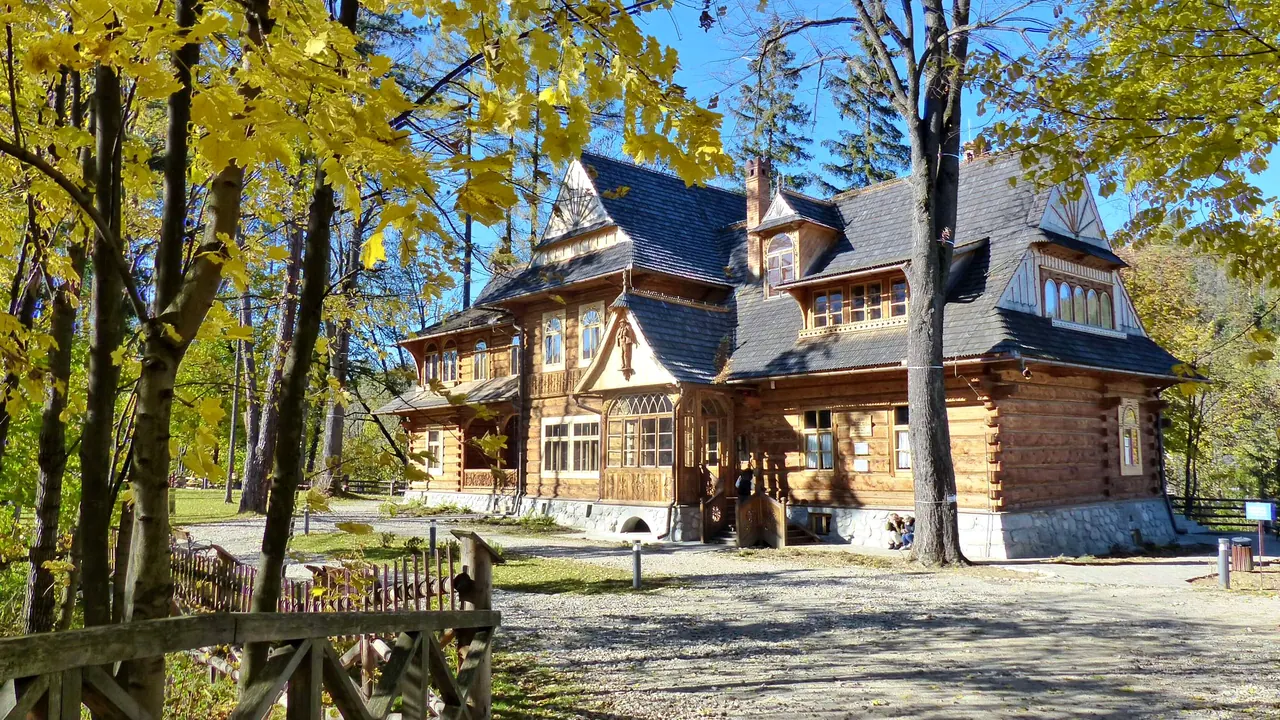
Willa Koliba, the museum of the Zakopane style
- Nature & outdoors88
- Affordable cities65
- Wellness & relaxation64
Photo: Wojciech Grzegorz Domagała, CC BY-SA 4.0, cropped
Match
48
Every category weighted equally
- Beach & sun46
- Culture & arts46
- Food & nightlife42
- Family trip51
- Outdoors55
- Relax & unwind50
- Shopping & style44
- On a budget49
Zakopane in twelve categories
Our verdict on each, scored 0 to 100 against the same fixed benchmark cities, so a score means the same thing on every page.
Beaches & swimming. Scores 8 out of 100.
Food & drink. Scores 40 out of 100.
Culture & sights. Scores 35 out of 100.
Nightlife. Scores 33 out of 100.
Nature & outdoors. Scores 88 out of 100.
Day trips. Scores 60 out of 100.
Good for families. Scores 62 out of 100.
Getting around. Scores 55 out of 100.
Shopping & style. Scores 28 out of 100.
Affordability. Scores 65 out of 100.
Live music & performing arts. Scores 32 out of 100.
Wellness & relaxation. Scores 64 out of 100.
Zakopane category by category
Beaches & swimming
8This is a mountain town, and the sea is a very long way off. The glacial lakes in the Tatras are cold, and the national park forbids bathing in them. The nearest swimming in summer is the reservoir at Czorsztyn, about an hour's drive away, where there are a few modest bathing spots. In practice, visitors who want to swim go to the outdoor thermal pools around the town, which stay warm all year.
Food & drink
40Food here is highland cooking. It is rustic, filling and quite unlike lowland Polish fare. The signature is oscypek, a smoked sheep's cheese pressed in carved moulds. Stalls grill it and serve it with cranberry jam on almost every corner. Timber inns, many with open fires and musicians, serve kwaśnica sauerkraut soup with smoked rib, grilled lamb, potato pancakes, pierogi and big pork dishes. A hot mulled beer or a herbal vodka finishes the day.
The range is narrow. Fine dining and international food are limited, and many places on Krupówki serve the same menu to the same crowds. The best meals come from smaller family inns on the side streets and from cheese bought straight from shepherds' huts in summer.
Culture & sights
35The town's own heritage is small but distinctive. It is the birthplace of the Zakopane style, an architectural movement drawn from highland carpentry. Its best examples are Villa Koliba, which houses the Museum of Zakopane Style, the wooden chapel at Jaszczurówka and many steep-roofed villas along the quieter streets. The Tatra Museum covers highland life, costume and natural history. Villa Atma, once the composer Karol Szymanowski's home, is a small museum about him.
The Old Church on Kościeliska Street and the Pęksowy Brzyzek cemetery beside it are among the most atmospheric spots in town. The cemetery's carved wooden grave markers commemorate artists and mountaineers. A day covers all of it. The mountains are the real reason to come.
Nightlife
33Going out happens mostly on and just off Krupówki, the main street. It has pubs, a few dance clubs and inns where the evening turns rowdy. The liveliest times are winter weekends and the ski season, when groups of friends arrive for après-ski. New Year's Eve here is a big event in Poland. Midweek and out of season the town is much quieter. Hikers who are up before dawn tend to make it an early night anyway.
Nature & outdoors
88The town sits at the foot of the Tatras, the only range in the Carpathians with true alpine character: granite peaks, cirques and glacial lakes. The national park begins at the edge of the streets. Gentle valley walks lead through Kościeliska and Chochołowska, where meadows turn purple with crocuses in spring. The easy classic is the long paved road up to Morskie Oko, a glacial lake under sheer granite walls, walked by great crowds. Harder routes climb to Giewont's cross, or go on from Morskie Oko past the dark lake of Czarny Staw to Rysy, Poland's highest summit at 2,499m. Orla Perć, a chained ridge route, is for experienced scramblers.
A cable car lifts walkers from Kuźnice to Kasprowy Wierch at 1,987m, and the Slovak side of the range is close by for more trails. In winter the hills turn to skiing, though the slopes are short by alpine standards, and to ski touring and cross-country routes. In summer there is rafting through the Pieniny gorge on the Dunajec, about an hour away. The popular trails get very crowded in high season, and the weather in the high mountains changes fast.
Day trips
60Kraków is the big outing, about two hours away by road on a busy route, and the Wieliczka salt mine lies on the way. Closer to home, the larch-wood Gothic church at Dębno, about half an hour away, is one of the UNESCO-listed wooden churches of southern Małopolska, its interior covered in painted medieval patterns. Chochołów, nearer still, is not listed but is the best-preserved highland village in the area, a long main street lined with log houses scrubbed pale, most still lived in. The castles of Niedzica and Czorsztyn face each other across the reservoir about an hour east.
Across the Slovak border, Spiš Castle and the walled town of Levoča make a strong heritage day. Kežmarok's wooden church is also within reach. Weekend traffic on the roads out of town can stretch any of these journeys considerably.
Good for families
62The town works well for families who like the outdoors. A funicular climbs Gubałówka hill, with slides, a summer toboggan run and views over the peaks at the top. Flat valley trails such as Kościeliska suit pushchairs and small legs. Winter brings sledging and gentle nursery slopes with ski schools nearby. The thermal water parks in the surrounding villages give a full day of pools and slides whatever the weather.
There is little else built for children, and the steeper hikes are only for older ones. Crowds on Krupówki and traffic jams on long weekends and in the school breaks are the main frustrations.
Getting around
55The centre is small enough to walk, and Krupówki is pedestrianised. Getting to the trailheads is easy without a car, because private minibuses and local buses shuttle between town and Kuźnice, the valley entrances and the Morskie Oko road. The road into town is the weak point. On winter weekends and in the summer peak it jams badly, and the rail line from Kraków winds through the hills, scenic rather than quick. A car helps for the Slovak side and the outlying villages, but parking in the town is hard work.
Shopping & style
28Shopping is mostly souvenirs, with a real highland craft tradition underneath. The market at the foot of Gubałówka is the place for it. Stalls sell thick sheep's-wool sweaters and socks, sheepskin rugs, felt slippers, carved wooden boxes and walking sticks, and wheels of oscypek cheese. Krupówki adds outdoor-gear and souvenir shops. Look for the sturdy, handmade pieces rather than the mass-produced trinkets.
Affordability
65Prices here are well below those of alpine resorts in Western Europe. Family-run guesthouses, hearty inn meals, minibuses and park entry all cost little by those standards. It is a resort, though, and costs climb at the busiest times: Christmas, New Year, the winter school breaks and long summer weekends. At those times rooms need booking early and cost noticeably more. Spring and autumn are the cheapest seasons.
Live music & performing arts
32The town's live culture has deep roots. The Witkacy Theatre, a small, well-regarded company named after the town's most famous artist, plays to local and visiting audiences. Highland string bands, with their sharp fiddles and their own harmonies, play in many inns in the evenings. Every August the International Festival of Mountain Folklore fills the town with dance troupes and parades. Beyond these, classical concerts and touring shows are occasional.
Wellness & relaxation
64Zakopane began as a mountain health resort, prized for its clean air, and that idea still shapes a stay. Hot geothermal water rises under the Podhale valley. Within half an hour there are several large thermal complexes, in Chochołów, Białka Tatrzańska, Bukowina and Szaflary. Their outdoor pools steam in the snow, with views of the Tatras. A soak after a day of hiking or skiing is part of the routine for many visitors, and plenty of hotels add saunas and spa treatments.
The town centre itself is not calm in high season. The restful version of a stay means a guesthouse on the quieter slopes and mornings in the valleys.
When should you go?
Pick a month to see what it is like. The climate figures are measured averages, not a forecast.
Zakopane in July
Daytime high, °C
Rainfall in the month, mm
The whole year
Shaded against this city’s own year: the deepest cell is its best month for that figure and the palest its weakest.
Where the figures come from
Zakopane has no rain gauge within 25 km of the centre, so its rainfall comes from a gridded climate dataset read at the city rather than from a gauge further away.
Zakopane's sunshine is measured 34 km from the centre, at Poprad / Tatry.
Temperature and rainfall are climate normals, averaged over the years shown. Zakopane: 1999-2020 (sunshine 1991-2020, rainfall 1991-2020) normals, Zakopane (0.2 km from centre).
Before you go
| Measure | Zakopane |
|---|---|
| Official language | Polish |
| Currency | Zloty (PLN) |
| Sockets | CE50 Hz |
| Driving side | Right |
| Time zone | UTC+1, UTC+2 in summer |
| Emergency number | 112 |
| Elevation | 837 m |
| Main airport | Kraków John Paul II International Airport (KRK)87 km from centre132 non-stop destinations |
| Public holidays this year | 14 days |
By the numbers
| Measure | Zakopane |
|---|---|
| City population | 25,770 |
| People per km² | 306 |
| Museums within 10 km | 18 |
| UNESCO World Heritage sites within 50 km | 2 |
Compare Zakopane with
Every comparison with a written verdict behind it.
- Belgrade
- Bratislava
- Brno
- Budapest
- Cesky Krumlov
- Cluj-Napoca
- Dresden
- Gdansk
- Graz
- Innsbruck
- Krakow
- Prague
- Salzburg
- Vienna
- Warsaw
- Wroclaw
- Zagreb