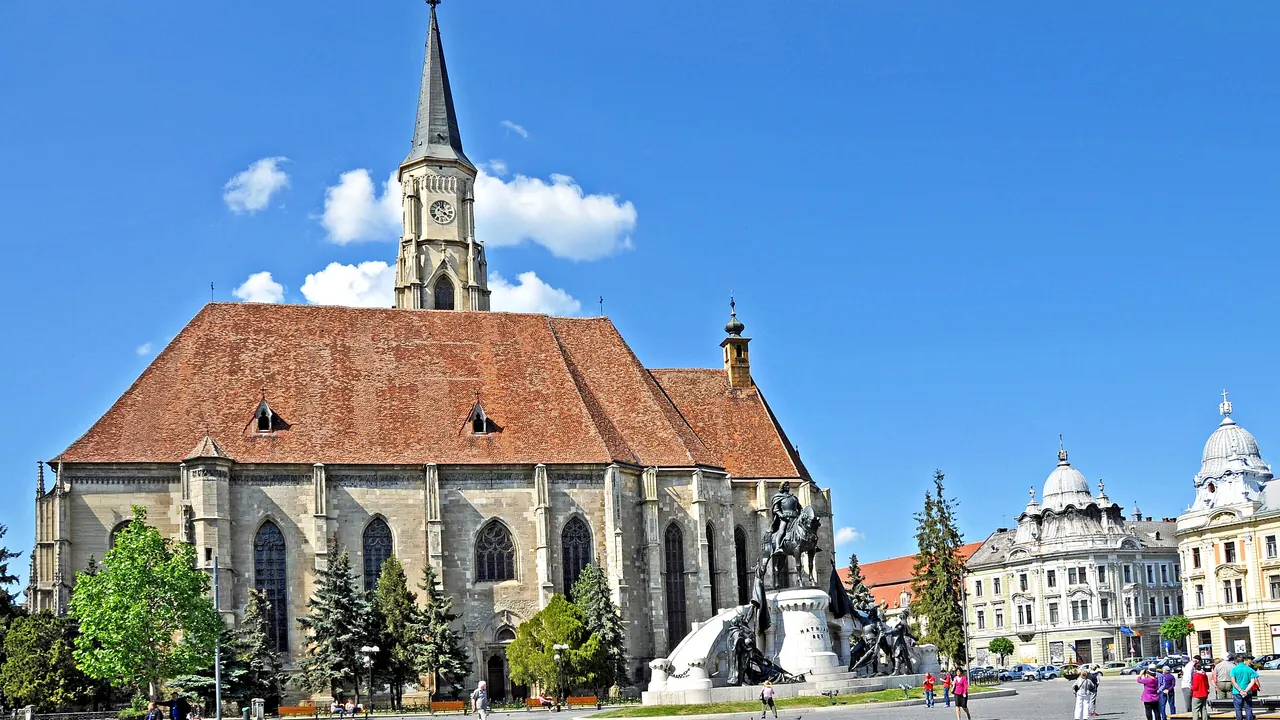
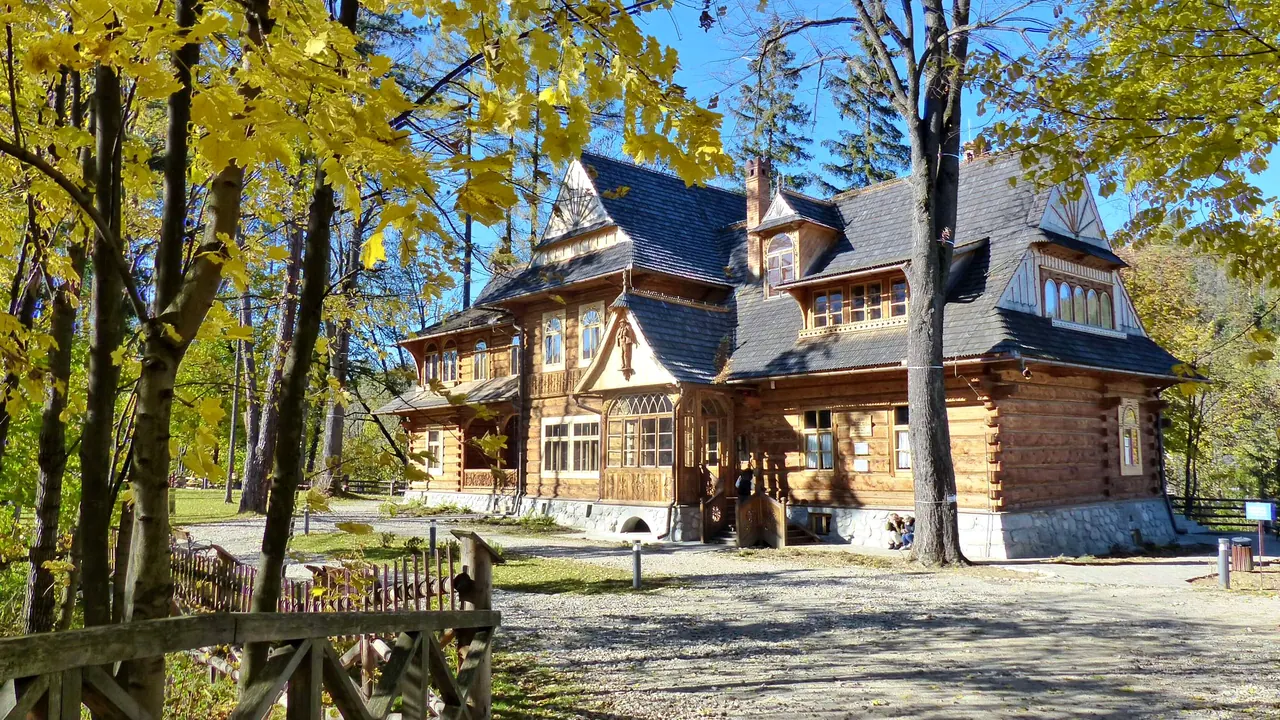
Photos: Cluj-Napoca by Dennis G. Jarvis, CC BY-SA 2.0, cropped; Zakopane by Wojciech Grzegorz Domagała, CC BY-SA 4.0, cropped.
Cluj-Napoca or Zakopane?
Our verdict in twelve categories, each scored against the same fixed benchmark cities, and the climate month by month, so you can choose for your trip.
Choose Cluj-Napoca for
- live music and the arts
- nightlife
- culture and sights
Cluj-Napoca is the choice if you want a real city. Its handsome old centre, two opera houses and theatre companies, Romanian-Hungarian cooking and a student bar scene give it fuller evenings and more culture. It also costs a little less. The centre is flat and easy to walk, and if you hire a car, Transylvania's castles, citadels and salt mine make good outings.
Choose Zakopane for
- wellness
- nature and the outdoors
- families
Zakopane suits travellers who come for the mountains. The Tatra national park starts where the streets end, so alpine lakes, granite peaks and a cable car are right on hand, and the thermal pools in nearby villages are there for a soak afterwards. It is also the easier place with children, but expect quiet nights and not much in the way of culture.
Scoreboard
Twelve categories on one fixed scale from 0 to 100. The shaded stretch is the gap between the two.
Your match
Pick a travel style or drag the sliders, and both match scores follow your weighting.
Too close to call, 1 point apart
Wins on live music and the arts and nightlife with your weighting.
Wins on wellness and nature and the outdoors with your weighting.
What matters to you?
Category by category
What the scores mean for a trip.
Beaches & swimming
Neither town is anywhere near the sea, so a beach trip rules both out equally. What differs is the kind of swim. Cluj has summer dips in the outdoor salt lakes at Turda and at lidos on the edge of the city. Zakopane's mountain lakes are off limits, but its outdoor thermal pools stay warm through the snow, so it is the better place for a swim in winter.
Food & drink
Cluj-Napoca has the wider table. Romanian and Hungarian cooking meet in dishes such as varză à la Cluj, sour ciorbă and papanași. The student crowd supports a serious coffee scene around Piața Unirii and Piața Muzeului, and Târnave valley whites are on most wine lists.
Zakopane's highland cooking is narrower but memorable: grilled oscypek with cranberry jam, kwaśnica and lamb in timber inns with fiddlers by the fire. Many places on Krupówki serve the same menu, though, so the best meals are in the family inns on the side streets.
Culture & sights
Cluj-Napoca gives you more to see. Its sights fill a day or two: the baroque palaces ringing Piața Unirii, the art collection in the Bánffy Palace, the Tailors' Bastion and the old Jewish and Hungarian quarters. The open-air ethnographic museum in the Hoia hills is the highlight.
Zakopane's heritage is smaller and more specialised. It centres on the steep-roofed timber villas of the Zakopane style, the Tatra Museum and the carved grave markers of Pęksowy Brzyzek. It is distinctive and worth seeing, but one unhurried day covers it.
Nightlife
After dark Cluj-Napoca is clearly the livelier of the two. Students fill the cellar bars and terraces around Piața Muzeului late into the night, and a few clubs play electronic music in old industrial courtyards until morning, especially in term time.
Zakopane's evenings are more limited. They run along Krupówki in pubs and rowdy inns, and come alive mainly for après-ski on winter weekends and at New Year. Outside those times most visitors are hikers who go to bed early.
Nature & outdoors
Zakopane is in another league for the outdoors. The Tatras are true alpine country, and the trails begin at the edge of town. You can walk the long road to Morskie Oko, climb Rysy at 2,499m, take the cable car up Kasprowy Wierch or ski in winter, and the Dunajec gorge is close enough for rafting.
Cluj-Napoca's landscape is gentler: rolling forest in Făget and Hoia, a half-day hike through Turda Gorge, and the caves and karst plateaus of the Apuseni, which you really need a car to reach. It is pleasant hill walking rather than mountain drama.
Day trips
The two are about level for days out, and each has a great salt mine within reach: Turda for Cluj-Napoca, and Wieliczka on the road to Kraków for Zakopane. Cluj's outings stay inside Transylvania and are mostly about history in stone. You can see the Habsburg citadel and coronation cathedral at Alba Iulia, the Bánffy country seat at Bonțida, the Saxon spire of Bistrița and the Art Nouveau palace in Târgu Mureș. Most are an hour or two by road, and they feel like a slow tour of one region's past.
Zakopane's outings are more varied in scale. One day can be spent in a major city, with Kraków's old town and royal castle. Another can be quieter: the painted interior of the wooden church at Dębno, half an hour away, or the street of pale log houses in Chochołów. Crossing into Slovakia for Spiš Castle and walled Levoča also adds a second country to a short stay, which Cluj cannot offer.
Good for families
Zakopane is the easier choice with children. Gubałówka has a funicular and a toboggan run, Kościeliska valley is flat enough for small legs, and winter brings sledging and ski schools. The thermal water parks rescue wet days.
Cluj-Napoca is safe and calm but has fewer attractions for children. There are rowing boats in Central Park and the Botanical Garden, and the Turda Salt Mine, with its underground lake and Ferris wheel, is the big hit. After that, families tend to move on around Transylvania.
Getting around
Both centres are easy on foot, and neither is hard to manage. Cluj-Napoca is a proper city, with buses, trolleybuses, a tram and an airport close by, but slow trains mean you need a car for the gorge, the mountains and the villages.
Zakopane is the other way round. Minibuses run cheaply to every trailhead and valley, so you can manage without a car once you arrive. The weak point is getting there, on a road that jams at peak times or a winding rail line from Kraków.
Shopping & style
Neither is a shopping destination, and the best buys in both are local crafts. In Cluj-Napoca that means embroidered blouses, painted ceramics and woodwork from folk-art fairs and the ethnographic museum shop, plus the usual chains in the malls. Zakopane's market at the foot of Gubałówka is better for practical souvenirs: sheep's-wool sweaters, sheepskins, felt slippers and wheels of oscypek, with outdoor gear on Krupówki.
Affordability
Cluj-Napoca is a little easier on the budget. It is expensive for Romania, but rooms, lunch menus and opera seats still cost well below Western European levels, though prices jump during the big summer festivals.
Zakopane is cheap compared with Western alpine resorts, but it is a resort, and rooms cost noticeably more at Christmas, New Year, in the school breaks and on long summer weekends. Spring and autumn are the cheapest times to go.
Live music & performing arts
Cluj-Napoca has far more on stage. Romanian and Hungarian opera, theatre and ballet companies perform in separate houses, the philharmonic runs a regular season, and tickets are easy to get. In summer some of Eastern Europe's largest music festivals take over the stadium area and a nearby castle estate.
Zakopane's live culture is smaller and more rooted in the place. It has the Witkacy Theatre, highland string bands playing in the inns and the August folklore festival, with only occasional concerts beyond that.
Wellness & relaxation
Zakopane is far better for unwinding. It grew up as a mountain health resort, and geothermal water feeds big outdoor pool complexes in Chochołów, Białka Tatrzańska, Bukowina and Szaflary, where you can soak with the Tatras in view. A guesthouse on the quieter slopes avoids the noise of the centre.
Cluj-Napoca has no bathing tradition of its own. There are hotel spas, the salt air of the Turda mine and the summer salt lakes, and the Botanical Garden is a quiet place for an afternoon.
When should you go?
Pick your month. The climate figures are measured averages, not a forecast.
Cluj-Napoca in July
Zakopane in July
Daytime high, °C
Rainfall in the month, mm
Where the figures come from
Zakopane has no rain gauge within 25 km of the centre, so its rainfall comes from a gridded climate dataset read at the city rather than from a gauge further away.
Zakopane's sunshine is measured 34 km from the centre, at Poprad / Tatry.
Temperature and rainfall are climate normals, averaged over the years shown. Cluj-Napoca: 1991-2020 normals, Cluj-Napoca (2.4 km from centre). Zakopane: 1999-2020 (sunshine 1991-2020, rainfall 1991-2020) normals, Zakopane (0.2 km from centre).
Cluj-Napoca is warmer and drier through the summer. From June to August the afternoons reach about 27°C with plenty of sun, which is good for terraces and day trips, though June and July bring the most rain. May and September are the gentlest months for walking the old centre. From December to February the days hover just above freezing and are short and grey.
Zakopane is cooler at every point of the year, with summer highs of about 21°C, which makes for comfortable hiking. Its summers are also very wet: July brings around 176mm of rain, about double Cluj's 87mm, often as mountain storms, so early starts pay off. September is a little drier and still mild enough for the high trails. From December to February it is around freezing and snowy, the season for skiing and steaming thermal pools rather than city sightseeing. Neither town has a beach season.
Which traveller are you?
On a culture and arts trip, choose Cluj-Napoca. Gothic St Michael's and the Bánffy Palace collection fill the days. In the evenings there is Romanian or Hungarian opera, ballet or a philharmonic concert, which Zakopane's small museums and single theatre cannot match.
On a family trip with children, Zakopane makes the easier week. The days are built around easy walks, play and, in winter, snow, with warm pools for bad weather. Cluj-Napoca is fine for a day or two, then runs out of things for children to do.
For a relaxing and wellness trip, pick Zakopane. A stay there settles into an easy rhythm: morning walks in clean mountain air and afternoons soaking in hot spring water. In Cluj-Napoca, rest comes down to a hotel spa.
Before you go
| Measure | Cluj-Napoca | Zakopane |
|---|---|---|
| Official language | Romanian | Polish |
| Currency | Romanian Leu (RON) | Zloty (PLN) |
| Sockets | CF230 V, 50 Hz | CE50 Hz |
| Driving side | Right | Right |
| Time zone | UTC+2, UTC+3 in summer | UTC+1, UTC+2 in summer |
| Emergency number | 112 | 112 |
| Elevation | 356 m | 837 m |
| Main airport | Avram Iancu Cluj International Airport (CLJ)7 km from centre53 non-stop destinations | Kraków John Paul II International Airport (KRK)87 km from centre132 non-stop destinations |
| Public holidays this year | 17 days | 14 days |
By the numbers
| Measure | Cluj-Napoca | Zakopane |
|---|---|---|
| City population | 286,598 | 25,770 |
| People per km² | 1,640 | 306 |
| Museums within 10 km | 6 | 18 |
| UNESCO World Heritage sites within 50 km | 0 | 2 |
Where else could you go?
Every comparison below shares a destination with this one, so you can follow Cluj-Napoca or Zakopane somewhere new.
- Krakowvs Zakopane
- Sibiuvs Cluj-Napoca
- Brasovvs Cluj-Napoca
- Budapestvs Zakopane
- Brnovs Zakopane
- Bratislavavs Zakopane