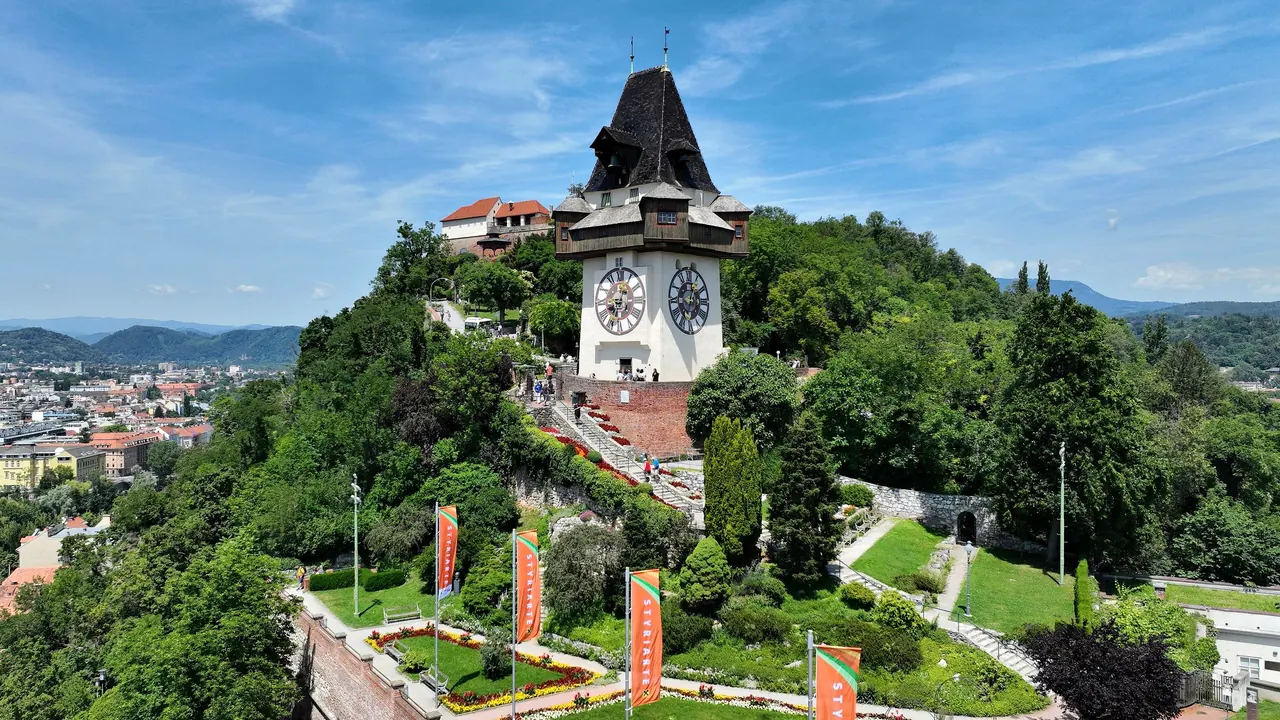
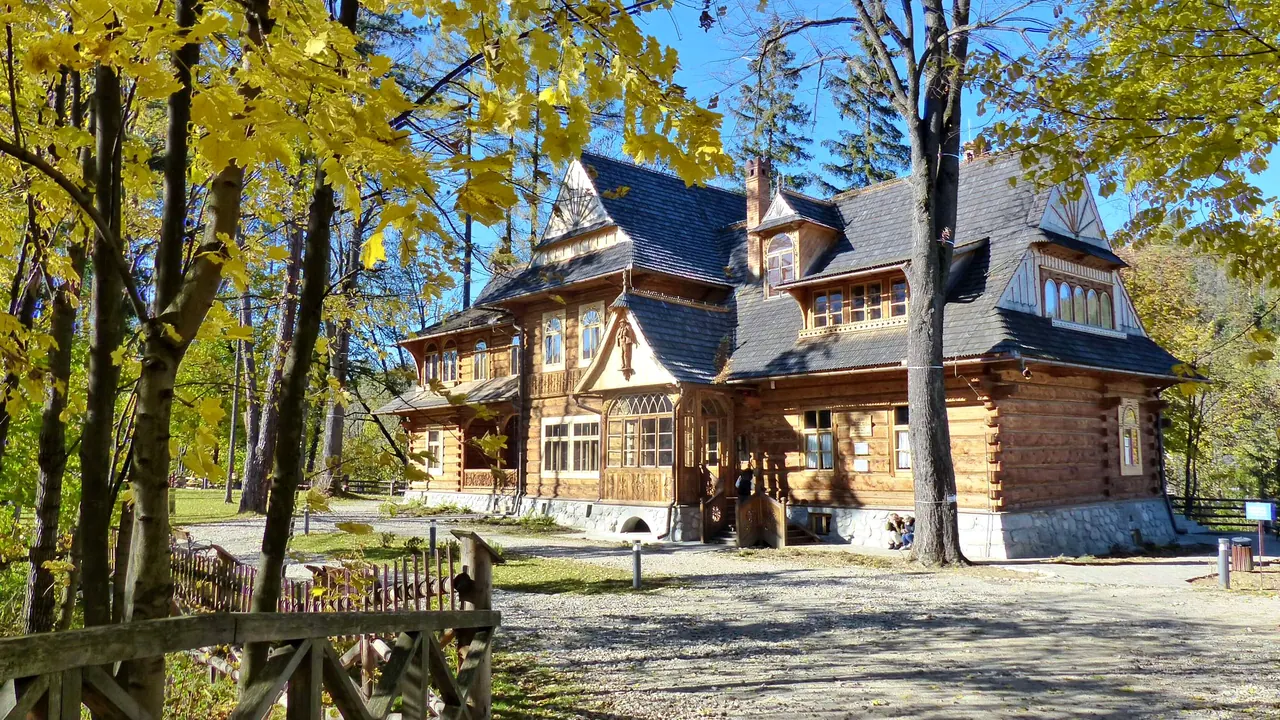
Photos: Graz by C.Stadler/Bwag, CC BY-SA 4.0, cropped; Zakopane by Wojciech Grzegorz Domagała, CC BY-SA 4.0, cropped.
Graz or Zakopane?
Our verdict in twelve categories, each scored against the same fixed benchmark cities, and the climate month by month, so you can choose for your trip.
Choose Graz for
- culture and sights
- live music and the arts
- getting around
Graz suits travellers who want a proper city with countryside close by. You get a well-preserved old town, an armoury and a Baroque palace, a working opera house and Styrian cooking with wine from the hills to the south. It is easy to walk and ride by tram, and it rewards two or three unhurried days followed by trips out to the vineyards and spa villages.
Choose Zakopane for
- prices
- nature and the outdoors
- wellness
Zakopane is for people who come for the mountains first and the town second. The Tatra national park begins where the streets end, so mornings can go on valley walks, glacial lakes or a summit, and evenings on a thermal soak and a meal at a highland inn. It costs less than Graz, but the town has less culture and less variety, and its roads and main street fill up at peak times.
Scoreboard
Twelve categories on one fixed scale from 0 to 100. The shaded stretch is the gap between the two.
Your match
Pick a travel style or drag the sliders, and both match scores follow your weighting.
Wins on culture and sights and live music and the arts with your weighting.
Wins on prices and nature and the outdoors with your weighting.
What matters to you?
Category by category
What the scores mean for a trip.
Beaches & swimming
Neither place is a swimming destination, and the difference is in the kind of water. Graz has gravel-pit lakes such as the Schwarzlsee, which reach a swimmable 23°C in high summer. Zakopane's Tatra lakes are cold and closed to bathers, so swimming there means the reservoir at Czorsztyn or, more likely, a heated thermal pool that stays warm all year.
Food & drink
Graz eats more broadly and better. Pumpkin seed oil, cold fried chicken salad and boiled pork with horseradish come from a proper regional cuisine. Two morning farmers' markets and the Sauvignon Blanc from the southern hills turn eating into a reason to visit.
Zakopane's highland food is hearty and has a strong character of its own: grilled oscypek with cranberry jam, kwaśnica soup and lamb by an open fire. But the range is narrow, and many menus on Krupówki repeat each other, so the best meals take some looking for on the side streets.
Culture & sights
Here the gap is wide. Graz has one of Central Europe's finest historic centres, from the arcaded courtyards around the Hauptplatz to the Mausoleum of Ferdinand II. Add the Landeszeughaus, still stacked with armour, Schloss Eggenberg and the modern contrast of the Kunsthaus, and you have two or three full days of sightseeing.
Zakopane's heritage is small but unlike anything in Graz. Its timber Zakopane-style villas, the Jaszczurówka chapel and the carved grave markers at Pęksowy Brzyzek all fit comfortably into one day.
Nightlife
Graz has the livelier evenings thanks to its students, though on a modest scale. Wine bars and pubs fill the Bermuda Triangle lanes, and Lend has artier bars across the river. Zakopane's going out is concentrated on Krupówki and depends on the season. It is rowdy at après-ski time and over New Year, and quiet midweek and among early-rising hikers. Each town loses its crowd at a different time of year: Graz in the summer break, Zakopane out of season.
Nature & outdoors
Zakopane is the mountain base, with true alpine scenery inside the national park at the end of town. Walkers have everything from flower-filled valleys like Chochołowska to the chained ridge of Orla Perć, and the Kasprowy Wierch cable car lifts them to almost 2,000m. Winter brings skiing and ski touring.
Graz is greener and gentler. You can ride a cable car up the Schöckl, cycle the Mur path or climb past waterfalls in the Bärenschützklamm. Serious alpine hiking in the Gesäuse means a two-hour drive.
Day trips
Outings from Graz lead into wine country and abbeys, while those from Zakopane lead to cities, castles and wooden churches. From Graz you can sit in a Buschenschank on the South Styrian Wine Road, see Riegersburg on its volcanic crag and Admont's great monastic library, or take the train to Maribor across the border. A car makes most of these easier.
Zakopane's big day out is Kraków, with the Wieliczka salt mine on the way. Closer to town are the painted larch church at Dębno and the log houses of Chochołów, and Spiš Castle and Levoča across the Slovak border make a strong heritage day. Weekend traffic can make any of them slow.
Good for families
Both towns are easy with children, in different ways. Graz offers city-style fun: the underground slide down the Schlossberg, the fairytale train in the rock tunnels and the FRida & freD children's museum, all within short tram rides.
Zakopane is about being outside. Families get the Gubałówka funicular and toboggan run, valley trails that work with a pushchair, sledging and ski schools in winter, and thermal water parks for wet days. Its crowds and traffic jams in school breaks are the main drawback, and Graz rarely has them.
Getting around
Graz is far easier to get around. The flat, largely pedestrian centre, the trams along the Herrengasse on one ticket and cycling beside the Mur mean you never need a car in town.
Zakopane's centre is walkable, and minibuses run reliably to Kuźnice and the valley entrances. The trouble is getting in and out: the road jams at peak times, the train from Kraków is slow, and parking is hard.
Shopping & style
Graz gives you more to browse. There are traditional shops on the Herrengasse and Sporgasse, a grand nineteenth-century department store with a rooftop view, and design and vintage shops in Lend. Its best buys are things to eat and drink, such as pumpkin seed oil, Schilcher rosé and craft chocolate.
Zakopane is mostly souvenirs. The worthwhile finds are handmade highland pieces from the market below Gubałówka: wool sweaters, sheepskins, carved boxes and wheels of oscypek.
Affordability
Zakopane is the cheaper stay. Guesthouses, inn meals and transport cost well below Western European mountain resorts, although prices jump at Christmas, New Year and in the school breaks. Graz charges normal Austrian prices for dinners and wine. Student lunch menus, a walkable centre and combined museum tickets help keep a short city stay reasonable.
Live music & performing arts
Graz has much more on stage. It has Austria's second-largest opera house, the Schauspielhaus and the Musikverein's concerts. Styriarte in early summer and steirischer herbst in autumn both draw visitors, and the music university feeds a strong jazz scene.
Zakopane's live culture is smaller and rooted in the region. It has the Witkacy Theatre, highland string bands playing in the inns and the August folklore festival, but only occasional classical concerts.
Wellness & relaxation
Zakopane does relaxation better. It grew up as a health resort, and the outdoor thermal pools at Białka Tatrzańska, Chochołów and Szaflary, steaming in view of the peaks, are less than half an hour away and part of most visitors' day. The calm, though, is on the quieter slopes, not in the town centre in high season.
Graz has no bathing tradition of its own, but it is a calm city to linger in. For a proper soak, Bad Blumau's Hundertwasser resort and the other Styrian spa villages are about an hour east.
When should you go?
Pick your month. The climate figures are measured averages, not a forecast.
Graz in July
Zakopane in July
Daytime high, °C
Rainfall in the month, mm
Where the figures come from
Zakopane has no rain gauge within 25 km of the centre, so its rainfall comes from a gridded climate dataset read at the city rather than from a gauge further away.
Zakopane's sunshine is measured 34 km from the centre, at Poprad / Tatry.
Temperature and rainfall are climate normals, averaged over the years shown. Graz: 1991-2020 normals, Graz Airport (7.9 km from centre). Zakopane: 1999-2020 (sunshine 1991-2020, rainfall 1991-2020) normals, Zakopane (0.2 km from centre).
Graz has the warmer summer, reaching about 27°C in July. That is warm enough for its bathing lakes, but rarely too hot for a day on foot. Rain peaks from June to August at around 125mm a month, but these are also the sunniest months, so wet days and bright ones tend to alternate. May, September and early October are the most comfortable months for walking the old town and the wine hills. Winters are cold, fairly dry and short on sunshine.
Zakopane stays cooler all year. July and August only reach about 21°C, which suits hiking well. June and July are the wettest months, with July close to 176mm, so build some slack into plans for the high mountains. September is drier and often the steadier month for the Tatras. From December to February daytime highs hover near 0°C, which makes it ski and sledging season rather than walking weather, and spring arrives later than in Graz.
Which traveller are you?
For a culture and arts trip, Graz is clearly the stronger choice. It has an intact Renaissance and Baroque old town, the Landeszeughaus armoury, Schloss Eggenberg and the Kunsthaus, plus a full opera and concert season. Zakopane's wooden villas and small museums take a single day.
For an outdoors trip, Zakopane wins. Granite peaks, glacial lakes and trails to Rysy and Giewont start at the edge of town, with skiing in winter. Graz has the Schöckl and gentle wine-hill walks, but real alpine ground is about two hours away.
On a trip with a tight budget, Zakopane goes further. Family guesthouses, filling inn meals, minibuses to the trailheads and park entry all cost little, especially in spring and autumn. Graz is fair for Austria, but dinners, wine and rooms cost noticeably more.
Before you go
| Measure | Graz | Zakopane |
|---|---|---|
| Official language | German, Austrian Sign Language | Polish |
| Currency | Euro (EUR) | Zloty (PLN) |
| Sockets | CF230 V, 50 Hz | CE50 Hz |
| Driving side | Right | Right |
| Time zone | UTC+1, UTC+2 in summer | UTC+1, UTC+2 in summer |
| Emergency number | 112 | 112 |
| Elevation | 353 m | 837 m |
| Main airport | Graz Airport (GRZ)9 km from centre26 non-stop destinations | Kraków John Paul II International Airport (KRK)87 km from centre132 non-stop destinations |
| Public holidays this year | 16 days | 14 days |
By the numbers
| Measure | Graz | Zakopane |
|---|---|---|
| City population | 306,971 | 25,770 |
| People per km² | 2,406 | 306 |
| Museums within 10 km | 29 | 18 |
| UNESCO World Heritage sites within 50 km | 1 | 2 |
Where else could you go?
Every comparison below shares a destination with this one, so you can follow Graz or Zakopane somewhere new.