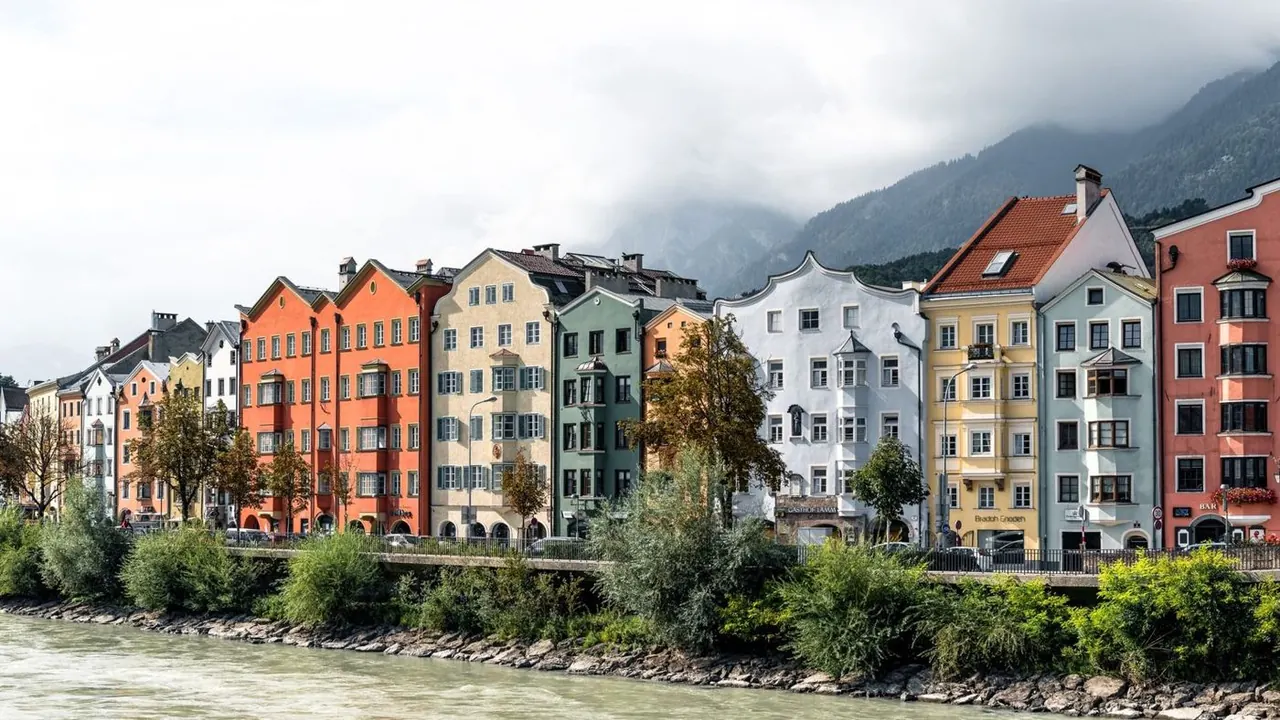
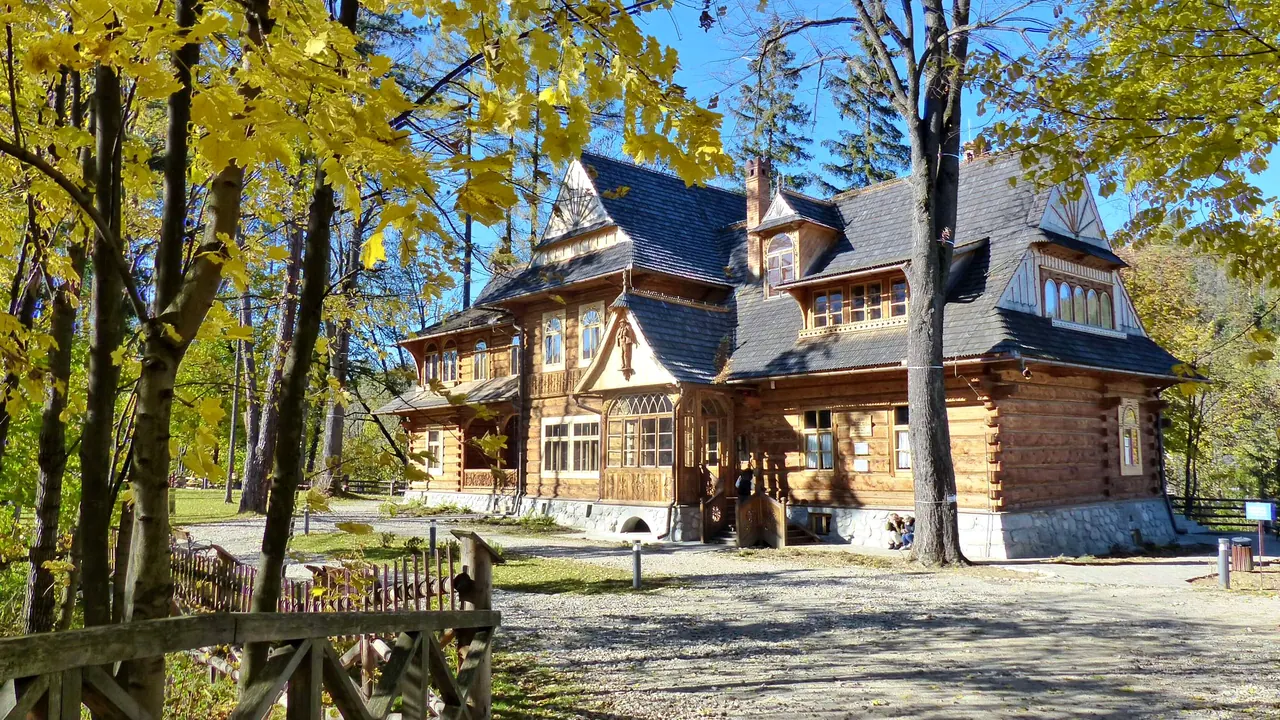
Photos: Innsbruck by Wolfgang Weiser, Pexels License; Zakopane by Wojciech Grzegorz Domagała, CC BY-SA 4.0, cropped.
Innsbruck or Zakopane?
Our verdict in twelve categories, each scored against the same fixed benchmark cities, and the climate month by month, so you can choose for your trip.
Choose Innsbruck for
- culture and sights
- getting around
- live music and the arts
Innsbruck suits travellers who want the mountains and a real small city in the same stay. It has a Habsburg old town with the Hofkirche and Ambras Castle, a funicular that climbs to high ridges straight from the centre, and trains that reach Munich, Salzburg and South Tyrol. It is the better choice for a first Alpine trip, for anyone without a car, and for people who want sightseeing between hikes or ski days.
Choose Zakopane for
- prices
- wellness
Choose Zakopane if the budget matters and you are going for the Tatras themselves. Guesthouses, inn meals and minibuses cost far less than in the Austrian Alps, and the thermal pools of the Podhale valley make an easy end to each day. The highland culture of wooden villas, smoked cheese and fiddle bands is unlike anything further west. In return, expect fewer sights and slower roads.
Scoreboard
Twelve categories on one fixed scale from 0 to 100. The shaded stretch is the gap between the two.
Your match
Pick a travel style or drag the sliders, and both match scores follow your weighting.
Wins on culture and sights and getting around with your weighting.
Wins on prices and wellness with your weighting.
What matters to you?
Category by category
What the scores mean for a trip.
Beaches & swimming
Neither is a place to swim, but Innsbruck at least has somewhere to go on a hot day. The Lanser See and the Natterer See on the plateaus above town reach about 22°C in high summer, and the Achensee is beautiful to look at, though chilly for swimming.
In Zakopane, bathing in the Tatra lakes is not allowed, and the reservoir at Czorsztyn is an hour's drive for a modest dip. Most visitors swim in the thermal pools instead, which do have the advantage of working in any month.
Food & drink
Both serve heavy, satisfying mountain food with a similarly narrow range. Innsbruck's is Austrian: Gröstl, Kaspressknödel, Speck and Kaiserschmarrn, best eaten at a hut reached by cable car, with Viennese-style coffee houses in the old town for strudel.
Zakopane's is Polish highland cooking: grilled oscypek from street stalls, kwaśnica soup and lamb in timber inns where musicians often play. Zakopane has more food on the street, while Innsbruck has more cafés and a small fine-dining tier.
Culture & sights
Innsbruck has much more to see. Its Habsburg past left the Golden Roof, the Hofburg and the Hofkirche, whose bronze figures around Maximilian I's tomb are the best single sight. Add Ambras Castle with its cabinet of curiosities and two solid museums, and you have enough for two or three days.
Zakopane's heritage is smaller and more specific: the wooden Zakopane style at Villa Koliba and the Jaszczurówka chapel, the Tatra Museum, and the carved grave markers of Pęksowy Brzyzek. It is charming and found nowhere else, but you can see it all in a day.
Nightlife
Neither is a nightlife town, and they differ more in character than in size. Innsbruck's evenings are shaped by its university, with bars and small clubs in the brick arches under the railway viaduct and wine bars in the old town. They stay open late at weekends all year round.
Zakopane's nights depend on the season and are rowdier. They centre on Krupówki, where pubs, a few dance clubs and inns fill up on ski weekends, and the town goes quiet midweek and out of season. Its New Year's Eve is a big event in Poland.
Nature & outdoors
Both have serious mountains at the end of the street, but nothing beats Innsbruck for access. The funicular and the Nordkette cable cars take you from the old town to a ridge at about 2,300m in under half an hour. The Karwendel lies behind it, the Stubai Glacier has skiing most of the year, and there are more ski areas, via ferratas and paragliding spots to choose from.
The Tatras are granite peaks with glacial lakes such as Morskie Oko, the climb to Rysy and the chained Orla Perć ridge, and they reward hikers well. The ski runs are short by comparison, though, and the famous trails get very crowded in high season.
Day trips
Innsbruck sits on the main Alpine rail lines, so it reaches further. Hall in Tirol is ten minutes away, Munich and Salzburg are each under two hours by train, and Bolzano and Merano lie over the Brenner Pass. You can visit three countries without a car.
Zakopane has good outings too: Kraków with the Wieliczka salt mine, the painted wooden church at Dębno, and Spiš Castle and Levoča across the Slovak border. Most of these are by road, though, and weekend traffic can make the journeys much longer.
Good for families
Both suit outdoor families equally well, and neither has big attractions built for children. In Innsbruck the highlights are the Alpenzoo with its ibex, bears and lynx, playgrounds by the mountain huts and swimming in the plateau lakes.
Zakopane has slides and a summer toboggan run on Gubałówka and valley trails that work with a pushchair. Its thermal water parks also deal with a rainy day better than anything in Innsbruck, where wet weather with small children takes more planning.
Getting around
Innsbruck is the easier place to manage without a car. The flat centre is easy to walk, trams and buses run out to Igls and the Stubai valley, the funicular starts at the edge of the old town, and regional trains leave the central station for towns along the valley.
In Zakopane, the pedestrianised centre and the minibuses to Kuźnice and the valley entrances work well once you have arrived. Getting there is the problem: the road jams on busy weekends, and the train from Kraków is scenic but slow.
Shopping & style
Innsbruck has a proper high street on Maria-Theresien-Strasse, crystal and jewellery in the old town arcades, loden jackets and dirndls, and excellent specialist ski and outdoor shops. Zakopane sells mostly souvenirs, but the market at the foot of Gubałówka has real highland crafts worth buying, such as sheep's-wool sweaters, sheepskins, carved boxes and wheels of oscypek. In both places shopping fills an afternoon at most.
Affordability
Zakopane is much the cheaper stay. Guesthouses, inn meals and transport cost little by Western Alpine standards, although rooms get noticeably dearer at Christmas, New Year and in the winter school breaks.
Innsbruck charges Western European prices with a resort premium on top, and an active trip gets expensive once you add lift passes. The guest and city cards help, and both places are cheapest in spring and autumn.
Live music & performing arts
Innsbruck has the fuller programme: opera, operetta and dance at the Tiroler Landestheater, concerts by the Tyrolean Symphony Orchestra, and in summer the Festival of Early Music, held in places such as the Spanish Hall at Ambras Castle. Zakopane's offer is smaller but more tied to the place, with the Witkacy Theatre, highland string bands in the inns and the International Festival of Mountain Folklore every August. Folk music lovers may prefer Zakopane's fiddles to Innsbruck's yodelling evenings.
Wellness & relaxation
Zakopane began as a health resort and still has the advantage, because hot water rises under the Podhale valley and supplies several large thermal complexes within half an hour. Innsbruck has no springs of its own. There, wellness means hotel spas in Igls and the plateau villages, mountain air and a sauna after a day outdoors, with the big thermal spas of the Ötztal and the Zillertal about an hour away.
Innsbruck does win on calm. The town is unhurried, while central Zakopane gets crowded in high season, so for a restful stay there choose a guesthouse on the quieter slopes.
When should you go?
Pick your month. The climate figures are measured averages, not a forecast.
Innsbruck in July
Zakopane in July
Daytime high, °C
Rainfall in the month, mm
Where the figures come from
Zakopane has no rain gauge within 25 km of the centre, so its rainfall comes from a gridded climate dataset read at the city rather than from a gauge further away.
Zakopane's sunshine is measured 34 km from the centre, at Poprad / Tatry.
Temperature and rainfall are climate normals, averaged over the years shown. Innsbruck: 1991-2020 normals, Innsbruck-Flughafen (3.3 km from centre). Zakopane: 1999-2020 (sunshine 1991-2020, rainfall 1991-2020) normals, Zakopane (0.2 km from centre).
Both are summer and winter destinations, but Innsbruck is warmer all year. In July highs reach about 26°C, so June to September is comfortable for walking and warm enough to swim in the plateau lakes. Zakopane peaks at about 21°C, which is ideal for hiking but never beach weather. Summer is also the wet season in both. Innsbruck's rain is heaviest in August, while Zakopane's comes earlier and harder, with about 176mm in July, so plan mountain days around afternoon storms.
Spring and autumn are good for walking around Innsbruck, with mild days in May and September. Zakopane stays cool well into May, so its hiking season really runs from June to September. In winter Zakopane hovers near freezing, with January highs around 0°C, while Innsbruck is a few degrees milder in town. In both places the cold months are mostly about skiing and warm water. Zakopane gets slightly more sun in high summer, and Innsbruck a little more in the darkest months.
Which traveller are you?
On a culture and arts trip, Innsbruck is the clear pick. Its compact Habsburg old town, Maximilian's tomb ringed with bronze figures in the Hofkirche and the curiosities at Ambras Castle fill two or three days. Zakopane's wooden-villa heritage takes about a day.
For a trip on a tight budget, Zakopane goes much further. Family-run guesthouses, filling highland meals, minibuses to the trailheads and national park entry all cost little. Innsbruck adds an Alpine resort premium to Western European prices.
On a relaxing and wellness trip, Zakopane has the edge because of the hot water under the Podhale valley. Outdoor pools at Chochołów or Białka Tatrzańska steam in the snow with Tatra views. Innsbruck relies on hotel saunas or spa complexes about an hour away.
Before you go
| Measure | Innsbruck | Zakopane |
|---|---|---|
| Official language | German, Austrian Sign Language | Polish |
| Currency | Euro (EUR) | Zloty (PLN) |
| Sockets | CF230 V, 50 Hz | CE50 Hz |
| Driving side | Right | Right |
| Time zone | UTC+1, UTC+2 in summer | UTC+1, UTC+2 in summer |
| Emergency number | 112 | 112 |
| Elevation | 574 m | 837 m |
| Main airport | Innsbruck Airport (INN)4 km from centre40 non-stop destinations | Kraków John Paul II International Airport (KRK)87 km from centre132 non-stop destinations |
| Public holidays this year | 16 days | 14 days |
By the numbers
| Measure | Innsbruck | Zakopane |
|---|---|---|
| City population | 132,499 | 25,770 |
| People per km² | 1,263 | 306 |
| Museums within 10 km | 28 | 18 |
| UNESCO World Heritage sites within 50 km | 1 | 2 |
Where else could you go?
Every comparison below shares a destination with this one, so you can follow Innsbruck or Zakopane somewhere new.
- Krakowvs Zakopane
- Munichvs Innsbruck
- Cortina d'Ampezzovs Innsbruck
- Salzburgvs Innsbruck
- Hallstattvs Innsbruck
- Veronavs Innsbruck