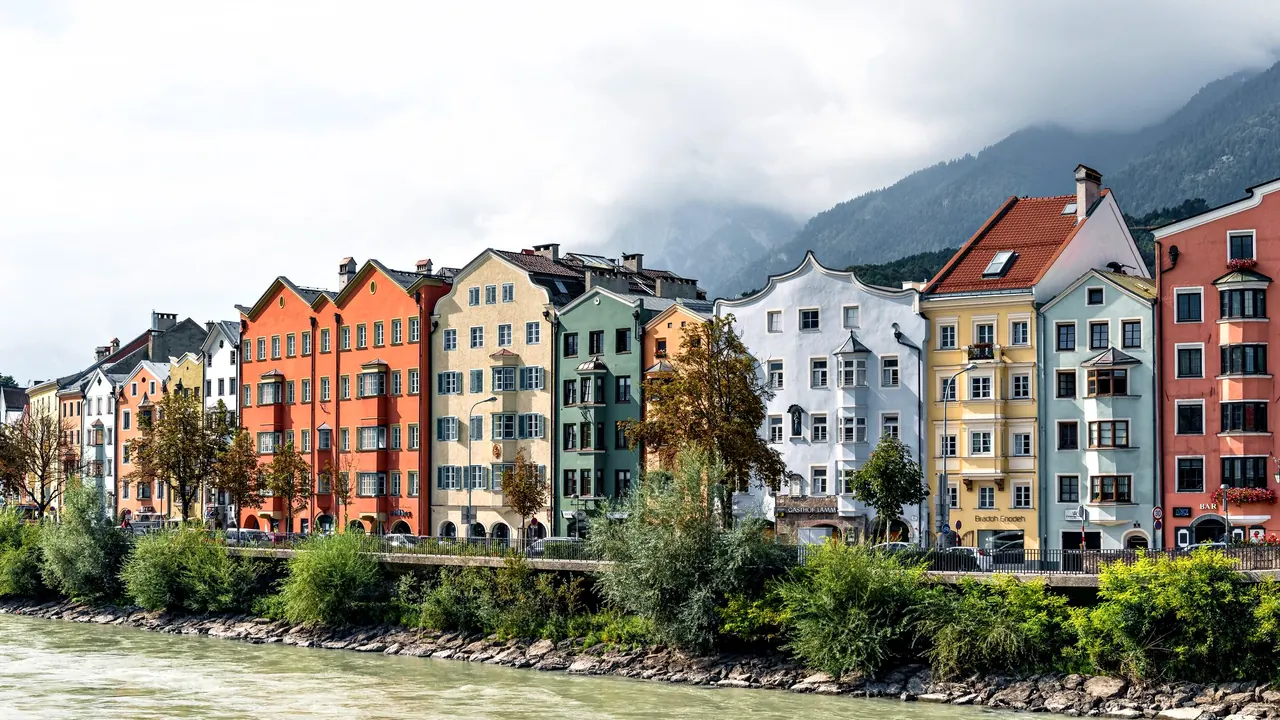
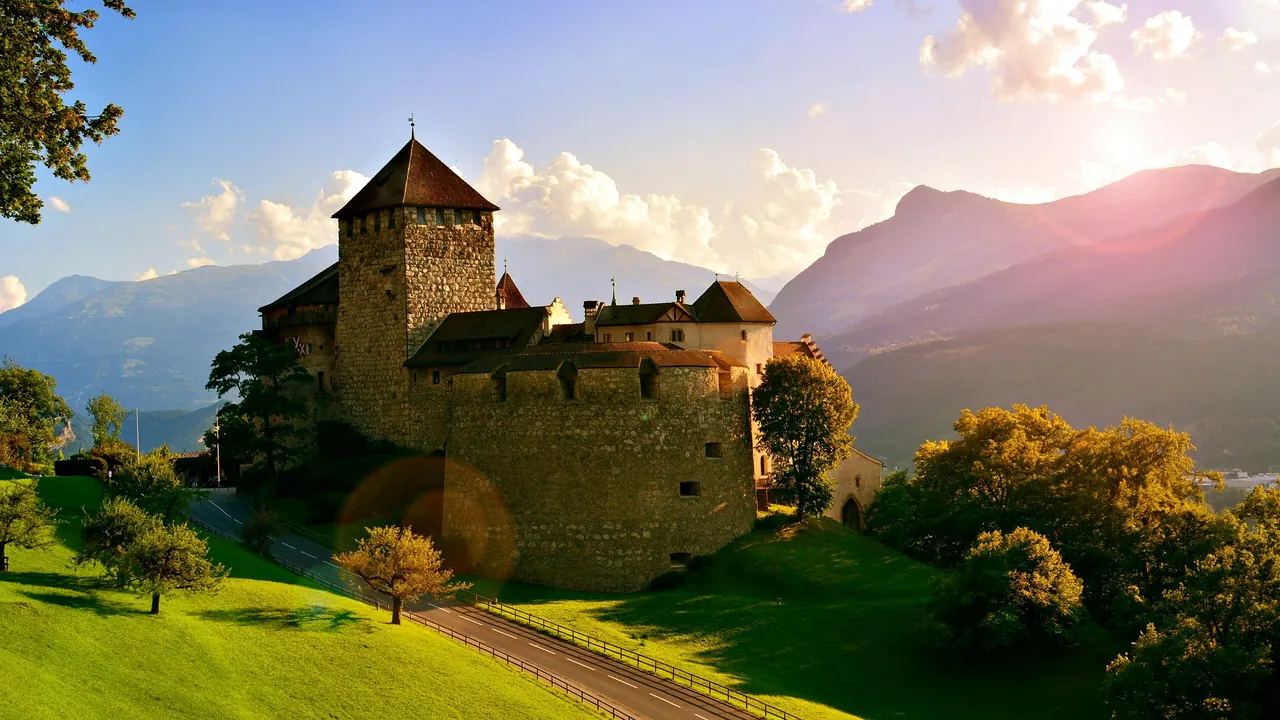
Photos: Innsbruck by Wolfgang Weiser, Pexels License; Vaduz by Justin LaBerge, CC BY 2.0, cropped.
Innsbruck or Vaduz?
Our verdict in twelve categories, each scored against the same fixed benchmark cities, and the climate month by month, so you can choose for your trip.
Choose Innsbruck for
- prices
- culture and sights
- nightlife
Innsbruck is the stronger choice for most trips. A funicular leaves from the edge of its Habsburg old town and links to the Nordkette cable cars, so high peaks are part of the city rather than a separate outing, and in winter ski buses run out to several areas that share one pass. It also has more to eat, see and do after dark, it costs noticeably less than Vaduz, and its rail links make it easy to arrive and to range further afield. Active travellers, families and anyone wanting a town with some life in it will find more here.
Choose Vaduz for
Vaduz does not lead in any category we score.
Vaduz suits a slower, quieter stay. Pick it if you want a small, orderly town where the trails start among the vineyards, an evening ends with a glass of the prince's Pinot Noir, and a morning can go on a fine modern art collection or a soak at Bad Ragaz. It works best for a few calm days with a car, and for travellers who are not watching the budget.
Scoreboard
Twelve categories on one fixed scale from 0 to 100. The shaded stretch is the gap between the two.
Your match
Pick a travel style or drag the sliders, and both match scores follow your weighting.
Wins on prices and culture and sights with your weighting.
Has no clear advantage with the weighting you have chosen.
What matters to you?
Category by category
What the scores mean for a trip.
Beaches & swimming
Neither town is a place to swim, but Innsbruck has the slight edge because its lakes are closer. The Lanser See and Natterer See sit on the plateaus just above the city and warm to about 22°C in high summer, which makes an easy family afternoon.
In Vaduz the Rhine is out of bounds for swimming, so the choice is the municipal open-air pools or a drive to the steep-sided Walensee or the shores of Lake Constance. Both are lovely, but each is an outing rather than a quick dip.
Food & drink
Innsbruck gives you more to choose from. Gröstl and Kaspressknödel taste best at a hut reached by cable car, the old town has Viennese-style coffee houses for strudel, and the student districts add cheaper international food. Avoid the restaurants around the Golden Roof, which mostly serve tour groups.
Vaduz has a handful of hotel dining rooms, a few places on the Städtle and village inns in the hills serving Käsknöpfle and autumn game. What it has that Innsbruck lacks is its own wine: Pinot Noir and Chardonnay from the vineyards below the castle, sold in town by the prince's estate.
Culture & sights
Innsbruck has far more to see. Its Habsburg past gives it the Hofburg, the Golden Roof and the Hofkirche, where Emperor Maximilian's tomb is guarded by its ring of bronze giants. Ambras Castle on the edge of town adds a Renaissance cabinet of curiosities, so the city easily fills two or three days.
Vaduz takes a single unhurried day. Its strength is modern art, in the black cube of the Kunstmuseum and the Hilti Art Foundation beside it, plus the National Museum and the Postage Stamp Museum. The castle frames every view but is closed to visitors.
Nightlife
Innsbruck's university gives it a modest but real night scene, centred on the bars and small clubs in the brick arches under the railway viaduct, which stay open late at weekends. In winter many visitors go to the après-ski in the nearby resorts instead. Vaduz has a few wine bars and hotel lounges on the Städtle and no clubs at all, so its own young people go to Feldkirch or Zurich.
Nature & outdoors
Both are true mountain bases, but Innsbruck is in a league of its own. The funicular from the old town links to cable cars that reach a ridge at about 2,300m in under half an hour, the Karwendel nature park starts just behind it, and the Stubai Glacier keeps snow for most of the year. A single pass covers several ski areas.
Vaduz works on a smaller, quieter scale. You can walk uphill through vineyards and beech forest from the centre, take the Fürstensteig path or the ridges of the Rätikon above Malbun, or cycle the flat Rhine dam path. Its skiing is a small family area, with bigger Swiss resorts about an hour away.
Day trips
Both make good bases, but they suit different travellers. Innsbruck sits on the main Alpine rail lines, so Munich, Salzburg and South Tyrol's Bolzano and Merano are all train rides, with Hall in Tirol ten minutes away and the Bavarian castles about two hours by car.
From Vaduz the outings are mostly smaller towns: Feldkirch twenty minutes away, the baroque abbey library at St Gallen, painted Appenzell, Chur and the vineyard villages of the Bündner Herrschaft, with Lindau and Zurich farther off. With no station in town, a car makes all of this much easier.
Good for families
Both are safe and clean, but Innsbruck gives children far more to do. The Alpenzoo, with its ibex, bears and wolves, is a funicular ride up from town, the huts have playgrounds and adventure trails, and the Swarovski Crystal Worlds have a big play tower. Rainy days still take some planning.
Vaduz has no zoo, aquarium or anything else aimed at children, and its museums lean towards modern art and stamps. Families spend their time at the pools, on gentle walks above Triesenberg or on Malbun's beginner slopes, which suits keen young walkers better than toddlers.
Getting around
Innsbruck is easier to get around. Its flat centre is walkable, trams and buses reach Igls and the Stubai valley, ski buses run in winter, and the central station has trains along the valley, so you can manage well without a car.
Vaduz is even smaller to walk, since the museums, cathedral and government buildings line one short pedestrian street. Its buses reach every village and climb to Malbun, but the town has no railway station, so longer journeys mean a change at Buchs, Sargans or Feldkirch, and many visitors end up hiring a car.
Shopping & style
Innsbruck is no shopping city, but it has a proper high street on Maria-Theresien-Strasse, old-town arcades selling Tyrolean crafts and crystal, and excellent outdoor and ski shops. Loden jackets, dirndls, Speck and schnapps are the things to buy. Vaduz has only a few shops on the Städtle selling watches, jewellery and stamps, and a bottle of local wine is the best thing to take home. Serious shoppers go to Zurich.
Affordability
Neither town is cheap, but Innsbruck is much easier on the wallet. It charges Western European prices with an Alpine premium that rises in ski season and drops in spring and autumn, and it has cards that bundle transport with lifts and sights, plus student cafés and bakeries for cheap meals.
Vaduz charges Swiss prices for everything from a room to a simple lunch, and with only a few hotels there is hardly anything at the budget end. Some visitors save by sleeping over the border in Austria.
Live music & performing arts
Innsbruck has a fuller programme. The Tiroler Landestheater stages opera, operetta, drama and dance through the season, and the summer Festival of Early Music, one of the oldest of its kind, uses settings such as the Spanish Hall at Ambras Castle. Folk evenings and small jazz venues fill out the rest.
Liechtenstein's calendar is smaller. The national stage is in neighbouring Schaan, the symphony orchestra plays only a short season, and Vaduz has a summer classical festival. There is usually something on during a week's stay, but little to plan a trip around.
Wellness & relaxation
The two are about equal here, but they relax you in different ways. Innsbruck's version is the hotel spa: saunas and steam rooms with mountain views up in Igls and the plateau villages, after a day on the trails. The big thermal complexes in the Ötztal and Zillertal are about an hour away.
Vaduz has the stiller streets and earlier nights. It also has the closer thermal bath: Bad Ragaz, about twenty-five minutes across the Rhine, has drawn bathers to the warm spring water from the Tamina gorge for centuries.
When should you go?
Pick your month. The climate figures are measured averages, not a forecast.
Innsbruck in July
Vaduz in July
Daytime high, °C
Rainfall in the month, mm
Where the figures come from
Vaduz's temperatures are measured 51 km from the centre, at Sigmarszell-Zeisertsweiler.
Vaduz has no rain gauge within 25 km of the centre, so its rainfall comes from a gridded climate dataset read at the destination rather than from a gauge further away.
Temperature and rainfall are climate normals, averaged over the years shown. Innsbruck: 1991-2020 normals, Innsbruck-Flughafen (3.3 km from centre). Vaduz: 1991-2020 normals, Sigmarszell-Zeisertsweiler (51.3 km from centre).
The two share a very similar Alpine year, but Innsbruck is a touch warmer and much sunnier in the cold months. Summer peaks at about 26°C in Innsbruck and 24°C in Vaduz. July and August are the only months when the lakes are warm enough for a swim, and they are also the wettest months in both places, with Innsbruck reaching 144mm in August. Late spring and September are the most comfortable time for walking the streets and hiking the high trails.
In December and January both towns sit around 4°C by day, with November and February only a few degrees milder, so the depth of winter suits skiing more than sightseeing. This is where the difference shows: Innsbruck gets well over half as much sun again in midwinter, while Vaduz has barely 52 hours in December, and its valley floor often lies under fog in late autumn while the heights above stay bright.
Which traveller are you?
On a trip on a tight budget, Innsbruck is the clear choice. It is not cheap, but its student cafés, bakeries and city cards bundling transport with lifts are a real help, while Vaduz charges Swiss prices and has almost no budget beds.
For a food and nightlife trip, Innsbruck offers mountain-hut lunches, coffee houses and student haunts by day, then bars and small clubs in the railway arches at night. Vaduz has solid Alpine cooking and local wine, but it goes quiet after dinner.
On a family trip with children, Innsbruck has the Alpenzoo up the funicular, hut playgrounds and the Swarovski play tower. Vaduz is safe and calm but offers nothing built for children, so it suits older children who are happy to hike.
Before you go
| Measure | Innsbruck | Vaduz |
|---|---|---|
| Official language | German, Austrian Sign Language | German |
| Currency | Euro (EUR) | Swiss Franc (CHF) |
| Sockets | CF230 V, 50 Hz | CJ230 V, 50 Hz |
| Driving side | Right | Right |
| Time zone | UTC+1, UTC+2 in summer | UTC+1, UTC+2 in summer |
| Emergency number | 112 | 112 |
| Elevation | 574 m | 455 m |
| Main airport | Innsbruck Airport (INN)4 km from centre40 non-stop destinations | Zürich Airport (ZRH)81 km from centre226 non-stop destinations |
| Public holidays this year | 16 days | 21 days |
By the numbers
| Measure | Innsbruck | Vaduz |
|---|---|---|
| Population | 132,499 | 5,668 |
| People per km² | 1,263 | 328 |
| Museums within 10 km | 28 | 7 |
| UNESCO World Heritage sites within 50 km | 1 | 3 |
Where else could you go?
Every comparison below shares a destination with this one, so you can follow Innsbruck or Vaduz somewhere new.
- Zurichvs Vaduz
- Lucernevs Vaduz
- Munichvs Innsbruck
- Cortina d'Ampezzovs Innsbruck
- Luganovs Vaduz
- Interlakenvs Vaduz