Serbia
Belgrade
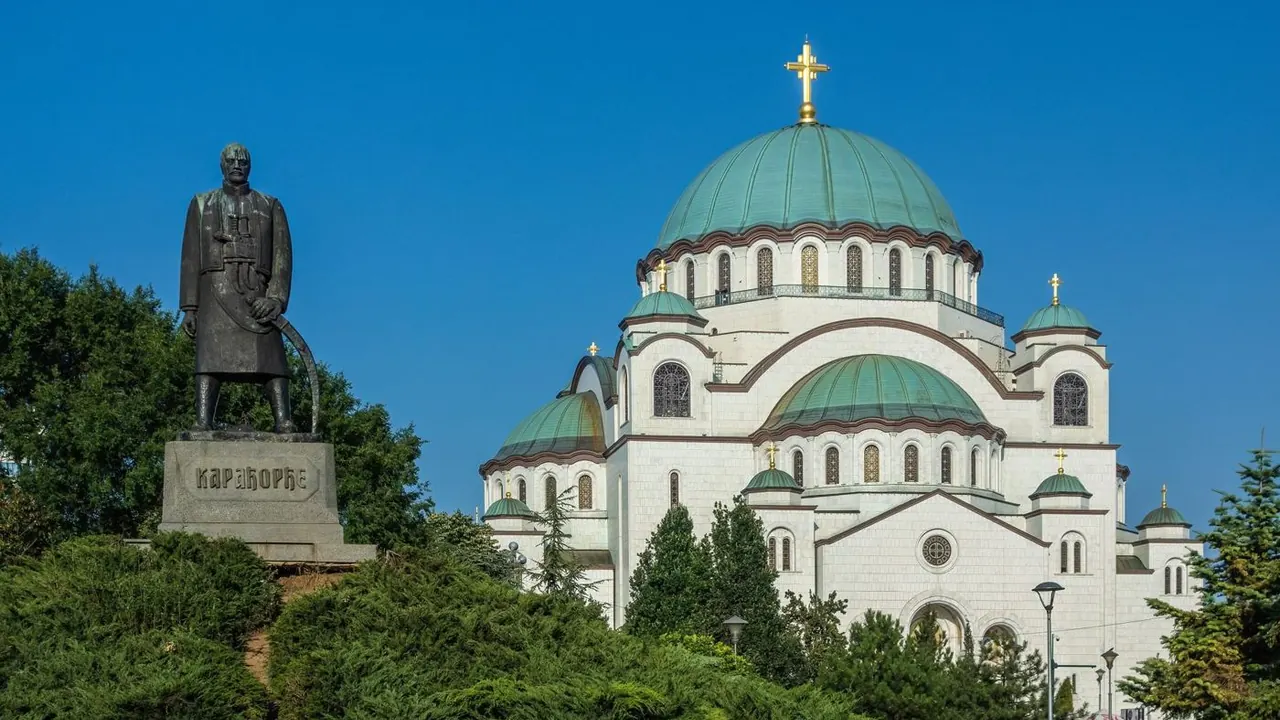
The Church of Saint Sava
- Nightlife80
- Affordable cities70
- Food & drink60
Photo: Petar Milošević, CC BY-SA 4.0, cropped
Match
53
Every category weighted equally
- Beach & sun52
- Culture & arts55
- Food & nightlife58
- Family trip51
- Outdoors52
- Relax & unwind49
- Shopping & style53
- On a budget55
Belgrade in twelve categories
Our verdict on each, scored 0 to 100 against the same fixed benchmark cities, so a score means the same thing on every page.
Beaches & swimming. Scores 40 out of 100.
Food & drink. Scores 60 out of 100.
Culture & sights. Scores 52 out of 100.
Nightlife. Scores 80 out of 100.
Nature & outdoors. Scores 50 out of 100.
Day trips. Scores 60 out of 100.
Good for families. Scores 45 out of 100.
Getting around. Scores 55 out of 100.
Shopping & style. Scores 42 out of 100.
Affordability. Scores 70 out of 100.
Live music & performing arts. Scores 55 out of 100.
Wellness & relaxation. Scores 30 out of 100.
Belgrade category by category
Beaches & swimming
40Belgrade is inland, but it has a proper summer bathing life. Ada Ciganlija, a river island turned into a lake on the Sava, has about 7km of gravel beaches, shallow lifeguarded water that reaches around 24°C in July and August, and it fills with locals from June to September. It feels more like a city lido than a seaside, with cafés, sports courts and a crowd that comes after work.
The Lido on Great War Island, across from Zemun, is a sandy Danube beach reached by boat in summer, wilder and quieter. Beyond these, swimming means pools. Nobody should come here for a beach vacation, but a summer visitor who wants a swim will find a good one.
Food & drink
60Eating in Belgrade is hearty, generous and built around the grill: ćevapi, pljeskavica and slow-roasted meats, with kajmak, ajvar and big shopska salads on the side. The kafana, a traditional tavern with long menus, rakija and often a band, is the heart of it, and Skadarlija and the older streets of Zemun keep the old style alive. Mornings start with burek from a bakery and yoghurt, and the café terraces of Dorćol and Vračar are full all day.
Zeleni Venac and Kalenić markets show the produce and are worth a morning. Fruit brandies are taken seriously and Serbian wine from Fruška Gora and the south is easy to find. Vegetarians and those wanting refined or international food will find the range thinner.
Culture & sights
52Belgrade's sights are interesting rather than grand. The Kalemegdan fortress, on the bluff where the Sava meets the Danube, layers Roman, Byzantine, Serbian, Ottoman and Austrian walls in a large park, and it is the one place every visitor goes. The domed Temple of Saint Sava is among the largest Orthodox churches anywhere, with a gold mosaic interior. The National Museum and the Museum of Yugoslavia, with Tito's mausoleum, are the strongest collections, and the Nikola Tesla Museum is small but popular.
The city was destroyed and rebuilt many times, so the old fabric is patchy: Austro-Hungarian facades along Knez Mihailova, the cobbled bohemian lane of Skadarlija, Ottoman traces in Dorćol, the Habsburg-era streets of Zemun and the bold socialist blocks of New Belgrade. Two or three days covers it.
Nightlife
80Going out is one of the main reasons people come. Nights start late and run until dawn. The signature is the splav, a floating club or bar moored along the Sava and Danube banks. They are busiest in summer, when the river is lined with music from turbo-folk to house. In winter the scene moves indoors, to basement clubs and bars in the centre and electronic nights in old industrial spaces.
Dorćol and the streets around Cetinjska and Strahinjića Bana are packed with cocktail bars and pubs that spill onto the pavement on warm nights. A kafana evening is its own kind of night out, with round after round of rakija at a long table. At the bigger clubs people book a table and order by the bottle rather than stand at the bar, and dress is often sharp. Crowds are sociable and weekends are loud. It suits groups and night owls more than anyone who wants a quiet drink and an early bed.
Nature & outdoors
50The landscape is shaped by two big rivers. Riverside promenades run for kilometres along the Sava and Danube, ideal for walking and cycling, and Great War Island is a protected wetland with herons and cormorants in sight of the fortress. Ada Ciganlija adds forest paths, rowing and wakeboarding, and Košutnjak and Topčider are wooded parks on the city's edge.
Avala, a forested hill with a tall television tower, is half an hour south. Fruška Gora, a low wooded ridge about an hour north, offers easy hiking among vineyards. The country's more dramatic scenery, such as the Iron Gates gorge on the Danube, is further than a comfortable day. Summers are hot and winters grey.
Day trips
60The best day out is north. Novi Sad, a relaxed Habsburg-era city with the Petrovaradin fortress above the Danube, is under an hour by fast train. Sremski Karlovci nearby is a small baroque town with wine cellars, and the Orthodox monasteries scattered across Fruška Gora can be combined with it for a day of churches and wine.
South-east along the Danube, the huge medieval fortress at Smederevo is about an hour away, and the Roman site of Viminacium a little further. Topola and the royal mausoleum at Oplenac make a quiet outing into the Šumadija wine country, and Golubac fortress at the mouth of the gorge is a long day by car. A car or tour helps for most of these.
Good for families
45Serbians are openly fond of children, and families eat out late together without fuss. Kalemegdan works well for a family afternoon, with ramparts to climb, a military museum with tanks outside and a small, old-fashioned zoo inside the fortress walls. In summer Ada Ciganlija is the easiest day, with shallow lake water, playgrounds and bike hire.
Beyond that there is little built for children: no theme park, aquarium or major science museum. Traffic is heavy, drivers impatient, pavements uneven and parked cars crowd them, so pushchairs are hard work. Summers are hot. It suits families with older children who like history and outdoors more than those with toddlers.
Getting around
55The core of a visit is walkable: Kalemegdan, Knez Mihailova, Dorćol, Skadarlija and the Republic Square area sit within a short walk, though with some steep slopes up from the rivers. Zemun and New Belgrade are a bus ride or a long riverside walk across the Sava.
Public transport is trams, trolleybuses and buses, with no metro. It covers the city widely but is crowded, slowed by heavy traffic and not easy for a visitor to decode. Taxis and ride-hailing are plentiful and widely used, and agreeing a metered fare matters. A car is unnecessary in the city and a burden given the parking.
Shopping & style
42Knez Mihailova, the pedestrian spine of the old centre, is the main shopping street, lined with international chains and a few bookshops. Large malls on the river and in New Belgrade carry the usual brands. Luxury fashion is thin.
The more interesting finds are local: young designers' boutiques in Dorćol and Vračar, Kalenić and Zeleni Venac markets for honey, ajvar, rakija and cheese, and the Zemun market. Traditional crafts such as embroidered textiles, opanci leather shoes and woollen goods turn up in souvenir shops around Kalemegdan. It is a city for browsing and food gifts rather than a shopping trip.
Affordability
70Belgrade is good value for a European capital. Eating at a kafana or grill, coffee on a terrace and rounds of beer or rakija cost far less than in Western Europe, taxis are cheap enough to use freely, and many museums and the fortress park cost little or nothing.
Accommodation is the larger cost: central hotels and apartments in Dorćol or around Knez Mihailova are priced closer to Central European cities than the rest of Serbia, and international-style restaurants and clubs on the river charge more. Even so, a visitor's daily spend stays modest.
Live music & performing arts
55The National Theatre on Republic Square stages opera and ballet alongside drama through the season, and the Belgrade Philharmonic plays at the historic Kolarac hall. Madlenianum in Zemun adds opera and musicals, and the Sava Centre hosts larger touring shows. Most theatre is in Serbian, so music and dance are the easier way in.
The long-running BITEF festival of experimental theatre and BEMUS music festival give the autumn calendar some weight. Day to day, the most characterful live music is in the kafanas of Skadarlija and Zemun, where tamburica and old-town bands play at the tables, and the city has a few long-established jazz and rock clubs.
Wellness & relaxation
30Belgrade has no bathing culture of its own. Wellness means hotel spas and a few day spas, and Serbia's historic spa towns lie several hours to the south. The city's restorative side is its pace: long, unhurried coffees on terraces are a local habit, and an afternoon by the lake on Ada Ciganlija or along the Danube promenade is genuinely calm.
The centre is loud, traffic is heavy, nights run late and smoking is common indoors, so this is a city to enjoy energetically rather than to rest in.
When should you go?
Pick a month to see what it is like. The climate figures are measured averages, not a forecast.
Belgrade in July
Daytime high, °C
Rainfall in the month, mm
The whole year
Shaded against this city’s own year: the deepest cell is its best month for that figure and the palest its weakest.
Temperature and rainfall are climate normals, averaged over the years shown. Belgrade: 1991-2020 normals, Beograd (2.1 km from centre).
Before you go
| Measure | Belgrade |
|---|---|
| Official language | Serbian |
| Currency | Serbian Dinar (RSD) |
| Sockets | CF230 V, 50 Hz |
| Driving side | Right |
| Time zone | UTC+1, UTC+2 in summer |
| Emergency number | Police 92/192, ambulance 94/194, fire 93/193 |
| Elevation | 117 m |
| Main airport | Belgrade Nikola Tesla Airport (BEG)12 km from centre125 non-stop destinations |
| Public holidays this year | 11 days |
By the numbers
| Measure | Belgrade |
|---|---|
| City population | 1,197,714 |
| People per km² | 3,327 |
| Museums within 10 km | 65 |
| UNESCO World Heritage sites within 50 km | 0 |
Compare Belgrade with
Every comparison with a written verdict behind it.
- Brasov
- Bratislava
- Bucharest
- Budapest
- Dubrovnik
- Kotor
- Ljubljana
- Mostar
- Plovdiv
- Sarajevo
- Skopje
- Sofia
- Split
- Tirana
- Vienna
- Zadar
- Zagreb