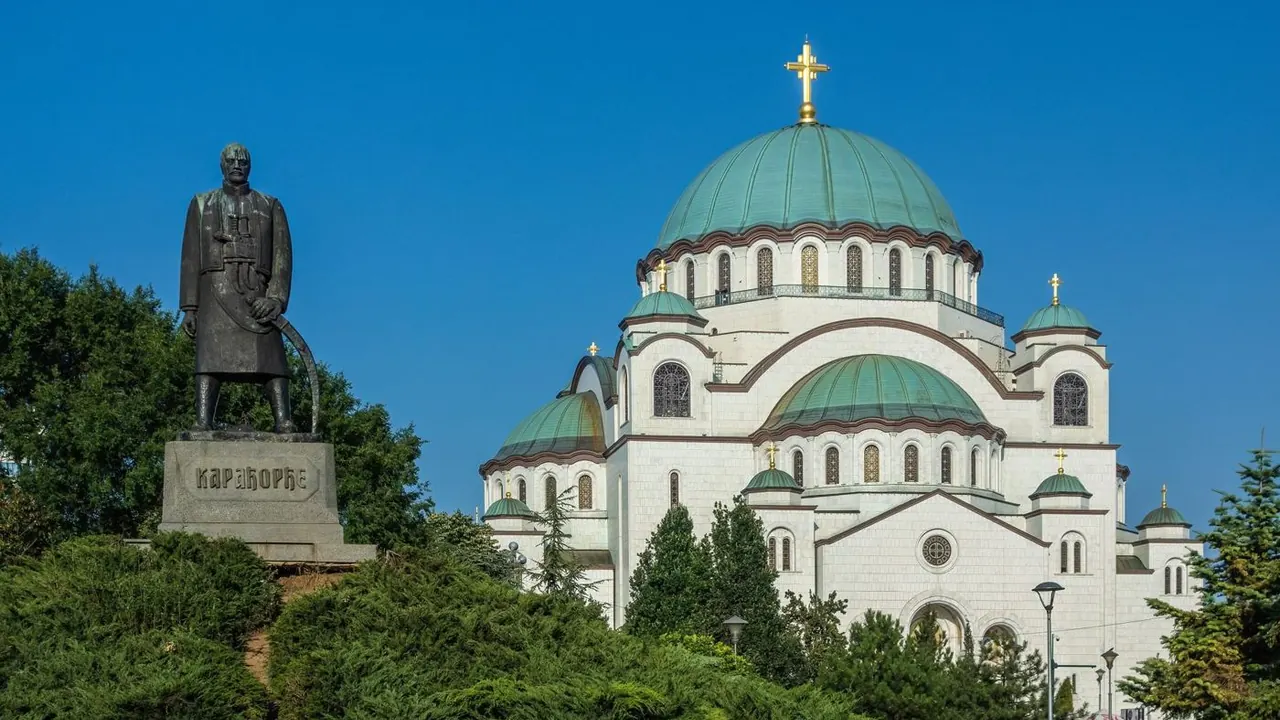
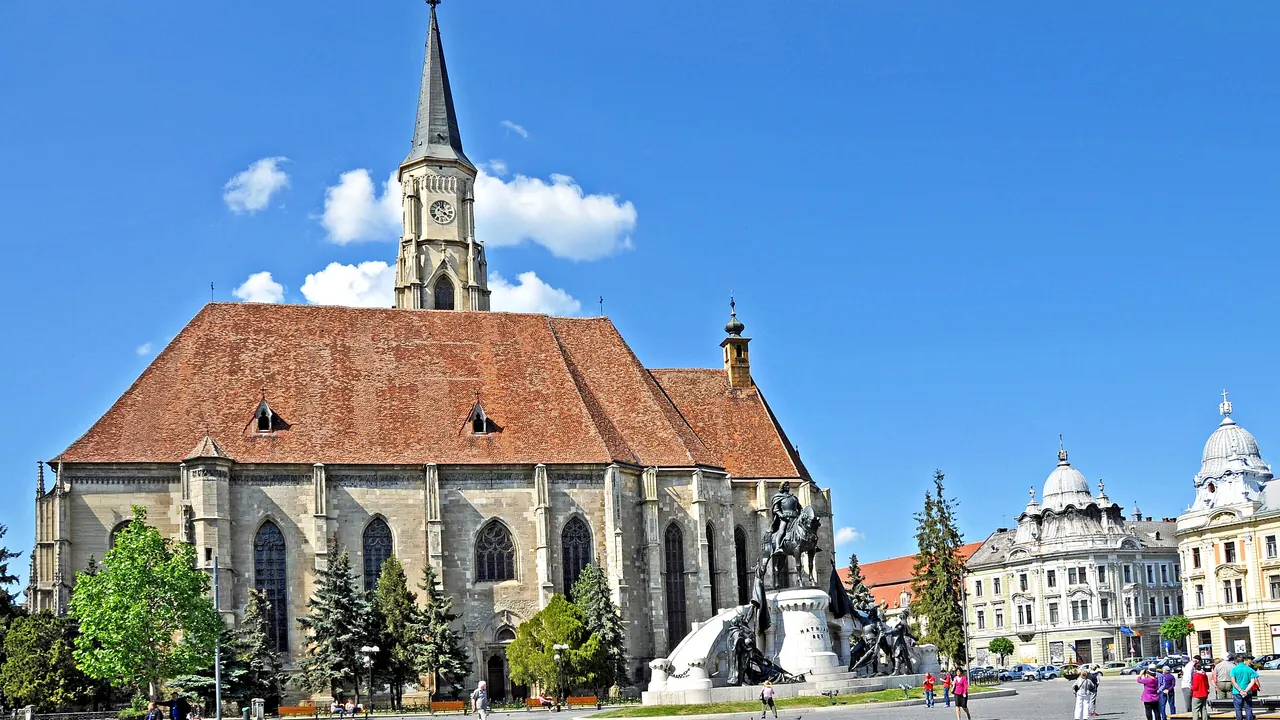
Photos: Belgrade by Petar Milošević, CC BY-SA 4.0, cropped; Cluj-Napoca by Dennis G. Jarvis, CC BY-SA 2.0, cropped.
Belgrade or Cluj-Napoca?
Our verdict in twelve categories, each scored against the same fixed benchmark cities, and the climate month by month, so you can choose for your trip.
Choose Belgrade for
- beaches
- nightlife
- food and drink
Belgrade is the pick for a trip built around evenings: splav clubs moored on the Sava and Danube, long kafana nights with rakija and a band, and grilled meat at shared tables. It also has the bigger sights, at Kalemegdan and the Temple of Saint Sava, and a lake beach at Ada Ciganlija for hot summer afternoons. Groups of friends and night owls will get the most out of it.
Choose Cluj-Napoca for
- nature and the outdoors
- getting around
- prices
If you'd rather spend your days outside, Cluj-Napoca makes more sense. The Făget woods start at the edge of town, Turda Gorge and the salt mine are close by, and the Apuseni Mountains lie to the west for anyone with a car. The flat old centre around Piața Unirii, opera and theatre in two languages, and a student bar scene make it a calmer, smaller base for exploring Transylvania.
Scoreboard
Twelve categories on one fixed scale from 0 to 100. The shaded stretch is the gap between the two.
Your match
Pick a travel style or drag the sliders, and both match scores follow your weighting.
Wins on beaches and nightlife with your weighting.
Wins on nature and the outdoors and getting around with your weighting.
What matters to you?
Category by category
What the scores mean for a trip.
Beaches & swimming
Neither city is on the coast, but Belgrade has a real summer swimming habit. Ada Ciganlija's gravel shores, on a lake in the Sava, work like a huge city lido with lifeguards and shallow water, and the sandy Lido on Great War Island is a short boat ride away.
Cluj-Napoca has nothing like this. On a hot day the best it offers is a float in the salt lakes at Turda, about forty minutes south, or a reservoir on the edge of the city. That makes a pleasant afternoon, not something to plan a trip around.
Food & drink
Belgrade is the better place to eat, mostly because the kafana turns a meal into an occasion. You get grilled ćevapi and pljeskavica with kajmak, rakija by the round and sometimes a band, in Skadarlija or old Zemun. Burek breakfasts and the Kalenić and Zeleni Venac markets add to it.
Cluj-Napoca's Transylvanian cooking, where Romanian and Hungarian dishes meet, is just as filling, with varză à la Cluj, sour ciorbă and papanași. Its specialty coffee around Piața Muzeului is a real strength, but there is less to explore beyond that, and a few days covers it. Vegetarians will find both cities heavy on meat.
Culture & sights
Belgrade has the bigger headline sights: the Kalemegdan fortress, with walls from many eras above the meeting of two rivers, the huge Temple of Saint Sava, and the Museum of Yugoslavia with Tito's mausoleum. Its streets mix Habsburg, Ottoman and socialist buildings rather than forming one continuous old town.
Cluj-Napoca is the opposite. It has a compact, handsome centre around Gothic St Michael's Church on Piața Unirii, but no single landmark to match Kalemegdan. Its best visit is the open-air section of the Ethnographic Museum in the Hoia hills, which shows rural Transylvania in a way Belgrade's museums do not.
Nightlife
This is where the two cities differ most. In Belgrade, going out is a reason to visit in itself: floating splav clubs on the Sava and Danube, the crowded bar streets of Dorćol and a habit of staying out until dawn. At the bigger clubs people book tables and dress sharply.
Cluj-Napoca's nights are driven by its students, with cellar bars and terraces around Piața Muzeului, cheap bars near the campuses and a few electronic clubs. It is good fun for a weekend but comes down to a few streets, and it goes quiet in summer, just when Belgrade's river clubs are busiest.
Nature & outdoors
Cluj-Napoca has the better outdoors. Forest begins at the edge of the city in Făget, Turda Gorge is a real canyon hike within an hour, and the Apuseni Mountains to the west have caves, karst plateaus and beech forest. Băișoara adds small ski slopes in winter.
Belgrade's nature is gentler and flatter and built around its rivers. It has long promenades for cycling, the wetland of Great War Island, and wooded parks at Košutnjak and Avala. Fruška Gora has easy walks among vineyards, but nothing near Belgrade matches a gorge or a mountain range.
Day trips
Both cities have a good choice of outings, but they are different in character. From Belgrade the easy win is Novi Sad and its Petrovaradin fortress by fast train, which you can combine with baroque Sremski Karlovci and the Fruška Gora monasteries. The Danube fortress at Smederevo and Roman Viminacium lie to the south-east.
Cluj-Napoca's trips lean underground and rural: the huge Turda Salt Mine with its lake, the Bánffy Castle at Bonțida, the village of Rimetea and Alba Iulia's star-shaped citadel. Trains are slow, so a car helps more from Cluj, while Belgrade's best day trip works without one.
Good for families
For families, the choice comes down to the kind of day out each city offers. Belgrade's is history that children can climb on: the ramparts of Kalemegdan, the tanks outside the military museum and the old-fashioned zoo inside the fortress walls. In summer there are shallow lake swims, playgrounds and bike hire at Ada Ciganlija. Heavy traffic and crowded, uneven pavements make pushchairs hard work, so the city suits older children best.
Cluj-Napoca's flat, compact centre is easier on foot, and Central Park has rowing boats and playgrounds. Its big outing is the Turda Salt Mine, with a Ferris wheel and play areas deep underground. Beyond that there isn't much for children, and most families treat Cluj as one stop on a wider Transylvanian trip.
Getting around
Both centres are walkable, but in different ways. In Cluj-Napoca most things are within twenty minutes of Piața Unirii on flat ground. Belgrade's core climbs steeply up from the rivers, and Zemun and New Belgrade are across the Sava.
Neither city has a metro. Belgrade's trams and buses are crowded and hard for a visitor to work out, so taxis do much of the work. Cluj's buses are simpler, but leaving the city is harder, because slow trains make a hired car the practical choice.
Shopping & style
Belgrade gives a browser more ground to cover. Knez Mihailova, the pedestrian street through the old centre, has the chains and a few bookshops, and the malls in New Belgrade and by the river carry the usual brands. Young designers have small boutiques in Dorćol and Vračar, and the Kalenić and Zeleni Venac markets sell food gifts such as honey, ajvar and rakija.
Cluj-Napoca has less to offer. What it does well is Transylvanian folk craft, such as embroidered blouses, painted ceramics and carved wood, found at folk-art fairs and the ethnographic museum's shop. The Christmas market on Piața Unirii is the city's busiest time for shopping.
Affordability
Day-to-day costs are much the same in both, and both are well below Western Europe. In Belgrade the bargains are eating and drinking at kafanas and using taxis freely, though central rooms cost more than elsewhere in Serbia.
In Cluj-Napoca opera and theatre seats are notably cheap, but rooms sell out and prices climb during the big summer festivals, so your dates matter more there.
Live music & performing arts
The two are evenly matched for live music and theatre, but they offer different things. Belgrade has opera and ballet at the National Theatre, the Philharmonic at Kolarac hall, the BITEF and BEMUS festivals in autumn, and tamburica bands playing at kafana tables.
Because Cluj-Napoca has both Romanian and Hungarian cultures, it has Romanian and Hungarian opera houses and theatres side by side, and tickets are easy to get. In summer it hosts some of Eastern Europe's largest music festivals. In both cities plays are in the local language, so music and dance are easier for visitors.
Wellness & relaxation
Neither is a place for a proper restful break. Both rely on hotel spas and neither has a bathing tradition of its own. In Belgrade the calm comes from long terrace coffees and lakeside afternoons at Ada Ciganlija, against a centre that is loud and late, with smoking common indoors.
Cluj-Napoca moves at a slower pace, and it has one unusual cure nearby: the salt air of the Turda mine and the salt lakes where you can float in summer.
When should you go?
Pick your month. The climate figures are measured averages, not a forecast.
Belgrade in July
Cluj-Napoca in July
Daytime high, °C
Rainfall in the month, mm
Temperature and rainfall are climate normals, averaged over the years shown. Belgrade: 1991-2020 normals, Beograd (2.1 km from centre). Cluj-Napoca: 1991-2020 normals, Cluj-Napoca (2.4 km from centre).
Belgrade is the warmer of the two all year. The best weeks for walking are in May, early June and September, at around 24°C. July and August reach 30°C and are long and sunny, which is good for Ada Ciganlija but tiring in the streets. Winters are grey and cool rather than harsh.
Cluj-Napoca stays a few degrees cooler, so July and August, at about 27°C, are still comfortable for sightseeing and hiking, and spring and autumn are best for the hills. Its winters are colder, near freezing in January. Both cities get their heaviest rain in June, around 90mm.
Which traveller are you?
For a food and nightlife trip, Belgrade is the clear choice. Splav clubs on the rivers, the bar streets of Dorćol and kafana evenings of grilled meat and rakija carry on until dawn. In Cluj-Napoca the student bars fill only a few streets.
On an outdoors trip, choose Cluj-Napoca. The Făget woods begin at the city's edge, Turda Gorge makes a good half-day hike and the Apuseni Mountains have caves and beech forest. Belgrade's nature is mostly river promenades and gentle wooded parks.
On a beach and sun trip, neither city has a coast, but Belgrade comes closer. Its summers are hotter and sunnier, and Ada Ciganlija's lifeguarded gravel shores make a proper lido day. Cluj-Napoca offers little more than an afternoon in Turda's salt lakes.
Before you go
| Measure | Belgrade | Cluj-Napoca |
|---|---|---|
| Official language | Serbian | Romanian |
| Currency | Serbian Dinar (RSD) | Romanian Leu (RON) |
| Sockets | CF230 V, 50 Hz | CF230 V, 50 Hz |
| Driving side | Right | Right |
| Time zone | UTC+1, UTC+2 in summer | UTC+2, UTC+3 in summer |
| Emergency number | Police 92/192, ambulance 94/194, fire 93/193 | 112 |
| Elevation | 117 m | 356 m |
| Main airport | Belgrade Nikola Tesla Airport (BEG)12 km from centre124 non-stop destinations | Avram Iancu Cluj International Airport (CLJ)7 km from centre53 non-stop destinations |
| Public holidays this year | 11 days | 17 days |
By the numbers
| Measure | Belgrade | Cluj-Napoca |
|---|---|---|
| City population | 1,197,714 | 286,598 |
| People per km² | 3,327 | 1,640 |
| Museums within 10 km | 65 | 6 |
| UNESCO World Heritage sites within 50 km | 0 | 0 |
Where else could you go?
Every comparison below shares a destination with this one, so you can follow Belgrade or Cluj-Napoca somewhere new.
- Sibiuvs Cluj-Napoca
- Sarajevovs Belgrade
- Brasovvs Cluj-Napoca
- Mostarvs Belgrade
- Kotorvs Belgrade
- Dubrovnikvs Belgrade