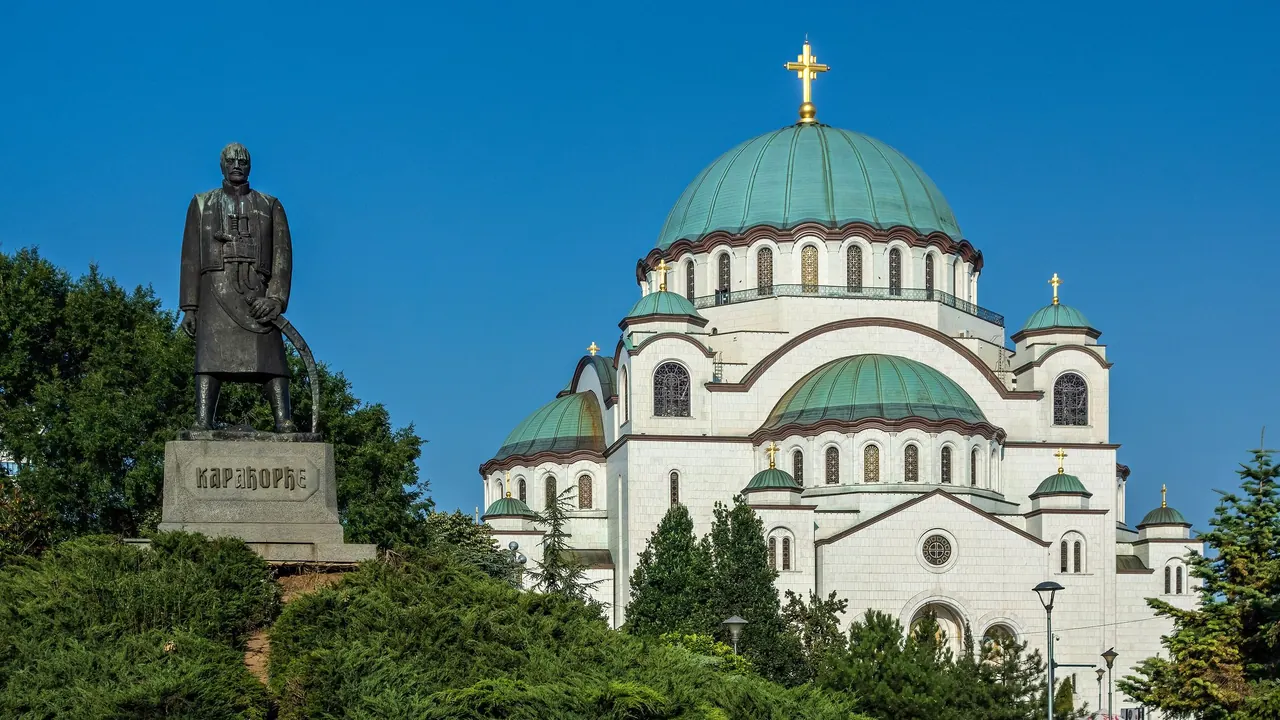
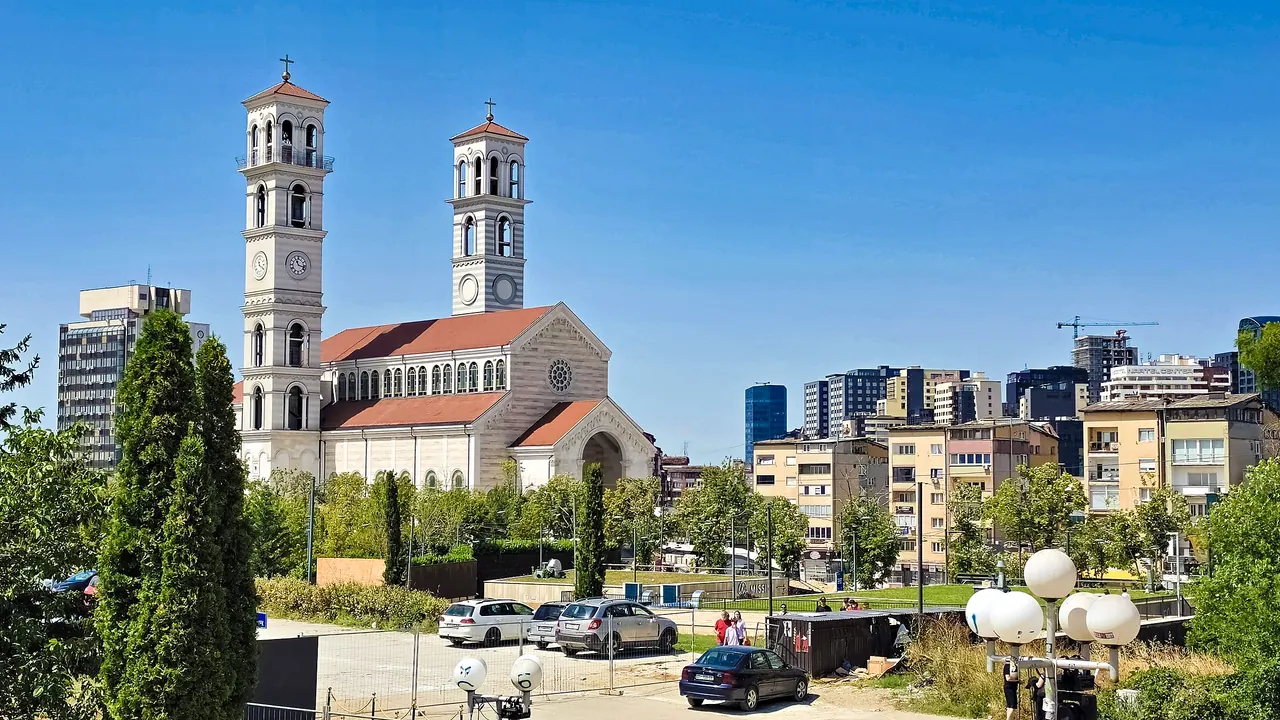
Photos: Belgrade by Petar Milošević, CC BY-SA 4.0, cropped; Pristina by Daciana Cristina Visan, Pexels License.
Belgrade or Pristina?
Our verdict in twelve categories, each scored against the same fixed benchmark cities, and the climate month by month, so you can choose for your trip.
Choose Belgrade for
- nightlife
- beaches
- live music and the arts
Belgrade suits the traveller who wants a capital with plenty going on after dark. The river clubs, the kafana evenings and the cocktail streets of Dorćol make going out a reason to come in itself, and the city has more by day as well: the Kalemegdan fortress, stronger museums, opera and ballet at the National Theatre, and a summer swim at Ada Ciganlija. It is the better pick for groups, night owls and anyone who wants a few full days in the city itself.
Choose Pristina for
- prices
- nature and the outdoors
- day trips
Pristina rewards a different kind of visitor, one who is more curious about the region than about the city. Its own sights take a day, but it makes a cheap, easy base for Prizren, the frescoed monasteries at Gracanica, Peja and Decani, and the mountains of Rugova and Sharr. Travellers on a tight budget, or those passing through the Balkans by bus, will get more from it than anyone hoping for a lively capital.
Scoreboard
Twelve categories on one fixed scale from 0 to 100. The shaded stretch is the gap between the two.
Your match
Pick a travel style or drag the sliders, and both match scores follow your weighting.
Wins on nightlife and beaches with your weighting.
Wins on prices and nature and the outdoors with your weighting.
What matters to you?
Category by category
What the scores mean for a trip.
Beaches & swimming
Belgrade has a real summer swimming life and Pristina does not. Ada Ciganlija gives the city kilometres of gravel shore on a calm, warm, lifeguarded lake, and the sandy Danube beach on Great War Island is a quieter alternative across the water.
Pristina's only option is Lake Batlava, a reservoir about forty minutes' drive away, plus hotel pools, and the Adriatic is a separate trip of several hours. In Belgrade a swim fits easily into an afternoon. In Pristina you have to set aside a day for one.
Food & drink
Belgrade eats with more range and ceremony. The kafana, with its long menu, rakija and band, gives a meal a sense of occasion, and the markets at Zeleni Venac and Kalenić, wine from Fruška Gora and the café terraces of Dorćol and Vračar add more variety than Pristina can match.
Pristina's strength is the macchiato and the hours spent over it, along with slow-baked flija and clay-pot tavë that you will not find on Belgrade grill menus. Beyond those the choice narrows quickly, so it suits a short stay better than a week of eating out. In both cities vegetarians and diners after refined cooking will struggle.
Culture & sights
Belgrade has more to see and keeps a visitor busy for two or three days. Kalemegdan's layered walls above the meeting of the rivers, the vast gold-mosaic interior of Saint Sava, the National Museum and the Museum of Yugoslavia with Tito's mausoleum make a much fuller programme.
Pristina's centre takes a day: the Ottoman quarter around the Imperial Mosque and clock tower, the Emin Gjiku ethnographic houses and the odd, latticed National Library. Its most important sight is Gracanica Monastery just outside town, and people tend to visit for the city's recent history more than for its monuments.
Nightlife
Belgrade's nightlife is one of the main reasons people visit, and Pristina's is not. The splavs moored along the Sava and Danube play everything from turbo-folk to house through the summer, and in winter the scene moves into basements and old industrial spaces. Big clubs work on table bookings and bottle service, and people dress up.
Pristina's evenings are young and friendly but small. Its café-bars around the pedestrian boulevard and the student quarter stay full until late on warm weekends, with a few lounge bars and DJs. It is good for a relaxed drink on a terrace, but not for a night that ends at dawn.
Nature & outdoors
The two are close here, but the outdoors is very different. Belgrade's is built around water: long promenades for walking and cycling, the herons of Great War Island, and rowing and wakeboarding on Ada Ciganlija, with gentle hikes on Fruška Gora about an hour away.
Pristina has the oak and beech forest of Germia right at its edge and the limestone pools of Mirusha within an hour. It also has a route to proper mountains, with ridge walks and via ferrata in Rugova and high hiking or skiing in the Sharr range, though each is a long day by car on rougher roads and trails.
Day trips
Both make good bases, with different destinations. From Belgrade the best outing is a fast train to Novi Sad and the Petrovaradin fortress, which you can combine with the baroque town of Sremski Karlovci and the Fruška Gora monasteries. To the south-east, Smederevo and Viminacium add medieval and Roman history, though most of these trips are easier with a car.
From Pristina, Prizren's Ottoman old town is a simple bus ride away, and the UNESCO-listed monasteries at Peja and Decani hold some of the finest frescoes in the Balkans. Skopje across the border is another easy option. The list is shorter, but the best stops are among the most memorable in the region.
Good for families
Children are warmly welcomed in both cities, and in both they stay out late with their families, but Belgrade has more to keep them busy. Kalemegdan alone makes an afternoon, with ramparts, tanks outside the military museum and a small zoo, and in summer Ada Ciganlija adds shallow water, playgrounds and bike hire.
Pristina has the safe pedestrian boulevard and Germia's playgrounds and summer pool, and little else for children. Uneven, car-blocked pavements make pushchairs hard going in both cities. Pristina works as a brief stop on a regional trip, while Belgrade can hold older children for a few days.
Getting around
Belgrade is a little easier to get around. Its central sights sit close together, apart from the climbs up from the rivers, and its trams, trolleybuses and buses reach Zemun and New Belgrade, even if they are crowded and slowed by traffic.
Pristina's centre is compact around Mother Teresa Boulevard, but walking beyond it is harder and the buses are hard for newcomers to work out, so cheap taxis do most of the work. Its intercity buses to Prizren, Peja and Skopje are frequent, which helps a lot if you are using it as a base.
Shopping & style
Neither city is worth a shopping trip, but Belgrade gives you more to browse. Alongside the chains on Knez Mihailova and the riverside malls, young designers in Dorćol and Vračar and the produce at Kalenić and Zeleni Venac make good hunting for honey, ajvar, rakija and cheese.
Pristina's chains line the boulevard and its malls sit out on the highway. Its most distinctive buys are silver filigree, plis felt caps and Rahovec wine, from a few stalls in the bazaar quarter rather than a real market.
Affordability
Both are cheap by European standards, and Pristina is cheaper still. Meals, coffee and taxis in Belgrade cost far less than in Western Europe, but central rooms in Dorćol or near Knez Mihailova and the river clubs push the daily spend up.
In Pristina even a full dinner with wine costs very little, most sights are free and good hotels are fairly priced. A tight budget lasts noticeably longer there.
Live music & performing arts
Belgrade has the richer stage. Opera and ballet at the National Theatre, the Philharmonic at Kolarac and musicals at Madlenianum give a visitor real choice, and the BITEF and BEMUS festivals add weight in autumn. Tamburica bands playing at the tables in Skadarlija's kafanas are easy to enjoy without any Serbian.
Pristina's Philharmonic, small opera and ballet company and Albanian-language theatre perform mainly for local audiences. On most nights the only live music for a visitor is a weekend band in a bar.
Wellness & relaxation
In Belgrade, rest means getting out to the water. An afternoon by the lake on Ada Ciganlija or along the Danube promenade is a real break from a centre that is loud, smoky indoors and up late, and hotel spas and a few day spas cover the rest.
Pristina offers a little less. Its old hammam no longer works as a bath, and the thermal resorts at Banja e Pejes and Kllokot are old-fashioned places more than an hour away. Lingering for hours over a macchiato is the local way to slow down, though the heavy traffic around the café streets keeps it from being truly restful.
When should you go?
Pick your month. The climate figures are measured averages, not a forecast.
Belgrade in July
Pristina in July
Daytime high, °C
Rainfall in the month, mm
Where the figures come from
Pristina has no weather station within reach, so its figures come from a gridded climate model rather than a measured record, and read a broad area rather than one spot.
Temperature and rainfall are climate normals, averaged over the years shown. Belgrade: 1991-2020 normals, Beograd (2.1 km from centre). Pristina: 2001-2020 normals, NASA POWER reanalysis grid, no weather station within 90 km.
Belgrade warms up sooner in spring and stays a little milder in winter. From June to September it is warm enough for the lake beaches at Ada Ciganlija, with August highs around 30°C and long, sunny days through high summer. June is its wettest month, at about 95mm, often in short heavy downpours. For walking the streets, late April and September are the most comfortable, warm without the midsummer heat.
Pristina stays a few degrees cooler through spring, and May is its wettest month at around 80mm, so it is a poor time for walking. July and August are as hot as Belgrade's and the driest months of its year, which makes them the dependable window for trips into the Rugova and Sharr mountains. September, almost as warm as in Belgrade, is the best month for the city itself. The rain comes back in October and November, and winter bites harder, with January highs around 2°C.
Which traveller are you?
On a food and nightlife trip, Belgrade is the clear choice. Its grill culture and kafanas give it more depth at the table, and its splavs on the Sava and Danube keep nights going until dawn, where Pristina offers sociable café-bars rather than a real club scene.
For a trip on a tight budget, Pristina goes further. Belgrade is good value for a European capital, but central rooms there cost more, while Pristina's grilled dinners, macchiatos, taxis and largely free sights keep a comfortable stay easy on very little money.
On an outdoors trip, Pristina has the edge for anyone willing to drive. Germia's forest is on the city's edge, and the Mirusha waterfalls, the Rugova Gorge and the Sharr mountains are within a day. Belgrade's outdoors is gentler, mostly riverside promenades and low wooded hills.
Before you go
| Measure | Belgrade | Pristina |
|---|---|---|
| Official language | Serbian | Albanian, Serbian |
| Currency | Serbian Dinar (RSD) | Euro (EUR) |
| Sockets | CF230 V, 50 Hz | F230 V, 50 Hz |
| Driving side | Right | Right |
| Time zone | UTC+1, UTC+2 in summer | UTC+1, UTC+2 in summer |
| Emergency number | Police 92/192, ambulance 94/194, fire 93/193 | 112 |
| Elevation | 117 m | 652 m |
| Main airport | Belgrade Nikola Tesla Airport (BEG)12 km from centre124 non-stop destinations | Priština Adem Jashari International Airport (PRN)15 km from centre42 non-stop destinations |
| Public holidays this year | 11 days | - |
By the numbers
| Measure | Belgrade | Pristina |
|---|---|---|
| Population | 1,197,714 | 227,466 |
| People per km² | 3,327 | 435 |
| Museums within 10 km | 65 | 4 |
| UNESCO World Heritage sites within 50 km | 0 | 1 |
Where else could you go?
Every comparison below shares a destination with this one, so you can follow Belgrade or Pristina somewhere new.
- Skopjevs Pristina
- Ohridvs Pristina
- Sofiavs Pristina
- Tiranavs Pristina
- Sarajevovs Belgrade
- Budvavs Pristina