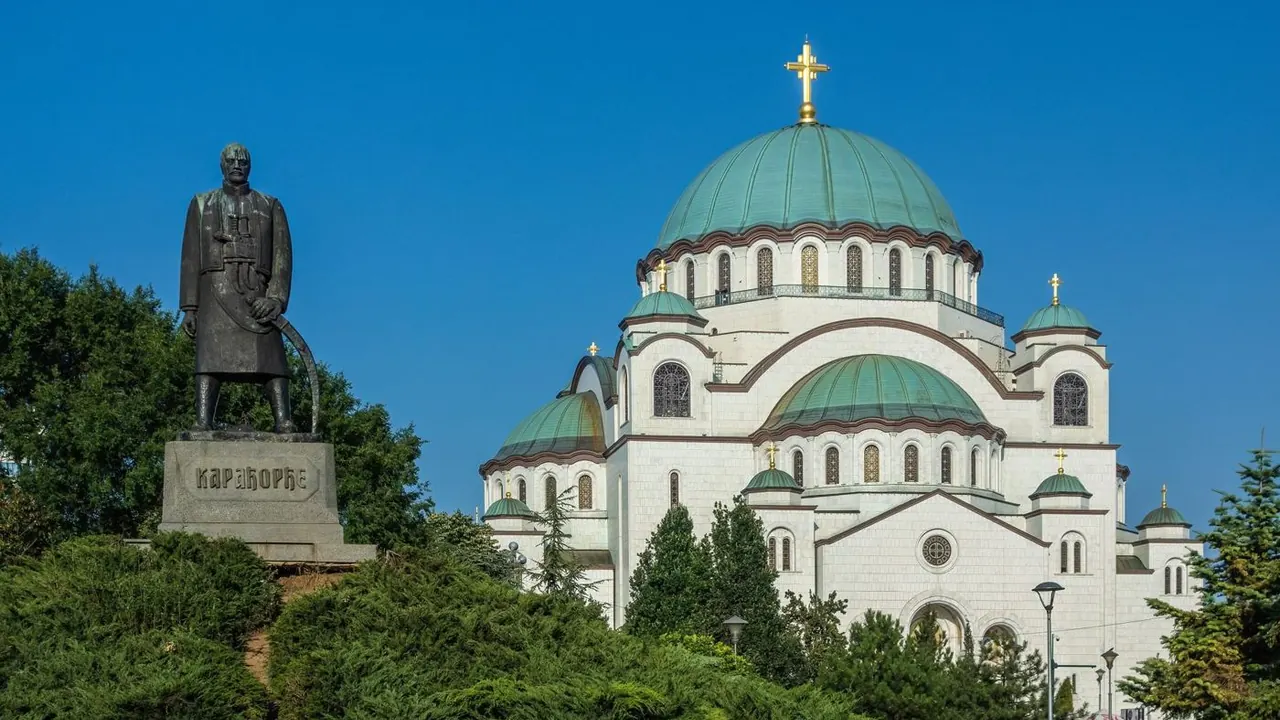
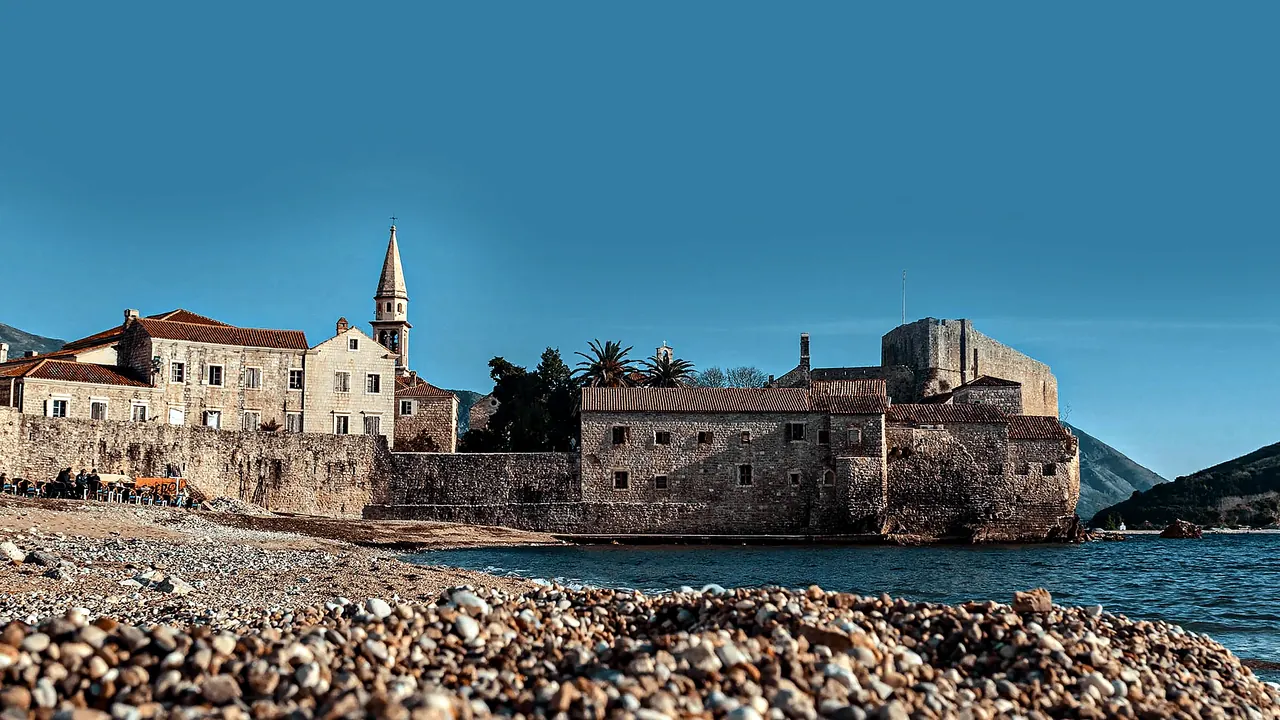
Photos: Belgrade by Petar Milošević, CC BY-SA 4.0, cropped; Budva by Ender Vatan, Pexels License.
Belgrade or Budva?
Our verdict in twelve categories, each scored against the same fixed benchmark cities, and the climate month by month, so you can choose for your trip.
Choose Belgrade for
- live music and the arts
- food and drink
- culture and sights
Belgrade suits a city trip built around long evenings. It has kafana dinners with rakija and a band, cocktail bars in Dorćol, and floating clubs on the rivers that run until dawn. By day there is a fortress, solid museums and a real opera and concert season. It costs less, works in any season and is best for travellers who would rather eat, drink and explore than lie on a beach.
Choose Budva for
- beaches
- nature and the outdoors
- day trips
If the trip is about the Adriatic, pick Budva. It has beaches in town and coves down the coast, a warm sea for much of the year and bare mountains rising straight behind. Kotor, Perast and Lovcen are all within easy reach. The old town takes a couple of hours, the food is mostly resort fare and the town goes quiet once the season ends, so it suits sun, sea and day trips far better than a cultural break.
Scoreboard
Twelve categories on one fixed scale from 0 to 100. The shaded stretch is the gap between the two.
Your match
Pick a travel style or drag the sliders, and both match scores follow your weighting.
Wins on live music and the arts and food and drink with your weighting.
Wins on beaches and nature and the outdoors with your weighting.
What matters to you?
Category by category
What the scores mean for a trip.
Beaches & swimming
Budva is a proper beach resort, while Belgrade is an inland capital with one good place to swim. In Budva you can walk straight onto Slovenska Plaza or down to the Mogren coves below the walls, and Becici, Jaz and the beach facing Sveti Stefan are a short ride away. The shore is mostly fine pebble or coarse sand, and in August it is lined with sunbeds.
Belgrade's answer is Ada Ciganlija, a lake on the Sava with gravel shores and lifeguards that locals use like a lido after work. The wilder sandy Lido on Great War Island is the other option. Both are fine for a summer swim but are no substitute for the open sea.
Food & drink
Belgrade is the better place to eat. Food there centres on the grill and the kafana, with ćevapi and slow-roasted meats served with kajmak and ajvar, and the old style survives in Skadarlija and Zemun. Zeleni Venac and Kalenić markets and the wines of Fruška Gora give you a reason to explore beyond your plate.
Budva's promenade restaurants feed the summer crowds, and the quality is uneven. The rewards are regional: Njegusi ham and mountain cheese, the day's catch at family-run konobas and Vranac red from around Lake Skadar. Neither town is the place for refined dining.
Culture & sights
Belgrade has far more to see. Kalemegdan stacks Roman, Ottoman and Austrian walls above the meeting of two rivers, the Temple of Saint Sava has its gold mosaic interior, and the Museum of Yugoslavia holds Tito's mausoleum. Add the Habsburg streets of Zemun and the socialist blocks of New Belgrade, and two or three days are well filled.
Budva has one sight, Stari Grad, with its marble lanes, churches and Citadel. Much of it was rebuilt after the 1979 earthquake, and a slow walk takes an hour or two. The region's real heritage lies in the towns along the coast.
Nightlife
Going out is one of Belgrade's main draws, and it lasts all year. In summer the splavs moored along the Sava and Danube play everything from turbo-folk to house. In winter the scene moves to basement clubs and old industrial spaces, and Dorćol's bars fill the pavements whenever it is warm. Bigger clubs work on table bookings and sharp dress.
Budva is a seasonal party town. Beach bars and terrace clubs line Slovenska Plaza, and a big open-air club on the hill keeps going until dawn, but from October to May most of it shuts. It also lacks Belgrade's range, from kafana evenings to cocktail bars.
Nature & outdoors
Budva has much grander scenery. Bare limestone mountains climb straight from the shore, Lovcen's beech forests and high trails look over the Bay of Kotor, and Lake Skadar offers kayaking among the reeds. Closer to town there are coastal paths, sea kayaking and paragliding above Becici.
Belgrade's outdoors is gentler and shaped by its rivers. You get long promenades for cycling, herons on Great War Island, wooded Košutnjak and Topčider, Avala to the south and easy vineyard walks on Fruška Gora.
Day trips
Budva makes the better base for day trips, and the trips are shorter. Kotor's walled town is about half an hour away, with Perast just beyond and the old royal capital of Cetinje under an hour inland. Further down the coast are Stari Bar and Ulcinj, and Dubrovnik is a long day across the border.
Belgrade's best outing is Novi Sad and the Petrovaradin fortress, under an hour by fast train. You can pair it with the baroque town of Sremski Karlovci and the Fruška Gora monasteries. Smederevo and Viminacium lie along the Danube, but most trips beyond Novi Sad need a car or a tour.
Good for families
Budva works a little better for families, mainly because a beach vacation is easy with children. The town beaches shelve gently, Becici has calmer water and there is a water park above town. In July and August the nights are loud, so families often stay down the coast or come in June or September.
Belgrade suits older children who like history. They can climb the ramparts at Kalemegdan, see the tanks outside the military museum and visit the small zoo inside the walls, and Ada Ciganlija is easy in summer. Heavy traffic and crowded pavements make pushchairs hard work.
Getting around
Belgrade is easier to get around. Kalemegdan, Knez Mihailova, Dorćol and Skadarlija sit within a short walk of each other, although the slopes up from the rivers are steep. Trams, trolleybuses and buses reach Zemun and New Belgrade, and cheap taxis fill the gaps.
Budva's centre is compact, and you can walk along the shore to Becici. Beyond that, though, there is no railway, and the single coast road jams in summer. Lovcen and Cetinje are far easier by car or on a tour, and boat taxis from the marina are the quickest way to the coves.
Shopping & style
Belgrade has more to offer, though neither is a place for a shopping trip. Knez Mihailova and the big malls in New Belgrade cover the chains, and young designers in Dorćol and Vračar, along with honey, ajvar and rakija at Kalenić market, make better finds.
In Budva, shopping means the stalls in the old town and on the promenade: beachwear, silver filigree jewellery, olive oil and honey. A modest centre near the marina covers the basics.
Affordability
Belgrade is the cheaper of the two. Kafana meals, terrace coffee and taxis cost little, and the fortress park is free. Your main expense will be a central room in Dorćol.
Budva is Montenegro's priciest resort, and in July and August seafront rooms, sunbeds and promenade restaurants all charge resort prices. Bakeries, grill houses and apartments a few streets back stay moderate, and June or September brings costs down noticeably.
Live music & performing arts
Belgrade has a real performing arts season, and Budva does not. The National Theatre stages opera and ballet, the Philharmonic plays at Kolarac and the Madlenianum in Zemun adds musicals, while BITEF and BEMUS fill the autumn. For something more local, the tamburica bands in Skadarlija's kafanas are worth an evening.
Budva's one fixture is the Grad Teatar summer festival on open-air stages in the old town squares. The rest of the year brings little beyond cover bands in seafront bars.
Wellness & relaxation
Neither is a wellness destination, and neither has a bathing tradition of its own. In Belgrade, rest means long coffees on the terraces and calm afternoons by the lake on Ada Ciganlija, set against a loud centre and late, smoky nights.
Budva's resort hotels in Becici and around Sveti Stefan have proper spas, and in May, June or late September the town is quiet and the sea is still warm enough for a slow seaside stay.
When should you go?
Pick your month. The climate figures are measured averages, not a forecast.
Belgrade in July
Budva in July
Daytime high, °C
Rainfall in the month, mm
Where the figures come from
Budva has no rain gauge within 25 km of the centre, so its rainfall comes from a gridded climate dataset read at the city rather than from a gauge further away.
Budva's sunshine is measured 40 km from the centre, at Podgorica-Grad.
Temperature and rainfall are climate normals, averaged over the years shown. Belgrade: 1991-2020 normals, Beograd (2.1 km from centre). Budva: 1991-2020 normals, Tivat (15.8 km from centre).
Belgrade has a continental year. Winters are grey and cold, with January highs around 5°C, so the streets are best walked in spring and autumn. July and August reach about 30°C, which is hot for sightseeing but is also the season for swimming at Ada Ciganlija and for the river clubs. Rain falls fairly evenly through the year, and early summer is the wettest stretch, with about 95mm in June.
Budva is milder in winter but much wetter. Rain builds from September and peaks in November at over 200mm. Summer there is dry, very sunny and a little hotter than in Belgrade. The sea is warm enough to swim from June into October and reaches 26°C in August. May, June and September give the best balance of swimmable water and heat you can walk in.
Which traveller are you?
On a beach and sun trip, choose Budva. Slovenska Plaza and the Mogren coves are right in town, with Becici, Jaz and Sveti Stefan along the coast and a warm Adriatic. Belgrade can only offer lake and river bathing.
For a culture and arts trip, Belgrade gives far more. It has Kalemegdan's layered walls, the National Museum and the Museum of Yugoslavia, plus opera, ballet and the Philharmonic through the season. Budva has a small old town and one summer festival.
On a food and nightlife trip, Belgrade wins clearly. Grill houses and kafanas with rakija, late bars in Dorćol and clubs on the splavs keep going all year. Budva's party season and promenade dining both fade in autumn.
Before you go
| Measure | Belgrade | Budva |
|---|---|---|
| Official language | Serbian | Montenegrin |
| Currency | Serbian Dinar (RSD) | Euro (EUR) |
| Sockets | CF230 V, 50 Hz | CF230 V, 50 Hz |
| Driving side | Right | Right |
| Time zone | UTC+1, UTC+2 in summer | UTC+1, UTC+2 in summer |
| Emergency number | Police 92/192, ambulance 94/194, fire 93/193 | 112 |
| Elevation | 117 m | 3 m |
| Main airport | Belgrade Nikola Tesla Airport (BEG)12 km from centre124 non-stop destinations | Tivat Airport (TIV)17 km from centre42 non-stop destinations |
| Public holidays this year | 11 days | - |
By the numbers
| Measure | Belgrade | Budva |
|---|---|---|
| City population | 1,197,714 | 13,338 |
| People per km² | 3,327 | 109 |
| Museums within 10 km | 65 | 0 |
| UNESCO World Heritage sites within 50 km | 0 | 3 |
| Swim season, months above 21 °C | - | 5 months |
Where else could you go?
Every comparison below shares a destination with this one, so you can follow Belgrade or Budva somewhere new.