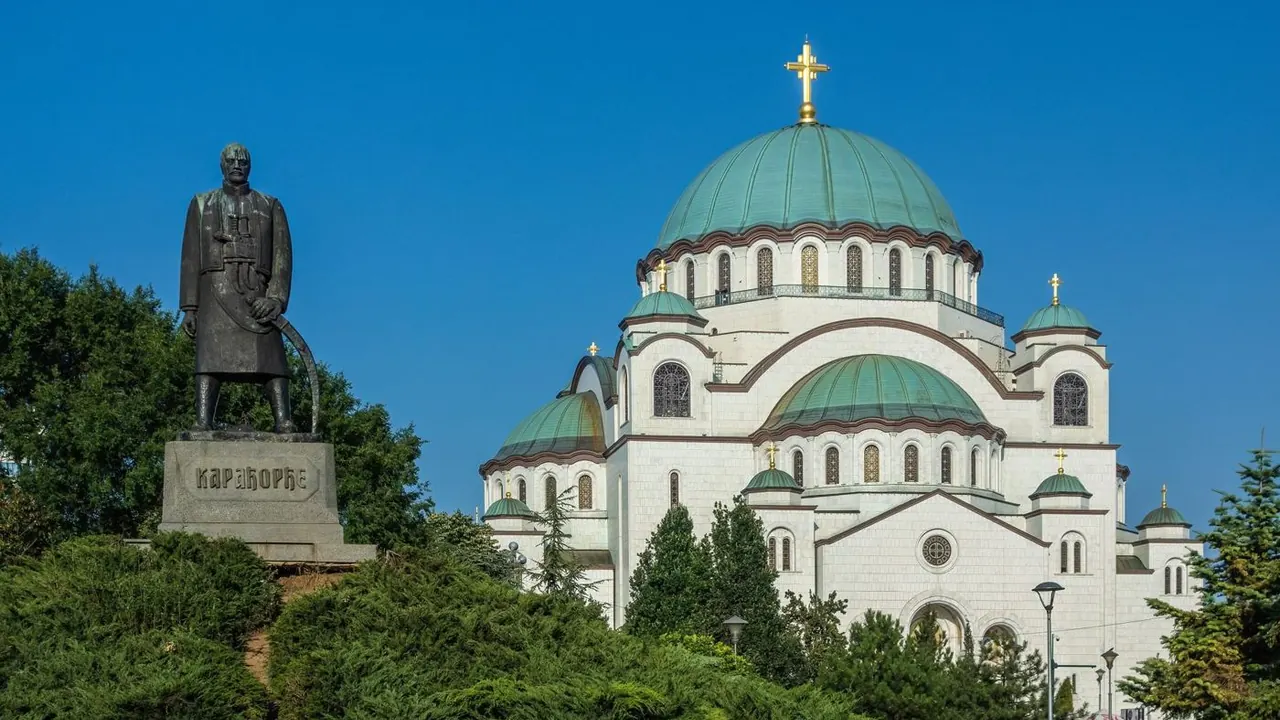
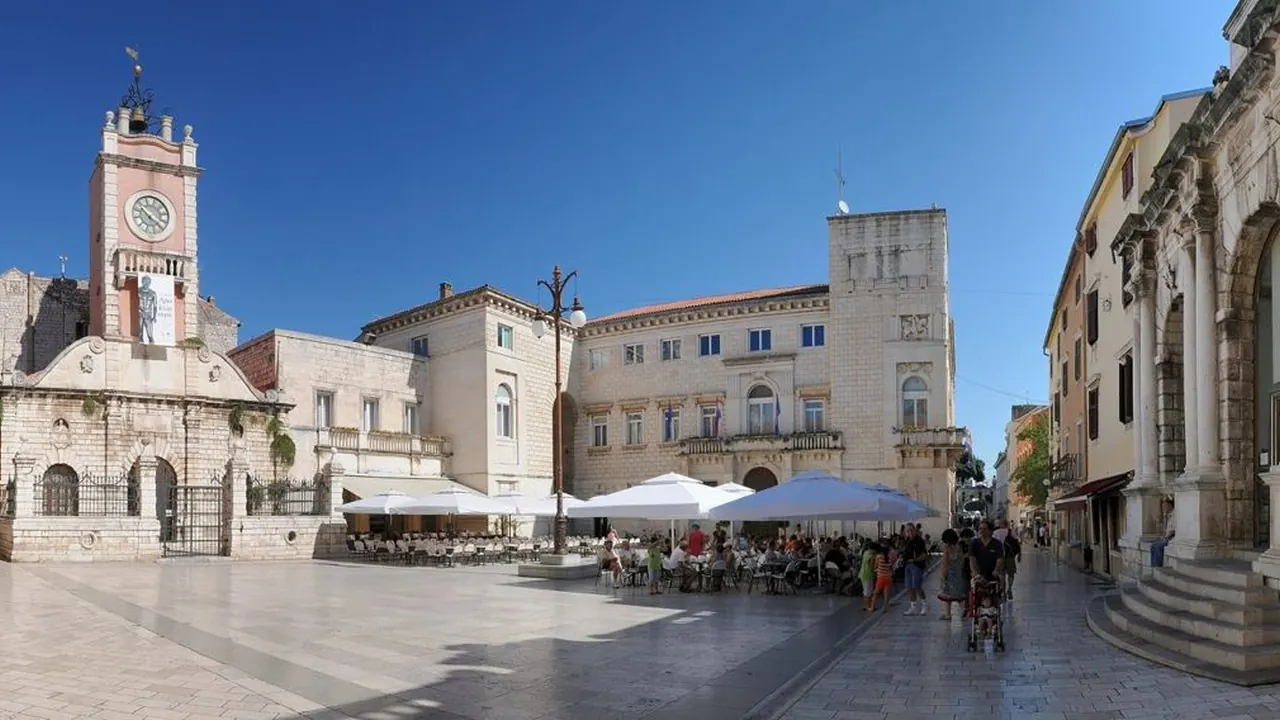
Photos: Belgrade by Petar Milošević, CC BY-SA 4.0, cropped; Zadar by Böhringer Friedrich, CC BY-SA 2.5, cropped.
Belgrade or Zadar?
Our verdict in twelve categories, each scored against the same fixed benchmark cities, and the climate month by month, so you can choose for your trip.
Choose Belgrade for
- nightlife
- live music and the arts
- prices
Belgrade is the choice for a lively, social city trip. Its nights on the river barges and in the Dorćol bars run until dawn, the kafana tables serve grilled meat and rakija for hours, and the National Theatre and Kolarac hall give it a proper concert and opera life. It also keeps daily spending lower. Go for the evenings and the energy. Clean seas and mountain trails are not what it offers.
Choose Zadar for
- beaches
- nature and the outdoors
- day trips
Zadar suits travellers who want the sea and the open landscape. You swim every day off stone promenades, take ferries out to quiet island coves, and you are within easy reach of the Velebit gorges, the Kornati islands and the waterfalls at Krka. The walled peninsula is flat and car-free, which makes it gentler for families. Evenings are slow, built around the sunset at the Sea Organ, and the town has none of Belgrade's nightlife or cultural calendar.
Scoreboard
Twelve categories on one fixed scale from 0 to 100. The shaded stretch is the gap between the two.
Your match
Pick a travel style or drag the sliders, and both match scores follow your weighting.
Too close to call, 2 points apart
Wins on nightlife and live music and the arts with your weighting.
Wins on beaches and nature and the outdoors with your weighting.
What matters to you?
Category by category
What the scores mean for a trip.
Beaches & swimming
Zadar is a real sea-swimming destination and Belgrade is not. In Zadar you swim in clear Adriatic water straight off the stone edge of the peninsula or at Kolovare and Borik. Both are pebble and concrete rather than sand, but long sandy shallows wait at Nin, and island beaches such as Sakarun on Dugi Otok are a ferry ride away.
Belgrade's answer is Ada Ciganlija, a gravel-shored lake on the Sava that works like a giant city lido, plus the wilder sandy Danube strip on Great War Island. It is a good swim on a hot afternoon, but it is no reason to plan a trip.
Food & drink
Belgrade is the better place to eat, mainly because its eating culture has more range through the day. Zadar's table is built around the sea, Belgrade's around the grill and the tavern. A Belgrade day can run from bakery pastry at breakfast, through a morning among the stalls at Kalenić, to an evening of ćevapi with kajmak and ajvar in a kafana, often with a band, in the old lanes of Skadarlija or Zemun. Fruit brandy is treated as a serious subject, and Fruška Gora wines are on most lists. Its weak spot is the same as Zadar's: little for vegetarians or for anyone after refined international cooking.
Zadar's strength is seafood. Grilled squid, black risotto and lamb under the peka are well made, and Pag cheese and Maraschino give it two genuine local specialities. But the konobas on the peninsula repeat one another's menus, and the cheaper places on the main streets cook for passing visitors, so over a week you end up eating the same good dishes several times.
Culture & sights
The two are fairly even, but the sightseeing is very different. Zadar packs its history into one small walled peninsula: an open Roman forum, round St Donatus, the cathedral bell tower, UNESCO-listed Venetian walls, and fine small museums of ancient glass and church silver. Belgrade's sights are spread out and more varied. There is the layered Kalemegdan fortress, the vast Saint Sava church, and the Museum of Yugoslavia with Tito's tomb, and the city's architecture runs from Habsburg Zemun to the socialist blocks of New Belgrade.
Zadar is more beautiful and more coherent. Belgrade is better for twentieth-century history. Each needs about two days.
Nightlife
This is the widest gap between the two. Belgrade is a city people visit for its nights. In summer the splavs, floating clubs moored on the Sava and Danube, play everything from turbo-folk to house. Dorćol's bar streets fill the pavements, and in winter the scene moves into basement clubs and old industrial spaces. Expect table service, sharp dress and very late finishes.
Zadar's evenings are gentler: sunset at the Sea Organ, then café-bars along Kalelarga and a few terrace bars on the walls. Anyone wanting to dance heads an hour away to Zrće on Pag, and from October the town goes quiet.
Nature & outdoors
Zadar is far stronger on the outdoors. The Velebit range rises behind the coast, Paklenica's limestone gorges offer serious hiking and climbing within an hour, and hundreds of islands, including the bare Kornati and the cliffs of Telašćica, invite sailing and kayaking. Krka and Plitvice are both within day range.
Belgrade's nature is gentler and closer to town. You get long riverside promenades for cycling, the heron-filled wetland on Great War Island, wooded Košutnjak and Avala, and easy vineyard walks on Fruška Gora. It is pleasant, but there is nothing dramatic within a comfortable day.
Day trips
Both are good bases, but Zadar's outings are more striking. Šibenik's hillside old town and UNESCO-listed cathedral are an hour away, Nin's tiny royal town is closer still, and Split and Trogir make a long but rewarding day. Ferries also take you to car-free Silba and the other islands.
From Belgrade the best trip is the fast train to Novi Sad and Petrovaradin, which can be combined with baroque Sremski Karlovci and the Fruška Gora monasteries. Smederevo, Viminacium and Oplenac add fortresses, Roman ruins and wine country. In both places a car or a tour makes most trips easier.
Good for families
Zadar is the easier of the two with children. The old town is flat and car-free, the waterfront promenade suits pushchairs, and the Sea Organ and the light-up Greeting to the Sun keep children happy in the evening. Nin's shallow sand is ideal for small swimmers.
Belgrade works better for older children who like history. They can climb Kalemegdan's ramparts, see the tanks at the military museum and visit the small fortress zoo. With toddlers it is harder going because of heavy traffic, uneven pavements and pushchair-blocking parked cars. Neither city has a theme park or aquarium.
Getting around
The two are much alike in practice: you walk the centre and need help to go further. Zadar's peninsula is flat, crossed on foot in a quarter of an hour, and island ferries leave from its edge, but buses are basic and the national parks really call for a car or excursion. Belgrade's centre is walkable too, though it is steep up from the rivers, and trams, trolleybuses and buses reach every district without a metro. They are crowded and slow in traffic, so cheap taxis fill the gap.
Shopping & style
Belgrade has more to offer, though neither is a shopping destination. Knez Mihailova and the big malls on the river and in New Belgrade cover the chains, while young designers' boutiques in Dorćol and Vračar, market honey and rakija, and embroidered textiles and opanci shoes give it some local character.
Zadar's shopping is mostly Kalelarga's jewellers and souvenir shops. The best things to take home are edible or handmade: Maraschino, Pag cheese, figs and Pag lace from the market by the walls.
Affordability
Belgrade is the cheaper trip. Kafana meals, terrace coffees, rounds of rakija and taxis all cost little, and the fortress park and many museums are cheap or free, so only central accommodation and the riverside clubs push the budget up.
Zadar is priced more like a mid-range Western European city. Private apartments are reasonable outside July and August, but high-summer rooms on the peninsula, restaurants on the main streets, national park tickets and boat trips add up quickly.
Live music & performing arts
Belgrade has a real year-round stage. The National Theatre presents opera and ballet, the Philharmonic plays at Kolarac, Madlenianum adds musicals, and BITEF and BEMUS fill the autumn calendar. Tamburica bands in the Skadarlija kafanas and a few long-standing jazz and rock clubs cover the informal side.
Zadar's highlight is short and seasonal: the Musical Evenings in St Donatus, chamber and early music in a ninth-century church, alongside summer concerts and klapa singing in the squares. Outside July and August there is very little to see.
Wellness & relaxation
Neither city has a spa tradition, and both rely on hotel spas, so the difference is in the pace. Zadar is calmer, with siesta afternoons, sunsets from the Sea Organ steps and the mud lagoon at Nin. Belgrade's calm comes in pockets, such as a long terrace coffee or an afternoon on Ada Ciganlija, against a loud, smoky, late-night centre.
When should you go?
Pick your month. The climate figures are measured averages, not a forecast.
Belgrade in July
Zadar in July
Daytime high, °C
Rainfall in the month, mm
Where the figures come from
Zadar has no rain gauge within 25 km of the centre, so its rainfall comes from a gridded climate dataset read at the city rather than from a gauge further away.
Temperature and rainfall are climate normals, averaged over the years shown. Belgrade: 1991-2020 normals, Beograd (2.1 km from centre). Zadar: 1999-2020 (rainfall 1991-2020) normals, Zadar / Zemunik (9.9 km from centre).
Belgrade has a continental climate with sharp seasons. Summer is hot, with July and August around 30°C, so you will want shade for walking in the afternoons, though it is the right time for the lake on Ada Ciganlija and the river clubs. June brings the heaviest rain, close to 95mm, mostly in storms. Winters are grey and cold, with highs near 5°C. May and September are the most comfortable months for exploring on foot, warm and sunny without the midsummer heat.
Zadar has milder winters and drier summers. July is the driest month, and from June to September the sea is warm enough for swimming, reaching about 25°C in August. Autumn turns wet from September, and November is the wettest month at around 113mm. Winter stays mild but the sea is too cool for most swimmers. For a beach trip Zadar's best months are clearly June to September. For a city break outside summer Belgrade has the drier late autumn, but Zadar is the milder of the two.
Which traveller are you?
On a beach and sun trip, Zadar is the clear pick. You can swim straight off the promenade, the shallow sand at Nin is a short drive away and ferries reach island coves. Belgrade offers only a summer lake beach on the Sava.
For a food and nightlife trip, Belgrade wins easily. Long kafana dinners with grilled meats and rakija lead on to cocktail bars in Dorćol and floating clubs on the rivers until dawn. Zadar's evenings are sunset drinks and relaxed café-bars.
On an outdoors trip, Zadar is the better base. Paklenica's gorges and climbing routes, sailing in the Kornati and the waterfalls at Krka are all within reach. Around Belgrade the outdoors means riverside cycling, wooded parks and gentle walks on Fruška Gora.
Before you go
| Measure | Belgrade | Zadar |
|---|---|---|
| Official language | Serbian | Croatian |
| Currency | Serbian Dinar (RSD) | Euro (EUR) |
| Sockets | CF230 V, 50 Hz | CF230 V, 50 Hz |
| Driving side | Right | Right |
| Time zone | UTC+1, UTC+2 in summer | UTC+1, UTC+2 in summer |
| Emergency number | Police 92/192, ambulance 94/194, fire 93/193 | 112 |
| Elevation | 117 m | 5 m |
| Main airport | Belgrade Nikola Tesla Airport (BEG)12 km from centre125 non-stop destinations | Zadar Airport (ZAD)10 km from centre66 non-stop destinations |
| Public holidays this year | 11 days | 14 days |
By the numbers
| Measure | Belgrade | Zadar |
|---|---|---|
| City population | 1,197,714 | 70,779 |
| People per km² | 3,327 | - |
| Museums within 10 km | 65 | 1 |
| UNESCO World Heritage sites within 50 km | 0 | 2 |
| Swim season, months above 21 °C | - | 4 months |
Where else could you go?
Every comparison below shares a destination with this one, so you can follow Belgrade or Zadar somewhere new.