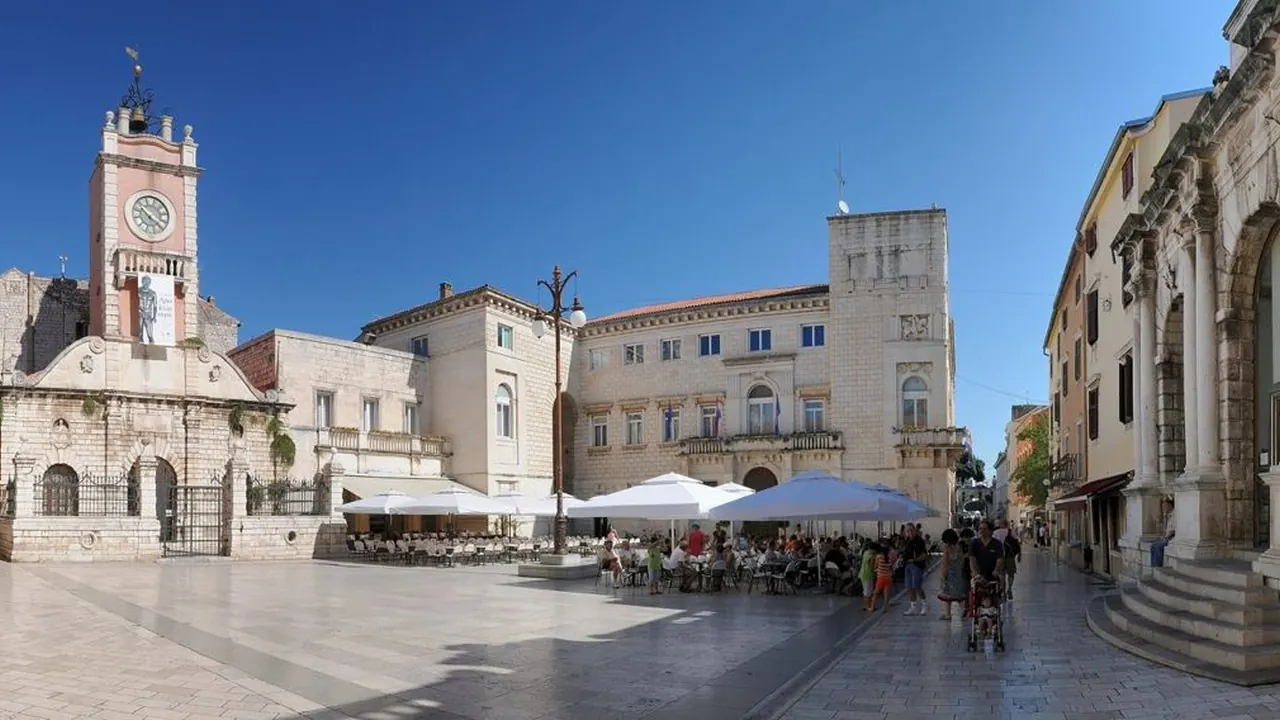
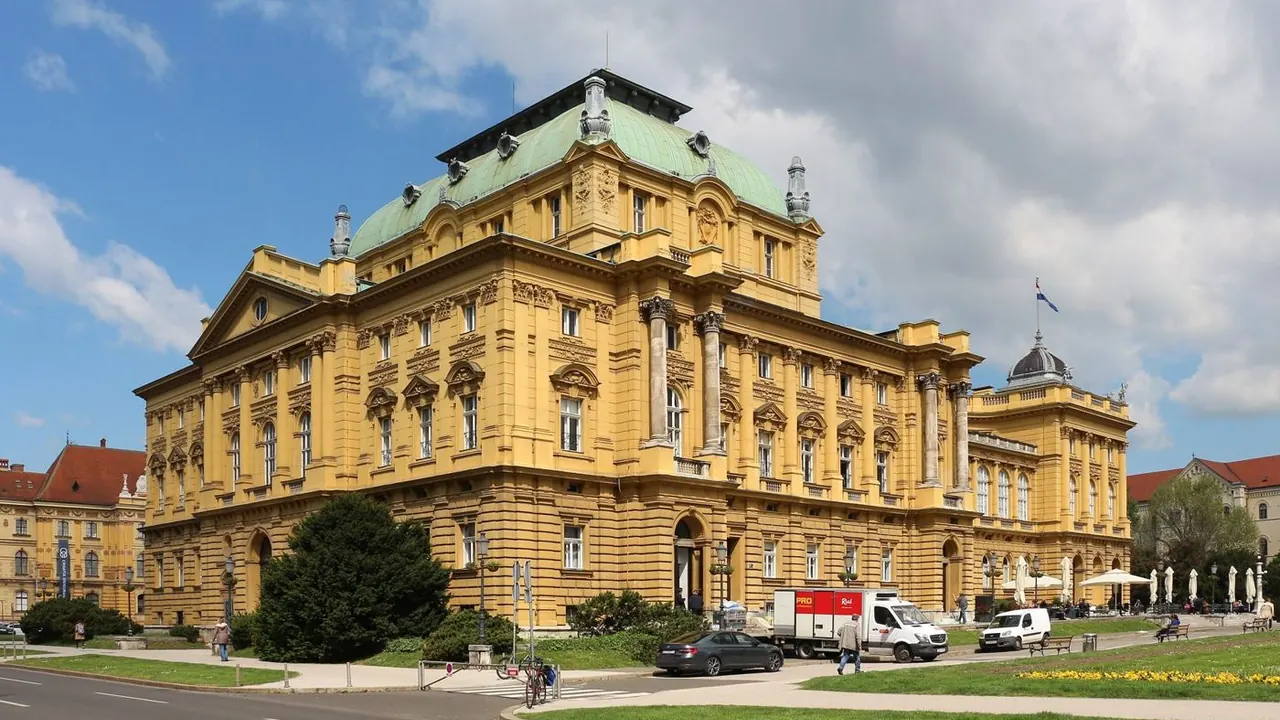
Photos: Zadar by Böhringer Friedrich, CC BY-SA 2.5, cropped; Zagreb by Bernard Gagnon, CC BY-SA 4.0, cropped.
Zadar or Zagreb?
Our verdict in twelve categories, each scored against the same fixed benchmark cities, and the climate month by month, so you can choose for your trip.
Choose Zadar for
- beaches
- nature and the outdoors
- day trips
Zadar is the choice for a summer trip built around the sea and the landscape. You can swim off the old town's promenade, take a ferry out to island coves, sail in the Kornati and hike or climb in Paklenica, all from a small walled peninsula with Roman stones at its centre. It suits travellers who want to be outdoors all day and are content with a quiet evening and a fairly narrow menu.
Choose Zagreb for
- live music and the arts
- shopping
- getting around
Travellers who want a city that works all year will do better in Zagreb. The capital eats a little better and costs a little less. It has opera, ballet and orchestral concerts, a student bar scene that stays open through the winter and trams that make it easy to get around. It has no sea, so it rewards people who come for cafés, galleries and evenings out rather than for swimming.
Scoreboard
Twelve categories on one fixed scale from 0 to 100. The shaded stretch is the gap between the two.
Your match
Pick a travel style or drag the sliders, and both match scores follow your weighting.
Too close to call, 1 point apart
Wins on beaches and nature and the outdoors with your weighting.
Wins on live music and the arts and shopping with your weighting.
What matters to you?
Category by category
What the scores mean for a trip.
Beaches & swimming
Zadar is a real swimming destination from June to September. Locals dive off the stone promenade on the peninsula, Kolovare and pine-shaded Borik offer pebble and concrete platforms, and Nin's long, shallow sandy beaches are only 20 minutes north. Ferries to Ugljan, Pašman and Dugi Otok, home of the pale sand at Sakarun, open up quieter water.
Zagreb sits inland, about two hours' drive from the Adriatic. Lake Jarun and the smaller Bundek are fine for a hot-afternoon swim from pebbly shores, but anyone who wants the sea on a Zagreb trip has to add a coastal stop.
Food & drink
Neither city is a food destination, but Zagreb gives you more to explore. Its cooking is hearty and Central European, with štrukli, turkey with mlinci and Zagorje sausages. Dolac market is a proper morning institution, and the café terraces and Plešivica wines make the long lunch a pleasure.
Zadar is the place for Adriatic seafood, black risotto, peka-cooked octopus and Pag cheese, and Maraschino was first made here. The trouble is that its konobas serve much the same menu, so meals start to repeat after a few days.
Culture & sights
The two are evenly matched but feel quite different. In Zadar, Roman, early medieval and Venetian layers share one small peninsula: the open forum, round St Donatus, the UNESCO-listed walls, then the Sea Organ and the Greeting to the Sun on the waterfront.
Zagreb is a capital in two halves. The medieval Upper Town sits on its hill above an Austro-Hungarian grid of parks and theatres. It has more museums, and more varied ones, from the Mimara and the Naive Art collection to the Museum of Broken Relationships, plus the arcades of Mirogoj.
Nightlife
Zagreb has more going on after dark, and it lasts all year. The terraces on Tkalčićeva, the cocktail and craft beer bars around Flower Square and the student-run alternative venues keep going through the winter, and in summer the clubs at Jarun add a lakeside night out.
Zadar's evenings are seasonal and gentle. They start with sunset at the Sea Organ and drift into the café-bars on Kalelarga. Real clubbing means the trip to Zrće on Pag, about an hour away, and from October to May the town goes quiet.
Nature & outdoors
Zadar sits between a steep mountain range and a scatter of islands, and that makes it the stronger choice for the outdoors. Paklenica's limestone gorges offer serious hiking and some of Croatia's best climbing, boats run to the bare Kornati and the cliffs of Telašćica, and Krka's waterfalls are an hour away.
Zagreb's countryside is green and gentle. The beech woods of Medvednica start at the edge of the city and can be reached by tram and bus, and Maksimir and the Sava embankments are good for an easy run or ride. Plitvice is about two hours from either city.
Day trips
From Zadar the day trips are stronger and more varied. You can visit Šibenik's UNESCO cathedral, Nin's royal history only 20 minutes away, Split and Trogir if you are happy with a long day, and island villages by ferry from the harbour.
Zagreb's outings run north into Zagorje, with Trakošćan castle, Marija Bistrica and Kumrovec, or out to baroque Varaždin, Samobor and Karlovac. Ljubljana works as a long day. It is a good spread, but nothing matches Split or Šibenik, and from either city a car makes most trips easier.
Good for families
Both are safe and easy with children, but family days look different. In Zadar they are built around the water: Nin's shallow sand, short ferry rides that feel like an adventure, and the tiles of the Greeting to the Sun lighting up after dark. There is no zoo or aquarium.
Zagreb has more to do in town, with the zoo in Maksimir, the Tesla technical museum's trams and mock mine, and the tiny funicular. Swimming is limited to the lakes at Jarun and Bundek.
Getting around
Zagreb is easier to get around. A dense network of blue trams covers the city, the funicular saves the climb to the Upper Town, and buses run to Medvednica and the airport. You only need a car for Zagorje and Plitvice.
Zadar's car-free peninsula takes a quarter of an hour to cross on foot, and the island ferries leave from its edge. Beyond Borik, though, the local buses are of little use, so the national parks, Šibenik and Nin really call for a hire car or an organised excursion.
Shopping & style
Shopping in Zadar is small-scale and mostly about the region's food and crafts. The marble Kalelarga has jewellers and souvenir shops, but the things worth taking home are Maraschino, Pag cheese, figs and fine Pag lace, and the market by the walls is the nicest place to find them.
Zagreb offers a good deal more choice, though it is still everyday shopping rather than a reason to visit. Ilica runs west from the main square with chains, local fashion and a few design shops. The cravat began in Croatia, so a necktie or a red licitar honey-dough heart makes a good souvenir from the capital, and the Sunday flea market at Britanski trg is good for browsing.
Affordability
Zagreb is the cheaper stay, especially in summer, when the coast is at its most expensive. Central rooms, tram fares, museum entry and market food are all reasonably priced, and only upmarket dining reaches Western European levels.
Zadar costs about the same as a mid-range Western European city. It is good value for an apartment in June or September, but rooms near the peninsula in July and August are dear, and national park tickets and boat trips add up quickly.
Live music & performing arts
Zagreb has a real cultural season. The Croatian National Theatre stages opera, ballet and drama, and the Lisinski hall is home to the Zagreb Philharmonic. Add the Zagreb Soloists, jazz clubs and summer courtyard concerts in the Upper Town, and there is something to book in most weeks of the year.
Zadar's one standout is the Musical Evenings in St Donatus, early and chamber music in a ninth-century church, with klapa singing on summer evenings. Outside July and August there is little to see.
Wellness & relaxation
Neither city has a spa culture of its own, and both are calm places with long café mornings. The difference is how you unwind. In Zadar it means hotel spas at Borik, the healing mud of Nin's lagoon and watching the sun go down over the islands from the Sea Organ steps.
From Zagreb you can drive about an hour to the thermal resorts of Zagorje, such as Tuheljske and Stubičke Toplice. Their warm mineral pools work in any season, which gives the capital a useful option for winter.
When should you go?
Pick your month. The climate figures are measured averages, not a forecast.
Zadar in July
Zagreb in July
Daytime high, °C
Rainfall in the month, mm
Where the figures come from
Zadar has no rain gauge within 25 km of the centre, so its rainfall comes from a gridded climate dataset read at the city rather than from a gauge further away.
Temperature and rainfall are climate normals, averaged over the years shown. Zadar: 1999-2020 (rainfall 1991-2020) normals, Zadar / Zemunik (9.9 km from centre). Zagreb: 1991-2020 normals, Zagreb / Gric (0.6 km from centre).
Zadar is at its best from June to September. The sea is warm enough for daily swimming and reaches about 25°C in August, and July and August are the driest months. Midsummer afternoons climb to around 31°C, which is too hot for long walks on the stone streets or hikes on high ground, so May, June and September are the better months for sightseeing and the outdoors. Rain sets in from September and peaks in November at about 113mm, and from then until spring the sea is too cool for most people.
Zagreb follows a continental pattern. Winters are much colder than on the coast, with January highs of about 5°C, and summer is slightly cooler than in Zadar. Summer is also the wetter season in Zagreb, as thundery showers keep rainfall high from June and peak at about 104mm in September, though July still has the most sunshine. Late spring and early autumn are the most comfortable times for walking the Upper Town and Medvednica.
Which traveller are you?
On a beach and sun trip, Zadar wins easily. From June to September you can swim straight off the old town promenade, Nin's sandy shallows are close by and ferries reach island coves. Zagreb has only its lakes, and the Adriatic is two hours away.
For an outdoors trip, Zadar is the better base. Paklenica's gorges offer serious hiking and climbing, boats sail to the Kornati and Telašćica, and Krka is an hour away. Zagreb's Medvednica woods and Maksimir park are pleasant but much gentler.
On a culture and arts trip, Zagreb has the edge. Its sights match Zadar's, and it adds a wider spread of galleries and a full evening programme of opera, ballet and the Philharmonic. Outside its summer church concerts, Zadar has little on stage.
Before you go
| Measure | Zadar | Zagreb |
|---|---|---|
| Official language | Croatian | Croatian |
| Currency | Euro (EUR) | Euro (EUR) |
| Sockets | CF230 V, 50 Hz | CF230 V, 50 Hz |
| Driving side | Right | Right |
| Time zone | UTC+1, UTC+2 in summer | UTC+1, UTC+2 in summer |
| Emergency number | 112 | 112 |
| Elevation | 5 m | 127 m |
| Main airport | Zadar Airport (ZAD)10 km from centre66 non-stop destinations | Zagreb Franjo Tuđman International Airport (ZAG)11 km from centre64 non-stop destinations |
| Public holidays this year | 14 days | 14 days |
By the numbers
| Measure | Zadar | Zagreb |
|---|---|---|
| City population | 70,779 | 767,131 |
| Museums within 10 km | 1 | 27 |
| UNESCO World Heritage sites within 50 km | 2 | 0 |
| Swim season, months above 21 °C | 4 months | - |
Where else could you go?
Every comparison below shares a destination with this one, so you can follow Zadar or Zagreb somewhere new.