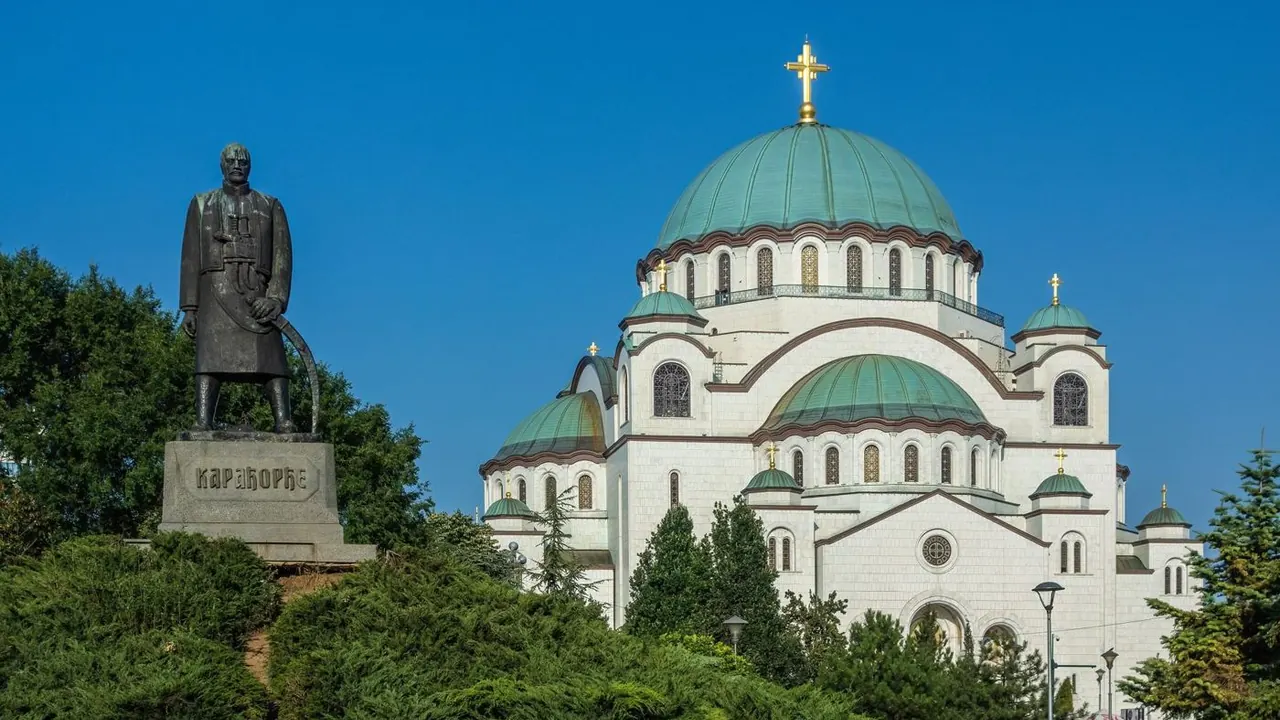
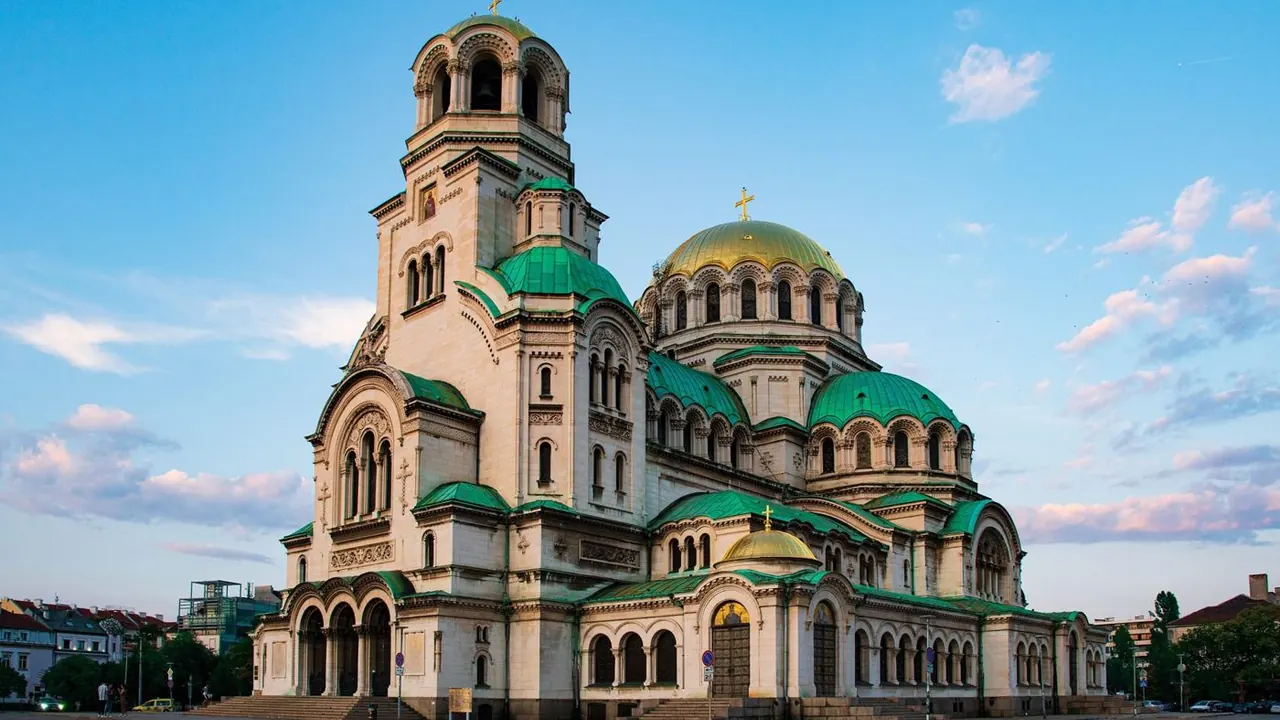
Photos: Belgrade by Petar Milošević, CC BY-SA 4.0, cropped; Sofia by Jose Ligero Loarte, CC BY-SA 4.0, cropped.
Belgrade or Sofia?
Our verdict in twelve categories, each scored against the same fixed benchmark cities, and the climate month by month, so you can choose for your trip.
Choose Belgrade for
- beaches
- nightlife
- food and drink
Belgrade suits groups and couples who plan their trip around the evenings. The splav clubs moored on the Sava and Danube, the late kafana tables with rakija and a band, and the bars of Dorćol give it a night scene Sofia doesn't try to match. The grill food is more generous, and in summer a swim at Ada Ciganlija rounds off a hot day.
Choose Sofia for
- nature and the outdoors
- wellness
- getting around
If you'd rather spend your days outdoors and keep your evenings gentle, Sofia is the better base. Vitosha rises straight from the edge of town, Rila Monastery and the Rila lakes are within a day's reach, and the centre fits Roman Serdica, gold-domed cathedrals and Boyana's frescoes into a compact core served by a metro. It is also the cheaper and calmer of the two, with mineral springs running from public taps.
Scoreboard
Twelve categories on one fixed scale from 0 to 100. The shaded stretch is the gap between the two.
Your match
Pick a travel style or drag the sliders, and both match scores follow your weighting.
Too close to call, 2 points apart
Wins on beaches and nightlife with your weighting.
Wins on nature and the outdoors and wellness with your weighting.
What matters to you?
Category by category
What the scores mean for a trip.
Beaches & swimming
Neither is a beach destination, but only Belgrade gives you a real summer swim. Ada Ciganlija, a lake formed on a river island in the Sava, has kilometres of gravel shore and shallow lifeguarded water. It works like a city lido, and the sandy, quieter Lido on Great War Island is a short boat ride away.
Sofia lies on a high plain with nothing comparable. In summer people swim in outdoor pools in the parks or at the lake at Pancharevo, and the Black Sea coast needs a separate stay.
Food & drink
Both cities cook hearty Balkan food built around the grill, and shopska salad turns up on both tables. Belgrade makes more of an occasion of it. Its kafanas in Skadarlija and Zemun serve ćevapi, pljeskavica and slow-roasted meats with kajmak at long tables, often with a band, and the Kalenić and Zeleni Venac markets are worth a morning.
Sofia is lighter in some ways: banitsa for breakfast, cold tarator in summer, clay-pot dishes in the mehanas, and small modern bistros behind Vitosha Boulevard. Its real strength is wine, with local grapes such as Mavrud and Melnik poured in wine bars across the centre.
Culture & sights
Sofia has the richer centre for sightseeing. Within a few minutes' walk you can see excavated Roman Serdica around the metro, the fourth-century Rotunda of St George, a mosque, a cathedral and the gold-domed Alexander Nevsky. Out at the foot of Vitosha, Boyana Church's UNESCO-listed medieval frescoes are the finest single sight, and the National Museum of History holds Thracian gold.
Belgrade's sights are more scattered and less grand. Kalemegdan fortress above the meeting of the rivers is the highlight, along with the huge Temple of Saint Sava and the Museum of Yugoslavia with Tito's mausoleum. Repeated destruction has left a patchwork of styles rather than one historic core.
Nightlife
Belgrade is the night-out city of the two, and for many visitors the nights are the reason to come. Things start late and end at dawn. In summer the floating splav clubs along the Sava and Danube play everything from turbo-folk to house. At the bigger venues people book tables, order by the bottle and dress sharply.
Sofia's scene is smaller and more relaxed. Around Shishman and Tsar Ivan Asen streets there are cocktail bars, craft beer pubs and wine bars, and students fill the underground bars beneath old buildings. It makes a pleasant long weekend, but it isn't a reason to choose the city.
Nature & outdoors
Sofia has a real mountain on its doorstep. Vitosha rises above 2,200m, with spruce forest, boulder rivers and modest winter skiing a bus or gondola ride from the centre. Further out are the glacial Seven Rila Lakes and the proper ski slopes of Borovets.
Belgrade's outdoors is flatter and gentler, shaped by its two rivers. There are long promenades for walking and cycling, and herons and cormorants on the protected wetland of Great War Island. The wooded hill of Avala and the low vineyard ridge of Fruška Gora are the nearest high ground.
Day trips
Both are good bases, but the trips are of a different kind. Belgrade's outings are closer and more varied. Novi Sad and its Petrovaradin fortress are under an hour by fast train, Sremski Karlovci and the Fruška Gora monasteries add wine and churches, and Smederevo's fortress and Roman Viminacium lie along the Danube.
Sofia has fewer outings, but the two main ones are bigger names. Rila Monastery and Plovdiv's Roman theatre and painted old town are each about two hours away, with the revival village of Koprivshtitsa as a quieter choice.
Good for families
Neither city has much built for children, and uneven pavements make pushchairs hard work in both. In Belgrade, the best family afternoon is at Kalemegdan, with tanks outside the military museum, ramparts to climb and a small zoo, and in summer the shallow lake at Ada Ciganlija. Heavy traffic and hot summers make it better for older children.
Sofia is calmer to move around with a family. Its best outing is the gondola and forest trails on Vitosha, and it adds something Belgrade lacks: a hands-on children's science centre.
Getting around
Sofia is the easier city to get around. A clean, simple metro runs from the airport through the centre to the railway station and out to Vitosha's foothills, and the main sights are a short walk apart.
Belgrade's centre is walkable too, though there are steep climbs up from the rivers, and Zemun and New Belgrade lie across the Sava. There is no metro. The trams and buses are crowded, slowed by traffic and hard for a visitor to work out, so most people end up using taxis.
Shopping & style
Both cities are better for browsing an afternoon than for a dedicated shopping trip, and each has a pedestrian main street lined with chains: Knez Mihailova in Belgrade, Vitosha Boulevard in Sofia. Belgrade's better finds are young designers' boutiques in Dorćol and Vračar, plus honey, ajvar and rakija from the markets.
Sofia's local things to buy are rose oil and rose cosmetics, and Troyan pottery. There is also a flea market of icons and curiosities beside the Alexander Nevsky Cathedral.
Affordability
Accommodation is where the two part ways. In Belgrade, kafana meals, terrace coffee and taxis cost little. Rooms in Dorćol or near Knez Mihailova, though, are priced closer to Central European cities, and the river clubs charge more.
Sofia stays cheap all the way through. Comfortable central hotels cost little, a mehana dinner with a bottle of Bulgarian wine is easy on the budget, and a trip to Vitosha or Rila Monastery barely adds to the bill.
Live music & performing arts
Belgrade's most characterful sound is the tamburica and old-town bands playing at the tables in the kafanas of Skadarlija and Zemun. In autumn it also has BITEF, the long-running experimental theatre festival, and the BEMUS music festival. Opera and ballet are at the National Theatre and the Madlenianum in Zemun, and the Philharmonic plays at Kolarac.
Sofia's season is just as full, with the National Opera and Ballet and the Philharmonic at Bulgaria Hall. What it offers that Belgrade doesn't is Bulgarian choral and Orthodox singing. In both cities the plays are in the local language, so music and dance are the easier way in.
Wellness & relaxation
Sofia has a real spa tradition and Belgrade has none. In Sofia, locals fill bottles at warm mineral taps beside the old Central Mineral Baths. Bathing pools are on the city's edges and in Bankya, half an hour west, and the pace of the city is unhurried.
In Belgrade, wellness means hotel spas, and the nearest historic spa towns are hours to the south. A quiet afternoon by the lake or along the Danube helps, but the noise, smoky interiors and late nights work against it.
When should you go?
Pick your month. The climate figures are measured averages, not a forecast.
Belgrade in July
Sofia in July
Daytime high, °C
Rainfall in the month, mm
Temperature and rainfall are climate normals, averaged over the years shown. Belgrade: 1991-2020 normals, Beograd (2.1 km from centre). Sofia: 1991-2020 normals, Sofia Observ. (7.3 km from centre).
Belgrade is the hotter of the two in summer. August highs reach about 30°C, which makes midday sightseeing hard work in July and August. The heat does warm the lake at Ada Ciganlija for swimming from June to September. Sofia sits higher on its plain and stays a couple of degrees cooler, peaking at around 28°C. That makes its summer comfortable for walking and the best time to hike on Vitosha and up to the Rila lakes. In both cities the rain peaks in late spring and early summer. June is the wettest month, and Belgrade is the wetter of the two with 95mm.
May and September are the best months for walking the streets in both cities, with Belgrade around 24°C and Sofia a little cooler. March, April, October and November are cool but fine for sightseeing. December and January bring highs of about 5°C and short, grey days to both, so they are better for museums and cafés. In Sofia the cold also brings snow to the mountains for skiing.
Which traveller are you?
For a food and nightlife trip, Belgrade is the clear choice. The splavs on the rivers run until dawn in summer, Dorćol's bars spill onto the pavement, and a kafana evening of grilled meats and rakija joins dinner and the night out into one.
On an outdoors trip, Sofia wins easily. Buses and a gondola reach Vitosha's spruce forest and boulder rivers within an hour, Cherni Vrah makes a real summit walk, and the Seven Rila Lakes are a day out. Belgrade has riverside cycling and gentle Fruška Gora instead.
For a relaxing and wellness trip, Sofia is the gentler choice. Warm mineral water flows from public taps in the centre, the spa town of Bankya is half an hour away, and the pace is unhurried. Belgrade's loud centre, heavy traffic and late nights make it hard to rest.
Before you go
| Measure | Belgrade | Sofia |
|---|---|---|
| Official language | Serbian | Bulgarian |
| Currency | Serbian Dinar (RSD) | Euro (EUR) |
| Sockets | CF230 V, 50 Hz | CF230 V, 50 Hz |
| Driving side | Right | Right |
| Time zone | UTC+1, UTC+2 in summer | UTC+2, UTC+3 in summer |
| Emergency number | Police 92/192, ambulance 94/194, fire 93/193 | 112 |
| Elevation | 117 m | 560 m |
| Main airport | Belgrade Nikola Tesla Airport (BEG)12 km from centre125 non-stop destinations | Sofia Airport (SOF)8 km from centre97 non-stop destinations |
| Public holidays this year | 11 days | 15 days |
By the numbers
| Measure | Belgrade | Sofia |
|---|---|---|
| City population | 1,197,714 | 1,213,134 |
| People per km² | 3,327 | 2,466 |
| Museums within 10 km | 65 | 42 |
| UNESCO World Heritage sites within 50 km | 0 | 1 |
Where else could you go?
Every comparison below shares a destination with this one, so you can follow Belgrade or Sofia somewhere new.