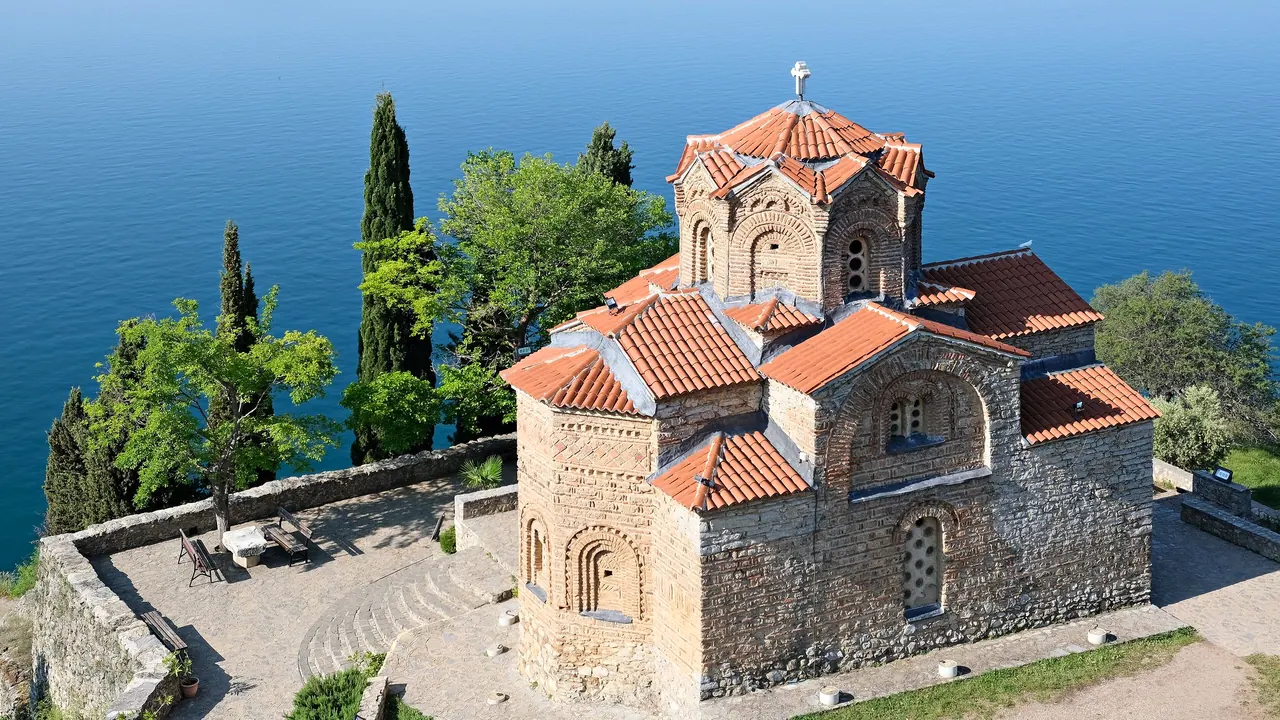
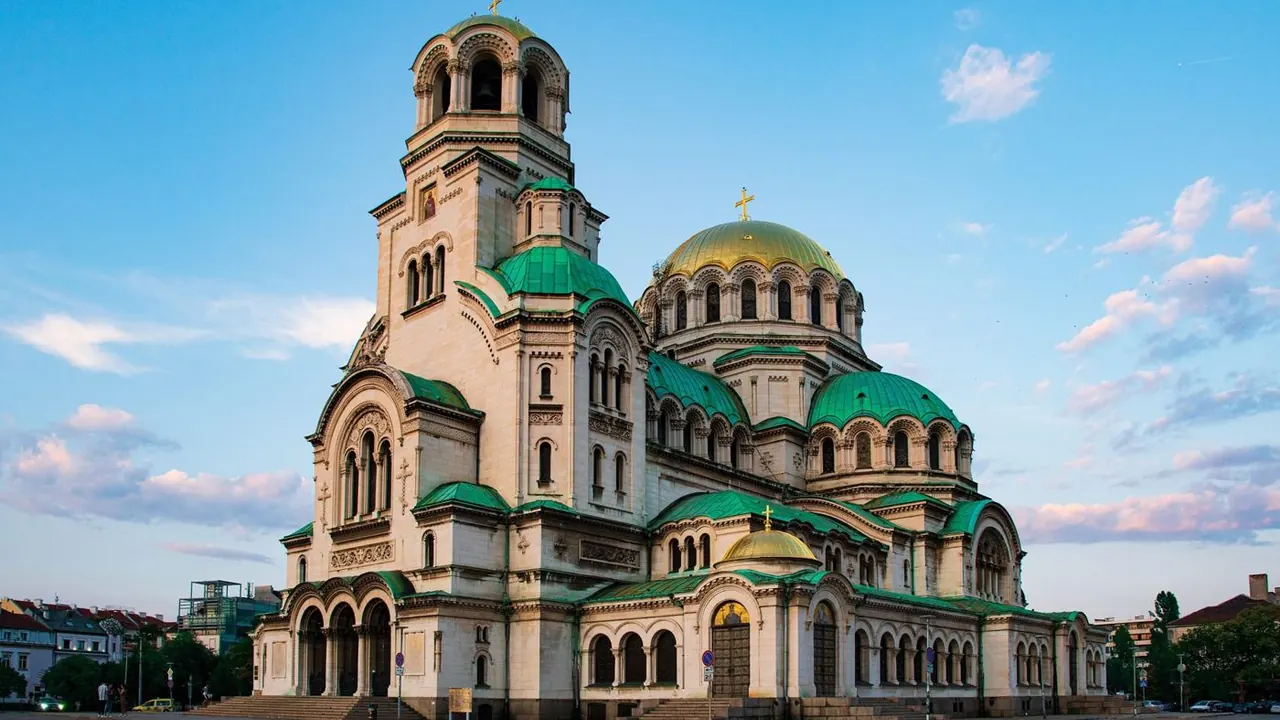
Photos: Ohrid by kallerna, CC BY-SA 4.0, cropped; Sofia by Jose Ligero Loarte, CC BY-SA 4.0, cropped.
Ohrid or Sofia?
Our verdict in twelve categories, each scored against the same fixed benchmark cities, and the climate month by month, so you can choose for your trip.
Choose Ohrid for
- beaches
- culture and sights
- families
Ohrid suits a slower summer trip built around water. You swim off jetties in one of Europe's clearest lakes and spend a day or two walking a small UNESCO-listed old town of frescoed churches. Evenings are spent strolling the promenade. It is a lake town rather than a city, ideal for couples and families who want calm and clean water more than things to do.
Choose Sofia for
- live music and the arts
- nightlife
- wellness
Choose Sofia for a city break with a mountain on the doorstep. It has more going on after dark, a real opera and concert season, warm mineral springs and a metro that makes it easy to get around. Vitosha's trails are a bus ride away, and Rila and Plovdiv make strong day trips. It works in any season, but there is nowhere to swim worth the name.
Scoreboard
Twelve categories on one fixed scale from 0 to 100. The shaded stretch is the gap between the two.
Your match
Pick a travel style or drag the sliders, and both match scores follow your weighting.
Too close to call, 2 points apart
Wins on beaches and culture and sights with your weighting.
Wins on live music and the arts and nightlife with your weighting.
What matters to you?
Category by category
What the scores mean for a trip.
Beaches & swimming
Only one of these two has swimming worth planning a trip around. Ohrid's lake is clear, calm and free of salt in July and August. There are coves and jetties below Kaneo and at Potpeš, and longer stretches with loungers at Lagadin and Gradište further south.
Sofia sits on a high inland plain. Swimming there means a park pool or the lake at Pancharevo, and the Black Sea coast is a separate trip altogether.
Food & drink
Both cities cook from the same Balkan tradition: grilled meats, a salad under white cheese and flaky pastry for breakfast. Sofia does it with more range. Rustic mehana taverns sit alongside lighter bistros behind Vitosha Boulevard, and wine bars pour Mavrud and Melnik.
Ohrid's special dish is lake fish such as belvica. The waterfront menus repeat one another, though, and the better meals mean climbing into the upper old town or driving to a village on the shore.
Culture & sights
Ohrid edges ahead because its sights form a single whole. St Sophia's frescoes, St John at Kaneo on its rock, Plaošnik and Samuel's Fortress all share one hill, with Ottoman-era houses in between, and the town and lake are listed by UNESCO together.
Sofia's history is spread more widely: Roman Serdica, the Rotunda of St George, the Alexander Nevsky Cathedral and the Thracian gold in the National Museum of History. Its finest frescoes are at Boyana, out at the foot of Vitosha. The streets between these sights are plain, so the pleasure lies in the buildings themselves rather than the walk between them.
Nightlife
Sofia goes out all year round. There are cocktail and wine bars around Shishman and Tsar Ivan Asen streets, cellar bars under old buildings full of students, and a few electronic clubs.
Ohrid wakes up only in July and August, when the promenade café-bars and the beach clubs on the southern shore fill with visitors from across the region. For the rest of the year, evenings end with wine at dinner.
Nature & outdoors
Both cities sit below real mountains, but Sofia has more within reach. Vitosha rises straight from the edge of the city, and buses and a gondola climb to its spruce forest and boulder rivers. The Rila range, with the Seven Rila Lakes and the ski slopes at Borovets, is a morning's drive away.
Ohrid's strength is the lake itself. You can paddle a kayak, walk the shore path or take a rowing boat across the spring-fed pool at the southern end. From the Galičica ridge you can see the Ohrid and Prespa lakes together. The setting is lovely, but there is less ground to explore.
Day trips
Each city has one monastery outing that almost everyone makes. From Ohrid it is St Naum, reached by boat along the lake in summer. From Sofia it is Rila, two hours away in a mountain valley. From Sofia, Plovdiv adds a second historic city with a Roman theatre, and you can get there by train.
Ohrid's outings are smaller and closer: Struga, Bitola with the mosaics of Heraclea, Vevčani, and Korçë across the Albanian border. Its roads are slow, so a car helps far more than it does from Sofia.
Good for families
Neither city is built around children, and both are calm and easy places to bring them. In Ohrid, summer is the whole appeal: long days in clear water, boat rides and the prehistoric pile village at the Bay of Bones, ideally from a lakeside apartment.
Sofia works in any season. It has big parks with playgrounds, a hands-on science centre and a gondola day on Vitosha. Steep cobbles in Ohrid and broken pavements in Sofia make pushchairs hard work in both.
Getting around
Sofia is easier without a car. Its metro links the airport, the centre and the foothills of Vitosha, and trams and buses cover the rest, although Cyrillic signs and cracked pavements slow you down.
Ohrid's centre is small but steep. Once you head for the southern beaches, St Naum or the mountains, the infrequent buses and summer boats lead most visitors to hire a car or a driver.
Shopping & style
Neither city is worth the trip for shopping, but Sofia has more variety. There are chain stores along Vitosha Boulevard, rose oil and Troyan pottery in craft shops, and an icon flea market near Alexander Nevsky. Ohrid has one distinctive buy, the Ohrid pearl, best bought from an old family workshop in the bazaar. Beyond that there are carved wood, filigree silver and summer souvenirs.
Affordability
Both are among the cheapest trips in Europe, so the difference is in timing. Ohrid is cheapest in late spring and early autumn, when the weather is also kind. Lakefront rooms cost more in July and August. Sofia is a capital at modest prices, where even the smarter bistros and cocktail bars feel reasonable and a day at Rila or on Vitosha adds little to the bill.
Live music & performing arts
Sofia has a proper season. The National Opera and Ballet performs for most of the year, the Philharmonic plays at Bulgaria Hall, and Orthodox choral singing is the most distinctive thing to hear.
Ohrid's music comes with the Summer Festival, held since the early 1960s, which puts concerts and opera inside St Sophia and in the ancient theatre. These are memorable settings, but outside the summer there is little to see.
Wellness & relaxation
Sofia sits on mineral springs. Locals fill bottles at the warm taps beside the old Central Mineral Baths, there are mineral pools on the edge of the city, and the spa town of Bankya is half an hour away. Ohrid has no bathing tradition beyond a few hotel spas. Its kind of rest is the stillness of the lake in May, June and September, before or after the August crowds.
When should you go?
Pick your month. The climate figures are measured averages, not a forecast.
Ohrid in July
Sofia in July
Daytime high, °C
Rainfall in the month, mm
Where the figures come from
Ohrid has no rain gauge within 25 km of the centre, so its rainfall comes from a gridded climate dataset read at the city rather than from a gauge further away.
Temperature and rainfall are climate normals, averaged over the years shown. Ohrid: 1999-2017 (rainfall 1991-2020) normals, Ohrid (0.2 km from centre). Sofia: 1991-2020 normals, Sofia Observ. (7.3 km from centre).
Ohrid and Sofia follow almost the same temperature curve. Both are cold in winter, mild in spring and autumn, and warmest in July and August at 28°C to 29°C. Where they part is the rain. Ohrid is driest in high summer and wettest from October to December, when around 94mm a month falls, so late autumn and winter there are grey and damp. In Sofia, May and June are the wettest months, though its rain is spread fairly evenly through the year and its winters are much drier than Ohrid's. Sofia's summers are also very sunny, with more than 300 hours of sunshine in July.
In Ohrid the lake is warm enough to swim in from late June to mid-September. May, June and September are the best months for the old town and the Galičica trails, before and after the hottest weeks. Sofia is good for city walking and mountain hiking from May to early October. In winter the cold makes long days on its streets less pleasant, but snow on Vitosha and Rila brings the skiing.
Which traveller are you?
On a beach and sun trip, Ohrid is the clear choice. Its clear, calm lake is warm in July and August and has swimming spots below the old town and longer beaches further south. Sofia is far inland and has only park pools.
For a food and nightlife trip, Sofia offers more. It has mehana taverns with folk music, lighter bistros and wine bars serving Bulgarian grapes, and the bars around Shishman Street are open all year. Ohrid's evenings come alive only in midsummer.
On an outdoors trip, Sofia gives you more ground. You can hike Vitosha straight from the city, and the Seven Rila Lakes and Borovets skiing are within a morning's drive. Ohrid has Galičica and the lake, but less terrain to cover.
Before you go
| Measure | Ohrid | Sofia |
|---|---|---|
| Official language | Albanian, Macedonian | Bulgarian |
| Currency | Denar (MKD) | Euro (EUR) |
| Sockets | CF230 V, 50 Hz | CF230 V, 50 Hz |
| Driving side | Right | Right |
| Time zone | UTC+1, UTC+2 in summer | UTC+2, UTC+3 in summer |
| Emergency number | 112 | 112 |
| Elevation | 695 m | 560 m |
| Main airport | Ohrid St. Paul the Apostle Airport (OHD)9 km from centre14 non-stop destinations | Sofia Airport (SOF)8 km from centre97 non-stop destinations |
| Public holidays this year | 12 days | 15 days |
By the numbers
| Measure | Ohrid | Sofia |
|---|---|---|
| City population | 38,818 | 1,213,134 |
| People per km² | 100 | 2,466 |
| Museums within 10 km | 11 | 43 |
| UNESCO World Heritage sites within 50 km | 2 | 1 |
Where else could you go?
Every comparison below shares a destination with this one, so you can follow Ohrid or Sofia somewhere new.