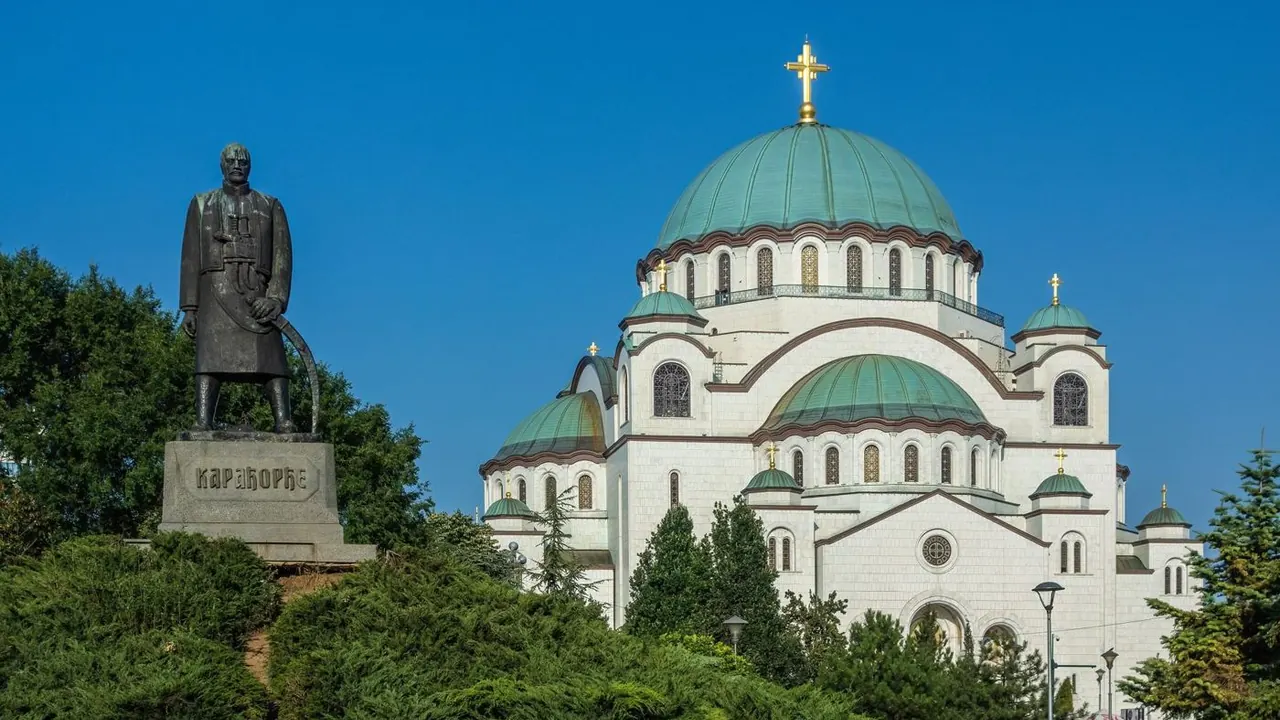
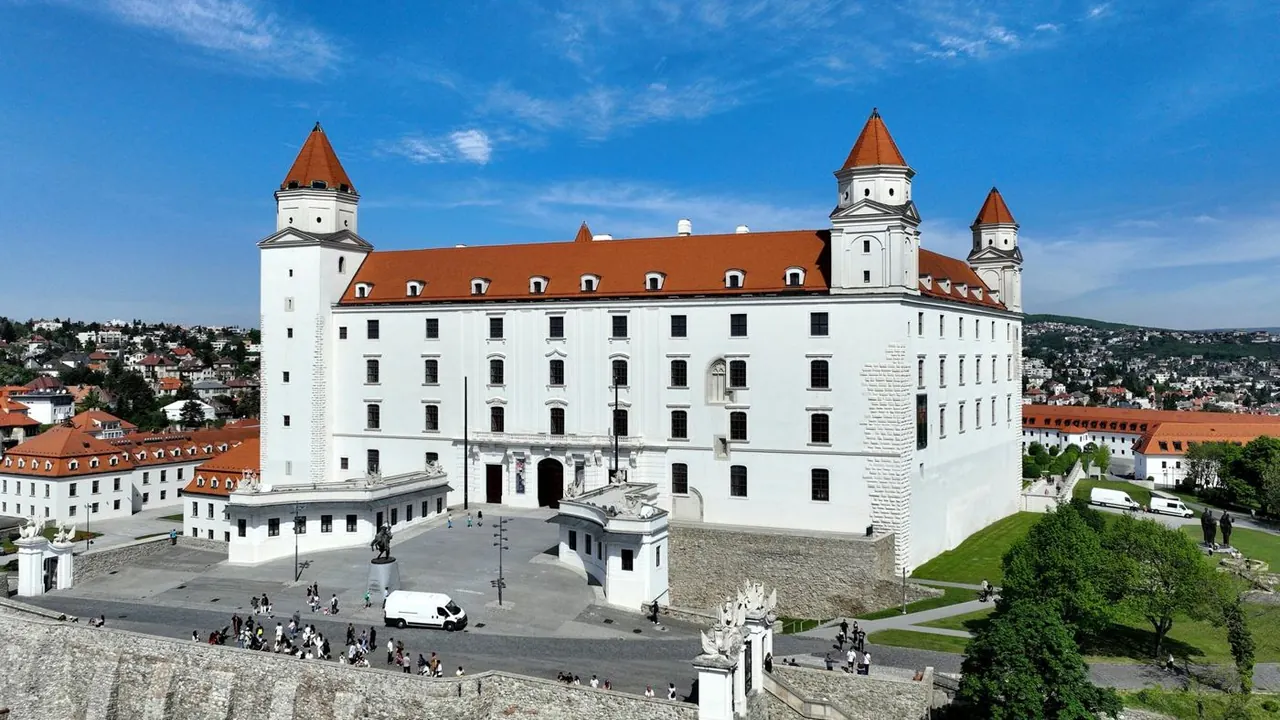
Photos: Belgrade by Petar Milošević, CC BY-SA 4.0, cropped; Bratislava by C.Stadler/Bwag, CC BY-SA 4.0, cropped.
Belgrade or Bratislava?
Our verdict in twelve categories, each scored against the same fixed benchmark cities, and the climate month by month, so you can choose for your trip.
Choose Belgrade for
- nightlife
- beaches
- food and drink
Belgrade is the choice for travellers who want long nights and generous tables. Floating river clubs, late kafana evenings and grill-heavy cooking give a trip real energy, and in summer the lake beaches of Ada Ciganlija add a swim to the day. It is also a little kinder on the wallet, though you need some patience with traffic, noise and an old town that survives only in patches.
Choose Bratislava for
- day trips
- getting around
- wellness
For a calmer, more compact stay, Bratislava fits better. Its baroque Old Town can be walked in an afternoon, the Little Carpathian forests begin at the edge of town, and with two borders close by, Vienna, wine villages and castles all make easy days out. It suits a quieter couple, or anyone who wants a base for exploring the region rather than a city to stay up late in.
Scoreboard
Twelve categories on one fixed scale from 0 to 100. The shaded stretch is the gap between the two.
Your match
Pick a travel style or drag the sliders, and both match scores follow your weighting.
Wins on nightlife and beaches with your weighting.
Wins on day trips and getting around with your weighting.
What matters to you?
Category by category
What the scores mean for a trip.
Beaches & swimming
Neither is a beach destination, but in Belgrade summer swimming is a real part of city life. The gravel shores of Ada Ciganlija, a lake formed from the Sava, stretch for kilometres with lifeguards and shallow warm water. The sandy Lido on Great War Island, reached by boat, is a wilder option.
Bratislava cannot match that, because the Danube there is too fast and too busy with barges to swim in. Bathing means the sandy lake at Zlate piesky, which you can reach by tram, or the Senec lakes half an hour away. Both are fine on a hot afternoon but crowded at weekends.
Food & drink
Belgrade gives a food-minded traveller more to work with. The grill culture of ćevapi and pljeskavica with kajmak and ajvar, kafanas with long menus and live bands, burek for breakfast and mornings at the Kalenić market make eating a central part of the stay.
Bratislava's cooking is simpler farm food: bryndzove halusky, roast duck with lokse and the old Bratislava rolls, and the central squares lean towards tourist menus. Its strength is in the glass, with Small Carpathian Veltliner and Frankovka in the wine bars and beer from small breweries. Vegetarians will find the choice thin in both.
Culture & sights
Belgrade has the slightly deeper set of sights, though it is a city of layers rather than a polished old centre. Kalemegdan fortress holds walls from Roman to Austrian times above the meeting of the rivers, and the Temple of Saint Sava is vast. The Museum of Yugoslavia, with Tito's mausoleum, tells a story that Bratislava has nothing to match.
Bratislava's centre is more intact and more compact. You can walk the baroque Old Town, St Martin's coronation cathedral and the castle above them in a day, and the cliff-top ruins of Devin make a short outing. It is prettier street by street, but there is less to see.
Nightlife
This is the widest gap between the two. In Belgrade the nights are a reason to go. In summer, splavs moored along the Sava and Danube play everything from turbo-folk to house until dawn, in winter the action moves into basements and old industrial spaces, and all year the bars of Dorćol spill onto the pavements. At the big clubs people book a table and order by the bottle, so dress up.
In Bratislava, going out means a handful of Old Town streets of pubs, wine bars and cocktail bars. They are loud at weekends with students and stag groups and quiet midweek. It makes a good pub crawl, but there is hardly any club scene.
Nature & outdoors
The two are close here, and the difference is rivers against hills. Belgrade's outdoors is flat and watery: long promenades on the Sava and Danube, the protected wetland of Great War Island with its herons, and rowing and wakeboarding at Ada Ciganlija. Fruška Gora's gentle vineyard walks are about an hour north.
Bratislava has woodland on its doorstep. Trails climb from Koliba through beech forest to Kamzik and on along the Little Carpathian ridge, Devinska Kobyla has steppe meadows and wide views, and the flat Danube cycle route runs into Austria. The whitewater course at Cunovo adds rafting, which Belgrade does not have.
Day trips
Bratislava has the stronger set of excursions, mainly because Vienna is about an hour away by train or a pleasant boat ride. Add the wine route through Svaty Jur, Pezinok and Modra, the churches of Trnava, and Carnuntum, Lednice-Valtice and Pannonhalma across three borders, and you could fill a week of days out.
Belgrade's best outing is Novi Sad and its Petrovaradin fortress, under an hour by fast train, which combines well with Sremski Karlovci and the Fruška Gora monasteries. Smederevo, Viminacium and Oplenac are rewarding too, but most of them need a car or a tour.
Good for families
Neither city is built around children, and the two come out about even, with different strengths. Belgrade has more to do: ramparts, tanks and a small zoo at Kalemegdan, and an easy summer day in the shallow water at Ada Ciganlija. But heavy traffic and pavements crowded with parked cars make it hard work with a pushchair.
Bratislava is smaller and quieter. The Old Town is mostly pedestrian, with bronze statues to spot, and there are the chairlift and playgrounds at Kamzik, a hillside zoo and the Senec water park. Its options run out sooner, but it is easier with toddlers.
Getting around
Bratislava is the easier city to get around. Almost everything a visitor wants is within a twenty-minute walk, and one ticket covers the trams, trolleybuses and buses out to Kamzik, the zoo and Devin.
Belgrade's centre is walkable too, but the streets climb steeply from the rivers, and Zemun and New Belgrade lie across the Sava. Its trams and buses are crowded, slowed by traffic and hard for a visitor to work out, so most people rely on cheap taxis and ride-hailing. Neither city has a metro.
Shopping & style
Belgrade's best buys are local rather than branded. Young designers keep small boutiques in Dorćol and Vračar, the Kalenić and Zeleni Venac markets sell honey, ajvar, rakija and cheese to carry home, and the shops around Kalemegdan stock opanci leather shoes and embroidered textiles. Knez Mihailova and the big malls cover the familiar chains.
Bratislava gives a browser less, mostly Old Town souvenir shops and riverside malls. Its one real find is the state folk-craft centre, with genuine Modra majolica, lace and blue-print cloth, and a bottle of Small Carpathian wine makes the best gift. Luxury fashion is thin in both, so neither city works as a shopping trip.
Affordability
Belgrade makes a budget go further. Grill meals, coffee on a terrace and rounds of rakija are cheap, taxis can be used freely and the fortress park costs little or nothing, so only central rooms and the smarter river clubs push spending up.
Bratislava is also good value by Western standards, with cheap beer, public transport and weekday pub lunches. But restaurants on the main Old Town squares and in the riverside complexes charge closer to Western prices, and rooms get dearer on busy summer weekends.
Live music & performing arts
Both capitals have a national theatre staging opera and ballet and a philharmonic in a historic hall, but Belgrade has more on and more character. Besides the National Theatre and the Kolarac hall, the Madlenianum in Zemun adds musicals, the BITEF and BEMUS festivals fill the autumn, and kafana bands play tamburica at the tables.
Bratislava offers a polished evening at the Slovak National Theatre on Hviezdoslav Square or at the Reduta, with tickets easy to get, best from autumn to spring. Music in bars is small-scale, and for a major international programme visitors go to Vienna.
Wellness & relaxation
For unwinding, Bratislava is the gentler choice. It moves at an unhurried pace for a capital, and the beech-forest paths above town are quiet on weekdays. Neither city has thermal baths of its own, but from Bratislava they are easy to reach: the Senec water park is half an hour away, and the mud and sulphur-water cures of Piestany are about an hour by train.
Belgrade asks for energy rather than giving you rest. The centre is loud, nights run late, smoking is common indoors, and the historic spa towns are several hours to the south. Its calm comes in smaller doses, from long coffees on a terrace or a slow afternoon by the lake on Ada Ciganlija or along the Danube promenade.
When should you go?
Pick your month. The climate figures are measured averages, not a forecast.
Belgrade in July
Bratislava in July
Daytime high, °C
Rainfall in the month, mm
Where the figures come from
Bratislava has no rain gauge within 25 km of the centre, so its rainfall comes from a gridded climate dataset read at the city rather than from a gauge further away.
Bratislava's sunshine is measured 56 km from the centre, at Wien / Hohe Warte.
Temperature and rainfall are climate normals, averaged over the years shown. Belgrade: 1991-2020 normals, Beograd (2.1 km from centre). Bratislava: 1991-2020 normals, Bratislava Ivanka (8.6 km from centre).
Both cities have true continental seasons, with cold grey winters and hot summers, but Belgrade is warmer in both. From June to August its afternoons reach about 30°C and July is very sunny. That is ideal for Ada Ciganlija and the river clubs but tiring for long walks through the centre, and June is its wettest month, with heavy showers. Bratislava's summer peaks a few degrees cooler at around 27°C, so midsummer sightseeing is easier, though its lake season is short and May and July bring the most rain.
For walking either city, May and September are the best months, warm without being oppressive. Winters are cold in both, with Bratislava slightly colder at around 3°C in January. From November to February the short grey days turn both into indoor cities of cafés and concerts, and in Belgrade of basement clubs.
Which traveller are you?
For a food and nightlife trip, Belgrade is the clear pick. Grill houses and kafana evenings with rakija and live bands lead straight on to splav clubs on the rivers that run until dawn. In Bratislava an evening out amounts to a cheerful Old Town pub crawl.
On a beach and sun trip, neither city replaces the coast, but Belgrade comes far closer. Ada Ciganlija has kilometres of lifeguarded lake beaches and long hot summers. Bratislava's lakes at Zlate piesky and Senec are pleasant, but their season is short and they are crowded at weekends.
For a short city break, Bratislava is the easier of the two. The castle, the coronation cathedral and the Old Town squares sit a few minutes' walk apart, two days covers them comfortably, and Vienna is close enough to add without changing hotel.
Before you go
| Measure | Belgrade | Bratislava |
|---|---|---|
| Official language | Serbian | Slovak |
| Currency | Serbian Dinar (RSD) | Euro (EUR) |
| Sockets | CF230 V, 50 Hz | CE230 V, 50 Hz |
| Driving side | Right | Right |
| Time zone | UTC+1, UTC+2 in summer | UTC+1, UTC+2 in summer |
| Emergency number | Police 92/192, ambulance 94/194, fire 93/193 | 112 |
| Elevation | 117 m | 152 m |
| Main airport | Belgrade Nikola Tesla Airport (BEG)12 km from centre125 non-stop destinations | M. R. Štefánik Airport (BTS)8 km from centre70 non-stop destinations |
| Public holidays this year | 11 days | 15 days |
By the numbers
| Measure | Belgrade | Bratislava |
|---|---|---|
| City population | 1,197,714 | 480,902 |
| People per km² | 3,327 | 1,308 |
| Museums within 10 km | 65 | 22 |
| UNESCO World Heritage sites within 50 km | 0 | 2 |
Where else could you go?
Every comparison below shares a destination with this one, so you can follow Belgrade or Bratislava somewhere new.