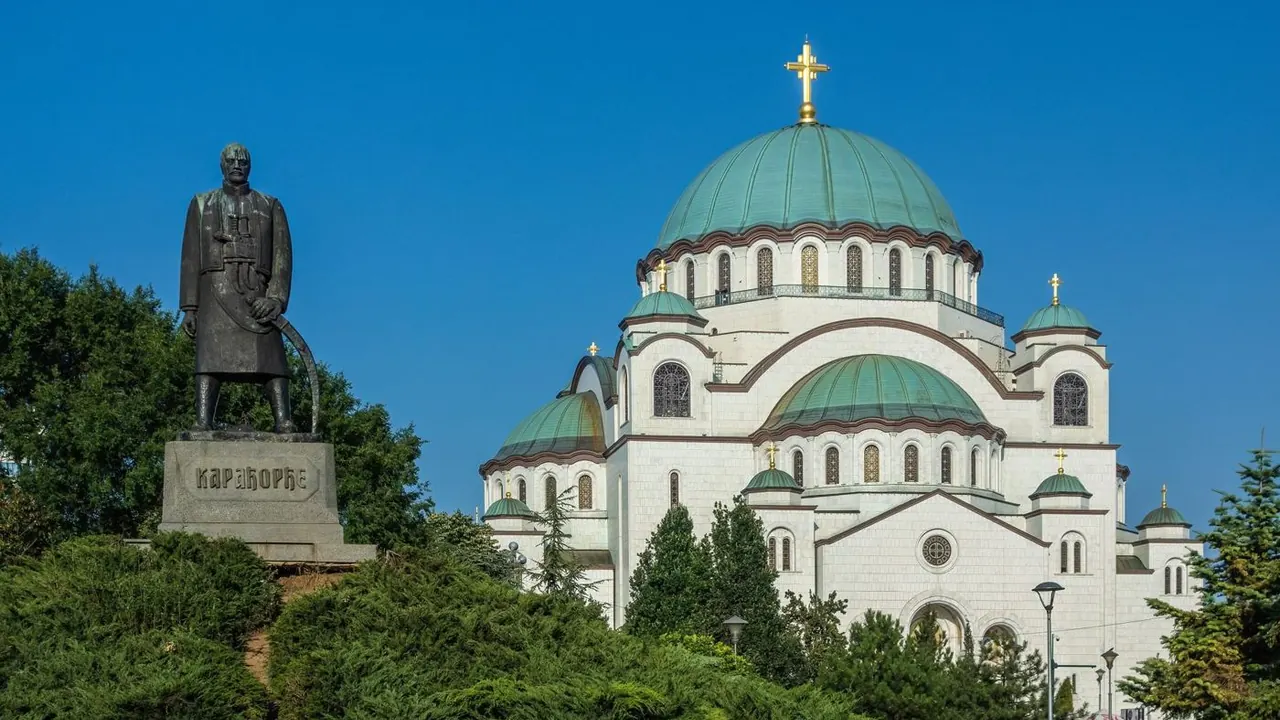
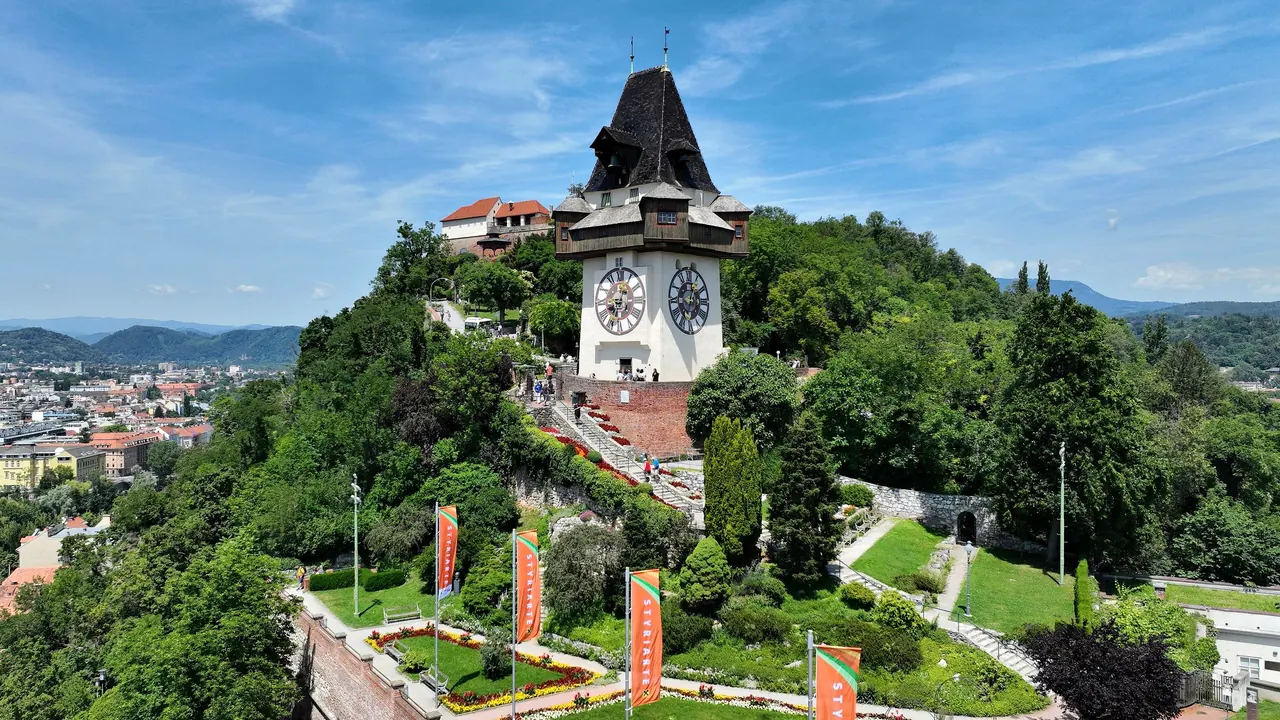
Photos: Belgrade by Petar Milošević, CC BY-SA 4.0, cropped; Graz by C.Stadler/Bwag, CC BY-SA 4.0, cropped.
Belgrade or Graz?
Our verdict in twelve categories, each scored against the same fixed benchmark cities, and the climate month by month, so you can choose for your trip.
Choose Belgrade for
- nightlife
- beaches
- prices
Belgrade is the choice for travellers who want long nights and a low daily spend. Its evenings run from kafana tables heavy with rakija to floating clubs on the Sava and Danube that stay open until dawn. A summer afternoon on the lake beaches of Ada Ciganlija makes up for the patchy old town. Groups of friends and night owls will get the most from it, and so will anyone who likes a city that is rough at the edges and generous at the table.
Choose Graz for
- getting around
- nature and the outdoors
- wellness
Graz suits a slower, tidier trip. The old town is small and intact, the trams are simple, and the Schlossberg rises straight out of the centre. Mountains, wine hills and thermal spas are all within an easy drive. Couples, families with young children and walkers who would rather spend the evening over a glass of Sauvignon Blanc than in a club will feel more at home here, as long as they accept Austrian prices.
Scoreboard
Twelve categories on one fixed scale from 0 to 100. The shaded stretch is the gap between the two.
Your match
Pick a travel style or drag the sliders, and both match scores follow your weighting.
Too close to call, 1 point apart
Wins on nightlife and beaches with your weighting.
Wins on getting around and nature and the outdoors with your weighting.
What matters to you?
Category by category
What the scores mean for a trip.
Beaches & swimming
Neither city is a beach destination, but Belgrade gives a summer visitor a much better swim. Ada Ciganlija has kilometres of gravel shore, lifeguarded water and an after-work crowd, all a short ride from the centre. Across from Zemun, the sandy Lido on Great War Island is a quieter Danube alternative reached by boat.
In Graz the river is not for swimming, so a swim means taking a trip out to the former gravel pits south of town, mainly the Schwarzlsee, or to Stubenbergsee in the hills. These are pleasant for a hot afternoon but take more effort and offer less.
Food & drink
The two are equally good places to eat, but they cook very differently. Belgrade means grilled meat: ćevapi and pljeskavica with kajmak and ajvar, burek for breakfast and long kafana evenings with fruit brandy. The portions are big and the meals go on late.
Graz cooks from a regional larder. Pumpkin seed oil goes on almost everything, with cold fried chicken salad and pork with horseradish, and crisp white wines come from the hills to the south. The markets show the same split: Zeleni Venac and Kalenić in Belgrade, Kaiser-Josef-Platz and Lendplatz in Graz. Vegetarians and anyone wanting international food will find the choice limited in both.
Culture & sights
Graz has the more rewarding sightseeing because so much of its past survives intact. The red-roofed old town, with its Renaissance arcaded courtyards, climbs to the cathedral and the imperial mausoleum. The seventeenth-century armoury still holds thousands of suits of armour, and Schloss Eggenberg and the blue Kunsthaus add a palace and a modern landmark.
Belgrade has been destroyed and rebuilt too often for that kind of harmony, so its sights come in fragments. The best of them is Kalemegdan, with its walls from every era above the two rivers. The Temple of Saint Sava's gold mosaics and the Museum of Yugoslavia, with Tito's grave, tell the twentieth-century story that Graz cannot.
Nightlife
Nights out are one of the main reasons to visit Belgrade, and the gap here is wide. In summer, floating clubs line the Sava and Danube playing everything from turbo-folk to house. Cocktail bars fill the streets of Dorćol, and at the bigger venues people book a table and order by the bottle until dawn.
Graz goes out on a much smaller scale. Its nights are bar-hopping in the old-town lanes around Mehlplatz, artier bars in Lend and a few late clubs at weekends. The city also goes quiet over the long summer break, just when Belgrade's river season is at its busiest.
Nature & outdoors
Graz has the better outdoors, because it sits where the Alps meet hill country. The Schöckl offers a cable car, trails and paragliding straight from town. The Bärenschützklamm gorge climbs past waterfalls on wooden ladders, and proper alpine hiking in the Gesäuse is within about two hours.
Belgrade's outdoors is flat and shaped by its rivers. There are long promenades for walking and cycling, herons on the Great War Island wetland and wooded parks at Košutnjak. Its best hill walking is on the low vineyard ridge of Fruška Gora, and its dramatic gorge country is too far for a day.
Day trips
Both cities have good day trips, and both have one easy outing by train. From Belgrade it is Habsburg Novi Sad and its Danube fortress, and from Graz it is Maribor across the Slovenian border. Beyond that, Belgrade's outings lean towards history, with the monasteries of Fruška Gora, the medieval walls of Smederevo and the Roman site at Viminacium.
Graz's outings lean towards countryside: the taverns of the South Styrian Wine Road, Riegersburg castle on its volcanic crag, the Lipizzaner stud at Piber and the great abbey library at Admont. Around both cities, a car makes most of these far easier.
Good for families
Graz is the easier city with small children. Families can ride the lift up the Schlossberg and come down by a long slide inside the hill. A little train runs through fairytale tunnels in the rock, there is a hands-on children's museum in the Augarten, and the trams take buggies.
Belgrade is warm towards children, and families eat out late without fuss. Kalemegdan's tanks, ramparts and small zoo fill an afternoon, and Ada's shallow lake fills a summer day. However, the heavy traffic and crowded pavements make it better suited to older children than to toddlers.
Getting around
Graz is much simpler to get around. The centre is flat and mostly pedestrianised, one ticket covers every tram and bus, and bikes along the Mur are an easy alternative. Outside the city it is different, because rural buses are sparse.
Belgrade's core is walkable too, but the walk up from the rivers is steep. The trams, trolleybuses and buses are crowded, slowed by traffic and hard for a visitor to work out, and there is no metro. Most visitors rely on cheap taxis to reach Zemun or New Belgrade.
Shopping & style
Graz is slightly the better place to shop, though neither city is worth a trip for it. Its main shops sit in historic buildings along the Herrengasse and the steep Sporgasse, and the grand nineteenth-century department store has a roof terrace over the old town. Lend adds vintage and design shops.
Belgrade has chain stores on Knez Mihailova, large malls and young designers in Dorćol and Vračar. In both cities the best things to take home are edible: honey, ajvar and rakija from Belgrade's markets, or pumpkin seed oil, Schilcher rosé and chocolate from Graz.
Affordability
Belgrade is clearly the cheaper trip, and most of the saving comes from everyday eating and drinking. The costs that spoil the picture are the big clubs on the river, where tables are booked and drinks come by the bottle, and international-style restaurants, which charge well above a kafana. A central room in Dorćol or near Knez Mihailova also costs more than you might expect after the low prices on the street.
In Graz you pay steady Austrian prices with fewer surprises. Hotels are reasonable for the country but rise during the big festivals and trade fairs, so dates matter. Sightseeing is good value, because combined tickets cover the Joanneum museums and many other sights, and in a centre this compact you will spend very little on getting around.
Live music & performing arts
The two are evenly matched on stage, and each has an autumn festival of experimental work: BITEF in Belgrade and steirischer herbst in Graz. In both, the theatre is in the local language, so music is the easier way in.
Graz's opera house, the second largest in Austria, gives it the stronger formal season, along with early music at Styriarte and a well-regarded jazz scene fed by the music university. Belgrade has the National Theatre and the Philharmonic at Kolarac. Its distinctive extra is tamburica and old-town bands playing at the tables in the kafanas of Skadarlija and Zemun.
Wellness & relaxation
Graz is the better base for rest. Styria's thermal villages are about an hour east, with Hundertwasser's grass-roofed resort at Bad Blumau and large warm pools at Loipersdorf. The quiet centre, the coffee houses and the shaded Schlossberg paths keep the pace slow in town as well.
Belgrade's spa towns lie hours to the south, so here wellness means hotel spas. The centre is loud, the nights are late and people smoke indoors. Its calm moments are a long coffee on a terrace or an afternoon by the lake on Ada Ciganlija.
When should you go?
Pick your month. The climate figures are measured averages, not a forecast.
Belgrade in July
Graz in July
Daytime high, °C
Rainfall in the month, mm
Temperature and rainfall are climate normals, averaged over the years shown. Belgrade: 1991-2020 normals, Beograd (2.1 km from centre). Graz: 1991-2020 normals, Graz Airport (7.9 km from centre).
Belgrade has the hotter and sunnier summer. July and August reach about 30°C with long clear days. That suits the lake beaches on Ada Ciganlija and the river clubs, but it makes the climb up the slopes of the centre hard work at midday. Late spring is showery, and the rain peaks in June at around 95mm before the high summer dries out. September is the best month for walking the city, because it is still warm and drier than early summer. Winters are cold and grey, with little sun.
Graz is a few degrees cooler. Its rain also peaks in summer, but it gets much more of it, around 125mm a month from June to August. Even so, highs near 27°C keep the bathing lakes pleasant on the drier days. May and September are wet too, so April and October are the better months for the old town and the wine hills, because they are mild and clearly drier. Winter is the driest season and sunnier than Belgrade's, but it is cold, with January highs near 3°C.
Which traveller are you?
For a food and nightlife trip, Belgrade wins clearly. Grill dinners in a kafana with rakija and a band lead on to splavs on the rivers and bars in Dorćol, and the nights run until dawn. Graz's student bars quieten early by comparison.
On an outdoors trip, Graz is far better placed. The Schöckl, with its cable car and trails, is on the edge of town, the Mur cycle path runs through the centre, and the alpine walls of the Gesäuse are a day out. Belgrade offers mostly riverside promenades and gentle hills.
On a tight budget, Belgrade stretches the money much further. Meals, coffee, drinks and taxis cost a fraction of Austrian prices, and the fortress park is free. In Graz, student lunch menus help, but dinners, wine and hotels follow Western European rates.
Before you go
| Measure | Belgrade | Graz |
|---|---|---|
| Official language | Serbian | German, Austrian Sign Language |
| Currency | Serbian Dinar (RSD) | Euro (EUR) |
| Sockets | CF230 V, 50 Hz | CF230 V, 50 Hz |
| Driving side | Right | Right |
| Time zone | UTC+1, UTC+2 in summer | UTC+1, UTC+2 in summer |
| Emergency number | Police 92/192, ambulance 94/194, fire 93/193 | 112 |
| Elevation | 117 m | 353 m |
| Main airport | Belgrade Nikola Tesla Airport (BEG)12 km from centre125 non-stop destinations | Graz Airport (GRZ)9 km from centre26 non-stop destinations |
| Public holidays this year | 11 days | 16 days |
By the numbers
| Measure | Belgrade | Graz |
|---|---|---|
| City population | 1,197,714 | 306,971 |
| People per km² | 3,327 | 2,406 |
| Museums within 10 km | 65 | 29 |
| UNESCO World Heritage sites within 50 km | 0 | 1 |
Where else could you go?
Every comparison below shares a destination with this one, so you can follow Belgrade or Graz somewhere new.