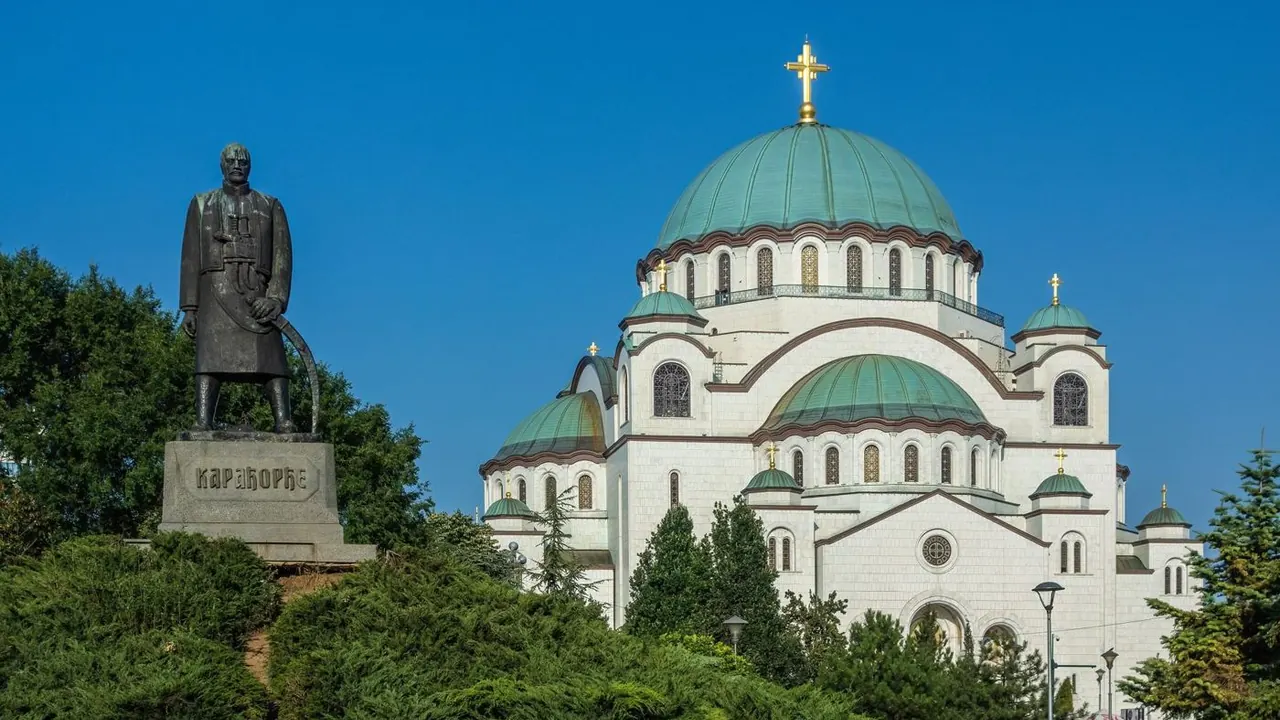
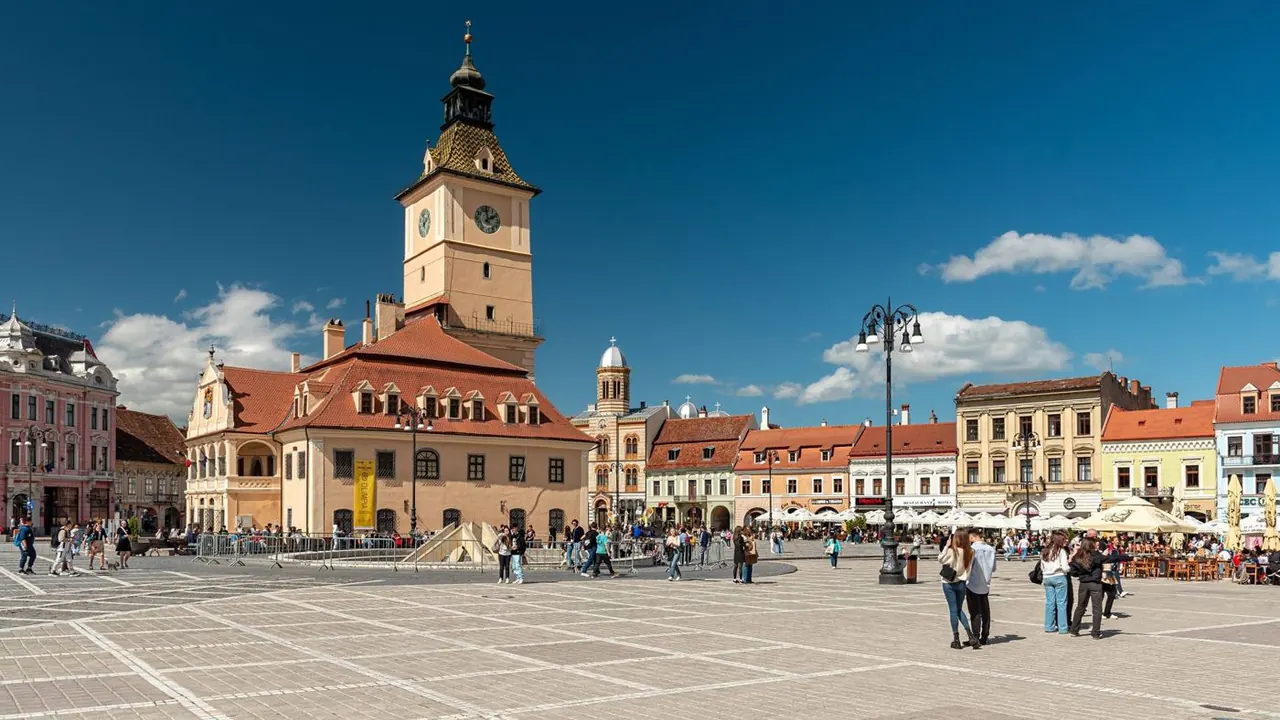
Photos: Belgrade by Petar Milošević, CC BY-SA 4.0, cropped; Brasov by Jorge Franganillo, CC BY 2.0, cropped.
Belgrade or Brasov?
Our verdict in twelve categories, each scored against the same fixed benchmark cities, and the climate month by month, so you can choose for your trip.
Choose Belgrade for
- nightlife
- beaches
- food and drink
Belgrade suits travellers who want a capital with late nights, a big appetite and life on the rivers. Its floating splav clubs, long kafana evenings and grill-heavy cooking set it well apart from Brasov. In summer the lake beaches of Ada Ciganlija also give you a proper swim, which a Transylvanian mountain town cannot offer. Expect a loud, energetic city rather than a pretty one.
Choose Brasov for
- nature and the outdoors
- day trips
- families
Pick Brasov if mountains and countryside are the point of the trip. Tampa hill rises straight from the old town walls, and Poiana Brasov is just up the road for skiing or hiking. Bran, Rasnov, the Saxon fortified churches and Sighisoara are all within a day's reach. Its compact medieval centre and quieter evenings also make it the easier of the two with children.
Scoreboard
Twelve categories on one fixed scale from 0 to 100. The shaded stretch is the gap between the two.
Your match
Pick a travel style or drag the sliders, and both match scores follow your weighting.
Wins on nightlife and beaches with your weighting.
Wins on nature and the outdoors and day trips with your weighting.
What matters to you?
Category by category
What the scores mean for a trip.
Beaches & swimming
Neither city is a beach destination, but Belgrade does have a real summer swim. Ada Ciganlija's gravel shores on the Sava lake are shallow and lifeguarded, and the sandy Lido on Great War Island is a short boat ride away, so a hot afternoon in the water can be part of a summer stay.
Brasov has nothing like it. Swimming there means the water park, a hotel pool or a cold mountain lake, and the Black Sea coast is a separate trip several hours away.
Food & drink
Food plays a bigger part in a Belgrade trip. The kafana culture of Skadarlija and Zemun, ćevapi and pljeskavica from the grill, burek in the morning and the produce at Kalenić and Zeleni Venac make eating one of the city's real pleasures. Fruška Gora wines and serious fruit brandies come with it.
Brasov's Transylvanian cooking is satisfying, with sour ciorba, sarmale and papanasi served in cellars around Council Square, but it is dependable rather than a reason to go. In both cities, vegetarians and anyone after international food will find the choice narrow.
Culture & sights
The two are about even for sightseeing, in very different ways. Brasov is one coherent medieval Saxon town. Council Square, the Gothic Black Church with its Anatolian carpets, and the bastions and gates along the foot of Tampa make a satisfying whole that takes a day or two.
Belgrade is patchier, because it was rebuilt many times, but it has more range: the layered Kalemegdan fortress, the huge Temple of Saint Sava, and stronger museums, including the Museum of Yugoslavia with Tito's mausoleum. Choose Brasov for atmosphere and Belgrade for twentieth-century history.
Nightlife
Nightlife is Belgrade's strongest card, and this is where the two cities differ most. In summer the river splavs run until dawn, and in winter the action moves to basement clubs and old industrial spaces. Dorćol's bar streets fill on warm nights, and at the big clubs people book tables and dress sharply.
Brasov's evenings are pleasant but short: craft beer pubs, cellar bars and terraces around Council Square, a few student clubs at weekends and some après-ski noise in winter. Most nights are over well before the small hours.
Nature & outdoors
Brasov is far the better choice for the outdoors. Tampa hill rises straight from the walls, Poiana Brasov offers skiing and mountain biking about 12km away, and Piatra Craiului and the Bucegi plateaus above 2,000m are within an hour. Bear watching in the Carpathian forests is a rare extra.
Belgrade's green side is gentler and flatter. It has long promenades along the Sava and Danube, the wetland birds of Great War Island, the wooded parks of Košutnjak and Avala, and easy walks among the vineyards of Fruška Gora.
Day trips
Brasov is the better base for day trips. Bran and Rasnov are about half an hour away, Prejmer and Harman sit at the edge of town, and Peles Castle in Sinaia, Viscri and Sighisoara make longer days. That adds up to a week of castles, fortified churches and medieval towns.
Belgrade's best outing is the fast train to Novi Sad and Petrovaradin, easily combined with Sremski Karlovci and the Fruška Gora monasteries. Smederevo, Viminacium and Oplenac are worth a visit but are quieter, and from either city a car or tour makes the smaller places much easier to reach.
Good for families
Belgrade suits older children who enjoy history best. Kalemegdan has ramparts to climb, tanks outside the military museum and an old-fashioned zoo inside the walls, and in summer Ada Ciganlija adds playgrounds and bike hire. Families eating out late together is completely normal. However, there is no theme park or science museum, the summer heat is hard on small children, and uneven pavements lined with parked cars make a pushchair a struggle.
Brasov works for a wider range of ages and also in winter. Poiana Brasov has sledging and beginner slopes, and the water park's indoor pools cover a cold or wet day. The castles at Bran and Rasnov capture children's imaginations. Its cobbles and steep lanes are still tough with a pushchair, so in either city a baby carrier is the easier choice.
Getting around
You can walk around the centre of either city, so the difference is one of scale. You can cross Brasov's old town in a quarter of an hour, and nearly everything is inside its walls. Buses go up to Poiana Brasov and trains run to Sinaia and Sighisoara, but trips to the villages need a car or tour.
Belgrade's core around Kalemegdan, Knez Mihailova and Skadarlija is walkable too, though the climbs up from the rivers are steep, and Zemun and New Belgrade lie across the Sava. With trams, trolleybuses and buses but no metro, all slowed by traffic, most visitors rely on taxis.
Shopping & style
Belgrade has more to offer for browsing. Knez Mihailova and the big malls on the river and in New Belgrade cover the familiar brands. The more interesting finds are the young designers' boutiques in Dorćol and Vračar, and the honey, ajvar and rakija at the Kalenić and Zemun markets.
In Brasov, shopping centres on Republicii Street, where chains sit beside Dracula souvenirs, painted eggs and embroidered blouses. The best things to take home are edible: sheep's cheese, plum brandy and honey from the markets and delicatessens.
Affordability
Both are cheap by European standards, so what differs is where the money goes. In Belgrade, food, drink and taxis cost little, but central rooms are priced more like a Central European capital, and the river clubs charge more.
In Brasov the rooms are the bargain, with guesthouses and comfortable hotels in and around the old town costing little. Lift passes in the peak ski season and restaurants on Council Square are the costs to watch.
Live music & performing arts
Belgrade has much more on stage. The National Theatre on Republic Square puts on opera and ballet, the Belgrade Philharmonic plays at Kolarac, Madlenianum adds musicals, and the BITEF and BEMUS festivals give the autumn real weight. Tamburica bands in the kafanas of Skadarlija and Zemun bring live music to dinner.
Brasov's cultural life is on a regional scale, with a philharmonic, a small opera company and theatre in Romanian. Its highlight is a summer organ recital in the Black Church, along with open-air concerts on Council Square.
Wellness & relaxation
The real difference here is pace. In Belgrade, calm comes in short spells, such as a long coffee on a terrace or an afternoon by the lake at Ada Ciganlija or along the Danube promenade. Around them is a loud city where nights run late and smoking indoors is common. Beyond that, wellness means hotel spas and day spas.
Brasov is a small, quiet town where slowing down takes no effort. You can sit on a terrace under the mountains, use the resort spas up at Poiana Brasov or the saunas at the water park. Neither city has a bathing tradition of its own, and both countries' historic spa towns are well outside the city.
When should you go?
Pick your month. The climate figures are measured averages, not a forecast.
Belgrade in July
Brasov in July
Daytime high, °C
Rainfall in the month, mm
Where the figures come from
Brasov has no rain gauge within 25 km of the centre, so its rainfall comes from a gridded climate dataset read at the city rather than from a gauge further away.
Temperature and rainfall are climate normals, averaged over the years shown. Belgrade: 1991-2020 normals, Beograd (2.1 km from centre). Brasov: 2016-2025 (rainfall 1991-2020) normals, Brasov (3 km from centre).
Belgrade is the warmer city all year. July and August reach around 30°C, which is hot for long afternoons of sightseeing but right for the lake beaches at Ada Ciganlija, where you can swim from June to September. High summer is also when Belgrade gets the most sunshine. May, June and September are the most comfortable months for walking the streets, though June is the wettest month. Winters are grey and cold, with very few sunny hours.
Brasov is a few degrees cooler, and summer highs of about 26°C suit trekking in the Carpathians far better than Belgrade's heat does. Its rain falls mostly in early summer, with June and July each bringing around 95mm, so mountain afternoons can turn wet. Late August and September are drier and still mild. Winters are colder than in Belgrade, close to freezing in January, and that cold brings the snow for skiing above the town.
Which traveller are you?
For a food and nightlife trip, Belgrade is the clear choice. Nights start late on the splavs moored along the Sava and Danube, kafana tables run on rakija and grilled meat, and Dorćol's bars spill onto the pavement. Brasov's cellar bars close early by comparison.
On an outdoors trip, Brasov wins easily. You can walk from the town walls up Tampa hill, hike or ski on Postavarul, cross the high Bucegi plateaus and watch brown bears from hides. Belgrade offers riverside paths and the gentle Fruška Gora ridge.
On a family trip with children, Brasov is the gentler base. Its compact, partly traffic-free old town, the Tampa cable car, a rope park, a water park and the bear sanctuary near Zarnesti fill the days, while Belgrade's heavy traffic and crowded pavements wear families down.
Before you go
| Measure | Belgrade | Brasov |
|---|---|---|
| Official language | Serbian | Romanian |
| Currency | Serbian Dinar (RSD) | Romanian Leu (RON) |
| Sockets | CF230 V, 50 Hz | CF230 V, 50 Hz |
| Driving side | Right | Right |
| Time zone | UTC+1, UTC+2 in summer | UTC+2, UTC+3 in summer |
| Emergency number | Police 92/192, ambulance 94/194, fire 93/193 | 112 |
| Elevation | 117 m | 600 m |
| Main airport | Belgrade Nikola Tesla Airport (BEG)12 km from centre125 non-stop destinations | Brașov-Ghimbav International Airport (GHV)9 km from centre14 non-stop destinations |
| Public holidays this year | 11 days | 17 days |
By the numbers
| Measure | Belgrade | Brasov |
|---|---|---|
| City population | 1,197,714 | 237,589 |
| People per km² | 3,327 | 890 |
| Museums within 10 km | 65 | 8 |
| UNESCO World Heritage sites within 50 km | 0 | 1 |
Where else could you go?
Every comparison below shares a destination with this one, so you can follow Belgrade or Brasov somewhere new.