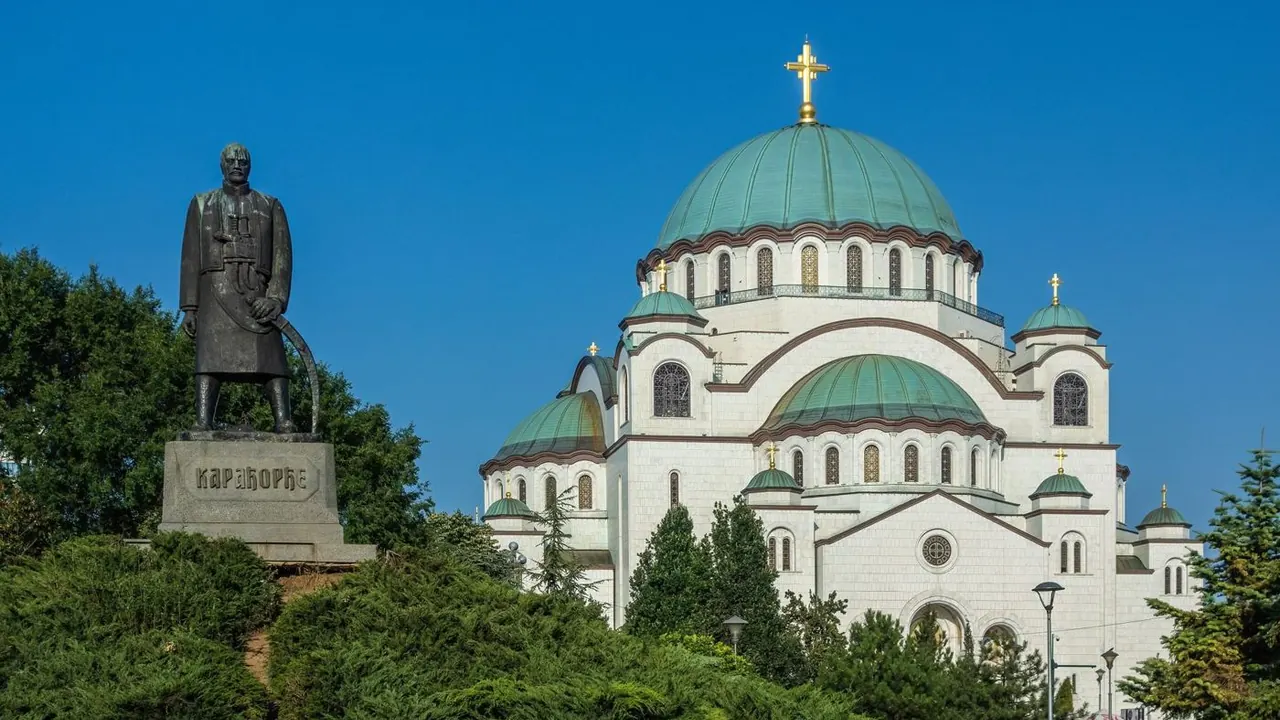
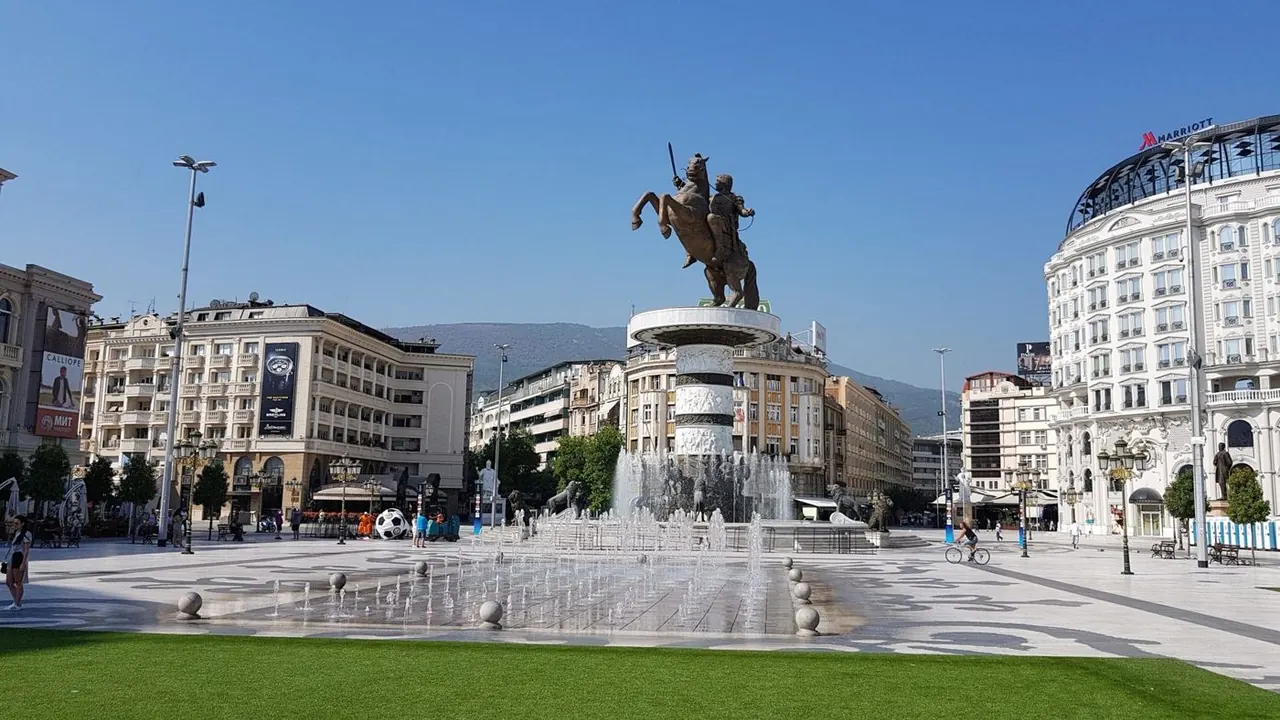
Photos: Belgrade by Petar Milošević, CC BY-SA 4.0, cropped; Skopje by George M. Groutas, CC BY 2.0, cropped.
Belgrade or Skopje?
Our verdict in twelve categories, each scored against the same fixed benchmark cities, and the climate month by month, so you can choose for your trip.
Choose Belgrade for
- nightlife
- beaches
- live music and the arts
Belgrade is the choice for a lively trip. Its nights are the main attraction, with floating clubs on the Sava and Danube, crowded bars in Dorćol and long kafana evenings over rakija. It also has a deeper food scene and a fuller calendar of opera, concerts and festivals, a real summer swim at Ada Ciganlija, and a centre that is a little easier to get around. Groups, night owls and anyone who wants a capital with some energy will get more out of it.
Choose Skopje for
- nature and the outdoors
- prices
- culture and sights
Skopje is better for travellers who want mountains close by and want their money to go as far as possible. Mount Vodno rises straight from the suburbs and Matka Canyon is a short ride out, so walking, kayaking and cave visits fit easily between sightseeing days. The Ottoman Old Bazaar gives the city an older, more eastern feel than Belgrade has, and the whole trip costs even less. It suits a slower, cheaper trip, ideally with a few days at Lake Ohrid added on.
Scoreboard
Twelve categories on one fixed scale from 0 to 100. The shaded stretch is the gap between the two.
Your match
Pick a travel style or drag the sliders, and both match scores follow your weighting.
Wins on nightlife and beaches with your weighting.
Wins on nature and the outdoors and prices with your weighting.
What matters to you?
Category by category
What the scores mean for a trip.
Beaches & swimming
Neither city is a beach destination, but Belgrade at least offers a proper summer swim. Ada Ciganlija has kilometres of gravel shore with lifeguards and warm, shallow lake water, and a boat crosses to the sandier, wilder Lido on Great War Island. A hot afternoon in the city can easily end in the water.
Skopje has nothing like this. Swimming there means hotel and public pools, and the cold reservoir at Matka is better for kayaks than for swimming. Anyone who wants to swim from a shore should plan a separate stay at Lake Ohrid, three hours away.
Food & drink
Both cities cook hearty Balkan food built around the grill, with ajvar, breakfast burek and rakija on every table, but Belgrade gives you more to work through. Its grills go well beyond the basics, from ćevapi and pljeskavica to slow-roasted meats served with kajmak, and a kafana meal feels like an occasion: a long table, a menu that runs for pages and often musicians, whether in Skadarlija or old Zemun.
Kalenić and Zeleni Venac are proper working produce markets for a morning's browsing, and in Dorćol and Vračar a good coffee on a terrace is never far away.\n\nSkopje is homelier and narrower in range. It has tavche gravche baked in clay dishes, pastrmajlija in the Old Bazaar and taverns with long tables in Debar Maalo, but you will have tried most of the local repertoire within a few days. Its strength is wine: Tikveš Vranec and Temjanika are on every list and hold their own beside Belgrade's Fruška Gora bottles. Anyone after refined or international cooking will find little choice in either city.
Culture & sights
The two are broadly level, and each needs two or three days, but they appeal in different ways. Belgrade's history is layered and spread out: Kalemegdan's walls from Roman to Austrian times, the vast gold-mosaic interior of Saint Sava, Tito's mausoleum at the Museum of Yugoslavia, and a mix of Habsburg Zemun and socialist New Belgrade.
Skopje has the more distinctive single quarter. The Old Bazaar is one of the Balkans' largest surviving Ottoman markets, with caravanserais, mosques and the carved iconostasis of Holy Saviour. Across the river is the much-argued-over statuary of Skopje 2014. The 1963 earthquake, remembered at the stopped clock of the old station, ties the city's story together.
Nightlife
This is where the two differ most. Going out is one of Belgrade's main draws: floating river clubs in summer, basement and warehouse electronic nights in winter, crowded bars around Strahinjića Bana and a bottle-and-table club culture with sharp dress that runs until dawn.
Skopje's evenings are more modest and local. Debar Maalo's terraces move from coffee to rakija and cocktails, and Old Bazaar courtyards stay busy late in summer. There are only a few clubs, and weeknights are quiet. It is a pleasant night out rather than a reason to travel.
Nature & outdoors
Skopje has real mountains on its edge. You can walk or take the cable car up Vodno for the view from the Millennium Cross, kayak through Matka Canyon's limestone walls to Vrelo Cave, and, with a car, reach high-ridge hiking in the Šar mountains or the beech forests of Mavrovo.
Belgrade's outdoors is flatter and gentler, shaped by its two rivers. It offers long cycling promenades, birdwatching on the Great War Island wetland, the wooded parks of Košutnjak and easy vineyard walks on Fruška Gora. Its dramatic scenery, such as the Iron Gates, is too far for a day.
Day trips
Both have a good spread of outings, and Belgrade's best one is easier. A fast train reaches Novi Sad and Petrovaradin in under an hour, and Sremski Karlovci and the Fruška Gora monasteries add wine and churches. Smederevo and Viminacium cover medieval and Roman history to the south-east.
Skopje's outings range wider. They include the painted Šarena Mosque in Tetovo, Stobi's mosaics on the road to the Tikveš wineries, the crater town of Kratovo, and a border crossing to Prizren's Ottoman old town in Kosovo. In both cities a car makes most of these much easier.
Good for families
Neither is built for children, but Belgrade gives families a little more to do. Kalemegdan alone fills an afternoon, with ramparts, tanks outside the military museum and a zoo inside the walls, and Ada Ciganlija's shallow water and playgrounds make an easy summer day.
Skopje's best family outings are the Vodno cable car and a boat on Matka, plus a small zoo and funfair by City Park. Its fiercer summer heat makes long days harder with small children, which is why many families pair it with a lake stay.
Getting around
Belgrade gives you more ways to get around. Its compact core around Kalemegdan and Knez Mihailova is walkable, despite steep climbs from the rivers, and trams, trolleybuses and buses reach Zemun and New Belgrade, though they are crowded.
Skopje's visitor area is flatter and smaller: a pleasant walk along the Vardar from Debar Maalo to the Old Bazaar. Beyond that there are only confusing buses, so Vodno, Matka and the bus station mostly mean a taxi. In both cities cheap taxis do much of the work, and a car is only worth having for the countryside.
Shopping & style
In Belgrade the interesting buys are newer. Young designers have boutiques in Dorćol and Vračar, and Kalenić and Zeleni Venac supply honey, cheese and rakija to take home. The chains are on Knez Mihailova and in the river malls, and embroidery and opanci leather shoes turn up in the souvenir shops around Kalemegdan.
Skopje's strength is the old craft trade. Workshops in the Old Bazaar sell silver filigree and copperware, Ohrid pearls are the classic thing to take home, and Bit Pazar next door is a working market full of spices and ajvar peppers. There is little independent design beyond its few malls, so both cities suit an afternoon of browsing more than a whole shopping trip.
Affordability
Both are cheap by European standards, and Skopje is the cheaper of the two. Tavern meals with wine, coffee, burek and taxis cost very little, and even central rooms in summer stay reasonably priced.
Belgrade's food, drink and taxis are similarly easy on the wallet. The difference is accommodation in Dorćol and around Knez Mihailova, which is priced closer to Central Europe, along with the river clubs and international restaurants. Your daily spending rises a little there.
Live music & performing arts
Belgrade has the deeper stage life. The National Theatre stages opera and ballet on Republic Square, the Philharmonic plays at Kolarac, Madlenianum puts on musicals in Zemun, and BITEF and BEMUS give the autumn real weight. Tamburica bands in Skadarlija's kafanas cover the informal side.
Skopje offers a smaller national capital's seasons of opera, ballet and orchestra. Its highlights are festivals: the long-established autumn Jazz Festival and summer concerts in the Old Bazaar and at the fortress. In both cities plays are in the local language, so music is the easier choice for visitors.
Wellness & relaxation
Belgrade's calm is found outdoors: an unhurried afternoon by the lake on Ada Ciganlija or along the Danube promenade. Beyond that it has only hotel and day spas, because Serbia's historic spa towns are hours to the south. The loud centre, late nights and indoor smoking work against rest.
Skopje has thermal water within reach. Katlanovska Banja, half an hour out, offers mineral pools in an old sanatorium setting rather than a polished day spa. The Ottoman hamams in the Old Bazaar are art galleries now, so in town the restful option is a long coffee on a shaded terrace in Debar Maalo or by the Vardar.
When should you go?
Pick your month. The climate figures are measured averages, not a forecast.
Belgrade in July
Skopje in July
Daytime high, °C
Rainfall in the month, mm
Where the figures come from
Skopje has no rain gauge within 25 km of the centre, so its rainfall comes from a gridded climate dataset read at the city rather than from a gauge further away.
Skopje's sunshine is measured 68 km from the centre, at Stip.
Temperature and rainfall are climate normals, averaged over the years shown. Belgrade: 1991-2020 normals, Beograd (2.1 km from centre). Skopje: 1991-2020 (sunshine 1961-1990) normals, Skopje-Petrovec (18.3 km from centre).
Both cities have the same inland Balkan year: cold, grey winters, mild springs and hot summers. They are best for walking from late April to early June and again in September and October. Belgrade is warm enough for the lake beaches at Ada Ciganlija in July and August, with highs around 30°C. Its wettest stretch is late spring into early summer, and June brings about 95mm of rain, often as thunderstorms.
Skopje is hotter, drier and sunnier. Highs reach about 32°C in July and August, which makes long afternoons in the valley hard going, so plan sightseeing and hikes on Vodno for the early morning. It also stays sunnier into September than Belgrade does, which makes early autumn a particularly good time for the mountains and the wine country. In both cities December and January are around freezing at night and dull by day, better for food and indoor life than for walking around.
Which traveller are you?
On a food and nightlife trip, choose Belgrade. Its splav clubs, Dorćol bars and kafana nights run until dawn, and the grill and market scene is broader. Skopje's café-bars are pleasant but quiet on weeknights and are not a reason to travel.
For an outdoors trip, choose Skopje. You can walk or take the cable car up Vodno from the city, kayak to Vrelo Cave in Matka Canyon, and hike the Šar ridges or Mavrovo further out. Belgrade's outdoors is gentler: mostly riverside promenades and the low hills of Fruška Gora.
On a trip on a tight budget, Skopje stretches money further. Tavern meals with wine, burek, taxis and central rooms all cost very little. Belgrade is also good value, but its hotels in Dorćol and around Knez Mihailova, and its river clubs, cost more.
Before you go
| Measure | Belgrade | Skopje |
|---|---|---|
| Official language | Serbian | Albanian, Macedonian |
| Currency | Serbian Dinar (RSD) | Denar (MKD) |
| Sockets | CF230 V, 50 Hz | CF230 V, 50 Hz |
| Driving side | Right | Right |
| Time zone | UTC+1, UTC+2 in summer | UTC+1, UTC+2 in summer |
| Emergency number | Police 92/192, ambulance 94/194, fire 93/193 | 112 |
| Elevation | 117 m | 251 m |
| Main airport | Belgrade Nikola Tesla Airport (BEG)12 km from centre125 non-stop destinations | Skopje International Airport (SKP)16 km from centre52 non-stop destinations |
| Public holidays this year | 11 days | 12 days |
By the numbers
| Measure | Belgrade | Skopje |
|---|---|---|
| City population | 1,197,714 | 422,540 |
| People per km² | 3,327 | 739 |
| Museums within 10 km | 65 | 17 |
| UNESCO World Heritage sites within 50 km | 0 | 0 |
Where else could you go?
Every comparison below shares a destination with this one, so you can follow Belgrade or Skopje somewhere new.