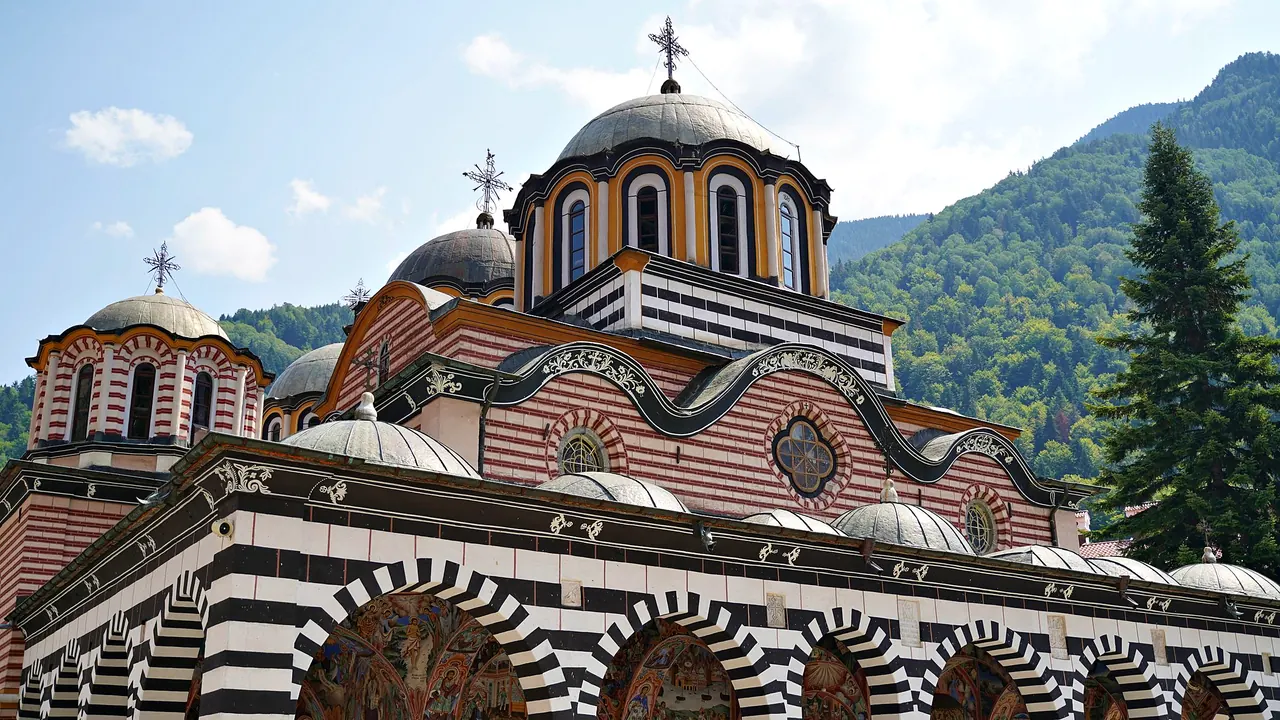
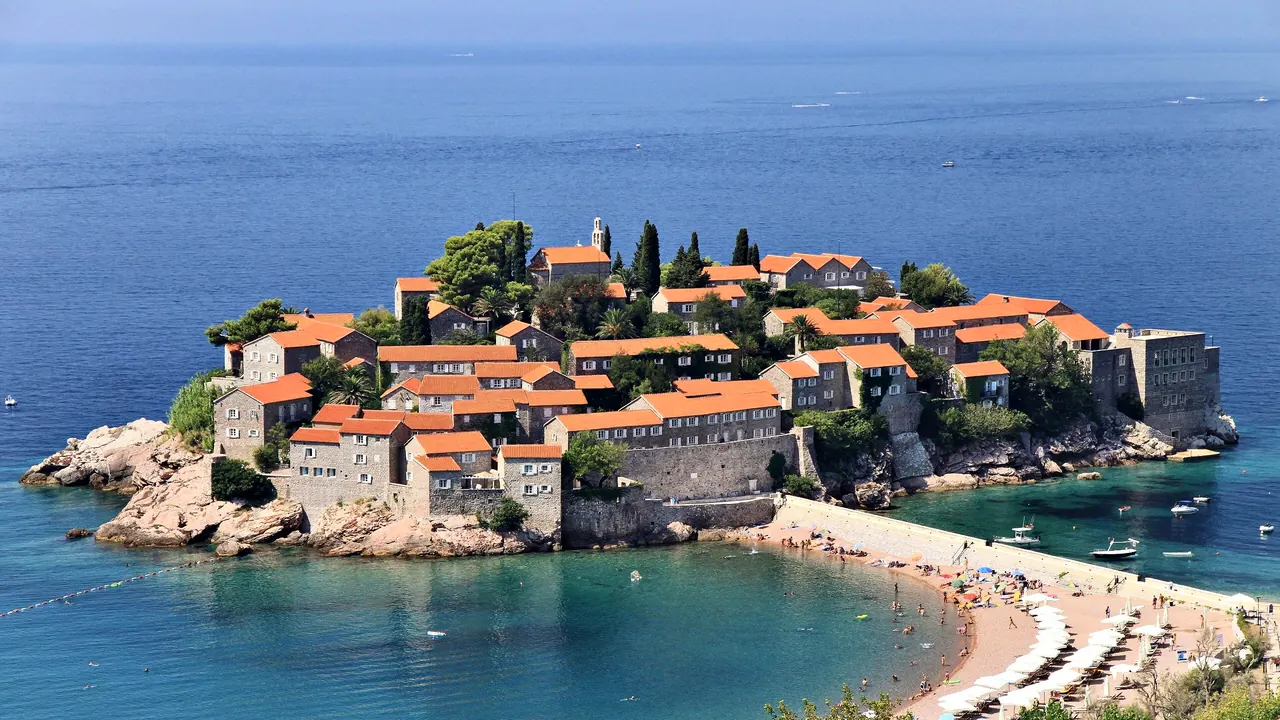
Photos: Bulgaria by Vaan Photography, Pexels License; Montenegro by Marcin Konsek, CC BY-SA 4.0, cropped.
Bulgaria or Montenegro?
Our verdict in twelve categories, each scored against the same fixed benchmark cities, and the climate month by month, so you can choose for your trip.
Choose Bulgaria for
- wellness
- live music and the arts
- prices
Bulgaria is the better choice for a varied, good-value tour that mixes history, mountains and a stretch of sand. Its heritage is spread over Plovdiv, Veliko Tarnovo, Sofia and Rila Monastery. It also has a real spa tradition, a livelier year-round city life in Sofia and Plovdiv, and food and wine with more depth. Your money goes further almost everywhere you travel. The price is distance: the country is large, and a trip here means long drives or a flight to the coast.
Choose Montenegro for
- nature and the outdoors
- beaches
- day trips
Montenegro suits travellers who want dramatic scenery packed into a small space. The Bay of Kotor's limestone walls, the clear Adriatic coves of the Budva Riviera and the canyons of Durmitor are never far apart, and one base on the coast reaches much of the country. Choose it for swimming with mountains around you and for walking and rafting. Don't choose it for great museums, serious dining or nights at the opera, and expect to pay more in the famous old towns.
Scoreboard
Twelve categories on one fixed scale from 0 to 100. The shaded stretch is the gap between the two.
Your match
Pick a travel style or drag the sliders, and both match scores follow your weighting.
Wins on wellness and live music and the arts with your weighting.
Wins on nature and the outdoors and beaches with your weighting.
What matters to you?
Category by category
What the scores mean for a trip.
Beaches & swimming
The two are evenly matched for a beach vacation, but the beaches are very different. Bulgaria's Black Sea shore is mostly broad, gently shelving sand: big resorts at Sunny Beach and Golden Sands, gentler Sozopol, and empty dunes and river mouths towards Sinemorets. The water is calm but greener and cloudier, and the season is shorter.
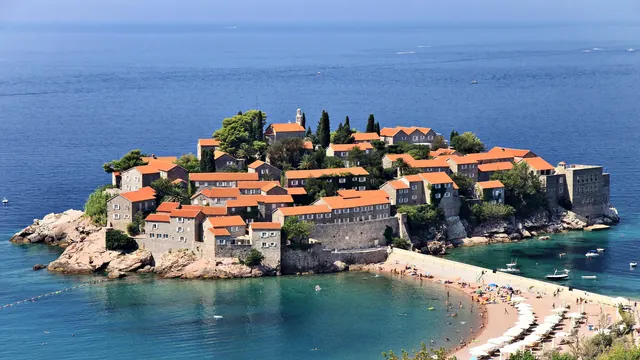
Montenegro offers clear Adriatic water with a mountain backdrop. The Budva Riviera is mostly pebble and coarse sand, with crowded coves around Sveti Stefan, and in the Bay of Kotor you swim from piers rather than beaches. For sand you head south to Velika Plaza at Ulcinj.
Where in Bulgaria: Southern Black Sea coast, Sozopol, Varna, Sunny Beach
Where in Montenegro: Budva Riviera, Ulcinj, Bay of Kotor, Petrovac
Food & drink
Bulgaria eats better. The mehana tavern, sheep's cheese, clay-pot stews and morning banitsa are found everywhere. Mavrud and Melnik wines from the Thracian plain and the Struma valley add depth, and Sofia and Plovdiv have proper bistros and wine bars.
Montenegro's cooking is honest but narrower: mussels and black risotto on the bay, and Njegusi ham and lamb under the bell inland. The best meals are in hill konobas and the Vranac wineries of the Crmnica valley rather than on the repetitive promenades.
Where in Bulgaria: Sofia, Plovdiv, Melnik, Thracian Valley
Where in Montenegro: Bay of Kotor, Crmnica valley, Njegusi
Culture & sights
Bulgaria has much more history to travel for, and it is spread across the country. You can sit in a working Roman theatre in Plovdiv, walk the medieval walls of Tsarevets above Veliko Tarnovo, and see Rila Monastery, the Thracian tombs near Kazanlak and the frescoes of Boyana Church. Allow time to travel between them.
Montenegro's heritage is compact and lovely, centred on walled Kotor and baroque Perast on the bay, with Cetinje and cliff-built Ostrog inland. It makes a fine few days, but it won't fill a culture-focused trip the way Bulgaria can.
Where in Bulgaria: Plovdiv, Veliko Tarnovo, Rila Monastery, Sofia
Where in Montenegro: Kotor, Perast, Cetinje, Ostrog
Nightlife
Bulgaria gives more choice of evenings out, and it does so all year. Sofia's cocktail and craft beer bars and Plovdiv's Kapana quarter work in any season, chalga clubs add a local flavour, and in summer Sunny Beach and Varna's seafront clubs run until dawn.
In Montenegro, nightlife essentially means Budva in July and August, with open-air clubs and old-town bars full of a young regional crowd. Kotor has a handful of bars, and outside high summer the coast falls quiet.
Nature & outdoors
Both are excellent for the outdoors, but the landscapes differ. Bulgaria's strength is high mountain walking: the Seven Rila Lakes beneath Musala, Pirin's granite ridges with huts for routes of several days, and the gentler forests and gorges of the Rhodopes.
Montenegro puts more drama into a smaller area. The fjord-like Bay of Kotor rises straight into Lovcen, and Lake Skadar's reeds and pelicans are close by. Up north, Durmitor's plateaus and the deep Tara canyon add rafting to the hiking.
Where in Bulgaria: Pirin National Park, Rila Mountains, Rhodope Mountains, Central Balkan
Where in Montenegro: Durmitor National Park, Bay of Kotor, Lake Skadar, Prokletije
Day trips
There is little to choose between them for outings, but they work differently. Bulgaria's day trips spread from several bases: Arbanasi, Tryavna and Etar from Veliko Tarnovo, Bachkovo from Plovdiv, and Sozopol and Pomorie from Burgas. You will need to move between those bases during the trip.
Montenegro is small enough that one base on the bay or the Budva Riviera reaches Perast, Cetinje, Ostrog and Lake Skadar. It also offers Dubrovnik across the border, though slow, winding roads stretch every outing.
Good for families
Both work for families mainly as a seaside vacation. Bulgaria has more resort infrastructure: big family hotels with pools, aquaparks and kids' clubs at Albena and Golden Sands, and tideless, shallow sand along much of the coast.
Montenegro's best family spots are quieter: the calm water of the Bay of Kotor and the shallow sweep of Velika Plaza. Steep old-town steps and hairpin roads make it slightly harder going with small children.
Where in Bulgaria: Albena, Sozopol, Golden Sands, Veliko Tarnovo
Getting around
Neither is easy without a car, but the problems differ. Bulgaria's difficulty is distance. Sofia has a handy metro, but the drive to the coast takes about half a day, the trains are slow, and the monasteries and Rhodope villages really need a hire car.
In Montenegro the distances are short but the roads are slow: the single coastal road jams in summer and mountain hairpins demand a confident driver. The upside is that buses along the Budva Riviera make one coastal base workable.
Shopping & style
Bulgaria has somewhat more to browse. There is a proper high street on Sofia's Vitosha Boulevard, and craftsmen work on Samovodska Charshiya in Veliko Tarnovo. Rose oil from the Kazanlak valley and Troyan pottery make distinctive buys.
In Montenegro, shopping is mostly souvenirs and lace in Kotor and Budva, plus a few boutiques at Tivat's marina. The best things to take home are edible: Njegusi ham and Vranac wine.
Where in Bulgaria: Sofia, Veliko Tarnovo, Plovdiv
Where in Montenegro: Kotor, Tivat
Affordability
Bulgaria stretches a budget noticeably further. Taverns, guesthouses, buses and entry to monasteries and fortresses all cost little, especially in Plovdiv, Veliko Tarnovo and the Rhodope villages. Only Sofia's centre, the ski resorts and the coast in high summer cost more.
Montenegro is reasonable by Adriatic standards, but Kotor, Budva, Tivat and Sveti Stefan charge peak prices. To keep costs down there, look to Ulcinj, the villages around Lake Skadar and Zabljak in Durmitor.
Where in Bulgaria: Rhodope Mountains, Veliko Tarnovo, Plovdiv
Where in Montenegro: Ulcinj, Lake Skadar, Durmitor National Park
Live music & performing arts
Bulgaria has a real performing arts life. Sofia has the National Opera and Ballet and the Philharmonic all season, and in summer there is opera in Plovdiv's Roman theatre and Varna's music festival. Village folk festivals offer the country's striking close-harmony singing.
Montenegro has little beyond summer festivals in the old-town squares of Kotor and Budva and Kotor's carnival. For most visitors, music there means a terrace band.
Wellness & relaxation
Taking the waters is part of everyday life in Bulgaria. The country has hundreds of mineral springs: there are spa towns such as Velingrad in the pine-covered Rhodopes, plus Hisarya and Sandanski, healing mud at Pomorie, and inexpensive treatments throughout.
Montenegro has a single real tradition in the medical spa at Igalo, near Herceg Novi. Otherwise, unwinding there means resort-hotel spas or a quiet stay in Perast, Prcanj or the vineyards by Lake Skadar, away from Budva in high summer.
Where in Bulgaria: Velingrad, Hisarya, Sandanski, Pomorie
Where in Montenegro: Igalo, Bay of Kotor, Lake Skadar
When should you go?
Pick your month, and for a country the place in it. The climate figures are measured averages, not a forecast.
Where in Bulgaria
Sofia (Bulgaria) in July
Kotor (Montenegro) in July
Daytime high, °C
Rainfall in the month, mm
Where the figures come from
Kotor (Montenegro) has no rain gauge within 25 km of the centre, so its rainfall comes from a gridded climate dataset read at the destination rather than from a gauge further away.
Kotor (Montenegro)'s sunshine is measured 42 km from the centre, at Podgorica-Grad.
Temperature and rainfall are climate normals, averaged over the years shown. Sofia (Bulgaria): 1991-2020 normals, Sofia Observ. (7.3 km from centre). Kotor (Montenegro): 1991-2020 normals, Tivat (4.2 km from centre).
Bulgaria has a short beach season. On the Black Sea around Varna the water is only warm enough for comfortable swimming from July to early September, peaking at about 25°C in August. June is fresher, and after September the coast largely closes. Inland, Sofia is pleasant for walking from May to September, which is also the hiking season in Rila and Pirin. Rain is moderate all year, with early summer the dampest time. Winters are properly cold, with Sofia near 4°C in January, which suits the ski resorts but not sightseeing. Both countries have long, very sunny summers.
Montenegro's coast has a longer swimming season. Around Kotor the sea is warm from June through September, still about 24°C at the end of summer, and October remains swimmable if a little fresher. The catch is heat: in August Kotor reaches about 32°C, which makes the climb to the fortress or the old-town steps hard going in the middle of the day. The weather also turns sooner than in Bulgaria. Summer is dry, but the rain returns in September, at about three times August's amount, and builds to 202mm in November. May and June are the best months for walking the coast and bay, and in winter the mountains around Durmitor, with their snow, suit a visit better than the wet coast.
Which traveller are you?
For a relaxing and wellness trip, Bulgaria offers far more. You can take the waters in spa towns like Velingrad, Hisarya and Sandanski, in pine forests or mild valleys, and treatments are inexpensive. In Montenegro, Igalo's medical spa is the one real tradition, and the rest means hotel spas.
More comparisons
Each shares a side with Bulgaria or Montenegro.
 Bulgaria vs Albania
 Bulgaria vs Croatia
 Bulgaria vs Greece
 Bulgaria vs Hungary
 Bulgaria vs North Macedonia
 Bulgaria vs Romania
 Greece vs Montenegro
 Kosovo vs Montenegro
 Malta vs Montenegro
 Moldova vs Bulgaria
- Montenegro vs Albania
 Montenegro vs Bosnia and Herzegovina
- Montenegro vs Croatia
- Montenegro vs North Macedonia
 Serbia vs Montenegro
Where else could you go?
Set Bulgaria or Montenegro against any other country.