Bulgaria
Sofia
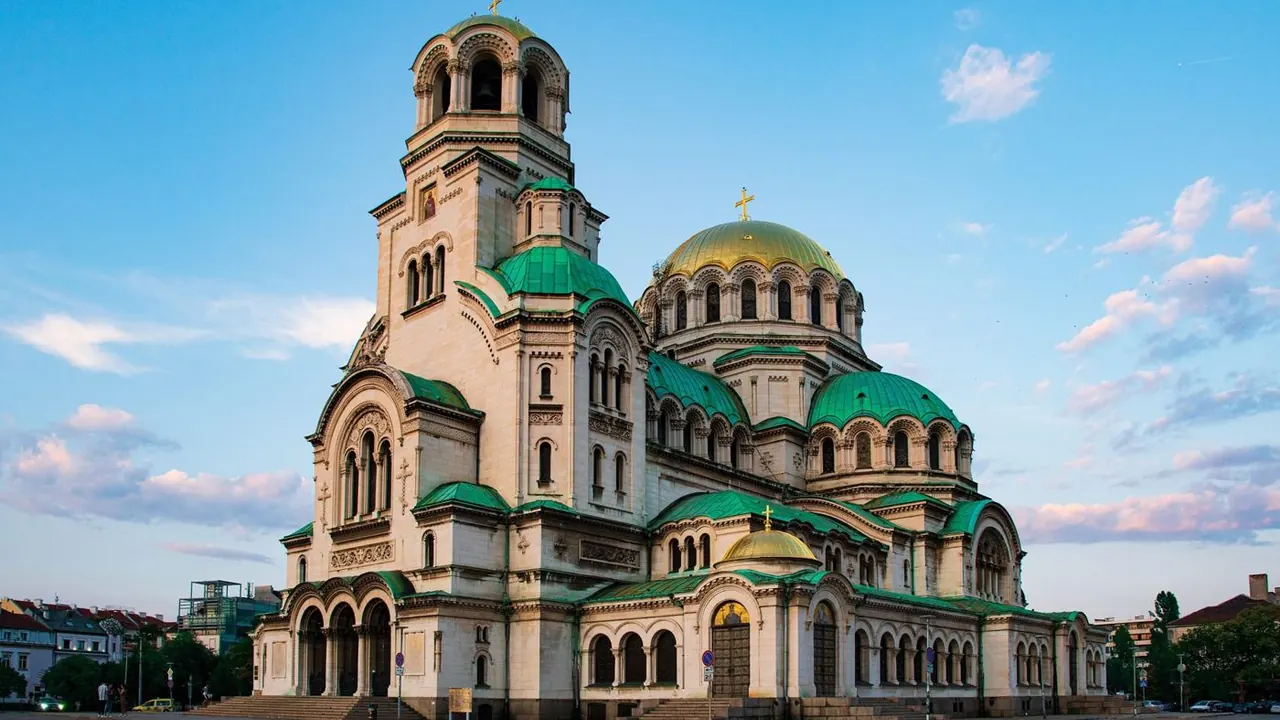
The Alexander Nevsky Cathedral
- Nature & outdoors80
- Affordable cities78
- Getting around65
Photo: Jose Ligero Loarte, CC BY-SA 4.0, cropped
Match
51
Every category weighted equally
- Beach & sun47
- Culture & arts55
- Food & nightlife51
- Family trip51
- Outdoors55
- Relax & unwind49
- Shopping & style51
- On a budget54
Sofia in twelve categories
Our verdict on each, scored 0 to 100 against the same fixed benchmark cities, so a score means the same thing on every page.
Beaches & swimming. Scores 5 out of 100.
Food & drink. Scores 45 out of 100.
Culture & sights. Scores 60 out of 100.
Nightlife. Scores 50 out of 100.
Nature & outdoors. Scores 80 out of 100.
Day trips. Scores 60 out of 100.
Good for families. Scores 40 out of 100.
Getting around. Scores 65 out of 100.
Shopping & style. Scores 38 out of 100.
Affordability. Scores 78 out of 100.
Live music & performing arts. Scores 50 out of 100.
Wellness & relaxation. Scores 45 out of 100.
Sofia category by category
Beaches & swimming
5Sofia is an inland city on a high plain, and the Black Sea coast is a full day's drive or a domestic flight away. In summer, people in the city swim in outdoor pools in the parks or at Pancharevo, the lake on the southeastern edge. If beach time matters, plan a separate stay on the coast.
Food & drink
45Eating in Sofia means hearty Balkan cooking. There are grilled kebapche and kyufte, shopska salad under a snow of white cheese, cold tarator soup in summer, and slow-baked dishes from clay pots. Breakfast is banitsa, a flaky cheese pastry from corner bakeries, often eaten with boza or ayran. The traditional mehana taverns serve this food in rustic rooms, sometimes with live folk music. Small modern bistros around Vitosha Boulevard and the streets behind it give it a lighter touch.
Bulgarian wine is the quiet strength. Local grapes such as Mavrud, Melnik and Rubin turn up in wine bars across the centre. The range beyond Balkan and Mediterranean cooking is limited, so the city is good for eating well but not for a food pilgrimage.
Culture & sights
60Sofia's history sits in layers right in the centre. The streets around the Serdika metro station open onto excavated Roman Serdica. Nearby are the fourth-century Rotunda of St George, tucked into a courtyard, the Banya Bashi Mosque and the Sveta Nedelya Cathedral, all within a few minutes of each other. On a wide square to the east stands the gold-domed Alexander Nevsky Cathedral, the city's landmark, with an icon museum in its crypt. The red-brick Basilica of St Sofia stands across the square.
At the foot of Vitosha, the medieval frescoes of Boyana Church are the finest single sight and are listed by UNESCO. The National Museum of History holds Thracian gold treasures, and the Museum of Socialist Art gathers the statues of a later era. It is a good two or three days, though the streets between the sights are often plain.
Nightlife
50Going out in Sofia is relaxed and stays fairly late. The quarter around Shishman and Tsar Ivan Asen streets is full of small cocktail bars, craft beer pubs and wine bars. The underground bars under the city's grand old buildings fill with students and young professionals. There are a handful of electronic music clubs, and in summer terraces spill into the parks. It is a sociable, unpretentious scene, and pleasant on a long weekend, though not a reason on its own to come.
Nature & outdoors
80Vitosha fills the southern skyline. It is a mountain rising above 2,200m, and city buses and a gondola reach its slopes. Within an hour of the centre you can walk on its boulder rivers, among spruce forest and up to the summit of Cherni Vrah, and in winter there is modest skiing. South Park and Borisova Gradina give long green walks inside the city.
Further out, the Rila Mountains hold the Seven Rila Lakes, glacial lakes strung up a high cirque, and the resort of Borovets has proper skiing about an hour and a half away. Pirin and the Iskar Gorge are within longer reach. Summers are warm and good for hiking. Winters bring real snow to the mountains.
Day trips
60The essential trip is to Rila Monastery, about two hours south in a mountain valley. Its striped arcades and painted church are the emblem of Bulgarian Orthodoxy. Plovdiv is the other strong choice, about two hours east by road or train. It has a Roman theatre, a stadium under its main street and an old town of painted merchant houses on its hills.
Koprivshtitsa, a village of nineteenth-century revival houses, makes a quieter outing, and the monastery-studded Iskar Gorge is closer still. Beyond these, the best-known towns, such as Veliko Tarnovo and Melnik, are too far for a comfortable day.
Good for families
40Sofia is calm and manageable with children, but it has few attractions made for them. The large parks, especially Borisova Gradina and South Park, have playgrounds and space to run, and a day on Vitosha with the gondola and forest trails is the best family outing. There is a hands-on children's science centre, the Museum of Earth and Man has a large mineral collection, and the zoo is modest. Broken pavements and high kerbs make pushchairs hard work in places.
Getting around
65The historic centre is compact, and the main sights are an easy walk from one another. The metro is clean and simple. It runs from the airport through the centre and out towards Vitosha's foothills and the main railway station, and trams, trolleybuses and buses fill in the rest. Taxis are plentiful. Pavements are often cracked or blocked by parked cars, and signs away from the centre are mostly in Cyrillic. You don't need a car in the city, though one helps for the mountains and monasteries.
Shopping & style
38Vitosha Boulevard is the main shopping street, a pedestrian stretch of international chains and cafés with the mountain at its end. Large malls on the outskirts fill out the mainstream offer. The more local finds are rose oil and rose cosmetics, embroidered textiles and painted pottery from Troyan, sold in craft shops around the centre. There is also the flea market of icons and old curiosities near the Alexander Nevsky Cathedral, and the Zhenski Pazar market for produce and everyday goods. It is enough for an afternoon, but not a shopping destination.
Affordability
78Sofia is one of the least expensive capitals in the European Union. Comfortable central hotels, full meals in a mehana, a good bottle of Bulgarian wine and metro rides all cost far less than in Western Europe, and museum admissions are low. Upmarket bistros and cocktail bars around the centre cost more, but even these feel moderate. A trip to Vitosha or Rila Monastery adds little to the bill.
Live music & performing arts
50Sofia has a full, old-fashioned season of performances at accessible prices. The National Opera and Ballet stages opera and ballet through most of the year. The neoclassical Ivan Vazov National Theatre faces the City Garden, though its plays are in Bulgarian. The Sofia Philharmonic plays at Bulgaria Hall, and the huge National Palace of Culture hosts big concerts and touring shows. Bulgarian choral and Orthodox singing is the most distinctive thing to hear, along with folk music in some taverns. Small jazz and live-music bars round out a scene that is solid rather than famous.
Wellness & relaxation
45Sofia sits on mineral springs, and you see it every day in the centre. Locals fill bottles at the warm public taps beside the Central Mineral Baths, a grand building of the early twentieth century that is now the city's history museum rather than a bathhouse. For actual bathing, there are mineral pools on the city's edges and the spa town of Bankya, about half an hour west. Spa hotels of every grade sit in the hot-spring resorts beyond, such as Velingrad, a longer drive away. Within the city, wellness mostly means hotel spas, park walks and long café afternoons. For a capital, the pace is unhurried.
When should you go?
Pick a month to see what it is like. The climate figures are measured averages, not a forecast.
Sofia in July
Daytime high, °C
Rainfall in the month, mm
The whole year
Shaded against this city’s own year: the deepest cell is its best month for that figure and the palest its weakest.
Temperature and rainfall are climate normals, averaged over the years shown. Sofia: 1991-2020 normals, Sofia Observ. (7.3 km from centre).
Before you go
| Measure | Sofia |
|---|---|
| Official language | Bulgarian |
| Currency | Euro (EUR) |
| Sockets | CF230 V, 50 Hz |
| Driving side | Right |
| Time zone | UTC+2, UTC+3 in summer |
| Emergency number | 112 |
| Elevation | 560 m |
| Main airport | Sofia Airport (SOF)8 km from centre97 non-stop destinations |
| Public holidays this year | 15 days |
By the numbers
| Measure | Sofia |
|---|---|
| City population | 1,213,134 |
| People per km² | 2,466 |
| Museums within 10 km | 42 |
| UNESCO World Heritage sites within 50 km | 1 |
Compare Sofia with
Every comparison with a written verdict behind it.