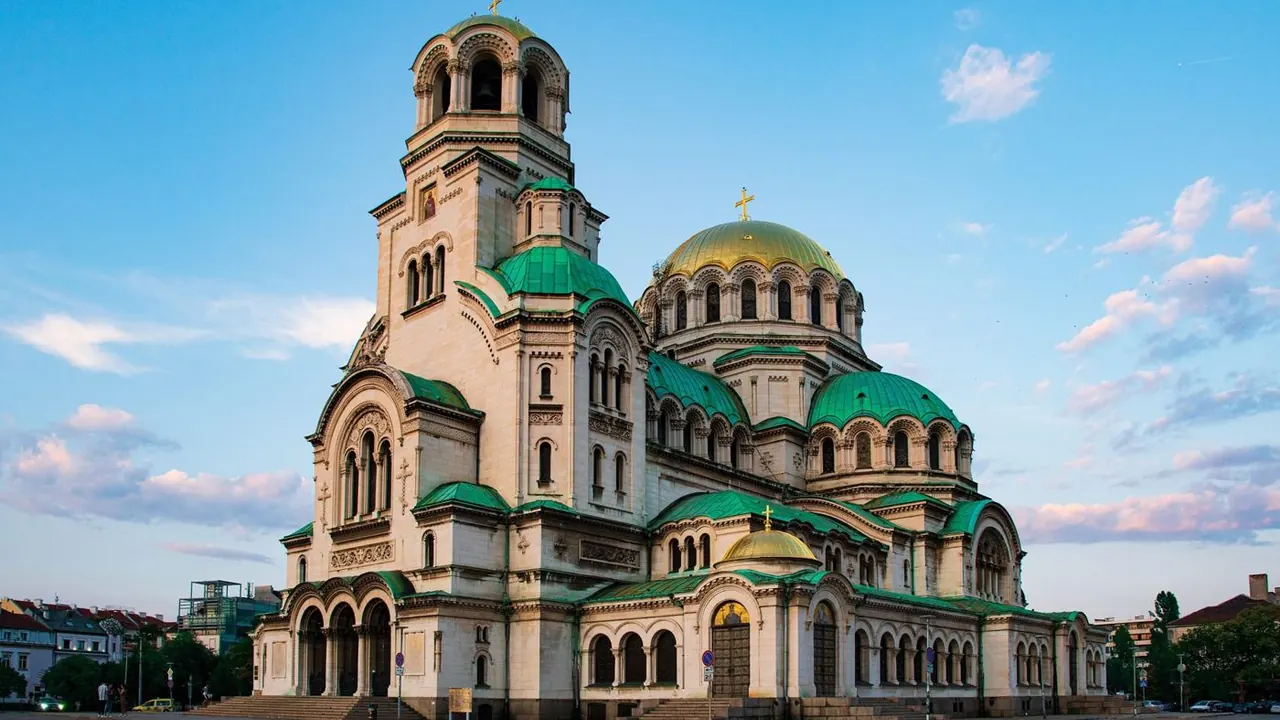
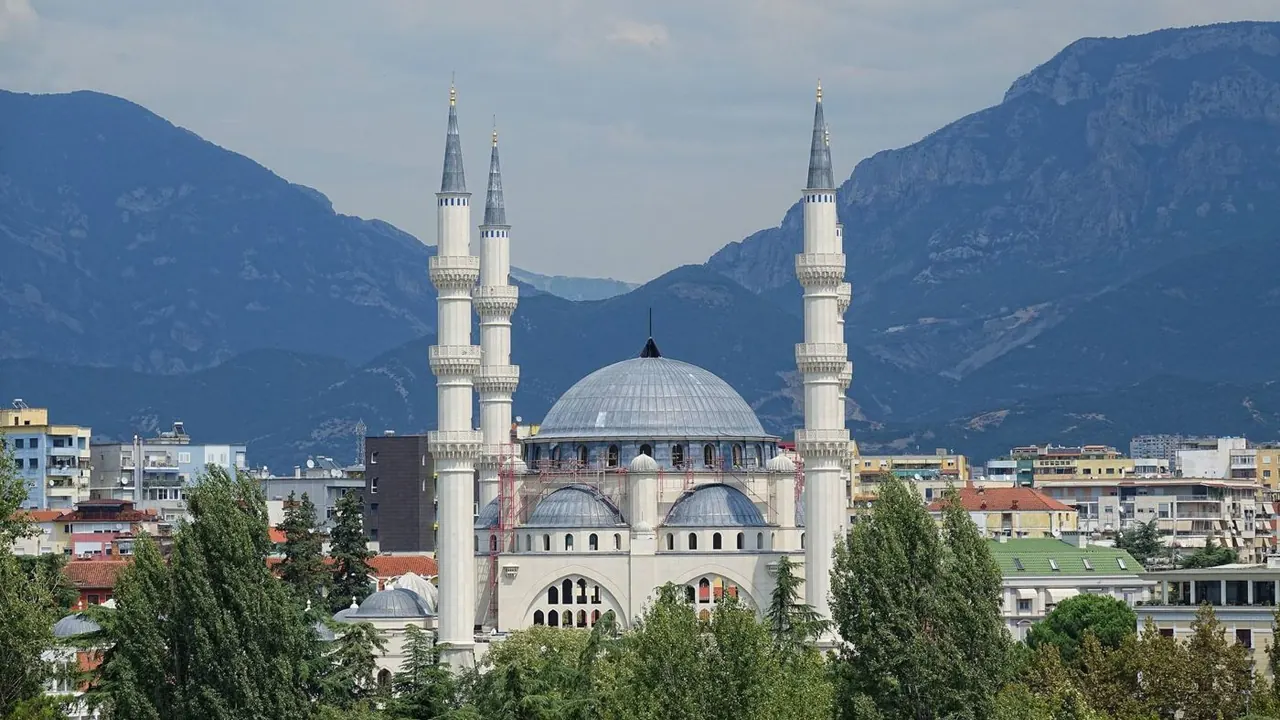
Photos: Sofia by Jose Ligero Loarte, CC BY-SA 4.0, cropped; Tirana by Bjørn Christian Tørrissen, CC BY-SA 4.0, cropped.
Sofia or Tirana?
Our verdict in twelve categories, each scored against the same fixed benchmark cities, and the climate month by month, so you can choose for your trip.
Choose Sofia for
- culture and sights
- nature and the outdoors
- live music and the arts
Sofia is the better pick for travellers who want mountains and history from the same base. Vitosha rises straight behind the city, the Rila lakes and the ski slopes at Borovets are within reach, and the centre packs Roman ruins, great Orthodox churches and the Boyana frescoes into a short walk or metro ride. It also has the fuller evenings of opera and concerts, and real mineral springs. Expect cold winters and plain streets between the sights.
Choose Tirana for
- beaches
- food and drink
- nightlife
Tirana is for a warmer, more sociable trip, built around long dinners, terrace coffee and late nights in Blloku. The food has more character, a sandy Adriatic beach is under an hour away, and Albania's best old towns, Berat and Kruja among them, make easy day trips that fill out a city with few sights of its own. The trade-off is heavy traffic, no metro and far less on stage.
Scoreboard
Twelve categories on one fixed scale from 0 to 100. The shaded stretch is the gap between the two.
Your match
Pick a travel style or drag the sliders, and both match scores follow your weighting.
Too close to call, 2 points apart
Wins on culture and sights and nature and the outdoors with your weighting.
Wins on beaches and food and drink with your weighting.
What matters to you?
Category by category
What the scores mean for a trip.
Beaches & swimming
Neither city is on the coast, but the gap between them is large. From Sofia the Black Sea is a full day's drive or a flight away, so swimming in the city means outdoor pools in the parks or the lake at Pancharevo.
Tirana can reach the sea in under an hour, at Durrës, where a long sandy beach runs south past Golem into warm, shallow water that suits children. It is crowded and built-up, and the clear coves of Ksamil and Himara belong to a separate trip, but a beach day is easy to fit in.
Food & drink
Tirana is the more rewarding place to eat. Its cooking tastes of the farm, from tavë kosi to fërgesë and tomatoes and cheeses straight from the countryside, and the best meals are often in the farm restaurants on the hills around town. Slow terrace coffee and raki after dinner make eating out the centre of the day.
Sofia's food is heartier and more predictable: grilled kebapche, shopska salad, clay-pot dishes and banitsa for breakfast, served in mehana taverns. Its advantage is wine, with local grapes such as Mavrud and Melnik in bars across the centre.
Culture & sights
Sofia has the deeper history. Roman Serdica lies open around the Serdika metro station, close to the Rotunda of St George, a mosque and a cathedral. Alexander Nevsky Cathedral, the UNESCO-listed frescoes of Boyana Church and the Thracian gold in the National Museum of History easily fill two or three days.
Tirana tells the story of the twentieth century instead. Bunk'Art and the House of Leaves bring the communist years vividly to life, and Skanderbeg Square holds the city's few older landmarks. Its own sights are covered in two days, and the older heritage lies outside town.
Nightlife
Tirana has the livelier night out, and almost all of it is in Blloku. The leadership's old closed quarter is now packed with cocktail bars and lounge terraces, and people dress up to be seen. Evenings start late after dinner, summer weekends stay busy well past midnight, and bigger clubs near the Grand Park lake run until dawn.
Sofia is lower-key and more varied. Small cocktail bars, craft beer pubs and wine bars cluster around Shishman Street, and students fill cellar bars under the old buildings. It is sociable and unpretentious rather than showy.
Nature & outdoors
Sofia has the stronger mountains on its doorstep. Vitosha rises above 2,200m, reached by city bus or gondola, with boulder rivers, spruce forest and the summit of Cherni Vrah. Further out lie the glacial Seven Rila Lakes, and Borovets has proper skiing about an hour and a half away.
Tirana's Mount Dajti is lower, but a cable car lifts you to about 1,000m for beech forest and views to the sea. The Bovilla reservoir and the canyons beyond are fine outings. The Albanian Alps need more than a day, and hot summers push walking into spring and autumn.
Day trips
Both cities make good bases, but they work differently. From Sofia, two outings stand out: Rila Monastery in its mountain valley, and Plovdiv's Roman theatre and painted old town, which you can reach by train as well as by road.
Tirana offers a wider choice of historic towns: Kruja's Skanderbeg castle and bazaar under an hour away, white Ottoman Berat, Shkodra and the Greek ruins at Apollonia. These visits are the heritage the city itself lacks, but they mostly mean minibuses, tours or a hire car on slow roads.
Good for families
Families will find little made for children in either city, so the difference is in the mood. Sofia is calmer, with a children's science centre and the Vitosha gondola as its best day out. Tirana is warmer towards children, who stay out late in cafés and on the evening stroll, and it has the beach at Durrës nearby, though traffic and summer heat take more managing.
Getting around
Sofia is the easier city to cross. Its metro runs from the airport through the centre to the railway station and Vitosha's foothills, trams and trolleybuses cover the rest, and the main sights are within walking distance. Cracked pavements and Cyrillic signs are the main nuisances.
Tirana has no metro or tram, so you mostly walk around its flat, compact centre and take inexpensive taxis further out. Buses are confusingly signed, and busy roads with assertive drivers make crossing them slower work.
Shopping & style
Neither city is worth the trip for shopping, though Sofia has a little more to browse. Pedestrian Vitosha Boulevard runs towards the mountain, and you can find rose oil, Troyan pottery and the icon flea market by Alexander Nevsky.
Tirana's best stop is the Pazari i Ri market, better for cheese, honey and raki than for things to take home, with filigree silver and felt hats as the craft finds.
Affordability
Both are among the cheapest capitals in Europe, and a visitor's money goes a long way in either. In Sofia, good Bulgarian wine and trips to Vitosha or Rila stretch the budget furthest. In Tirana it is coffee, byrek and cheap taxis, while the smart bars of Blloku are where costs rise.
Live music & performing arts
Sofia offers far more to see after dark. The National Opera and Ballet performs for most of the year, the Sofia Philharmonic plays at Bulgaria Hall, and the National Palace of Culture hosts the big touring shows. Orthodox and choral singing is the sound most worth seeking out.
Tirana has one good venue in its opera house on Skanderbeg Square, plus a few jazz bars and summer concerts. Its famous iso-polyphonic singing is heard mostly in the south, not in the capital.
Wellness & relaxation
Sofia is built on mineral springs. Locals fill bottles at the warm taps by the old Central Mineral Baths, and you can bathe in the spa town of Bankya, about half an hour away, or at Velingrad further out.
Tirana has no bathing tradition, and its nearest thermal water, at Llixha, means an hour's drive to plain old-fashioned spa hotels. Rest there comes from long coffees and the evening xhiro, with Dajti as the escape from traffic noise.
When should you go?
Pick your month. The climate figures are measured averages, not a forecast.
Sofia in July
Tirana in July
Daytime high, °C
Rainfall in the month, mm
Temperature and rainfall are climate normals, averaged over the years shown. Sofia: 1991-2020 normals, Sofia Observ. (7.3 km from centre). Tirana: 1961-1990 normals, Tirana (3 km from centre).
Sofia sits high on its plain and has a true continental year. Winters are cold, with highs of about 4°C in January and snow on the mountains, which suits skiing more than sightseeing. Late spring and early autumn are the best months for walking the city and hiking on Vitosha. Summer peaks around 28°C with long sunny days, and May and June are the wettest months, though rain is moderate all year.
Tirana is milder in winter and hotter in summer. July and August reach about 31°C, which is hard work on the streets but right for the coast, where the sea warms to about 25°C. Swimming is comfortable from June to September. From October the rain sets in heavily and peaks in November at about 172mm, so April, May and late September are the most pleasant months for sightseeing. In midwinter Tirana is the warmer of the two, but also much the wetter.
Which traveller are you?
On a beach and sun trip, Tirana is the only real option. The long sandy shore at Durrës is under an hour away, with warm, shallow Adriatic water in summer, while Sofia's swimming is limited to park pools and Pancharevo lake.
For an outdoors trip, Sofia wins clearly. A gondola climbs Vitosha from the city edge, the Seven Rila Lakes and Pirin are within reach, and winter brings proper skiing at Borovets. Tirana's Dajti and Bovilla are pleasant, but on a smaller scale.
For a culture and arts trip, choose Sofia. Roman Serdica, Alexander Nevsky Cathedral, the Boyana frescoes and Thracian gold fill several days, and the opera, ballet and Philharmonic give you evenings to match. Tirana's story is mostly its communist past.
Before you go
| Measure | Sofia | Tirana |
|---|---|---|
| Official language | Bulgarian | Albanian |
| Currency | Euro (EUR) | Lek (ALL) |
| Sockets | CF230 V, 50 Hz | CF220 V, 50 Hz |
| Driving side | Right | Right |
| Time zone | UTC+2, UTC+3 in summer | UTC+1, UTC+2 in summer |
| Emergency number | 112 | 112 |
| Elevation | 560 m | 110 m |
| Main airport | Sofia Airport (SOF)8 km from centre97 non-stop destinations | Tirana International Airport Mother Teresa (TIA)13 km from centre121 non-stop destinations |
| Public holidays this year | 15 days | 14 days |
By the numbers
| Measure | Sofia | Tirana |
|---|---|---|
| City population | 1,213,134 | 389,323 |
| People per km² | 2,466 | 9,314 |
| Museums within 10 km | 42 | 11 |
| UNESCO World Heritage sites within 50 km | 1 | 0 |
| Swim season, months above 21 °C | - | 5 months |
Where else could you go?
Every comparison below shares a destination with this one, so you can follow Sofia or Tirana somewhere new.