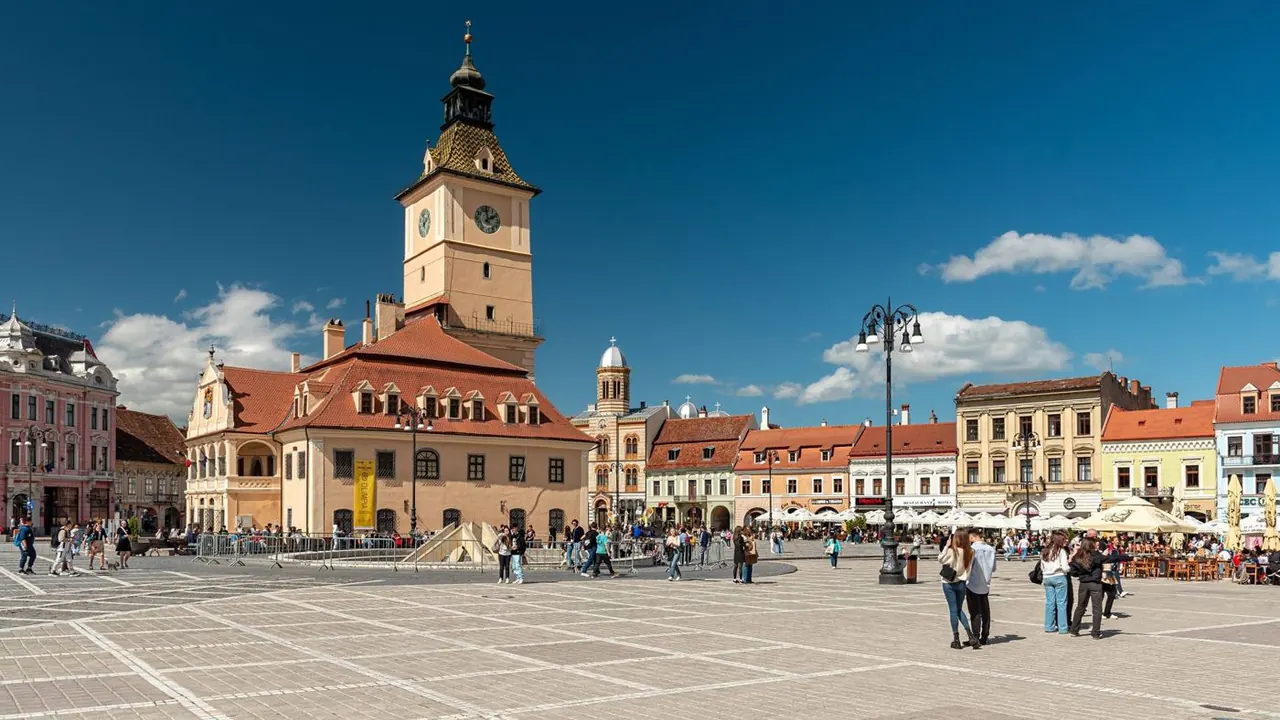
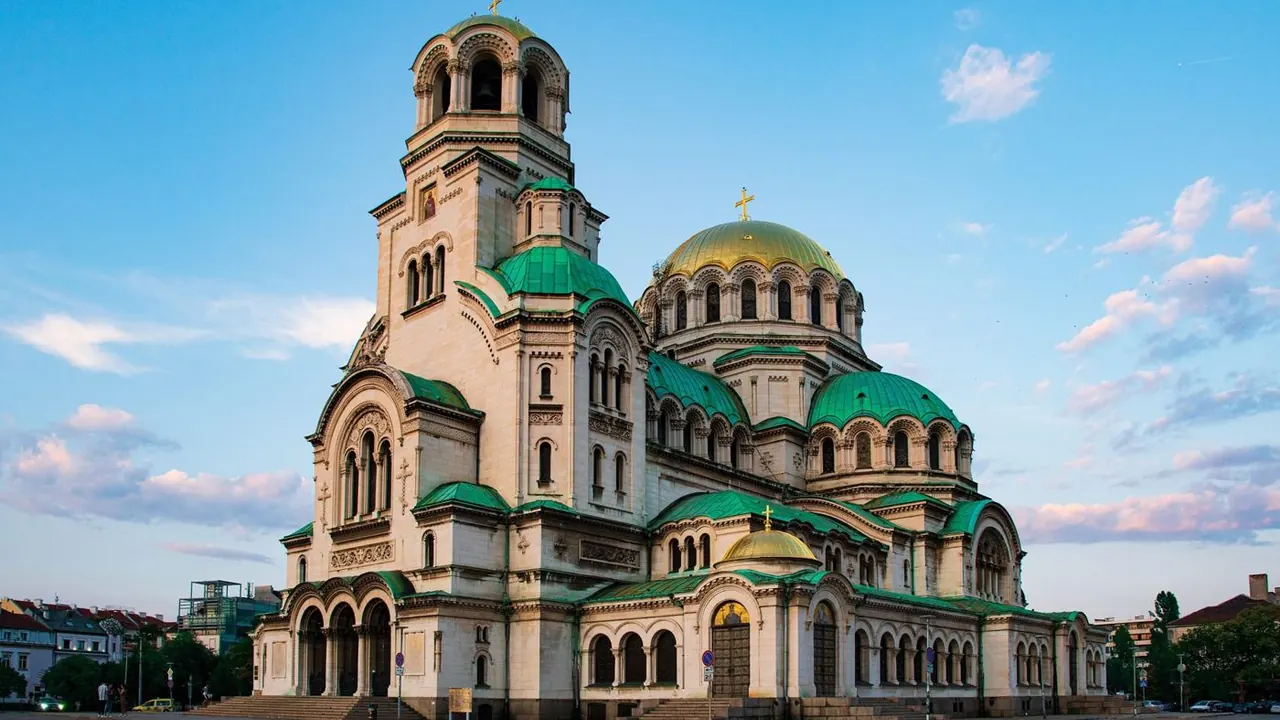
Photos: Brasov by Jorge Franganillo, CC BY 2.0, cropped; Sofia by Jose Ligero Loarte, CC BY-SA 4.0, cropped.
Brasov or Sofia?
Our verdict in twelve categories, each scored against the same fixed benchmark cities, and the climate month by month, so you can choose for your trip.
Choose Brasov for
- day trips
- families
- nature and the outdoors
Brasov suits travellers who want the Carpathians and the castles on their doorstep. The walled Saxon town is small and easy, but the real reason to stay is what lies around it: Bran, Rasnov, the fortified churches, Peles Castle and Sighisoara, plus bear watching and trails on Tampa and Postavarul. Families also get more here, with the cable car, the water park and gentle castle days.
Choose Sofia for
- wellness
- nightlife
- live music and the arts
Pick Sofia if you want a capital with more going on after dark and in the concert hall. Its evenings stretch later, the opera, ballet and philharmonic run for most of the year, and mineral springs and the baths at Bankya give it a relaxing side that Brasov lacks. Vitosha is close enough for a morning hike, but the day trips are fewer and further, with Rila Monastery and Plovdiv the two that really count.
Scoreboard
Twelve categories on one fixed scale from 0 to 100. The shaded stretch is the gap between the two.
Your match
Pick a travel style or drag the sliders, and both match scores follow your weighting.
Too close to call, 1 point apart
Wins on day trips and families with your weighting.
Wins on wellness and nightlife with your weighting.
What matters to you?
Category by category
What the scores mean for a trip.
Beaches & swimming
Neither city has a beach, and both are far from the Black Sea, so sand and sea mean a separate stay on the coast. For a summer swim in Brasov you have the big water park or a cold mountain lake, while Sofia has open-air pools in its parks and the lake at Pancharevo on its edge.
Food & drink
Both cities serve hearty, inexpensive regional cooking rather than food worth the journey on its own. Brasov's table is Transylvanian, a mix of Romanian, Saxon and Hungarian dishes such as sour ciorba, sarmale with polenta and papanasi, eaten in cellar dining rooms around Council Square.
Sofia gives a little more choice, with grills, shopska salad, clay-pot dishes and banitsa at breakfast, plus small modern bistros near Vitosha Boulevard. Wine is the clearer difference: Bulgarian grapes such as Mavrud and Melnik fill dedicated wine bars, where Brasov's lists stick to Romanian bottles.
Culture & sights
The two are broadly level, but they show different kinds of history. Brasov is one coherent medieval Saxon town, with the Black Church, Council Square, the bastions along Tampa and the Schei quarter all seen properly in a day or two, and its museums are modest.
Sofia is layered and scattered. Roman Serdica, the Rotunda of St George, a mosque and Orthodox churches sit side by side, with Alexander Nevsky Cathedral, the Thracian gold in the National Museum of History and the frescoes of Boyana Church taking it to two or three days. The streets between those sights are plainer than Brasov's old town lanes.
Nightlife
Sofia is the better place to go out. The small cocktail, craft beer and wine bars around Shishman and Tsar Ivan Asen streets, the cellar bars under old buildings and a few electronic clubs keep things going later.
Brasov's evenings are shorter and gentler: terraces and cellar pubs around Council Square and Republicii Street, a few student clubs at weekends and some après-ski noise in winter, with most nights over before the small hours.
Nature & outdoors
Both are mountain cities with superb outdoors close by, and the difference lies in the details. In Brasov the forest starts at the town walls with Tampa hill, Poiana Brasov is about 12km away, and Piatra Craiului and the Bucegi plateaus are within an hour. Guided bear watching from hides is the experience Sofia cannot match.
Sofia has Vitosha on its skyline, reached by city bus and gondola, with boulder rivers and the climb to Cherni Vrah. Further out, the Seven Rila Lakes and the proper skiing at Borovets reward a longer drive.
Day trips
Brasov is clearly the stronger base. Bran Castle is about half an hour away, Rasnov and the fortified churches of Prejmer and Harman are closer still, Peles Castle at Sinaia is an hour off and Sighisoara makes a full day. Viscri and Fagaras add more, though a car helps for the villages.
From Sofia the choice narrows to two big outings, Rila Monastery and Plovdiv, each around two hours away. Koprivshtitsa and the Iskar Gorge are quieter extras, and well-known places like Veliko Tarnovo are too far for a day.
Good for families
Brasov gives children more to do. The short cable car up Tampa, a forest rope park, a big water park with indoor pools, castles that fire the imagination and the rescued bears near Zarnesti make easy days, with sledging at Poiana Brasov in winter.
Sofia is calm with children but thin on attractions: playgrounds in Borisova Gradina and South Park, a children's science centre, a modest zoo and a gondola day on Vitosha. Pushchairs struggle in both, on cobbles and steep lanes in Brasov and broken pavements in Sofia.
Getting around
Both are easy to manage, in different ways. Brasov's old town can be crossed on foot in a quarter of an hour and buses reach Poiana Brasov, but castles, villages and trailheads mean slow rural buses, so a car or tour helps.
Sofia is bigger but has a clean, simple metro from the airport through the centre to the railway station and Vitosha's foothills. Cracked pavements and Cyrillic signs outside the centre take some getting used to.
Shopping & style
Neither city is worth the trip for shopping, though Sofia offers a little more. Vitosha Boulevard and the outer malls cover the mainstream, and rose oil, Troyan pottery and the icon flea market by Alexander Nevsky give it some local character.
In Brasov, Republicii Street mixes chains with Dracula souvenirs and embroidered blouses. The best buys there are edible: sheep's cheese, plum brandy and honey.
Affordability
Both are cheap by European standards, and a stay in either goes a long way. Sofia keeps costs down even in the capital, with low museum entry, metro fares and good Bulgarian wine. In Brasov the extras that add up are the terraces on Council Square and ski passes in high season.
Live music & performing arts
Sofia has the fuller stage. The National Opera and Ballet performs for most of the year, the Sofia Philharmonic plays at Bulgaria Hall, and Bulgarian choral and Orthodox singing is something to hear nowhere else.
Brasov's offer is regional: a philharmonic, a small opera company and Romanian-language drama. Its standout is an organ recital in the Black Church on a summer evening.
Wellness & relaxation
Sofia has a real bathing heritage that Brasov lacks. Warm mineral water flows from public taps beside the old Central Mineral Baths, Bankya's spa pools are half an hour away and Velingrad lies further out.
Brasov has no springs of its own. Relaxing there means hotel spas at Poiana Brasov, the water park's saunas and slow afternoons on a terrace below the mountains.
When should you go?
Pick your month. The climate figures are measured averages, not a forecast.
Brasov in July
Sofia in July
Daytime high, °C
Rainfall in the month, mm
Where the figures come from
Brasov has no rain gauge within 25 km of the centre, so its rainfall comes from a gridded climate dataset read at the city rather than from a gauge further away.
Temperature and rainfall are climate normals, averaged over the years shown. Brasov: 2016-2025 (rainfall 1991-2020) normals, Brasov (3 km from centre). Sofia: 1991-2020 normals, Sofia Observ. (7.3 km from centre).
Both cities have a real winter and a warm summer, and both are at their best from May to September. Brasov sits lower in temperature at both ends of the year, with January highs around 2°C and snow on the slopes above town, which suits skiing more than walking the old town. Its summer is also its wettest time, with June and July bringing close to 81mm of rain, much of it in short showers, so September, when it is mild and drier, is a strong month for hiking and the autumn beech colours.
Sofia warms up a little more, reaching about 28°C in July and August, and its summer is sunny, with over 300 hours of sunshine in July. That heat can make midday sightseeing tiring, so late spring and September are the most comfortable months for the streets. Rain is spread more evenly through Sofia's year, and neither city has a beach season of its own.
Which traveller are you?
On a family trip with children, Brasov is the easier choice. The town is small and partly traffic-free, the forest starts at the walls and castles are close, so days stay short and varied. Sofia is calm but gives children less.
For a food and nightlife trip, choose Sofia. Brasov feeds you well, but most of its evenings are over before the small hours. In Sofia, a long dinner with Bulgarian wine can run on into small bars until late.
On a relaxing and wellness trip, Sofia offers more. Brasov's calm comes from its slow small-town pace and hotel spas. Sofia has its own mineral water, so a city stay can include real thermal bathing alongside unhurried park and café days.
Before you go
| Measure | Brasov | Sofia |
|---|---|---|
| Official language | Romanian | Bulgarian |
| Currency | Romanian Leu (RON) | Euro (EUR) |
| Sockets | CF230 V, 50 Hz | CF230 V, 50 Hz |
| Driving side | Right | Right |
| Time zone | UTC+2, UTC+3 in summer | UTC+2, UTC+3 in summer |
| Emergency number | 112 | 112 |
| Elevation | 600 m | 560 m |
| Main airport | Brașov-Ghimbav International Airport (GHV)9 km from centre14 non-stop destinations | Sofia Airport (SOF)8 km from centre97 non-stop destinations |
| Public holidays this year | 17 days | 15 days |
By the numbers
| Measure | Brasov | Sofia |
|---|---|---|
| City population | 237,589 | 1,213,134 |
| People per km² | 890 | 2,466 |
| Museums within 10 km | 8 | 42 |
| UNESCO World Heritage sites within 50 km | 1 | 1 |
Where else could you go?
Every comparison below shares a destination with this one, so you can follow Brasov or Sofia somewhere new.