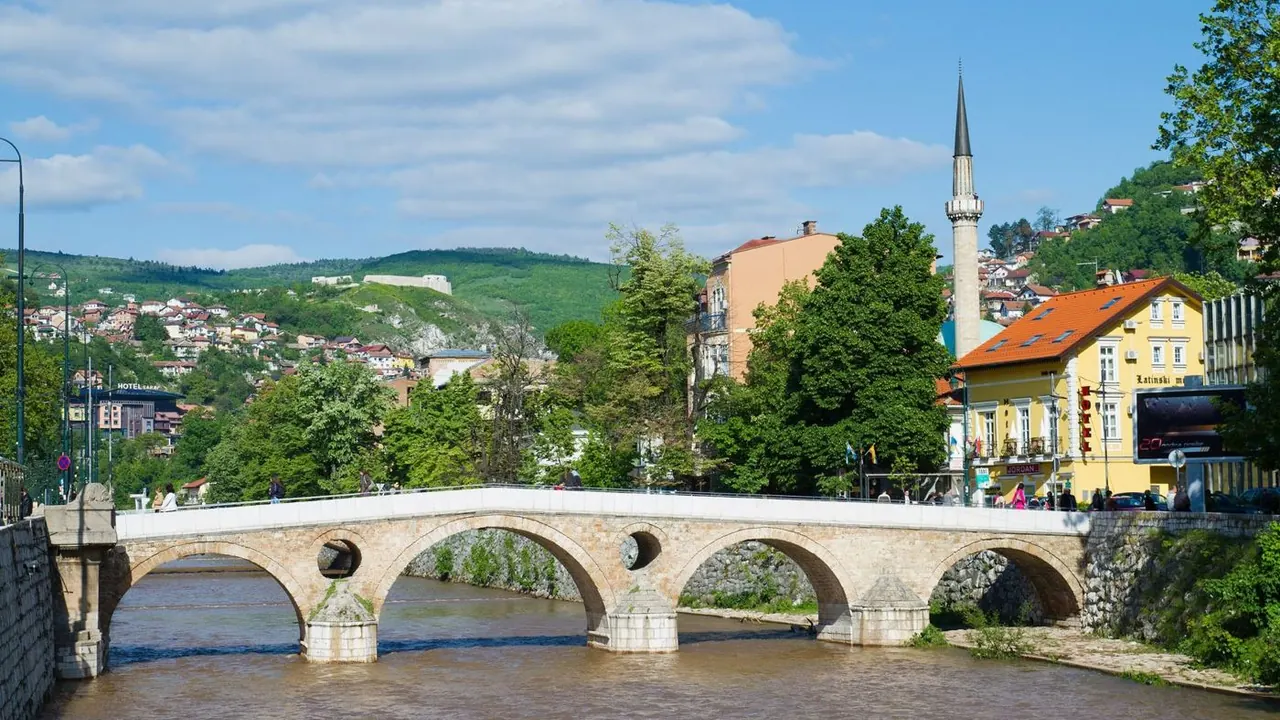
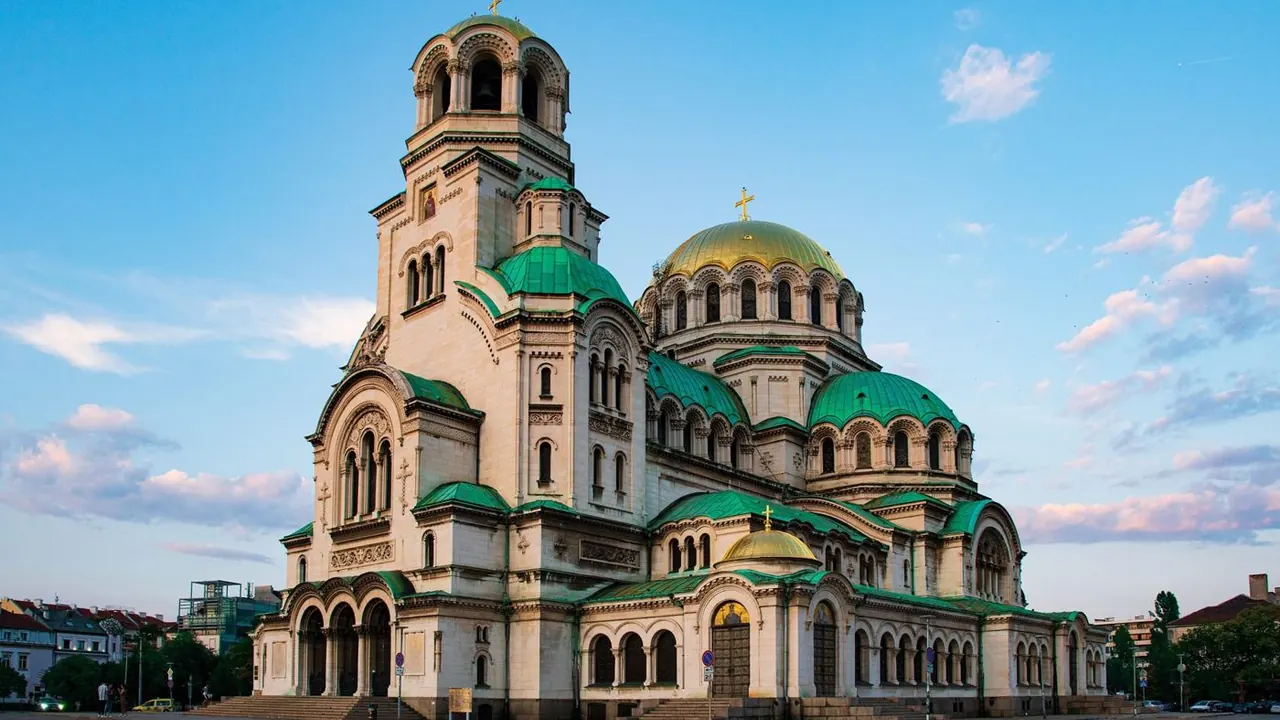
Photos: Sarajevo by Tumi-1983, CC0; Sofia by Jose Ligero Loarte, CC BY-SA 4.0, cropped.
Sarajevo or Sofia?
Our verdict in twelve categories, each scored against the same fixed benchmark cities, and the climate month by month, so you can choose for your trip.
Choose Sarajevo for
- food and drink
- culture and sights
- day trips
Sarajevo suits the traveller who wants a place with a strong sense of itself, packed into a few walkable streets. Ottoman bazaar lanes, Austro-Hungarian avenues, four faiths within a few minutes of each other and the memory of the 1990s siege make it a moving, compact city. It also has the more distinctive table, with grills turning out ćevapi and a slow coffee ritual that shapes the day. Choose it for a short, intense stay where eating and history come first and evenings are relaxed.
Choose Sofia for
- live music and the arts
- nightlife
- getting around
Sofia rewards visitors who want a fuller evening programme and a little more ease. Its bar quarter around Shishman Street runs later, opera, ballet and the Philharmonic play through most of the year, and a metro links the airport, the centre and the foot of Vitosha. The sights are spread through layers of Roman, Byzantine and Ottoman history rather than one atmospheric quarter, and Rila Monastery and Plovdiv make excellent outings. It is the better pick for a long weekend that mixes museums, a night at the opera and a day in the mountains.
Scoreboard
Twelve categories on one fixed scale from 0 to 100. The shaded stretch is the gap between the two.
Your match
Pick a travel style or drag the sliders, and both match scores follow your weighting.
Too close to call, level with your weighting
Wins on food and drink and culture and sights with your weighting.
Wins on live music and the arts and nightlife with your weighting.
What matters to you?
Category by category
What the scores mean for a trip.
Beaches & swimming
Neither city is a beach destination, and both send swimmers to lakes and pools in summer. The difference is the distance to the sea: from Sarajevo the Adriatic is about three hours away, so an extra few days on the Croatian or Montenegrin coast fits easily onto the trip. Sofia's Black Sea coast is a full day's drive or a flight away, so a beach stay there means a separate leg of the journey, with Pancharevo lake as the nearest summer swim.
Food & drink
Sarajevo is the better city to eat in. Its cooking is narrow but done with real care: ćevapi in soft somun from the Baščaršija grills, burek sold by weight, begova čorba and lamb slow-cooked under a metal lid, all finished with Bosnian coffee in a copper džezva and a square of rahat lokum.
Sofia's food is hearty and enjoyable, with banitsa at breakfast, shopska salad and clay-pot dishes in the mehana taverns, but it is less distinctive. Its real advantage is wine, with local grapes such as Mavrud and Melnik poured in bars across the centre, and a few lighter modern bistros around Vitosha Boulevard.
Culture & sights
Both cities give a rich two or three days of sights, but they feel very different on foot. In Sarajevo the appeal is concentration: the Ottoman bazaar runs straight into Austro-Hungarian avenues, mosque, synagogue and two cathedrals stand close together, and the siege of the 1990s is present everywhere from the Tunnel of Hope to the Sarajevo roses in the pavement.
Sofia's history is more scattered and more layered, from Roman Serdica beneath the Serdika metro station to the fourth-century Rotunda of St George and the gold domes of Alexander Nevsky. Its single finest sight, the UNESCO-listed frescoes of Boyana Church, lies at the foot of Vitosha, and the streets between the monuments are often plain where Sarajevo's are part of the attraction.
Nightlife
Sofia offers more for a night out. The streets around Shishman and Tsar Ivan Asen are lined with small cocktail bars, craft beer pubs and wine bars, there are cellar bars under the old buildings and a handful of electronic clubs, and summer terraces spill into the parks.
Sarajevo's evenings revolve around café-bars that grow louder after dark, with students keeping a few cellar bars and small clubs going at weekends. It is friendly and cheap, but more often ends with a glass of rakija than on a dancefloor.
Nature & outdoors
Both are mountain cities with real hills on the doorstep, and they are close to level for outdoor time. Sarajevo's cable car climbs from the Old Town to Trebević and the overgrown Olympic bobsleigh track, the 1984 Olympic mountains of Jahorina and Bjelašnica are under an hour away, and Lukomir and the Rakitnica canyon reward a longer outing.
Sofia's Vitosha rises above 2,200m and is reachable by city bus and gondola, with boulder rivers and the climb to Cherni Vrah. Further out, the Seven Rila Lakes and the skiing at Borovets give it slightly grander high country, while Sarajevo adds rafting on the Neretva.
Day trips
Each city has one outing that nearly every visitor makes, and both are about two hours away. From Sarajevo it is Mostar and its rebuilt bridge, reached on a scenic train through the Neretva gorge, with Konjic, Blagaj and Počitelj along the same route and Višegrad's Ottoman bridge to the east.
From Sofia the essential trip is Rila Monastery in its mountain valley, with Plovdiv's Roman theatre and painted old town an equally strong choice by road or rail. Sarajevo's trips cluster along one memorable river route, while Sofia's split between a sacred site and a full historic city.
Good for families
Sarajevo's best family moments are small rides and outings: the cable car from the edge of the Old Town up Trebević, a horse-drawn carriage along the avenue to the streams of Vrelo Bosne, pigeons at the Sebilj and the little zoo at Pionirska dolina. The flat Old Town is easy to walk with children. The steep hillside quarters, the sights about history and war, and the winter smog and grill smoke make it harder going for the youngest.
Sofia offers fewer rides and more room to run, with playgrounds in Borisova Gradina and South Park, a hands-on science centre, the mineral halls of the Museum of Earth and Man, and the gondola and forest trails on Vitosha. Its cracked pavements and high kerbs are the main nuisance, especially with a pushchair.
Getting around
Both centres are compact and easy to walk, so the difference lies in public transport. Sarajevo's historic tram follows the valley floor from Baščaršija to Ilidža, which is simple to grasp, but away from that single corridor the buses and minibuses are harder to follow and the hillside quarters are steep.
Sofia has the edge with its clean metro, which links the airport, the centre, the railway station and the foothills of Vitosha. Signs away from the centre are mostly in Cyrillic, though, and the Tunnel of Hope or the ski slopes from Sarajevo, like the monasteries from Sofia, are easier with a car or tour.
Shopping & style
In Sarajevo you can still hear the coppersmiths at work on Kazandžiluk, hammering coffee sets and engraved trays, and the lanes around the old Bezistan sell kilims, leather slippers and filigree jewellery. Much of it is souvenir stock, so look closely before you buy. Sofia has no working craft quarter to match, but its local finds pack well: rose oil and rose cosmetics, Troyan pottery and embroidered textiles, and old icons and curiosities at the flea market near Alexander Nevsky.
For ordinary shopping, Sofia's pedestrian Vitosha Boulevard, with the mountain at its end, is a pleasanter street than anything away from Sarajevo's bazaar, where you mostly find chains and malls. In either city an afternoon covers it.
Affordability
Both are among the least expensive capitals in Europe, and the budget barely separates them. In Sarajevo the savings come from street food and coffee in the bazaar, cheap taxis and modest guesthouses, though the Old Town and the summer film festival nudge prices up. In Sofia a full mehana meal with a good bottle of local wine is the bargain, and a trip to Vitosha or Rila Monastery adds very little.
Live music & performing arts
Sofia has the fuller stage life. The National Opera and Ballet plays through most of the year, the Sofia Philharmonic performs at Bulgaria Hall, and Orthodox choral singing and folk music in the taverns give it a sound of its own, though plays at the Ivan Vazov Theatre are in Bulgarian.
Sarajevo's National Theatre also stages opera and ballet, but the city really comes alive during its festivals, the MESS theatre festival in autumn and the jazz festival in November. Its most moving music is sevdah, the slow Bosnian love songs heard in traditional restaurants.
Wellness & relaxation
Sarajevo makes a spa visit simple: the tram runs all the way to Ilidža, where thermal springs used since Roman times feed warm pools and treatments, and the shaded avenue of Vrelo Bosne is close by. Its old hammam is an exhibition space, though, and in winter smog can take the calm out of the valley.
In Sofia the springs are on show in the centre, where locals fill bottles at warm taps beside the old Central Mineral Baths, now a museum. To bathe, you head out to the mineral pools on the city's edges, to Bankya about half an hour west, or further to Velingrad. Within the city, rest means park walks, hotel spas and a pace that is unhurried for a capital.
When should you go?
Pick your month. The climate figures are measured averages, not a forecast.
Sarajevo in July
Sofia in July
Daytime high, °C
Rainfall in the month, mm
Temperature and rainfall are climate normals, averaged over the years shown. Sarajevo: 1991-2020 normals, Sarajevo-Bejelave (2 km from centre). Sofia: 1991-2020 normals, Sofia Observ. (7.3 km from centre).
The two cities share almost the same temperatures through the year, which is no surprise for two Balkan capitals in mountain basins. Both have cold winters around 4°C, which suit skiing on the nearby slopes but make street walking a brisk affair, and both reach about 28°C in July and August, warm but rarely too hot for sightseeing. Late May, June and September are the most comfortable months for long days on foot and for hiking in the hills. Neither has a sea, so there is no beach season to plan around.
What separates them is rain and sun. Sarajevo is noticeably wetter, especially in autumn and early winter, with about 91mm in October against Sofia's 56mm, and its valley gets fewer sunny hours all year. Sofia is drier and brighter, with long sunny summers and clearer spring weather, so an autumn or spring city break there is the safer bet for staying dry.
Which traveller are you?
For a short city break, Sarajevo makes more of two or three days. Baščaršija, the cathedrals, the Latin Bridge and the war museums sit within an easy walk, and the grills and coffee houses give every pause between sights real flavour.
On a culture and arts trip, Sofia is the stronger choice. Alongside Boyana's frescoes, Thracian gold and Roman Serdica, it has a full season of opera, ballet and orchestral concerts, while Sarajevo's stage life comes alive mainly during its festivals.
For a food and nightlife trip, Sarajevo wins on the plate with its ćevapi, pita bakeries and slow Bosnian dishes, a cuisine more distinctive than Sofia's. Those who care more about late nights should note that Sofia's cocktail and wine bars keep going longer.
Before you go
| Measure | Sarajevo | Sofia |
|---|---|---|
| Official language | Croatian, Serbian, Bosnian | Bulgarian |
| Currency | Convertible Mark (BAM) | Euro (EUR) |
| Sockets | CF230 V, 50 Hz | CF230 V, 50 Hz |
| Driving side | Right | Right |
| Time zone | UTC+1, UTC+2 in summer | UTC+2, UTC+3 in summer |
| Emergency number | 112 | 112 |
| Elevation | 518 m | 560 m |
| Main airport | Sarajevo International Airport (SJJ)7 km from centre38 non-stop destinations | Sofia Airport (SOF)8 km from centre97 non-stop destinations |
| Public holidays this year | 8 days | 15 days |
By the numbers
| Measure | Sarajevo | Sofia |
|---|---|---|
| City population | 275,524 | 1,213,134 |
| People per km² | 1,947 | 2,466 |
| Museums within 10 km | 25 | 42 |
| UNESCO World Heritage sites within 50 km | 1 | 1 |
Where else could you go?
Every comparison below shares a destination with this one, so you can follow Sarajevo or Sofia somewhere new.