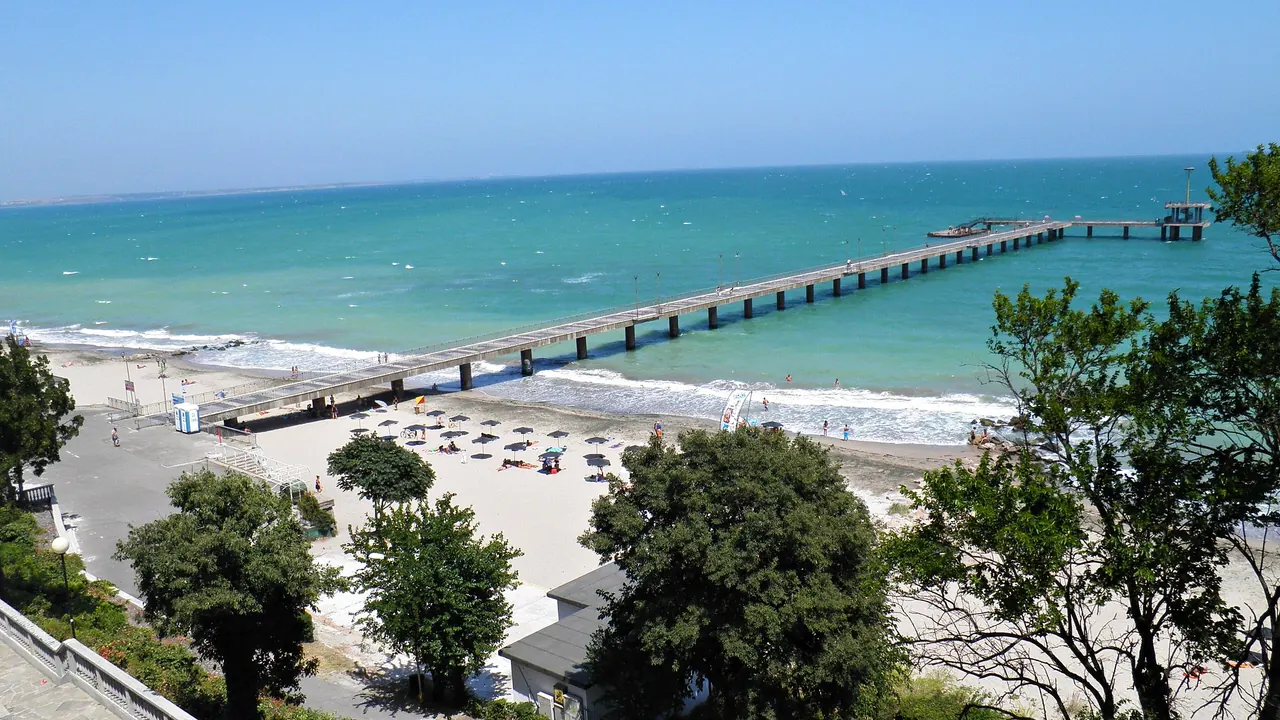
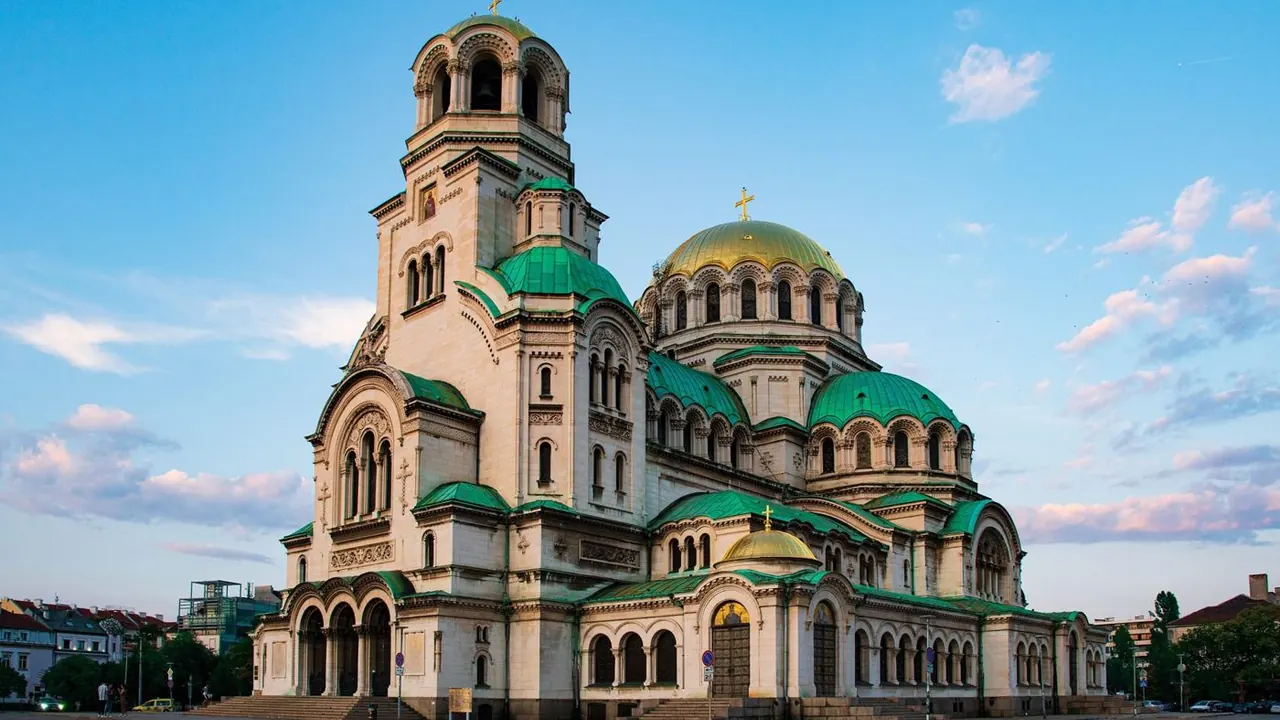
Photos: Burgas by Mister No, CC BY 3.0, cropped; Sofia by Jose Ligero Loarte, CC BY-SA 4.0, cropped.
Burgas or Sofia?
Our verdict in twelve categories, each scored against the same fixed benchmark cities, and the climate month by month, so you can choose for your trip.
Choose Burgas for
- beaches
- families
- wellness
Burgas is the choice for a summer trip built around the sea. Soft sand and shallow, warm water lie a few minutes from the centre, the old towns of Nessebar and Sozopol are within easy reach along the coast, and the lagoons around the city fill with migrating birds. Families with young children do well here between late June and mid-September, and the healing mud and mineral springs add a gentle spa side. Outside summer there is much less to do.
Choose Sofia for
- culture and sights
- nature and the outdoors
- live music and the arts
Travellers who want history, stages and mountains rather than a beach will be happier in Sofia. Roman Serdica, the Alexander Nevsky Cathedral and the frescoes of Boyana Church fill a few days. The opera and philharmonic perform through most of the year, and Vitosha rises straight from the southern edge of the city for hiking and some winter skiing. Sofia works in every season, and its small bars keep the evenings livelier.
Scoreboard
Twelve categories on one fixed scale from 0 to 100. The shaded stretch is the gap between the two.
Your match
Pick a travel style or drag the sliders, and both match scores follow your weighting.
Too close to call, level with your weighting
Wins on beaches and families with your weighting.
Wins on culture and sights and nature and the outdoors with your weighting.
What matters to you?
Category by category
What the scores mean for a trip.
Beaches & swimming
This is where the two differ most. Burgas has a long town beach of dark, soft sand below the Sea Garden, quieter sands at Sarafovo and Kraimorie, and a whole coast of bays and resorts within an hour.
Sofia is inland on a high plain, so summer swimming there means park pools or the lake at Pancharevo. If you want the sea on a Sofia trip, plan separate nights on the coast, and Burgas is one of the natural places to spend them.
Food & drink
The two eat at about the same level. Both serve Bulgarian cooking and both are better for good, simple meals than for a food-focused trip. The difference is the sea: in Burgas you go for fried sprats, grilled bluefish, turbot and mussels at plain harbour and beach places, with Pomorie wine alongside.
Sofia leans to the grill and the clay pot, with kebapche, kyufte and slow-baked dishes in mehana taverns, sometimes with folk music. It also has more variety of setting, with small modern bistros around Vitosha Boulevard and wine bars pouring Mavrud and Melnik.
Culture & sights
Sofia is far richer. Its centre packs Roman Serdica, the Rotunda of St George, a mosque and several great churches into a short walk, led by the gold domes of Alexander Nevsky. Boyana Church and the Thracian gold in the National Museum of History give it real depth.
Burgas is mostly a modern port. The highlights are the Sea Garden, the boat trip to St Anastasia Island and the Roman and Ottoman baths at Aquae Calidae, and two days covers them all.
Nightlife
Sofia has the livelier evenings, and it has them all year. Small cocktail bars, craft beer pubs and wine bars crowd the streets around Shishman, cellar bars under old buildings fill with students, and a few clubs play electronic music.
Burgas only gets busy at night in summer, when the Sea Garden beach bars and the streets around Aleksandrovska stay open late. After the season it goes quiet. If you want an all-night resort party rather than bar-hopping, Sunny Beach is forty minutes up the coast.
Nature & outdoors
Sofia has the stronger outdoors by some way because it has mountains. Vitosha rises above 2,200m at the edge of the city, with spruce forest, boulder rivers and the walk to Cherni Vrah, and the Rila lakes and the ski slopes of Borovets lie further out.
Burgas is flat but has its own speciality. Its four lagoons lie on the Via Pontica migration route, where storks and pelicans pass in late summer and autumn and flamingos feed in the salt pans. Add easy cycling, kitesurfing and the oak and beech hills of Strandzha.
Day trips
Both have good day trips, but of different kinds. From Burgas they run along the coast to the medieval churches of Nessebar, the wooden old quarter of Sozopol, and the salt museum and Thracian tomb at Pomorie, all within about forty minutes.
Sofia's trips go inland and take longer. Rila Monastery in its mountain valley and Plovdiv, with its Roman theatre and painted houses, are each about two hours away. The revival village of Koprivshtitsa makes a quieter outing. Plovdiv is an easy day from Sofia but too far from Burgas.
Good for families
Burgas is the easier family choice in summer because the sea does most of the work. The sand is soft, the warm water shelves gently, and the shade and playgrounds of the Sea Garden are right beside the beach. The centre is flat and easy with a pushchair, and the water parks are up the coast in the resorts.
Sofia has big parks, a hands-on science centre and a good gondola day on Vitosha. It has few attractions made for children, though, and broken pavements make pushchairs hard work.
Getting around
Both are easy to get around, in different ways. Burgas is small and flat, with the station, the pedestrian streets and the Sea Garden all within walking distance and the airport close by. The catch is the coast buses, which fill up in high summer, and you need a car for the lakes and Strandzha.
Sofia has a compact centre you can walk, plus a clean, simple metro from the airport through the middle, with trams and buses for everything else. You don't need a car in the city. Cracked pavements and Cyrillic signs away from the centre take some getting used to.
Shopping & style
Neither is a shopping destination, but Sofia offers more. Vitosha Boulevard is a pedestrian high street with the mountain at its end, craft shops sell Troyan pottery and embroidery, and a flea market of icons sits by Alexander Nevsky.
Burgas has chains on Aleksandrovska and Bogoridi and a couple of malls. The things worth taking home are edible or practical: Pomorie salt, honey and local wine.
Affordability
Both are very cheap by Western European standards, and over a week the difference is small. The timing is what differs. Burgas is inexpensive for most of the year, but rooms fill up and cost more in July and August, which is exactly when most people want the beach.
Sofia's costs stay low all year. Central hotels, mehana meals and metro rides are well below Western levels, and outings to Vitosha or Rila add little to the bill.
Live music & performing arts
What separates the two stages is scale and season. Burgas has a respectable regional scene for a city its size: the State Opera and the philharmonic perform through the season, and in summer open-air festivals fill the Sea Garden. Beyond those, most stage work is in Bulgarian, and the living folk music and nestinari fire-dancing are found in the Strandzha villages.
Sofia offers a much bigger programme for most of the year. It has the National Opera and Ballet, the Sofia Philharmonic at Bulgaria Hall and big concerts at the National Palace of Culture. Orthodox choral singing is the most distinctive thing to hear, and there is a good evening on stage to be had in almost any month.
Wellness & relaxation
Burgas has the edge for relaxing. Its speciality is the black, salty mud of the Atanasovsko and Pomorie lakes, used for wraps in sanatoria or simply smeared on at the shore. There are hot springs at the northern edge of the city that have been used since Roman times, and the spa hotels of Pomorie are close by.
Sofia also sits on mineral springs, but in the city they mostly mean public taps beside the old Central Mineral Baths. For actual bathing you go to the pools on the outskirts or to Bankya, half an hour west. Day to day, relaxing in Sofia means park walks and long café afternoons.
When should you go?
Pick your month. The climate figures are measured averages, not a forecast.
Burgas in July
Sofia in July
Daytime high, °C
Rainfall in the month, mm
Where the figures come from
Burgas's sunshine is measured 86 km from the centre, at Varna.
Temperature and rainfall are climate normals, averaged over the years shown. Burgas: 1991-2020 (rainfall 1981-2010) normals, Burgas (2.4 km from centre). Sofia: 1991-2020 normals, Sofia Observ. (7.3 km from centre).
Burgas is a summer place. The sea is comfortable only from late June to mid-September and reaches about 25°C in August. The air peaks at 29°C at the same time, and the long sunny days make the beach the obvious plan. Summer is also the driest part of its year. The rain comes in autumn and peaks in November at 72mm, and winters on the coast are cool and dull, good for lagoon walks and not much else. May and September are pleasant for the old towns and the birds.
Sofia gets about as hot in summer, but May and June are its wettest months, at up to 78mm, so early summer can be showery. Late spring and September to October are the most comfortable times for walking the centre and hiking on Vitosha. Winter is colder than on the coast, with January highs around 4°C, but the same cold brings snow to the mountains for skiing.
Which traveller are you?
On a beach and sun trip, Burgas is the clear pick. Central Beach is a short walk from the centre, the sea is warm by August, and the bays of Sozopol and the long sands towards Nessebar are within an hour. Sofia has only pools and a lake.
For a culture and arts trip, Sofia offers far more: Roman Serdica beneath the centre, the Alexander Nevsky Cathedral, the frescoes at Boyana and Thracian gold by day, then opera, ballet or the philharmonic at night. Burgas has small museums and takes two days.
On an outdoors trip, Sofia suits hikers better, with Vitosha a city bus or gondola ride away, the Seven Rila Lakes further out and real skiing at Borovets in winter. Burgas has flat cycling and birdwatching around its lagoons, but no mountains.
Before you go
| Measure | Burgas | Sofia |
|---|---|---|
| Official language | Bulgarian | Bulgarian |
| Currency | Euro (EUR) | Euro (EUR) |
| Sockets | CF230 V, 50 Hz | CF230 V, 50 Hz |
| Driving side | Right | Right |
| Time zone | UTC+2, UTC+3 in summer | UTC+2, UTC+3 in summer |
| Emergency number | 112 | 112 |
| Elevation | 30 m | 560 m |
| Main airport | Burgas Airport (BOJ)8 km from centre69 non-stop destinations | Sofia Airport (SOF)8 km from centre97 non-stop destinations |
| Public holidays this year | 15 days | 15 days |
By the numbers
| Measure | Burgas | Sofia |
|---|---|---|
| City population | 189,086 | 1,213,134 |
| People per km² | 746 | 2,466 |
| Museums within 10 km | 7 | 43 |
| UNESCO World Heritage sites within 50 km | 1 | 1 |
| Swim season, months above 21 °C | 4 months | - |
Where else could you go?
Every comparison below shares a destination with this one, so you can follow Burgas or Sofia somewhere new.