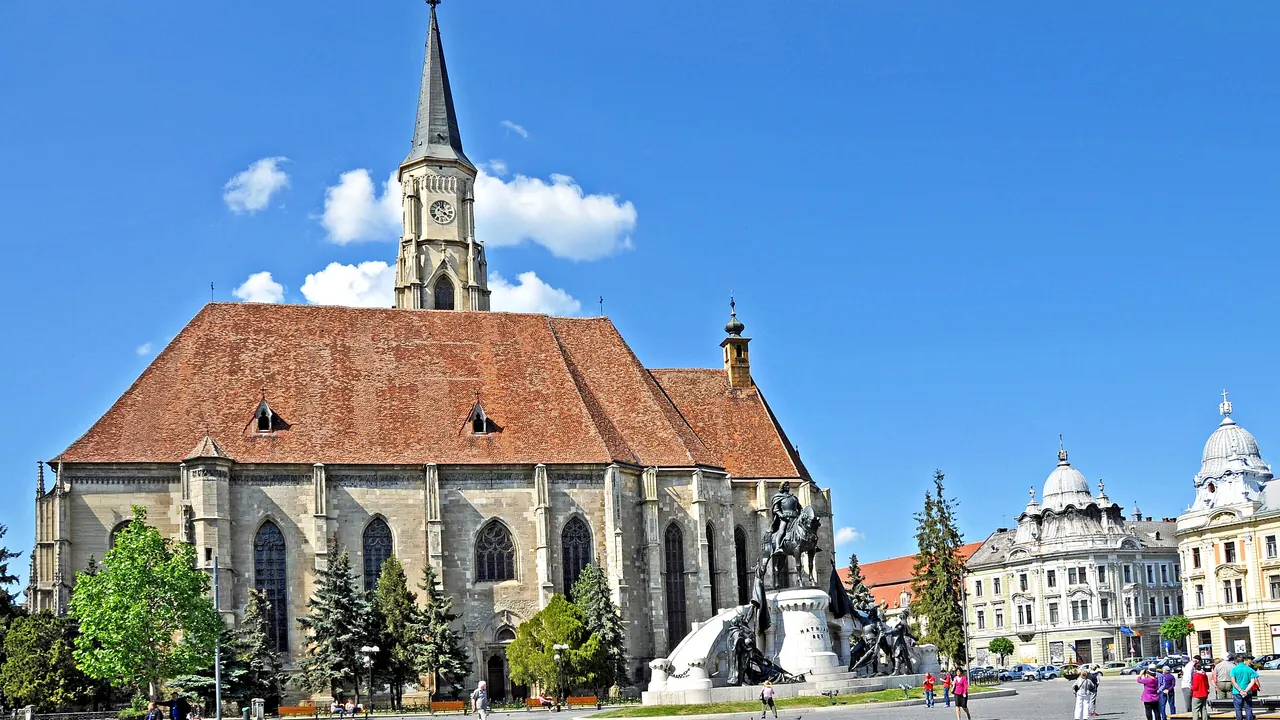
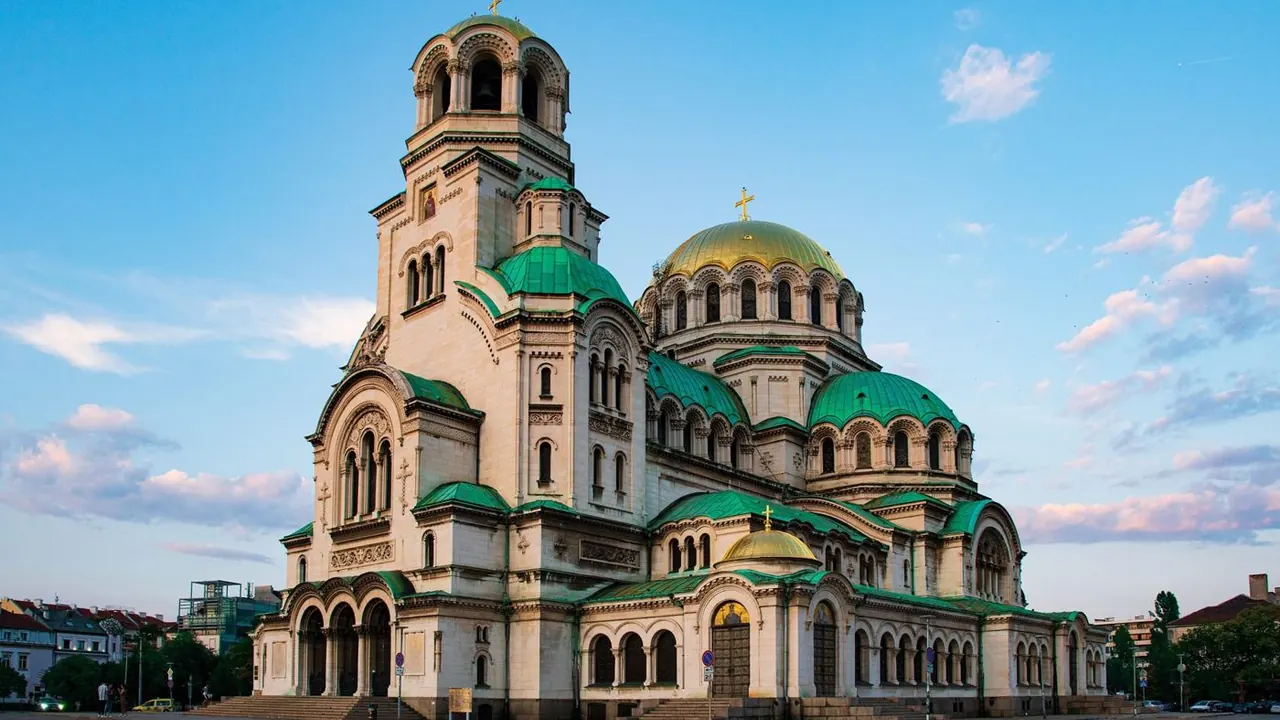
Photos: Cluj-Napoca by Dennis G. Jarvis, CC BY-SA 2.0, cropped; Sofia by Jose Ligero Loarte, CC BY-SA 4.0, cropped.
Cluj-Napoca or Sofia?
Our verdict in twelve categories, each scored against the same fixed benchmark cities, and the climate month by month, so you can choose for your trip.
Choose Cluj-Napoca for
- live music and the arts
- food and drink
- beaches
Cluj-Napoca suits travellers who want a small, walkable university city with two cultures under one roof. Romanian and Hungarian opera houses, theatres and churches stand a few streets apart, the old centre fills with students in term time, and the summer music festivals draw crowds from across Eastern Europe. It works best as a lively base for a wider Transylvanian trip, with the Turda Salt Mine and the Apuseni Mountains close by.
Choose Sofia for
- wellness
- nature and the outdoors
- culture and sights
Sofia is the better pick for anyone who wants a mountain on the doorstep and history layered under the pavements. Vitosha rises straight above the city, Rila and its lakes are within a day, and the centre packs Roman ruins, a mosque, a fourth-century rotunda and the gold domes of Alexander Nevsky into a short walk. It is also the cheaper of the two, and its mineral springs and spa towns give a slower trip somewhere to go.
Scoreboard
Twelve categories on one fixed scale from 0 to 100. The shaded stretch is the gap between the two.
Your match
Pick a travel style or drag the sliders, and both match scores follow your weighting.
Wins on live music and the arts and food and drink with your weighting.
Wins on wellness and nature and the outdoors with your weighting.
What matters to you?
Category by category
What the scores mean for a trip.
Beaches & swimming
Neither city has a beach, and both are a long way from the Black Sea, so a sun-and-sea trip means booking separate nights on the coast. What differs is the summer swim. Around Cluj the draw is floating in the buoyant outdoor salt lakes at Turda, while Sofia's options are park pools and the lake at Pancharevo on the city's edge.
Food & drink
Both serve hearty home cooking rather than a gourmet scene, but the traditions differ. Cluj eats where Romania meets Hungary: cabbage and meat bakes, sour ciorbă soups, sarmale with polenta and fried papanași, with serious specialty coffee in the student streets around Piața Unirii.
Sofia leans Balkan, with grilled kebapche, shopska salad, cold tarator and banitsa for breakfast, served in folk-style mehana taverns. Its real strength is wine from local grapes such as Mavrud and Melnik, where Cluj's glass is more likely a Târnave valley white.
Culture & sights
Sofia offers more to see and more variety across the centuries. Roman Serdica lies excavated around the metro, the Rotunda of St George, a mosque and an Orthodox cathedral sit minutes apart, and Boyana Church's medieval frescoes and the Thracian gold in the history museum are worth the trip on their own. The catch is that the streets in between can be plain.
Cluj is the handsomer old town but the thinner list: Gothic St Michael's on Piața Unirii, baroque palaces, the Bánffy Palace art museum and stretches of medieval wall. The open-air section of the ethnographic museum is its standout, and a day or two covers it.
Nightlife
Evenings out are on a similar scale, good for a weekend rather than a reason to travel. Cluj is the more student-driven, with cellar bars and terraces around Piața Muzeului, cheap campus bars and a few clubs in industrial courtyards, though it goes quiet in summer when term ends.
Sofia feels a little older and steadier, with cocktail, craft beer and wine bars around Shishman Street, bars beneath the grand old buildings and park terraces in summer.
Nature & outdoors
Sofia wins clearly here, because a real mountain starts at the edge of town. Vitosha's boulder rivers, spruce forest and the summit of Cherni Vrah are reachable by city bus and gondola, and the glacial Seven Rila Lakes and proper skiing at Borovets are a short drive further.
Cluj's surroundings are greener and softer: forest walks in Făget, the limestone canyon of Turda Gorge for a half-day hike, and the caves and karst plateaus of the Apuseni, which need a car and an early start.
Day trips
Both make good bases for outings, with a different flavour to each. From Cluj the Turda Salt Mine is the essential trip, joined by Alba Iulia's star-shaped citadel, Bánffy Castle at Bonțida and the whitewashed village of Rimetea, so the theme is castles, Habsburg forts and Hungarian and Saxon towns.
Sofia's outings are fewer but weightier: Rila Monastery in its mountain valley and Plovdiv's Roman theatre and painted old town, each about two hours away, plus the revival village of Koprivshtitsa.
Good for families
Families will find both calm and safe but short on attractions built for children. The difference is the big day out: in Cluj it is underground at the Turda Salt Mine, with its lake, small Ferris wheel and play areas, while in Sofia it is up on Vitosha by gondola, though broken pavements make pushchairs harder work there.
Getting around
In both cities the centre is easy on foot, but the networks differ. Sofia has a clean, simple metro linking the airport, the centre and the foothills of Vitosha, so you rarely need a taxi, though signs away from the centre are mostly in Cyrillic.
Cluj is flat and small enough that almost everything lies within a twenty-minute walk of Piața Unirii, with buses and trolleybuses for the rest. Leaving town is the weaker point there, with slow trains making a hired car the practical choice.
Shopping & style
Neither is a shopping destination, and the best buys in both are crafts rather than fashion. Cluj's are Transylvanian: embroidered blouses, painted ceramics and wooden work from folk-art fairs and the ethnographic museum shop, with the Christmas market on Piața Unirii as the high point.
Sofia has the stronger main street in pedestrian Vitosha Boulevard, plus rose oil, Troyan pottery and the icon and curiosity stalls near Alexander Nevsky.
Affordability
Both are cheap by Western European standards, but Sofia stretches a budget further. It is one of the least expensive capitals in the EU, and meals, wine, hotels and trips to Rila add little to the bill.
Cluj's tech and university economy pushes prices above the Romanian norm, and rooms become scarce and costly during the summer festivals. Its opera and theatre seats remain a bargain.
Live music & performing arts
Cluj has the fuller stage life, because it runs two of everything: a Romanian opera and theatre sharing one ornate house, a Hungarian opera and theatre in their own, and a philharmonic season. In summer it adds some of Eastern Europe's biggest music festivals.
Sofia's season is solid and affordable, with opera and ballet, the Sofia Philharmonic and big shows at the National Palace of Culture. Its distinctive sound is Bulgarian choral and Orthodox singing. In both cities, plays are in the local languages, so music and dance suit visitors best.
Wellness & relaxation
Cluj has no bathing tradition of its own, so unwinding there is mostly a matter of slowing down: the Botanical Garden, the lake in Central Park and long coffees away from the student streets. The nearest thing to a cure is at Turda. People go down into the old salt mine to breathe its dry, salty air for their lungs in any season, but floating in the outdoor salt lakes is for summer only. Otherwise the choice is hotel wellness centres and a few day spas.
Warm mineral water rises beneath Sofia itself, and you notice it in the centre, where locals fill bottles at the public taps beside the old Central Mineral Baths. To bathe in that water, you go out to the city's edge or to Bankya, about half an hour west, and it is just as good in a snowy January as in July. Further out, whole resorts such as Velingrad are built around the hot springs, so a slow trip here has much more to it than one in Cluj.
When should you go?
Pick your month. The climate figures are measured averages, not a forecast.
Cluj-Napoca in July
Sofia in July
Daytime high, °C
Rainfall in the month, mm
Temperature and rainfall are climate normals, averaged over the years shown. Cluj-Napoca: 1991-2020 normals, Cluj-Napoca (2.4 km from centre). Sofia: 1991-2020 normals, Sofia Observ. (7.3 km from centre).
Both cities are inland with no sea, and their years run on a similar pattern: cold winters, warm summers and the most comfortable walking in May, June and September. Cluj has the harsher winter, with January highs around 1°C against about 4°C in Sofia, and it gets the heavier early-summer rain, peaking at about 91mm in June, so pack for thundery afternoons.
Sofia is the slightly warmer and noticeably sunnier city through the summer, reaching around 28°C in July and August, which is still pleasant for sightseeing and ideal for high walks on Vitosha and in Rila. Its rain is spread more evenly through the year. October stays mild in both, a little more so in Sofia, while November to February suit Christmas markets and snow in the hills rather than long days on foot.
Which traveller are you?
On an outdoors trip, choose Sofia. In Cluj the walking is gentle woodland and one good canyon, with the wilder hills a car-dependent day away. In Sofia you can reach high ground from your hotel door, hiking in summer and skiing in winter.
For a relaxing and wellness trip, Sofia is the better choice. A slow week in Cluj comes down to parks, cafés and a hotel spa. In Sofia you can build whole days around mineral pools and add a night in a spa town.
For music festival-goers, Cluj is the pick. A summer trip there can centre on some of Eastern Europe's largest electronic and pop festivals, which Sofia has nothing to match. Rooms in Cluj sell out at festival time, so book well ahead.
Before you go
| Measure | Cluj-Napoca | Sofia |
|---|---|---|
| Official language | Romanian | Bulgarian |
| Currency | Romanian Leu (RON) | Euro (EUR) |
| Sockets | CF230 V, 50 Hz | CF230 V, 50 Hz |
| Driving side | Right | Right |
| Time zone | UTC+2, UTC+3 in summer | UTC+2, UTC+3 in summer |
| Emergency number | 112 | 112 |
| Elevation | 356 m | 560 m |
| Main airport | Avram Iancu Cluj International Airport (CLJ)7 km from centre53 non-stop destinations | Sofia Airport (SOF)8 km from centre97 non-stop destinations |
| Public holidays this year | 17 days | 15 days |
By the numbers
| Measure | Cluj-Napoca | Sofia |
|---|---|---|
| City population | 286,598 | 1,213,134 |
| People per km² | 1,640 | 2,466 |
| Museums within 10 km | 6 | 43 |
| UNESCO World Heritage sites within 50 km | 0 | 1 |
Where else could you go?
Every comparison below shares a destination with this one, so you can follow Cluj-Napoca or Sofia somewhere new.
- Sibiuvs Cluj-Napoca
- Plovdivvs Sofia
- Skopjevs Sofia
- Brasovvs Cluj-Napoca
- Thessalonikivs Sofia
- Ohridvs Sofia