Bulgaria
Burgas
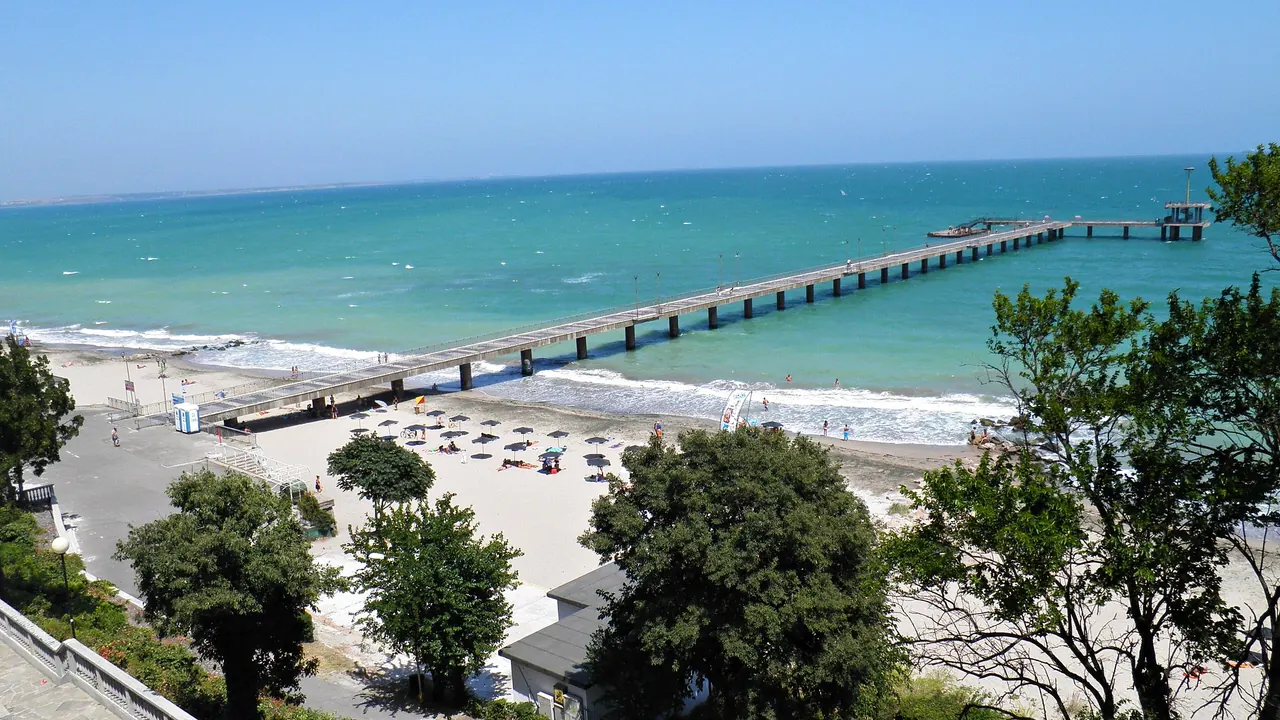
The pier over the Black Sea, seen from the Sea Garden
- Affordable cities76
- Beaches70
- Getting around62
Match
51
Every category weighted equally
- Beach & sun55
- Culture & arts47
- Food & nightlife47
- Family trip56
- Outdoors56
- Relax & unwind54
- Shopping & style46
- On a budget54
Burgas in twelve categories
Our verdict on each, scored 0 to 100 against the same fixed benchmark cities, so a score means the same thing on every page.
Beaches & swimming. Scores 70 out of 100.
Food & drink. Scores 42 out of 100.
Culture & sights. Scores 32 out of 100.
Nightlife. Scores 40 out of 100.
Nature & outdoors. Scores 60 out of 100.
Day trips. Scores 60 out of 100.
Good for families. Scores 55 out of 100.
Getting around. Scores 62 out of 100.
Shopping & style. Scores 30 out of 100.
Affordability. Scores 76 out of 100.
Live music & performing arts. Scores 35 out of 100.
Wellness & relaxation. Scores 52 out of 100.
Burgas category by category
Beaches & swimming
70Burgas is a Black Sea city where beach life sets the rhythm of summer. The long Central Beach runs below the Sea Garden, a few minutes' walk from the centre, with soft, dark, iron-rich sand and shallow water that warms to about 25°C by August. The commercial port is close by, though, and many locals head a little way out to Sarafovo, Kraimorie or the dunes towards Pomorie.
Within an hour along the coast there is a lot of variety: the small bays of Sozopol, the broad, lively sands of Sunny Beach and Nessebar, and quieter stretches south towards Primorsko. The season is short. The sea is comfortable from late June to mid-September, and outside those months the shore is for walking, not swimming.
Food & drink
42Eating in Burgas means simple Bulgarian cooking with a seaside bias. Fish is the thing to seek out: fried sprats, grilled bluefish, turbot and mussels from the gulf, served at plain harbourside and beach restaurants. Elsewhere you find shopska salad, grilled meats, tarator in the heat, and banitsa and mekitsi from bakeries in the morning. Local wines from the Pomorie vineyards and Thracian reds are good and come cheap.
The range is narrow, though, and the beach promenade leans towards standard menus aimed at summer visitors. Fine dining and international cooking are thin on the ground. It's a pleasant place to eat well and simply. Few people would plan a trip around the food.
Culture & sights
32Burgas is mostly a modern port city of the late nineteenth and twentieth centuries, and its sights are modest. The centre has some handsome early-twentieth-century buildings, the Cathedral of Saints Cyril and Methodius, and a set of small regional museums: archaeology, ethnography and natural history. The Sea Garden, a long seafront park with sculptures and monuments, is the city's best-loved landmark.
Two outlying sights add some depth. St Anastasia Island, a former monastery and prison reached by boat across the bay, has stories and views. Aquae Calidae, the excavated Roman and Ottoman baths at the city's northern edge, is the most interesting heritage site in the area. Two days covers it all comfortably.
Nightlife
40Going out in Burgas follows the season. In summer the beach bars along the Sea Garden and the cafés and bars around Aleksandrovska and Bogoridi streets stay busy late, and a handful of clubs keep going until the small hours. Out of season the city goes quiet and evenings mostly end in a bar or a mehana.
For a full party night, many visitors head to Sunny Beach, a big resort strip of clubs and bars about forty minutes up the coast that runs until dawn all summer. Burgas itself is the calmer, more local alternative.
Nature & outdoors
60What makes Burgas stand out outdoors is birds. The city is ringed by four coastal lakes and lagoons, Vaya, Atanasovsko, Mandra and Pomorie, which lie on the Via Pontica, one of Europe's great migration routes. In late summer and autumn, huge flocks of white storks and pelicans pass overhead, and flamingos, avocets and herons feed in the salt pans. The Poda reserve on the southern edge has hides and easy trails.
About an hour south, Strandzha Nature Park covers low, forested hills of oak and beech with rivers and quiet villages. Along the coast, the rocky headlands near Sozopol and Chernomorets make good walking. Cycling around the lakes is flat and easy, and kitesurfers use the windy shallows. There are no real mountains within reach.
Day trips
60The coast either side of Burgas is lined with old towns, and they make the best outings. Nessebar, about forty minutes north, is a UNESCO-listed peninsula of medieval churches and timber houses, crowded in summer and lovely in the early evening. Sozopol, about the same distance south, has an old quarter of wooden houses on a rocky point, with a lively harbour below.
Closer in, Pomorie has a salt museum, a Thracian beehive tomb and wineries around the town. Inland, the villages of Strandzha keep traditional architecture and the fire-dancing customs of the region. Varna, Bulgaria's other big port, is just under two hours north, with a fine archaeological museum and Roman baths. The great inland sites, such as Plovdiv and the Valley of the Thracian Kings, are too far for an easy day.
Good for families
55In summer Burgas works well with young children, mainly because of the sea: the sand is soft, the water shelves gently and it's warm. The Sea Garden gives a long stretch of shade, playgrounds and space to run beside the beach, and the centre is flat, compact and easy with a pushchair.
There is little built specifically for children in the city itself. The water parks and fairground rides are up the coast in the big resorts. Boat trips to St Anastasia Island and birdwatching at the lakes appeal to older children. Outside summer there is not much to keep a family busy.
Getting around
62Central Burgas is small and flat, and almost everything a visitor needs lies on foot between the station, the pedestrian streets and the Sea Garden. Cycling is easy along the seafront and around the lakes. The airport is close to the city, so arrivals are quick.
Regional buses from the central bus stations run along the coast to Sozopol, Pomorie, Nessebar and Sunny Beach. In high summer they fill up and the coast road gets congested, and taxis are the common fallback. The lakes, Strandzha villages and smaller beaches are much easier with a car.
Shopping & style
30Shopping in Burgas is everyday city shopping: high-street chains along the pedestrian Aleksandrovska and Bogoridi streets, a couple of large malls and produce markets in the centre. Things worth taking home are mostly edible or practical: local wine, rose oil and rose cosmetics, honey and Black Sea salt from Pomorie. In summer the resort promenades fill with souvenir stalls. No one chooses Burgas for shopping.
Affordability
76Burgas is one of the cheaper seaside cities in Europe. Sit-down meals of grilled fish and salad, local wine and beer, buses along the coast and entry to the city's museums all cost well below Western European levels. Rooms in the city are generally reasonable, often cheaper than in the resorts it serves. The main exception is the peak weeks of July and August, when coastal accommodation fills up and prices go up, so book ahead for those weeks. Outside summer it's a very inexpensive place to stay.
Live music & performing arts
35For a city its size, Burgas has a respectable stage life. The State Opera Burgas puts on opera, operetta and ballet through the season, the Adriana Budevska Drama Theatre plays in Bulgarian, and the city's philharmonic gives regular concerts. In summer, open-air stages in the Sea Garden and on the beach host festivals, from classical music to large pop and rock events.
It's a regional scene, though, and outside the opera and summer concerts there's little a non-Bulgarian speaker can easily follow. In the mountain villages of Strandzha, traditional folk music and the nestinari fire-dancing survive as living customs rather than staged shows.
Wellness & relaxation
52Burgas sits in an old spa landscape. The hot mineral springs at the northern edge of the city have been used since Roman times, and the restored baths of Aquae Calidae tell that story. Mud cures are the real local speciality. The black, salty mud of the Atanasovsko and Pomorie lakes is used by sanatoria and spa hotels for therapeutic wraps, and many visitors simply smear it on themselves at the lake shore and let it dry in the sun.
The city's pace helps too. Outside the peak weeks Burgas is unhurried, and long evening walks through the Sea Garden are the local way to unwind. For polished spa resorts, look to the hotels in Pomorie and the larger coastal resorts rather than the city centre.
When should you go?
Pick a month to see what it is like. The climate figures are measured averages, not a forecast.
Burgas in July
Daytime high, °C
Rainfall in the month, mm
The whole year
Shaded against this city’s own year: the deepest cell is its best month for that figure and the palest its weakest.
Where the figures come from
Burgas's sunshine is measured 86 km from the centre, at Varna.
Temperature and rainfall are climate normals, averaged over the years shown. Burgas: 1991-2020 (rainfall 1981-2010) normals, Burgas (2.4 km from centre).
Before you go
| Measure | Burgas |
|---|---|
| Official language | Bulgarian |
| Currency | Euro (EUR) |
| Sockets | CF230 V, 50 Hz |
| Driving side | Right |
| Time zone | UTC+2, UTC+3 in summer |
| Emergency number | 112 |
| Elevation | 30 m |
| Main airport | Burgas Airport (BOJ)8 km from centre69 non-stop destinations |
| Public holidays this year | 15 days |
By the numbers
| Measure | Burgas |
|---|---|
| City population | 189,086 |
| People per km² | 746 |
| Museums within 10 km | 7 |
| UNESCO World Heritage sites within 50 km | 1 |
| Swim season, months above 21 °C | 4 months |
Compare Burgas with
Every comparison with a written verdict behind it.