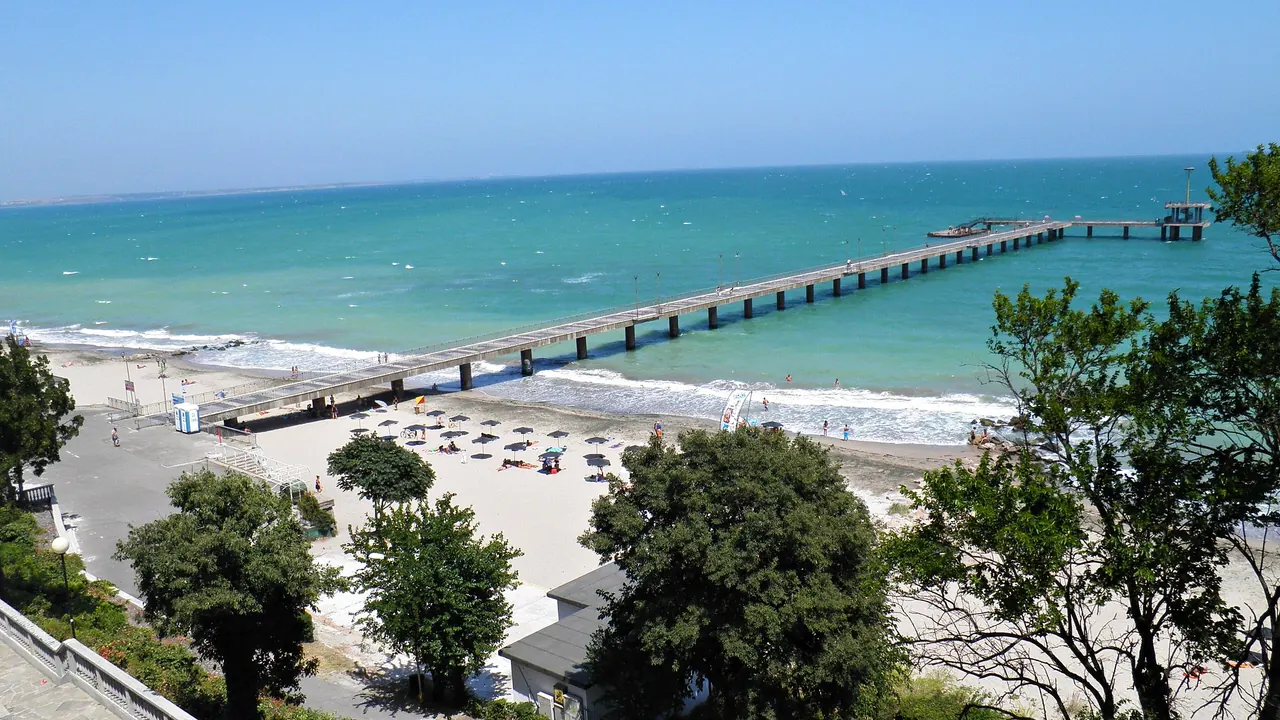
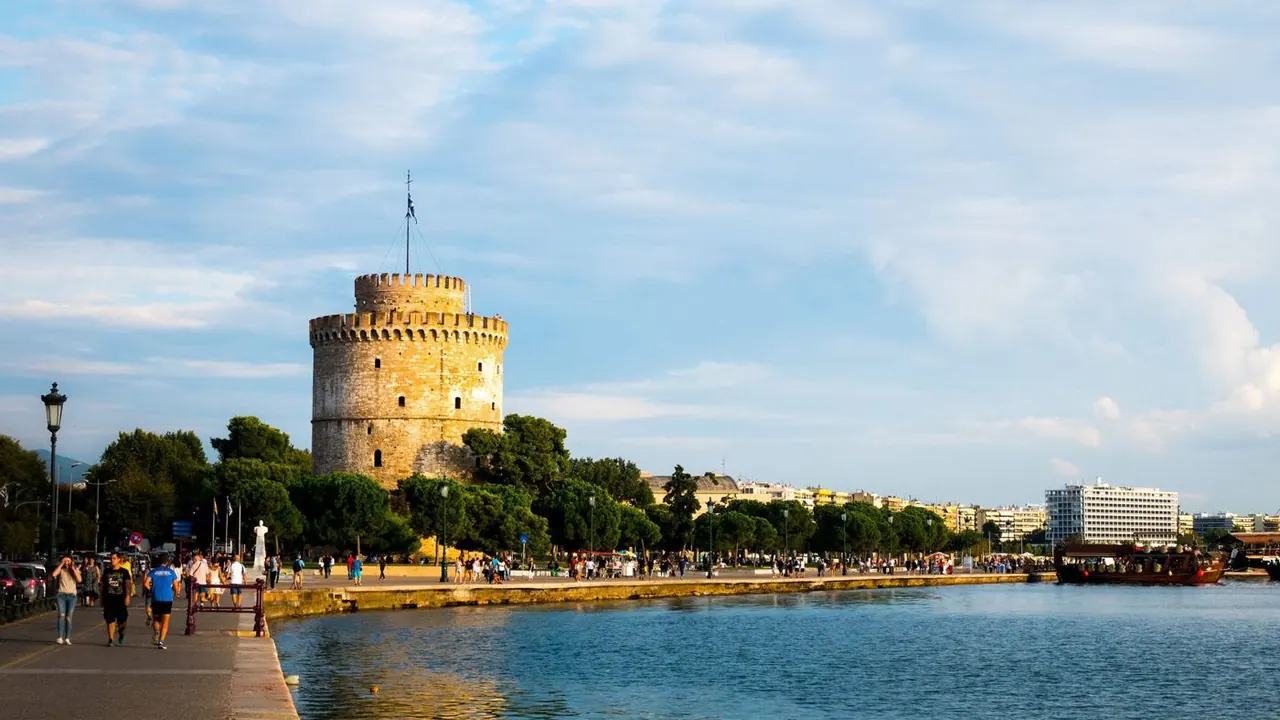
Photos: Burgas by Mister No, CC BY 3.0, cropped; Thessaloniki by Destinygreece, CC BY-SA 4.0, cropped.
Burgas or Thessaloniki?
Our verdict in twelve categories, each scored against the same fixed benchmark cities, and the climate month by month, so you can choose for your trip.
Choose Burgas for
- wellness
- beaches
- prices
Burgas is for a summer trip built around the sea. Its long beach of soft, dark sand starts at the edge of the centre, the water shelves gently, and a good meal, a room and a bus along the coast all cost little. Add the bird lakes, the mud baths and the old towns of Nessebar and Sozopol, and it suits families, beach lovers and anyone after an easy, inexpensive week that asks little planning.
Choose Thessaloniki for
- culture and sights
- nightlife
- food and drink
Thessaloniki rewards travellers who want the city itself to be the point. Its Byzantine churches, Roman ruins and Macedonian gold fill days, the tavernas and ouzeri make every meal worth planning, and the nights in Ladadika run late on weeknights too. Swimming means a trip out to Halkidiki, so it fits a culture, food and going-out trip better than a lazy beach stay.
Scoreboard
Twelve categories on one fixed scale from 0 to 100. The shaded stretch is the gap between the two.
Your match
Pick a travel style or drag the sliders, and both match scores follow your weighting.
Wins on wellness and beaches with your weighting.
Wins on culture and sights and nightlife with your weighting.
What matters to you?
Category by category
What the scores mean for a trip.
Beaches & swimming
Burgas has the easier swimming. Central Beach runs below the Sea Garden within minutes of the centre, with soft sand and gently shelving water, and Kraimorie, Sarafovo, Sozopol's bays and the long sands to the north are all close by. The catch is a short season and a commercial port next door.
Thessaloniki's own waterfront is not for bathing, and the nearby town beaches are ordinary. The clearer, warmer water of Halkidiki is better than anything near Burgas, but it is an hour's drive away and works as a day out or a separate stay.
Food & drink
Thessaloniki is one of the great eating cities of Greece. Ottoman, Sephardic and Anatolian influences show in its kebabs, meze tables and pastries, and the Kapani and Modiano markets are working places to eat as well as shop.
Burgas eats well but simply. Grilled bluefish, fried sprats and mussels from the gulf are the highlights, with Pomorie wines alongside, but the range is narrow and the promenade menus are aimed at summer visitors.
Culture & sights
Burgas is a young port city. Its draws are the Sea Garden, the cathedral, a few small regional museums, the boat out to St Anastasia Island and the Roman baths of Aquae Calidae, and two days covers them.
Thessaloniki has far more depth. Its UNESCO-listed Byzantine churches, the Arch of Galerius, the Roman Forum and the Museum of Byzantine Culture can fill several days, and the Ottoman lanes and walls of Ano Poli add more, even though the modern centre around them is plain.
Nightlife
Evenings in Burgas mean summer beach bars along the Sea Garden and a few late clubs, then a quiet winter, and anyone wanting a full party night rides up to Sunny Beach.
Thessaloniki goes out properly and all year. Students and the late Greek hours keep Ladadika, the Valaoritou bars and the tables of the Bit Bazaar crowded well past midnight, including on weeknights.
Nature & outdoors
Outdoors, Burgas is all flat water and birds. Its ring of lagoons lies on the Via Pontica flyway, so late summer and autumn put migrating flocks and wading birds close enough to watch from a hide or a bike, and kitesurfers use the shallows. For anything higher you have only the wooded hills of Strandzha.
Thessaloniki has more variety and real height. The Seich Sou pines begin just above Ano Poli, and Mount Olympus, with the Enipeas gorge and multi-day hiking, is close enough for a day trip. In winter there is skiing at Kaimaktsalan and Seli, though most of it is easier with a car.
Day trips
Burgas's outings run along the coast: medieval Nessebar, the wooden houses of Sozopol, Pomorie's Thracian tomb and salt museum, with the great inland sites of Bulgaria too far for a day.
Thessaloniki has a richer choice. The royal tombs at Vergina, Pella, Dion below Olympus, the waterfalls of Edessa and the Naoussa vineyards make up a whole circuit of ancient Macedonia, and Halkidiki and the Mount Athos coast add sea days.
Good for families
Both are fair choices for families, for different reasons. Burgas has the sea on the doorstep, with soft sand, shallow water and the shady Sea Garden, plus a flat centre easy with a pushchair, though it has little to offer outside summer.
Thessaloniki keeps children up late at tavernas and has the Noesis science centre, but narrow, car-blocked pavements, steep Ano Poli and the July heat make it harder going.
Getting around
Both centres are easy on foot, but the arrangement differs. Burgas is a compact, flat block between the station and the Sea Garden, with buses along the coast that crowd in summer.
Thessaloniki stretches as a long strip by the water, served by a metro line and slow buses, with a climb or a taxi up to Ano Poli. Both cities need a car for their best countryside.
Shopping & style
Thessaloniki gives a better morning's shopping: Tsimiski's fashion and shoe shops, small independents around Valaoritou, antique stalls at the Bit Bazaar and market spices, loukoumi and tsipouro to take home.
Burgas is everyday high-street and mall shopping, and the best things to buy are rose oil, honey and Pomorie salt.
Affordability
Burgas is the cheaper of the two. Fish dinners, local wine, buses along the coast and museum tickets all cost little, and rooms are inexpensive outside the peak weeks of July and August.
Thessaloniki is good value for a city because it is priced for students and locals, with generous plates at the tavernas and cheap nights out. Intercity buses reach most of its day-trip sites, so hiring a car is an optional extra for travellers who want to cover the circuit more easily.
Live music & performing arts
Thessaloniki has the stronger stage life. The Concert Hall and State Orchestra, open-air summer concerts and above all rebetiko played late in the tavernas give a visitor something to enjoy without speaking Greek.
Burgas has its State Opera, ballet and summer festivals in the Sea Garden, and the nestinari fire-dancing survives in the Strandzha villages, but most of its theatre is in Bulgarian.
Wellness & relaxation
Burgas is the better place to unwind. Mineral springs used since Roman times and the black, salty mud of the Atanasovsko and Pomorie lakes still feed sanatoria and spa hotels, and plenty of visitors simply smear the mud on at the lake shore.
Thessaloniki's hammams survive only as monuments, and the simple baths at Lagadas are half an hour away. Its calm comes from long iced coffees on the seafront rather than from spas.
When should you go?
Pick your month. The climate figures are measured averages, not a forecast.
Burgas in July
Thessaloniki in July
Daytime high, °C
Rainfall in the month, mm
Where the figures come from
Burgas's sunshine is measured 86 km from the centre, at Varna.
Temperature and rainfall are climate normals, averaged over the years shown. Burgas: 1991-2020 (rainfall 1981-2010) normals, Burgas (2.4 km from centre). Thessaloniki: 1991-2020 normals, Thessaloniki Airport (14 km from centre).
Burgas is a short-season seaside city. The sea only becomes comfortable from late June, reaches about 25°C in August and holds into mid-September, while the air stays pleasant rather than fierce, with highs around 28°C in high summer and long, sunny days. Autumn turns wetter, with November the rainiest month, and winters are cold enough that the shore is only for walking.
Thessaloniki runs hotter and longer. July and August reach about 32°C, too hot for sightseeing in the middle of the day, so May, June, September and October are the best months for walking the churches and Ano Poli. The gulf stays mild well into autumn, which helps a late beach day in Halkidiki, and winters are milder and fairly dry until rain picks up in December.
Which traveller are you?
For a beach and sun trip, Burgas is the clear choice. Its sandy Central Beach lies a short walk from the centre, the water is shallow and warm in summer, and Sozopol and Primorsko are an easy bus ride away, whereas Thessaloniki's good beaches mean a drive to Halkidiki.
On a culture and arts trip, Thessaloniki wins easily. UNESCO-listed Byzantine churches, the Rotunda mosaics, the Archaeological Museum and day trips to Vergina and Pella offer far more than Burgas, whose modest museums and island monastery are done in two days.
For a food and nightlife trip, Thessaloniki is the place. Meze at the ouzeri, bougatsa for breakfast, the Kapani market, and bars in Ladadika and around Valaoritou that stay full past three go well beyond Burgas's simple fish tavernas and quiet off-season evenings.
Before you go
| Measure | Burgas | Thessaloniki |
|---|---|---|
| Official language | Bulgarian | Greek |
| Currency | Euro (EUR) | Euro (EUR) |
| Sockets | CF230 V, 50 Hz | CF230 V, 50 Hz |
| Driving side | Right | Right |
| Time zone | UTC+2, UTC+3 in summer | UTC+2, UTC+3 in summer |
| Emergency number | 112 | 112 |
| Elevation | 30 m | 6 m |
| Main airport | Burgas Airport (BOJ)8 km from centre69 non-stop destinations | Thessaloniki Macedonia International Airport (SKG)14 km from centre90 non-stop destinations |
| Public holidays this year | 15 days | 15 days |
By the numbers
| Measure | Burgas | Thessaloniki |
|---|---|---|
| City population | 189,086 | 309,617 |
| People per km² | 746 | 16,042 |
| Museums within 10 km | 7 | 32 |
| UNESCO World Heritage sites within 50 km | 1 | 1 |
| Swim season, months above 21 °C | 4 months | 5 months |
Where else could you go?
Every comparison below shares a destination with this one, so you can follow Burgas or Thessaloniki somewhere new.
- Varnavs Burgas
- Ohridvs Thessaloniki
- Skopjevs Thessaloniki
- Istanbulvs Burgas
- Plovdivvs Thessaloniki
- Plovdivvs Burgas