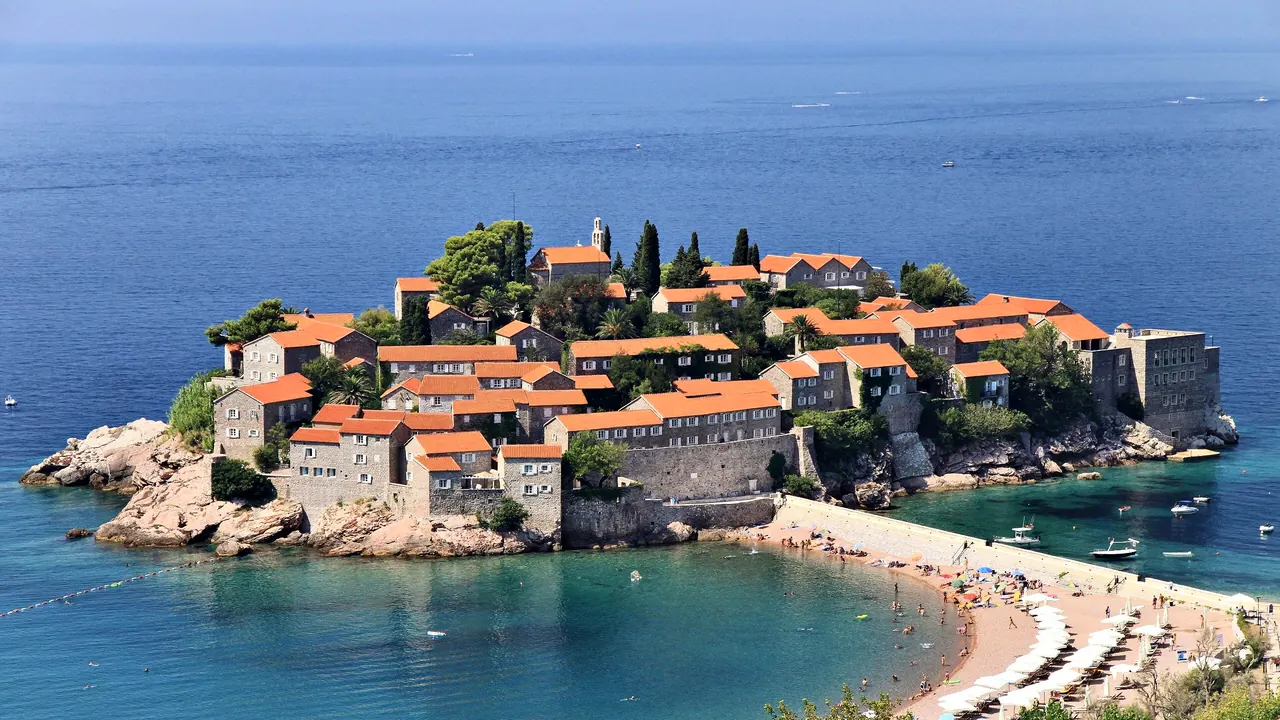
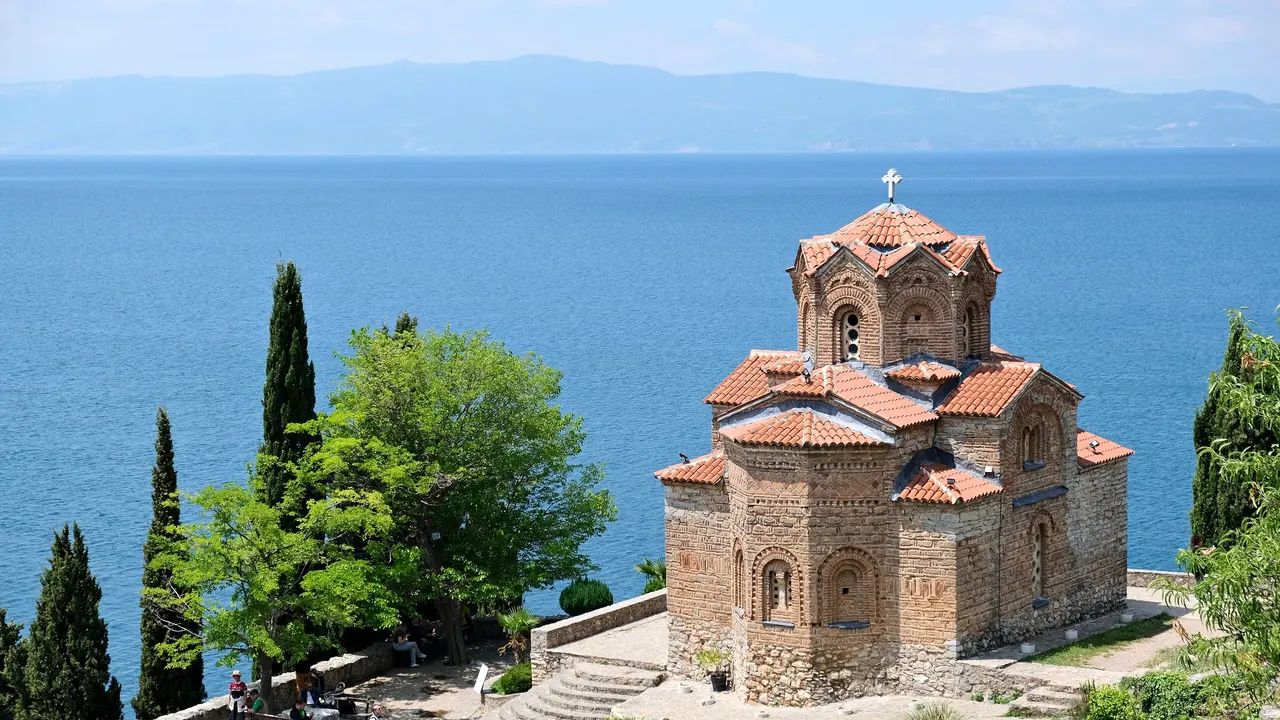
Photos: Montenegro by Marcin Konsek, CC BY-SA 4.0, cropped; North Macedonia by Petar Milošević, CC BY-SA 4.0, cropped.
Montenegro or North Macedonia?
Our verdict in twelve categories, each scored against the same fixed benchmark cities, and the climate month by month, so you can choose for your trip.
Choose Montenegro for
- beaches
- families
- nature and the outdoors
Montenegro is the pick for a summer trip built around the sea and the mountains behind it. The Budva Riviera and the Bay of Kotor give you warm Adriatic water and proper beaches, while Durmitor and the Tara canyon lie a few hours inland. That means one small country covers a coastal week and serious hiking or rafting. Families who want easy sea swimming will also find it the more comfortable choice.
Choose North Macedonia for
- prices
- live music and the arts
- food and drink
Travellers who care more about frescoes, bazaars and long tavern meals than sunbeds should lean towards North Macedonia. Ohrid's medieval churches and Skopje's Ottoman quarter give it the richer heritage, the Tikveš cellars and Debar Maalo taverns give it the better table, and every day costs noticeably less. Swimming there is a dip in Lake Ohrid between sights rather than the point of the trip.
Scoreboard
Twelve categories on one fixed scale from 0 to 100. The shaded stretch is the gap between the two.
Your match
Pick a travel style or drag the sliders, and both match scores follow your weighting.
Wins on beaches and families with your weighting.
Wins on prices and live music and the arts with your weighting.
What matters to you?
Category by category
What the scores mean for a trip.
Beaches & swimming
For beaches there is no real contest. Montenegro has the Adriatic, with pebble and coarse-sand coves along the Budva Riviera from Mogren to Petrovac, calm swims off piers below Perast and Dobrota, and the long shallow sand of Velika Plaza near Ulcinj. The price is crowding and paid loungers in high summer.
North Macedonia is landlocked, so swimming means Lake Ohrid's clear water from small shingle beaches towards Trpejca and Ljubaništa, or the cove below St John at Kaneo. The season is short and the beaches are small. It is a lovely swim between churches, but you would not plan a beach week around it.
Where in Montenegro: Budva Riviera, Ulcinj, Bay of Kotor, Petrovac
Where in North Macedonia: Lake Ohrid, Lake Prespa
Food & drink
North Macedonia eats better. Its Balkan home cooking is generous and varied: tavče gravče in earthenware, ajvar, pastrmajlija, grill houses and baklava in Skopje's Old Bazaar, informal taverns in Debar Maalo, and lake trout by the water in Ohrid. The Tikveš cellars around Kavadarci make a proper wine day out.
Montenegro's best food is simple and regional: Kotor mussels, black risotto, Njegusi ham and lamb under the bell. You have to leave the resort promenades to find it, in hill konobas or the Crmnica wineries. Both countries pour the same dark grape, Vranac on one side of the border and Vranec on the other.
Where in Montenegro: Bay of Kotor, Crmnica valley, Njegusi
Culture & sights
North Macedonia has the deeper heritage. Ohrid alone has St Sophia, St Clement at Plaošnik, St John at Kaneo and Samuel's Fortress, and the Byzantine frescoes there and at Nerezi are of world rank. Skopje adds a large Ottoman bazaar with hans and mosques, and Stobi and Heraclea bring Roman ruins into the picture.
Montenegro's sights are fewer and closer together. Its centrepiece is Kotor's walled Venetian town with fortifications climbing the mountain, followed by baroque Perast, royal Cetinje and the cliff monastery of Ostrog. It is a fine week of exploring, but it has few major museums and more restored old towns.
Where in Montenegro: Kotor, Perast, Cetinje, Ostrog
Nightlife
Neither is a nightlife country, but the nights are very different. Montenegro's going-out is a summer resort affair: in July and August Budva's open-air clubs on the hills and beaches run until dawn with a young regional crowd, then the town goes quiet for the rest of the year.
North Macedonia's scene is café-led and centred on Skopje, where Debar Maalo's bars and the Old Bazaar lanes fill on warm evenings all year and people linger rather than dance. In summer, Ohrid's lakefront bars and beach clubs towards Struga add a second focus.
Nature & outdoors
This is where Montenegro is strongest. The fjord-like Bay of Kotor has limestone walls rising straight from the water: you can kayak on it or climb the old switchback path from Kotor into Lovćen, and Lake Skadar's reeds and pelicans are close by. Further north, Durmitor's glacial lakes, the Tara canyon rafting and the wild Prokletije range are worth a separate stay of a few days.
North Macedonia's best landscapes start close to the towns where visitors stay. From Ohrid you can walk the Galičica ridge with both lakes below you. Pelister's pine forests and the Mountain Eyes lakes rise above Bitola, and Matka Canyon's kayaking and caves are just outside Skopje, while Mavrovo has beech forest and Korab. The trails are quiet but not always well marked, and nothing here matches a Tara rafting trip or the Bay of Kotor seen from above.
Where in Montenegro: Durmitor National Park, Bay of Kotor, Lake Skadar, Prokletije
Where in North Macedonia: Galičica National Park, Mavrovo National Park, Pelister National Park, Matka Canyon
Day trips
Montenegro packs more into a day from one base. From Kotor or the Riviera you reach Perast, Cetinje and Njegusi up the Lovćen road, Ostrog, and Lake Skadar's wineries. Dubrovnik across the Croatian border is the standout outing, and from Ulcinj you can visit Shkoder's castle.
North Macedonia's outings are good but less famous. From Ohrid you can take a boat to St Naum or drive about an hour to Bitola and Heraclea. From Skopje, the choices include Tetovo's Painted Mosque, Kratovo's towers and Stobi on the way to the wine cellars, mostly half-days that work best with a car.
Good for families
Montenegro is the easier family choice because it has the sea. The calm water of the Bay of Kotor and the shallow sand of Velika Plaza suit small children, Budva has a water park, and older children can go rafting.
North Macedonia manages with a summer week at Lake Ohrid, where there are pebbly shallows and boat rides to St Naum and its peacocks, plus Skopje's zoo and funfair. Neither country has much built for children, and both involve long, winding drives.
Getting around
Both are slow to cross, but for different reasons. In Montenegro the difficulty is the coast. Buses link Herceg Novi to Ulcinj along a single road that jams in summer, and reaching Durmitor or the monasteries means hiring a car and driving confident hairpins.
In North Macedonia the difficulty is distance between two compact, walkable bases. Skopje to Ohrid is about three hours by bus on mountain roads, although Ohrid's own airport helps in summer. Roads are mostly fine, and a car makes the monasteries and wineries straightforward.
Shopping & style
Neither country is a shopping destination. North Macedonia has slightly more character, with goldsmiths and filigree silver workers in Skopje's Old Bazaar, the working Bit Pazar, and Ohrid pearls and carved icons in the old town.
Montenegro's best buys are edible, such as Njegusi ham, olive oil and Vranac. The small cluster of upmarket boutiques at the Tivat marina is its only nod to fashion.
Where in Montenegro: Kotor, Tivat
Affordability
North Macedonia is the cheaper trip by some distance. Family rooms, hearty tavern meals, rakija, buses and site entry all cost little. Even Ohrid at the height of summer stays modest, and Skopje and Bitola are cheaper still.
Montenegro is fair value for the Adriatic, especially in June and September. Kotor, Budva, Tivat and Sveti Stefan push costs up, so it pays to mix in Ulcinj, the Lake Skadar villages or Zabljak's guesthouses.
Where in Montenegro: Ulcinj, Lake Skadar, Durmitor National Park
Live music & performing arts
North Macedonia offers more to attend. Skopje has the national opera and ballet, the Macedonian Philharmonic and its long-running autumn jazz festival. In summer, the Ohrid festival puts classical concerts inside St Sophia and theatre in the ancient amphitheatre.
Montenegro's stage is mostly seasonal: open-air summer festivals in the old-town squares of Kotor and Budva, and Kotor's carnival. Otherwise there is little beyond a band on a terrace.
Wellness & relaxation
Montenegro has the edge thanks to Igalo, near Herceg Novi, a long-established medical spa using sea mud and mineral springs. The resort hotel spas around Budva and Tivat add to that, and quiet bay villages such as Perast and Prčanj are good for slow days, as long as you avoid Budva in high summer.
North Macedonia's thermal springs feel more like sanatoriums than retreats, and Skopje's old hammams now serve as galleries. Its restful side is the pace of Ohrid and the Prespa shore out of season.
Where in Montenegro: Igalo, Bay of Kotor, Lake Skadar
Where in North Macedonia: Ohrid, Lake Prespa, Banja Bansko
When should you go?
Pick your month, and for a country the place in it. The climate figures are measured averages, not a forecast.
Where in North Macedonia
Kotor (Montenegro) in July
Ohrid (North Macedonia) in July
Daytime high, °C
Rainfall in the month, mm
Where the figures come from
Kotor (Montenegro) has no rain gauge within 25 km of the centre, so its rainfall comes from a gridded climate dataset read at the destination rather than from a gauge further away.
Kotor (Montenegro)'s sunshine is measured 42 km from the centre, at Podgorica-Grad.
Ohrid (North Macedonia) has no rain gauge within 25 km of the centre, so its rainfall comes from a gridded climate dataset read at the destination rather than from a gauge further away.
Temperature and rainfall are climate normals, averaged over the years shown. Kotor (Montenegro): 1991-2020 normals, Tivat (4.2 km from centre). Ohrid (North Macedonia): 1999-2017 (rainfall 1991-2020) normals, Ohrid (0.2 km from centre).
On the Montenegrin coast the sea is warm enough for proper beach days from June to September, already about 23°C in June and warmer still in August. July and August are the sunniest months but also hot, with Kotor reaching 31°C, which makes the fortress steps and old-town lanes hard work at midday. June and September are the most comfortable months for combining beach and sightseeing. Rain arrives in earnest in October, and November is the wettest month with around 202mm, so the coast is a poor choice from late autumn through winter.
North Macedonia has a more continental pattern. Skopje climbs to 32°C in July and August, so May, June, September and early October are better for walking the city and visiting monasteries. Ohrid stays a little milder and is the place to be in July and August, when the lake is warm enough to swim. Winters are properly cold inland, with Ohrid at about 6°C in January. That suits the small ski areas but little else, while Montenegro's coast stays milder and much wetter at the same time of year.
Which traveller are you?
On a trip with a tight budget, North Macedonia stretches money furthest. Guesthouses, tavern meals, wine and site entry all cost little, even in Ohrid in summer. Montenegro is fair value for the Adriatic, but its old towns and Riviera resorts cost noticeably more.
More comparisons
Each shares a side with Montenegro or North Macedonia.
Where else could you go?
Set Montenegro or North Macedonia against any other country.