Montenegro
Budva
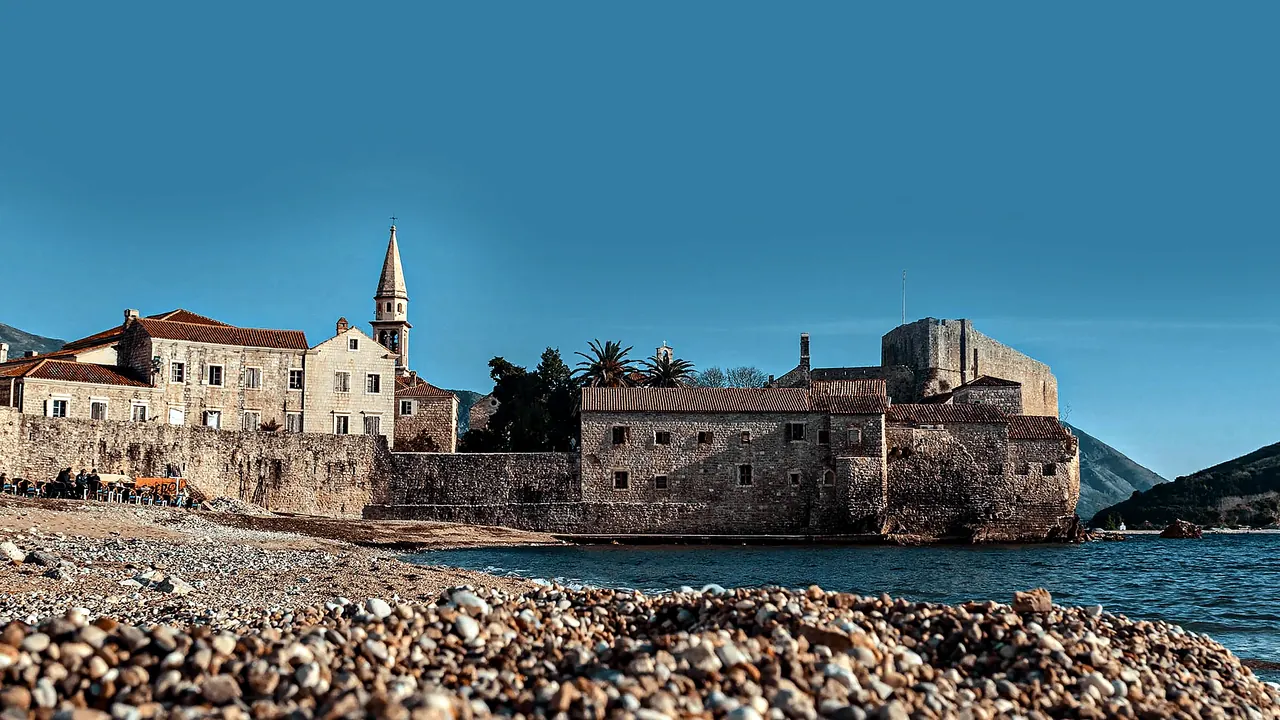
The old town and citadel seen from the pebble beach
- Beaches78
- Day trips72
- Nature & outdoors70
Photo: Ender Vatan, Pexels License
Match
47
Every category weighted equally
- Beach & sun52
- Culture & arts41
- Food & nightlife42
- Family trip52
- Outdoors55
- Relax & unwind48
- Shopping & style40
- On a budget48
Budva in twelve categories
Our verdict on each, scored 0 to 100 against the same fixed benchmark cities, so a score means the same thing on every page.
Beaches & swimming. Scores 78 out of 100.
Food & drink. Scores 35 out of 100.
Culture & sights. Scores 27 out of 100.
Nightlife. Scores 55 out of 100.
Nature & outdoors. Scores 70 out of 100.
Day trips. Scores 72 out of 100.
Good for families. Scores 52 out of 100.
Getting around. Scores 45 out of 100.
Shopping & style. Scores 22 out of 100.
Affordability. Scores 58 out of 100.
Live music & performing arts. Scores 18 out of 100.
Wellness & relaxation. Scores 28 out of 100.
Budva category by category
Beaches & swimming
78Beaches are the reason Budva exists as a resort. Right in town, Slovenska Plaza runs the length of the seafront, and Mogren's two small coves sit beneath the cliffs just past the old town walls. A short ride along the coast brings the long curve of Becici, the open bay at Jaz, the pink-tinged sand facing the Sveti Stefan islet and the quieter bays towards Petrovac. In August the Adriatic reaches about 25°C and it stays swimmable from June into October.
Most of the shore is fine pebble or coarse sand, not powder. In high summer the town beaches fill with rows of sunbeds and loud music, so anyone wanting space should go early, take a boat to one of the coves or head down the coast. Out of season the water clears and the beaches empty.
Food & drink
35Eating in Budva follows the resort's rhythm. Promenade restaurants serve grilled fish, black risotto, pizza and international menus to the summer crowds, and quality is uneven. The best things are regional. Look for smoked Njegusi ham and cheese from the mountains behind the coast, grilled squid and the day's catch at family-run konobas, and the dark Vranac red from vineyards around Lake Skadar. Bakeries sell burek and the cafés make strong coffee. Fine dining is mostly confined to the luxury resorts, and a visitor who travels to eat will find the range narrow.
Culture & sights
27Stari Grad, the walled old town on its small peninsula, is Budva's one real sight. Inside you find marble lanes, the Church of St John with its bell tower, the small churches of Santa Maria in Punta and the Holy Trinity, and the Citadel, which has views along the coast. Much of the stonework was rebuilt after the earthquake of 1979, and an unhurried walk through it all takes an hour or two. There is a small archaeological museum with Greek and Roman finds from the town's ancient past. The view of the Sveti Stefan islet down the coast is the other image people take home. The region's major heritage lies in the towns nearby, not here.
Nightlife
55In summer Budva has a reputation across the Balkans as a party town. The seafront along Slovenska Plaza fills at night with beach bars and terrace clubs playing loud pop and house. A large open-air club on the hill above town draws crowds until dawn, and the old town's small bars are busy late. It suits groups of friends who want long, loud nights. It is less good for anyone after cocktail craft or an underground scene. From October to May most of this shuts and the town goes quiet early.
Nature & outdoors
70Budva sits on a narrow strip of coast with bare limestone mountains climbing straight up behind it, which gives the town a dramatic backdrop. Lovcen National Park is about an hour inland by serpentine roads, with beech forest, high walking trails and wide views over the Bay of Kotor. Lake Skadar, a large lake for birdwatching and kayaking among reeds and water lilies, is a similar distance away. Closer to town there are coastal paths between the bays, boat trips along the cliffs, sea kayaking and paragliding launched from the hills above Becici. Spring and autumn are the best times to walk. Midsummer heat pushes most outdoor activity onto the water.
Day trips
72Budva is a good base for the rest of the Montenegrin coast. Kotor, a walled medieval town at the head of its fjord-like bay, is about half an hour away. Beyond it lies Perast, a small baroque town of captains' palaces facing two island churches. Inland, Cetinje, the old royal capital with its monastery and former embassies, is under an hour. The wine villages around Virpazar on Lake Skadar make a relaxed afternoon. Down the coast, there is Sveti Stefan, the hilltop ruins of Stari Bar and the old town of Ulcinj with its Ottoman flavour. Dubrovnik is possible as a long day, with a border crossing that can be slow in summer.
Good for families
52For families Budva is mainly a beach vacation. The town beaches shelve gently enough for children, there are calmer bays at Becici and along the coast, and a water park sits on the hill above town. Montenegrin culture is relaxed with children, who stay out on the promenade late on summer evenings. Beyond that there is little made for them: no zoo, aquarium or science museum. In July and August the town is crowded and loud at night, so families often do better staying in Becici or further down the coast, or coming in June or September.
Getting around
45The centre of Budva is easy on foot. The old town, the marina, the promenade and Slovenska Plaza are all close together, and Becici is a pleasant walk along the shore. Local buses and minibuses run along the coast road and to Kotor, and taxis are plentiful. There is no railway, though, and the one main coast road jams badly in summer. Reaching Lovcen, Cetinje or the quieter bays is much easier with a car, a driver or an organised trip. Boat taxis from the marina are the easiest way to reach nearby coves.
Shopping & style
22Shopping is a sideline. The lanes of the old town and the stalls along the promenade sell souvenirs, beachwear, sunglasses, silver filigree jewellery, local olive oil, honey and bottles of rakija. A modest shopping centre near the marina and a few clothing shops cover the basics, and the small green markets are the place for fruit and local produce. Nobody comes to Budva to shop, and anyone looking for more than beach and vacation essentials will need to look elsewhere.
Affordability
58Budva is the most expensive place in Montenegro, and it shows in high summer. Seafront rooms and beach sunbeds cost more in July and August, and promenade restaurants charge resort prices. Away from the front it is more moderate. Bakeries, grill houses, local buses and drinks at ordinary cafés are cheaper than on most Western European coasts, and private apartments a few streets back are good value. Visiting in June or September, or staying in a nearby village, brings prices down noticeably.
Live music & performing arts
18The one fixture is Grad Teatar, a summer festival held in Budva for decades that stages theatre, concerts and readings on open-air stages in the old town squares. Outside the festival, live performance means cover bands in seafront bars and occasional summer concerts on the beach. There is no theatre or concert season for the rest of the year.
Wellness & relaxation
28Budva has no bathing tradition of its own, so wellness means the spas of the large resort hotels in Becici and around Sveti Stefan, plus massage at beach clubs. The town itself is not restful in high summer, when music carries from the seafront late into the night. Anyone who wants a slow vacation does better in the quieter villages down the coast, or in Budva itself in May, June or late September, when the town calms and the sea is still warm.
When should you go?
Pick a month to see what it is like. The climate figures are measured averages, not a forecast.
Budva in July
Daytime high, °C
Rainfall in the month, mm
The whole year
Shaded against this city’s own year: the deepest cell is its best month for that figure and the palest its weakest.
Where the figures come from
Budva has no rain gauge within 25 km of the centre, so its rainfall comes from a gridded climate dataset read at the city rather than from a gauge further away.
Budva's sunshine is measured 40 km from the centre, at Podgorica-Grad.
Temperature and rainfall are climate normals, averaged over the years shown. Budva: 1991-2020 normals, Tivat (15.8 km from centre).
Before you go
| Measure | Budva |
|---|---|
| Official language | Montenegrin |
| Currency | Euro (EUR) |
| Sockets | CF230 V, 50 Hz |
| Driving side | Right |
| Time zone | UTC+1, UTC+2 in summer |
| Emergency number | 112 |
| Elevation | 3 m |
| Main airport | Tivat Airport (TIV)17 km from centre42 non-stop destinations |
By the numbers
| Measure | Budva |
|---|---|
| City population | 13,338 |
| People per km² | 109 |
| Museums within 10 km | 0 |
| UNESCO World Heritage sites within 50 km | 3 |
| Swim season, months above 21 °C | 5 months |
Compare Budva with
Every comparison with a written verdict behind it.
- Amalfi
- Bari
- Belgrade
- Bodrum
- Dubrovnik
- Kotor
- Lecce
- Matera
- Mostar
- Naples
- Ohrid
- Plovdiv
- Positano
- Salerno
- Sarajevo
- Skopje
- Sofia
- Sorrento
- Split
- Thessaloniki
- Tirana
- Zadar
- Zagreb