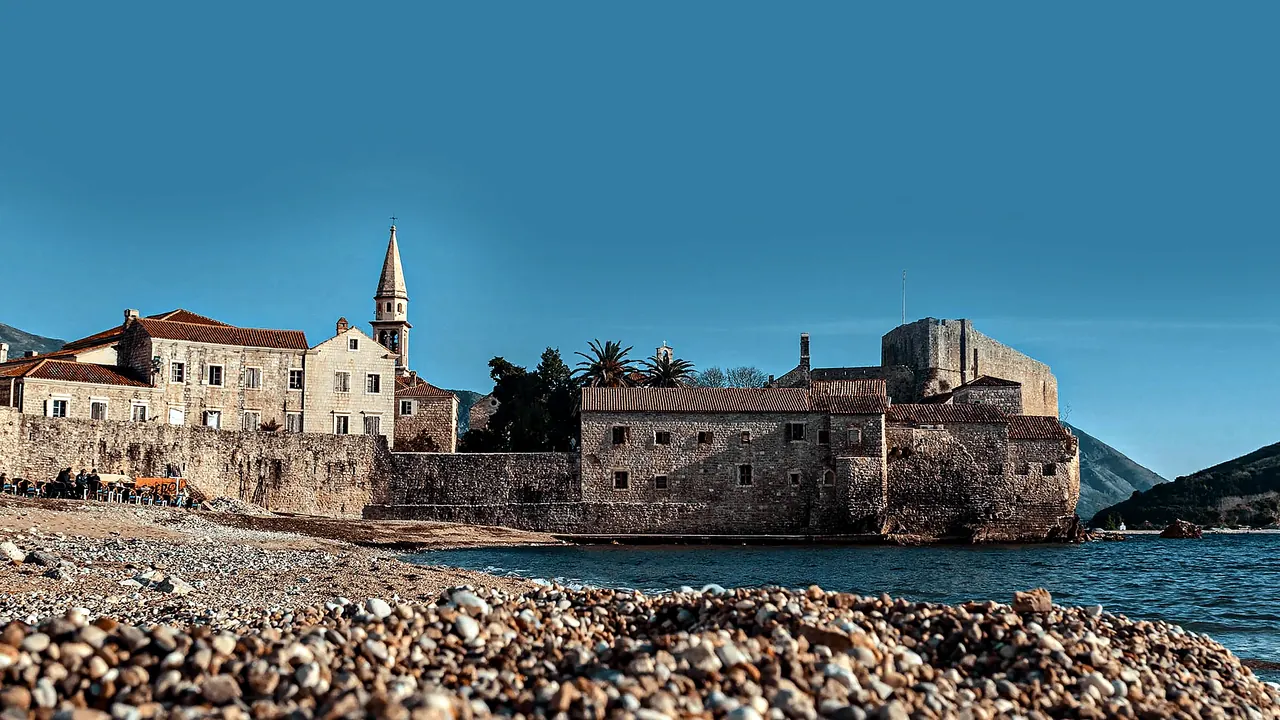
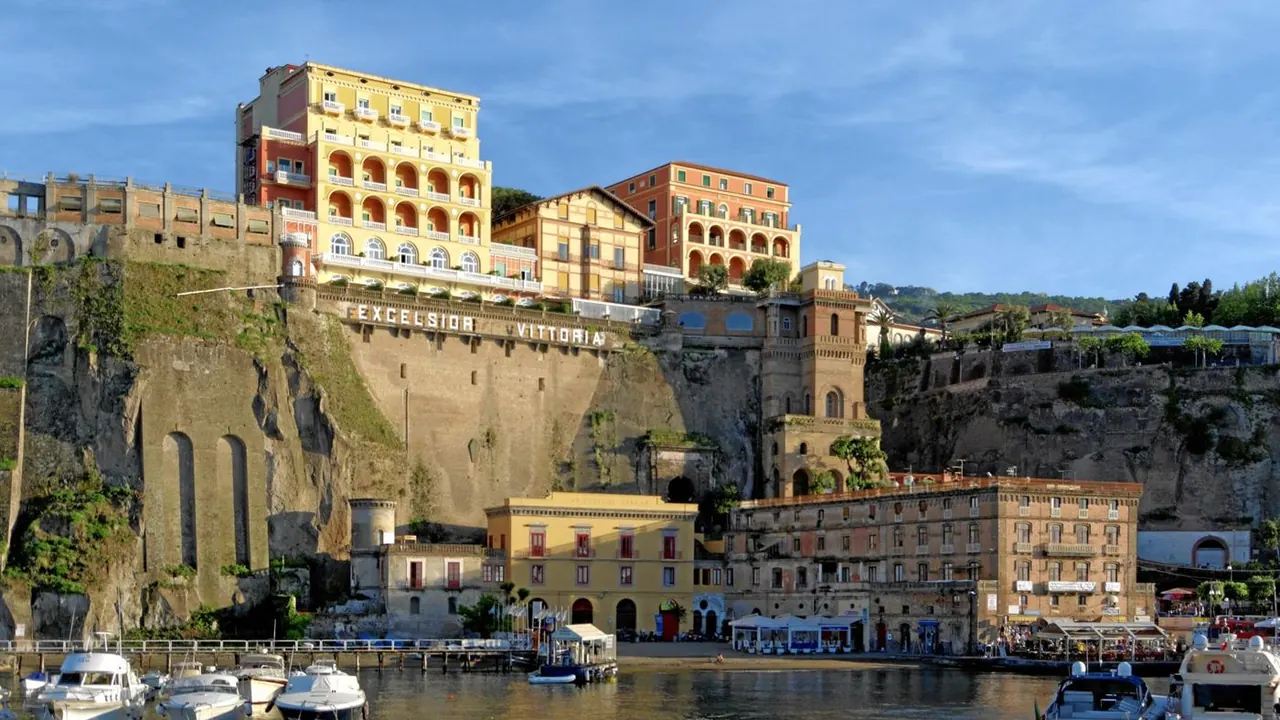
Photos: Budva by Ender Vatan, Pexels License; Sorrento by Berthold Werner, CC BY-SA 3.0, cropped.
Budva or Sorrento?
Our verdict in twelve categories, each scored against the same fixed benchmark cities, and the climate month by month, so you can choose for your trip.
Choose Budva for
- nightlife
- prices
- beaches
Budva suits a sun-and-sea trip with long nights. Its beaches start at the edge of the old town and run on down the coast, and in summer the seafront is the loudest party strip on this part of the Adriatic. A stay here generally costs less than one on the Italian side. Kotor and Lovcen are close enough for a change of scene, but most days will end on a sunbed.
Choose Sorrento for
- food and drink
- day trips
- wellness
Sorrento is the better pick for travellers who want to fill their days. Pompeii, Capri, the Amalfi Coast and Naples are all within a train or ferry ride, and the cliff paths of the peninsula begin at the edge of town. The cooking is better too, and the evenings are slower. You pay more for all this, and you swim from piers and rocks rather than from a long beach.
Scoreboard
Twelve categories on one fixed scale from 0 to 100. The shaded stretch is the gap between the two.
Your match
Pick a travel style or drag the sliders, and both match scores follow your weighting.
Too close to call, 2 points apart
Wins on nightlife and prices with your weighting.
Wins on food and drink and day trips with your weighting.
What matters to you?
Category by category
What the scores mean for a trip.
Beaches & swimming
Budva is a proper beach town and Sorrento is not. In Budva you walk from the old town onto Slovenska Plaza or down to the coves at Mogren, and a short ride brings the long bay at Becici, open Jaz and the sand facing Sveti Stefan. The shore is pebble or coarse sand, and in high summer it is crowded with sunbeds and loud music.
Sorrento's cliff leaves room only for lidos on wooden piers at Marina Piccola and Marina Grande, and for the rocks at the Bagni della Regina Giovanna. Swimmers there climb down ladders into deep, clear water. The sea is just as warm, but finding a real beach means a bus to Marina del Cantone or a boat to the coves.
Food & drink
Sorrento eats much better. It sits at the source of Campanian cooking: gnocchi alla sorrentina, fish cooked all'acqua pazza, mozzarella from the hill dairies, lemons in everything and Neapolitan pizza. The hill villages of the peninsula also have some of the most celebrated fine dining in southern Italy.
Budva's best food is regional and simple: smoked Njegusi ham, mountain cheese, grilled squid at family konobas and dark Vranac wine from around Lake Skadar. Along the promenade, the menus are generic and the quality uneven. In both towns, the good meals are away from the main squares.
Culture & sights
Neither town is a cultural destination in its own right, and their sights are on a similar scale. Budva's Stari Grad is a compact walled peninsula with marble lanes, the Citadel and a small archaeological museum, and much of it was rebuilt after the 1979 earthquake. You can see it in an hour or two.
Sorrento's old centre is spread more thinly but repays a slower day. It has a Roman street grid, the cloister of San Francesco, Neapolitan paintings in the Museo Correale and the strange sunken ravine of the Vallone dei Mulini.
Nightlife
Budva is the place for a night out. In summer the seafront beach bars and terrace clubs play pop and house until late, and a large open-air club on the hill keeps going until dawn. Groups of friends come for exactly that.
Sorrento's evening is a passeggiata along Corso Italia, a drink on a terrace over the bay, perhaps a piano bar with Neapolitan songs. A club or two stays open in summer. Because the last trains and ferries leave early, a big night in Naples or on Capri means staying over. Both towns go quiet out of season.
Nature & outdoors
Both towns sit beneath limestone mountains, but Sorrento's walking is closer to hand. Paths lead from town through olive and lemon terraces to Punta Campanella and down to the protected bay of Ieranto. The Path of the Gods, Monte Faito and the crater rim of Vesuvius are all within reach.
Budva's best landscapes are about an hour away by winding road: the beech forest and high trails of Lovcen, and the reed beds of Lake Skadar for birdwatching and kayaking. Closer to town there are coastal paths, sea kayaking and paragliding above Becici.
Day trips
Sorrento is one of the best bases anywhere for day trips. The train reaches Pompeii in about half an hour, with Herculaneum and Vesuvius on the same line. Ferries cross to Capri and run along the Amalfi Coast, and Naples is about an hour away. Even Paestum and Ischia are manageable.
Budva's outings are good but fewer. Kotor and its fjord-like bay are half an hour away, with baroque Perast beyond, and Cetinje and the Skadar wine villages lie inland. Dubrovnik makes a long day, with a slow border crossing in summer.
Good for families
Budva works better with children, mainly because of the water. The town beaches and the bays at Becici shelve gently, and the water park above town fills an afternoon. Families usually stay out of the centre in July and August, when the nights get loud.
Sorrento is warm towards children, and boat trips and Pompeii go down well. However, the swimming is off piers and rocks into deep water, and many hotels sit on steep lanes without pavements, so families with small children lean on hotel pools.
Getting around
The centres of both towns are compact and easy on foot. The difference shows once you leave town. From Sorrento, the Circumvesuviana train runs to Pompeii and Naples, and ferries reach Capri and the Amalfi side, so a car is more trouble than it is worth, even though the trains are crowded and the coast buses slow.
Budva has no railway and one coast road that jams in summer. Buses and minibuses cover the coast and Kotor, but Lovcen, Cetinje and the quieter bays are far easier with a car, a driver or an organised trip. Boat taxis from the marina are the quickest way to the nearby coves.
Shopping & style
Sorrento gives shoppers more to take home. Alongside the lemon-themed souvenirs on Via San Cesareo there are genuine local crafts: intarsia boxes and trays, leather sandals made to measure while you wait, linen, coral and cameo jewellery.
In Budva, the old town lanes and promenade stalls sell beachwear, silver filigree, olive oil, honey and rakija, and a modest centre near the marina covers the basics. Neither suits serious fashion shopping.
Affordability
Budva leaves more money in your pocket, but the saving depends on when you come and where you stay. As Montenegro's dearest resort, it charges its highest rates in July and August for seafront rooms, sunbeds and promenade meals. In June or September, or in a village down the coast, those costs ease noticeably, and away from the seafront ordinary meals and coffee stay cheap all year. The catch is getting inland, since Lovcen and Cetinje usually mean paying for a hire car, a driver or an organised trip.
Sorrento's costs gather in the things people come for: a room facing the bay, a bed on a lido pier, dinner on a terrace, a private boat around Capri. It is kinder in getting about, because the train to Pompeii and Naples and the coast buses cost little, and pizza or a trattoria meal off the main squares is fairly priced. Spring and late autumn cut its hotel rates considerably.
Live music & performing arts
Neither town has a real performing arts season, and both rely on summer. Budva's one fixture is the Grad Teatar festival, which brings theatre, concerts and readings to open-air stages in the old town squares.
Sorrento offers Neapolitan song and tarantella shows for visitors and chamber concerts in the cloister of San Francesco. Its real advantage is Naples, about an hour away, where opera at the Teatro di San Carlo is possible outside summer.
Wellness & relaxation
Sorrento is the more restful stay. Cliff-top hotels have spas, pools and terraces over the bay, the villa gardens and lemon groves set a slow pace, and the thermal gardens of Ischia are a ferry ride away.
Budva has no bathing culture of its own, only the resort spas in Becici and around Sveti Stefan and massages at beach clubs. In high summer, music from the seafront carries late into the night. Both towns are calmer in spring and late September.
When should you go?
Pick your month. The climate figures are measured averages, not a forecast.
Budva in July
Sorrento in July
Daytime high, °C
Rainfall in the month, mm
Where the figures come from
Budva has no rain gauge within 25 km of the centre, so its rainfall comes from a gridded climate dataset read at the city rather than from a gauge further away.
Budva's sunshine is measured 40 km from the centre, at Podgorica-Grad.
Sorrento has no rain gauge within 25 km of the centre, so its rainfall comes from a gridded climate dataset read at the city rather than from a gauge further away.
Sorrento's sunshine is measured 54 km from the centre, at Grazzanise.
Temperature and rainfall are climate normals, averaged over the years shown. Budva: 1991-2020 normals, Tivat (15.8 km from centre). Sorrento: 2005-2025 (sunshine 1991-2020, rainfall 1991-2020) normals, Capri (17 km from centre).
The two towns follow the same Mediterranean rhythm, with a few differences. Both are dry and sunny from June to August, and both seas are warm enough to swim from June into October, reaching about 26°C in August. Budva is a little hotter at the peak, around 32°C in August, so midday walks through the old town or along the coast paths are hard work in midsummer. Sorrento stays a degree or two cooler, which helps on the exposed trails, though those also get hot.
The rain arrives in September in both places, but Budva's wet season is much heavier. Its rainfall climbs to over 200mm in November, while Sorrento's peak is about 150mm. That makes Sorrento's spring and late autumn more dependable for walking and day trips. For Budva, June and early September are the best months: warm sea, plenty of sun and less heat than August.
Which traveller are you?
On a beach and sun trip, Budva is the stronger choice. Long stretches of pebble and coarse sand run from Slovenska Plaza and Mogren down to Becici and Jaz, while Sorrento offers mostly paid lidos on piers and a rocky inlet.
For a culture and arts trip, choose Sorrento. Neither town has many sights of its own, but Pompeii, Herculaneum, the Naples archaeological museum and Ravello are all within a train or boat ride. Budva's nearby heritage stops at Kotor, Perast and Cetinje.
For a trip on a tight budget, Budva goes further. Bakeries, grill houses, local buses and private apartments a few streets back cost less than on Western European coasts. Sorrento charges full Italian resort rates for rooms, terraces and sunbeds.
Before you go
| Measure | Budva | Sorrento |
|---|---|---|
| Official language | Montenegrin | Italian |
| Currency | Euro (EUR) | Euro (EUR) |
| Sockets | CF230 V, 50 Hz | CFL230 V, 50 Hz |
| Driving side | Right | Right |
| Time zone | UTC+1, UTC+2 in summer | UTC+1, UTC+2 in summer |
| Emergency number | 112 | 112 |
| Elevation | 3 m | 50 m |
| Main airport | Tivat Airport (TIV)17 km from centre42 non-stop destinations | Naples International Airport (NAP)30 km from centre131 non-stop destinations |
| Public holidays this year | - | 13 days |
By the numbers
| Measure | Budva | Sorrento |
|---|---|---|
| City population | 13,338 | 15,407 |
| People per km² | 109 | 1,541 |
| Museums within 10 km | 0 | 6 |
| UNESCO World Heritage sites within 50 km | 3 | 5 |
| Swim season, months above 21 °C | 5 months | 5 months |
Where else could you go?
Every comparison below shares a destination with this one, so you can follow Budva or Sorrento somewhere new.
- Positanovs Sorrento
- Kotorvs Budva
- Amalfivs Sorrento
- Naplesvs Sorrento
- Salernovs Sorrento
- Dubrovnikvs Budva