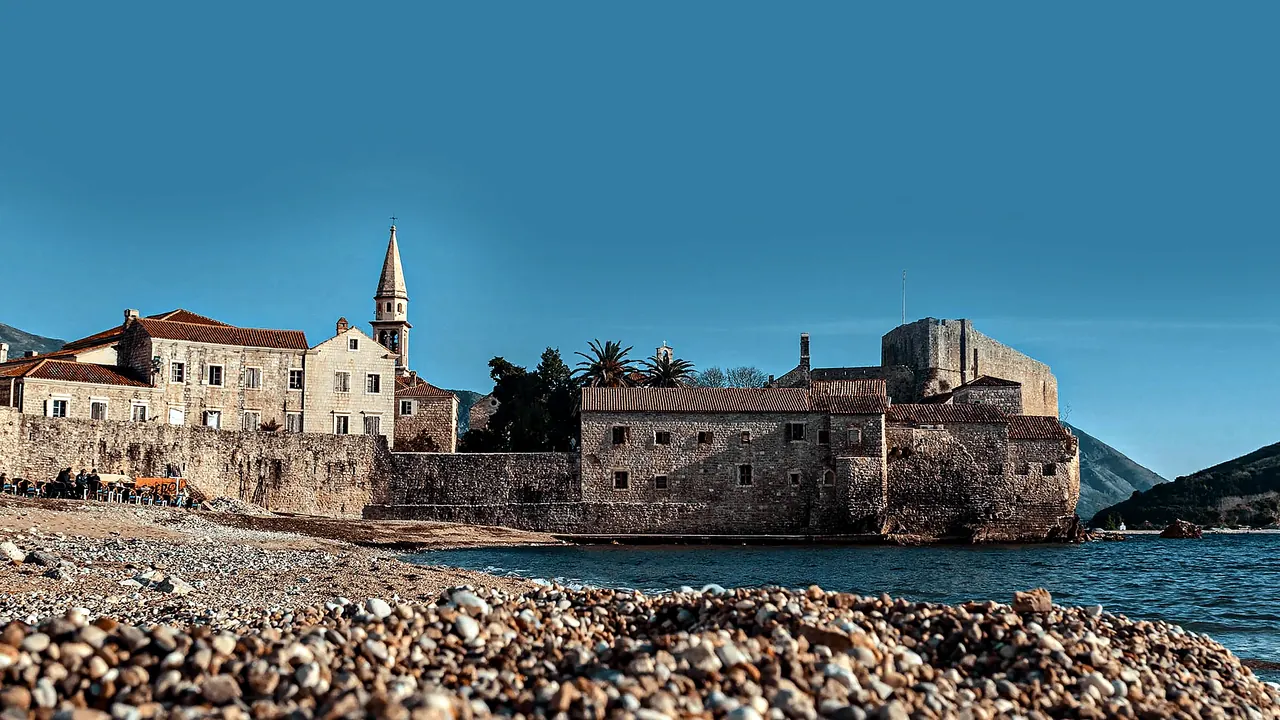
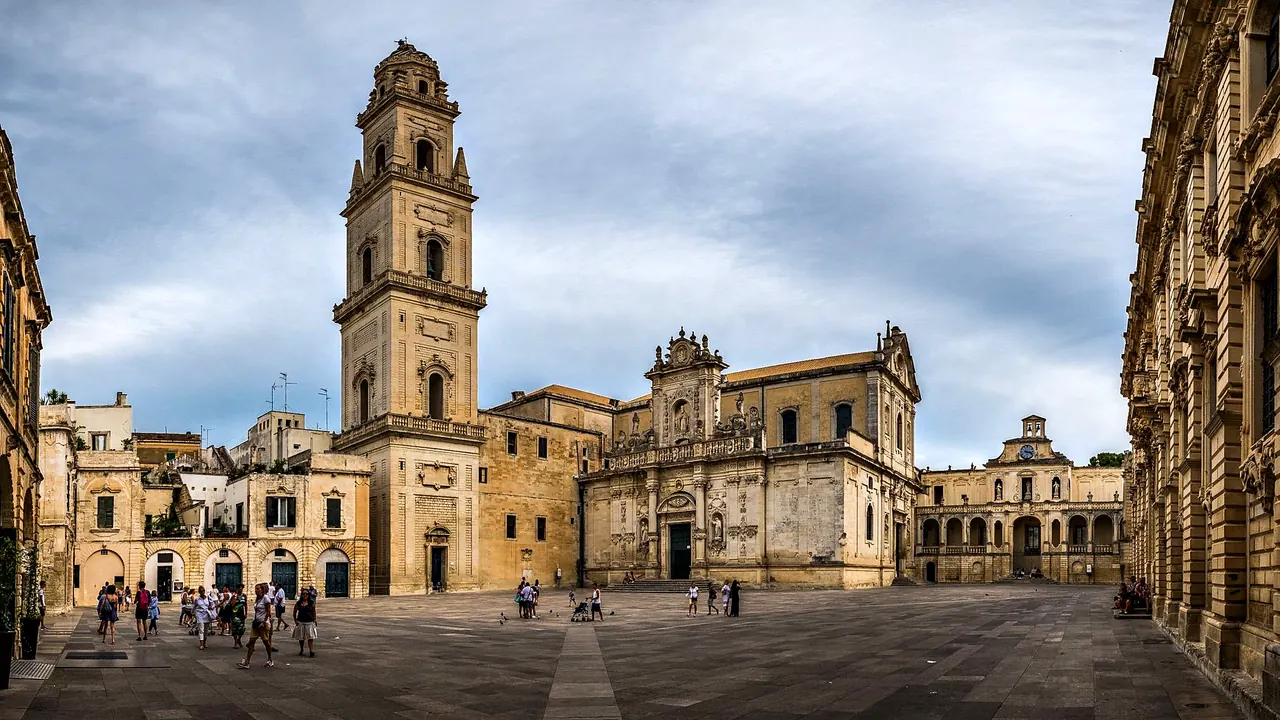
Photos: Budva by Ender Vatan, Pexels License; Lecce by Giuseppe Milo, CC BY 3.0, cropped.
Budva or Lecce?
Our verdict in twelve categories, each scored against the same fixed benchmark cities, and the climate month by month, so you can choose for your trip.
Choose Budva for
- nightlife
- nature and the outdoors
- beaches
Budva is the pick for a sea-and-mountains summer. Its beaches start at the hotel door, the limestone ridges rise straight behind the town, and Kotor, Lovcen and Lake Skadar are all close. Add long, loud nights on the seafront and it suits groups of friends and active couples who want the water by day and a party after dark, and who will not miss museums or serious restaurants.
Choose Lecce for
- culture and sights
- food and drink
- live music and the arts
Travellers who want a town worth walking for its own sake should go to Lecce. The Baroque old town is the main attraction, the Apulian cooking is distinctive and cheap to eat well, and the beaches of the Salento are a short drive away rather than outside the window. It rewards a slower trip built around piazzas, food, small stone towns and evening strolls, with the coast as part of the day rather than all of it.
Scoreboard
Twelve categories on one fixed scale from 0 to 100. The shaded stretch is the gap between the two.
Your match
Pick a travel style or drag the sliders, and both match scores follow your weighting.
Wins on nightlife and nature and the outdoors with your weighting.
Wins on culture and sights and food and drink with your weighting.
What matters to you?
Category by category
What the scores mean for a trip.
Beaches & swimming
Budva has the edge for beach time because the sea is right there. Slovenska Plaza fronts the town, the Mogren coves are a few minutes' walk past the walls, and Becici, Jaz and Sveti Stefan line up along the coast road. The trade-off is fine pebble and coarse sand, crowded sunbed rows and music in high summer.
Lecce is inland, and its nearest beaches are plain local strands, but the Salento coast offers more variety once you drive there. You get pale coves and sea stacks at Torre dell'Orso on one side and long, shallow fine-sand beaches at Porto Cesareo on the other. Each beach day means a car or a seasonal bus.
Food & drink
Budva eats like a resort. The seafront menus are written for summer crowds, mixing fish, pizza and international dishes of uneven quality, and the good things are a handful of regional specialities you have to look for, such as smoked Njegusi ham from the mountains or the day's catch at a family konoba with a glass of Vranac. You will eat well enough on a beach vacation, but the food is not a reason to go.
In Budva good food is the exception you seek out. In Lecce it runs through the whole day and belongs to the city rather than to its visitors. A custard pasticciotto and iced almond coffee start the morning, a warm rustico bridges the gap to lunch, and evenings in a simple old-town osteria bring ciceri e tria or orecchiette with turnip tops alongside a dark Negroamaro. It is careful peasant cooking at low cost, though anyone hoping for variety beyond Apulian dishes will find the choice narrow.
Culture & sights
Lecce is far richer. Its honey-coloured limestone old town is one of Italy's great Baroque ensembles, from the carved front of Santa Croce to the enclosed Piazza del Duomo, with a half-excavated Roman amphitheatre, Charles V's castle and Messapian layers underground. The pleasure lies in wandering, since the museums are modest.
Budva has Stari Grad, a compact walled peninsula of marble lanes, small churches and a Citadel, largely rebuilt after the 1979 earthquake and seen in an hour or two. For heritage on this coast you go to Kotor, Perast or Cetinje.
Nightlife
Budva is the livelier choice for a big night out, at least in summer. Beach bars and terrace clubs along Slovenska Plaza play pop and house, a large hilltop open-air club runs until dawn, and the old town bars stay busy late. Almost all of it closes from October to May.
Lecce's evenings are gentler: passeggiata, aperitivo on the piazzas, then wine and cocktail bars in the lanes, with students keeping weekends going most of the year. For dancing in summer you drive to the coastal discos around Gallipoli.
Nature & outdoors
Budva has the more dramatic setting. Bare limestone mountains rise straight behind the beaches, Lovcen's beech forests and high trails look down on the Bay of Kotor, and Lake Skadar's reeds and water lilies suit kayaks and birdwatchers. Paragliding from above Becici adds a bit of adventure.
Around Lecce the land is a flat plain of olive groves and red earth, good for easy cycling. The interest is on the coast, with clifftop paths and sea caves from Roca Vecchia towards Leuca, the Alimini and Le Cesine wetlands, and the pine woods of Porto Selvaggio, plus good snorkelling and diving.
Day trips
Both make excellent bases, so the choice depends on what you want to see. From Budva the outings are short and varied: medieval Kotor at the head of its bay, baroque Perast, the old royal capital of Cetinje, Lake Skadar's wine villages and, as a long day across a border, Dubrovnik.
Lecce gives access to the whole Salento and southern Apulia: Otranto's cathedral mosaic, Gallipoli on its island, Galatina's frescoes, white Ostuni and the trulli of Alberobello further north. The distances are longer, though, and a car helps far more than the trains.
Good for families
For children the two are about equal, and in both the beach does most of the work. Budva adds a water park and gently shelving town beaches, but its summer nights are loud, so families often stay in Becici. Lecce offers a car-free old town where children run around the piazzas at night, and very shallow sand at Porto Cesareo, though reaching it takes a drive.
Getting around
Both centres are easy on foot, and both get harder beyond them. In Budva the old town, marina and promenade sit together, buses and minibuses run the coast road, and boat taxis reach the coves. There is no railway, and the single coast road jams in summer. Lecce has a station at the edge of the old town with fast trains north to Bari, but the local Salento lines are slow, so most visitors hire a car and park outside the walls.
Shopping & style
Neither is a shopping destination, but Lecce has more to take home. Its cartapesta saints and nativity figures come from workshops in the old town, along with carved local stone, Grottaglie ceramics and food shops selling olive oil, wine and taralli.
Budva's offer is beachwear, sunglasses, silver filigree, rakija and honey from the old town lanes and promenade stalls, plus a modest centre by the marina for the basics.
Affordability
Costs come out much the same, and both follow the same pattern: reasonable most of the year, expensive at the height of summer. Budva charges resort prices on the seafront in July and August but is cheap a few streets back, in bakeries, grill houses and private apartments. Lecce eats well for little and has fairly priced palazzo bed and breakfasts, but August across the Salento pushes up rooms and beach loungers, and a hire car adds to the bill.
Live music & performing arts
Lecce has much more live culture. The Politeama Greco and Teatro Paisiello run a modest season of opera, concerts and theatre. In summer the villages ring with pizzica tambourine music, which builds to the great open-air Notte della Taranta night at Melpignano.
Budva's stage is essentially the Grad Teatar summer festival in the old town squares. Beyond that you get cover bands in seafront bars, and nothing at all through the winter.
Wellness & relaxation
Lecce makes for the calmer stay. The city closes for its long afternoon rest, the sulphur pools of Santa Cesarea Terme sit in grottoes on the cliffs within an hour, and old fortified masserie on the plain offer spa retreats.
Budva's wellness means resort hotel spas in Becici and around Sveti Stefan and massage at beach clubs. In high summer the music carries late, so come in May, June or late September if rest is the aim.
When should you go?
Pick your month. The climate figures are measured averages, not a forecast.
Budva in July
Lecce in July
Daytime high, °C
Rainfall in the month, mm
Where the figures come from
Budva has no rain gauge within 25 km of the centre, so its rainfall comes from a gridded climate dataset read at the city rather than from a gauge further away.
Budva's sunshine is measured 40 km from the centre, at Podgorica-Grad.
Lecce's temperatures are measured 38 km from the centre, at Brindisi.
Lecce has no rain gauge within 25 km of the centre, so its rainfall comes from a gridded climate dataset read at the city rather than from a gauge further away.
Temperature and rainfall are climate normals, averaged over the years shown. Budva: 1991-2020 normals, Tivat (15.8 km from centre). Lecce: 1991-2020 (sunshine 1981-2010) normals, Brindisi (38 km from centre).
The two share a summer. The sea warms enough for comfortable swimming from June, peaks at about 26°C in August and stays pleasant through September into early October, and both get long, sunny days from May to September. Budva runs a little hotter, with August afternoons around 32°C, which pushes sightseeing and walking into the mornings, while Lecce is slightly gentler but still hot enough in July and August to make the midday rest sensible.
The real difference is the rain. Budva's coast catches heavy autumn and winter downpours, with November the wettest month at over 200mm, so from October to April it is a damp, quiet place. Lecce stays much drier through the cooler months, so spring and autumn are good times for walking its streets, and even winter is mild if grey. For walking either place, May and late September are the best months.
Which traveller are you?
On a culture and arts trip, Lecce is the clear choice. Its whole old town is a Baroque showpiece with a Roman amphitheatre, theatres with a real season and pizzica in the summer villages, while Budva offers one small walled quarter you can see in an afternoon.
For an outdoors trip, Budva wins. Bare mountains climb straight from the shore, Lovcen's high trails and the reed beds of Lake Skadar are about an hour away, and paragliding and sea kayaking start near town. Lecce's flat olive plain gives you cycling and coastal paths, and little more.
On a relaxing and wellness trip, go to Lecce. The long afternoon rest and evenings in the piazzas set a slow pace, the sulphur grottoes of Santa Cesarea Terme are within reach and country masserie make quiet retreats. Summer Budva is noisy late into the night.
Before you go
| Measure | Budva | Lecce |
|---|---|---|
| Official language | Montenegrin | Italian |
| Currency | Euro (EUR) | Euro (EUR) |
| Sockets | CF230 V, 50 Hz | CFL230 V, 50 Hz |
| Driving side | Right | Right |
| Time zone | UTC+1, UTC+2 in summer | UTC+1, UTC+2 in summer |
| Emergency number | 112 | 112 |
| Elevation | 3 m | 49 m |
| Main airport | Tivat Airport (TIV)17 km from centre42 non-stop destinations | Brindisi Airport (BDS)39 km from centre49 non-stop destinations |
| Public holidays this year | - | 13 days |
By the numbers
| Measure | Budva | Lecce |
|---|---|---|
| City population | 13,338 | 94,783 |
| People per km² | 109 | 393 |
| Museums within 10 km | 0 | 11 |
| UNESCO World Heritage sites within 50 km | 3 | 0 |
| Swim season, months above 21 °C | 5 months | 4 months |
Where else could you go?
Every comparison below shares a destination with this one, so you can follow Budva or Lecce somewhere new.