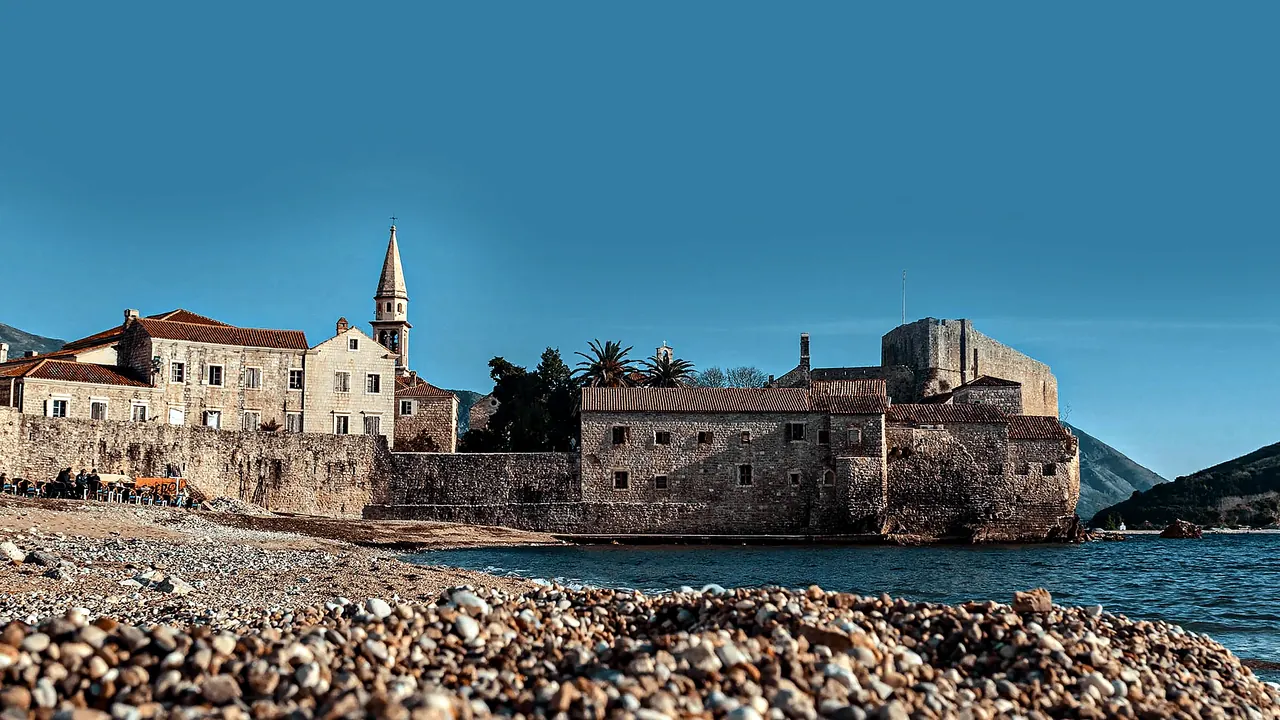
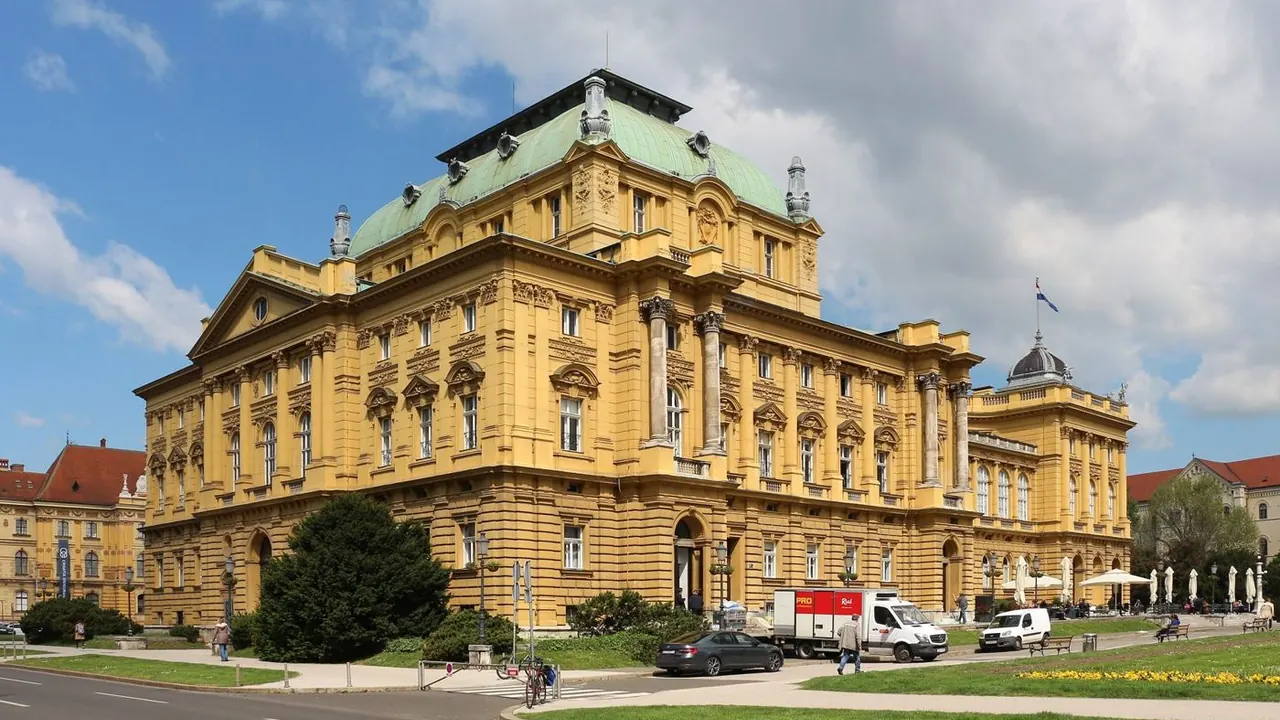
Photos: Budva by Ender Vatan, Pexels License; Zagreb by Bernard Gagnon, CC BY-SA 4.0, cropped.
Budva or Zagreb?
Our verdict in twelve categories, each scored against the same fixed benchmark cities, and the climate month by month, so you can choose for your trip.
Choose Budva for
- beaches
- day trips
- nightlife
Budva is the pick for a summer by the sea. It has beaches in town and coves a boat ride away, and the water stays warm from June into autumn. Nights on the seafront are loud, and Kotor, Lovcen and Lake Skadar are all within reach. It asks little beyond swimming, sun and a stroll through the walled old town, which suits couples and groups of friends who put the beach first.
Choose Zagreb for
- live music and the arts
- culture and sights
- getting around
Travellers who want a proper city should look to Zagreb. Its medieval Upper Town sits above Austro-Hungarian squares lined with galleries, it has an opera and concert season, and its market and café culture make eating out more rewarding. Trams make it easy without a car, and it works well in spring and autumn when the Montenegrin coast has turned wet. There is no sea, though.
Scoreboard
Twelve categories on one fixed scale from 0 to 100. The shaded stretch is the gap between the two.
Your match
Pick a travel style or drag the sliders, and both match scores follow your weighting.
Wins on beaches and day trips with your weighting.
Wins on live music and the arts and culture and sights with your weighting.
What matters to you?
Category by category
What the scores mean for a trip.
Beaches & swimming
Budva is built around its shore. Slovenska Plaza and the Mogren coves are right in town, with Becici, Jaz and the sand facing Sveti Stefan a short ride away. The Adriatic is warm enough to swim from June into October. Expect fine pebble or coarse sand rather than powder, and crowded sunbeds in August.
Zagreb has no sea at all, and the coast is about two hours' drive over the hills. Lake Jarun and Bundek are good for a cooling swim on a hot afternoon, but anyone who wants a real beach should add a stop on the coast.
Food & drink
Zagreb is the better place to eat, though neither city is a trip for serious food. Its cooking is filling and Central European: štrukli, turkey with mlinci and Zagorje sausages. Dolac market above the main square makes a good morning, and café terraces and Plešivica wines fill the rest of the day.
Budva's best food comes from the sea and the mountains behind it. Look for grilled squid and the day's catch at family konobas, Njegusi ham and Vranac red. Away from those, the promenade menus are aimed at summer crowds and vary a lot.
Culture & sights
Zagreb has two unhurried days of sightseeing, against a morning in Budva. Its medieval Upper Town has the tiled roof of St Mark's, the Stone Gate and the twin-spired cathedral. Below it, the Lower Town is a grid of parks, theatres and galleries. The museums run from old masters and naive art to the Museum of Broken Relationships, and Mirogoj's arcaded cemetery is a quiet highlight.
Budva's walled Stari Grad was largely rebuilt after the 1979 earthquake. The Citadel and a small archaeological museum take an hour or two, and the region's richer heritage lies in the towns nearby.
Nightlife
Budva is the place for big nights in summer. Beach bars and terrace clubs line Slovenska Plaza, an open-air club on the hill runs until dawn, and the old town's small bars stay busy late. From October it goes quiet.
Zagreb goes out more gently but keeps going all year. The café-bar terraces on Tkalčićeva fill on warm nights, and there are cocktail and craft beer bars around Flower Square. In summer the lakeside clubs at Jarun take over. It suits a long conversation more than dancing.
Nature & outdoors
Budva has the more dramatic setting, with bare limestone mountains rising straight from the coast, and more to do in it. Lovcen has high trails with views over the Bay of Kotor, and Lake Skadar is good for birdwatching and kayaking. Closer to town you can take boat trips under the cliffs, go sea kayaking or paraglide above Becici.
Zagreb's outdoors is gentler but closer at hand. A tram and a short bus ride reach the beech woods of Medvednica, and Maksimir is good for an easy walk. Plitvice's lakes and waterfalls make a long day out to the south.
Day trips
Budva's surroundings are the stronger draw. Kotor's walled town at the head of its bay is about half an hour away, with baroque Perast beyond it. Cetinje, the old royal capital, is under an hour inland, and Stari Bar and Ulcinj lie down the coast. Dubrovnik works as a long day if the summer border queue allows.
Zagreb's outings are pleasant rather than memorable. Most head north into Zagorje for Trakošćan castle and Marija Bistrica, or to baroque Varaždin and little Samobor. Ljubljana works as a long day by train.
Good for families
Both suit families about equally, but in quite different ways. Budva is a beach vacation, with gently shelving town beaches, calmer water at Becici and a water park, though it is loud at night in July and August.
Zagreb offers city outings instead: the zoo in Maksimir, the Tesla Technical Museum with its trams and mock mine, and the short funicular ride. Its flat streets suit pushchairs, and the lakes are there for summer swimming.
Getting around
Zagreb is much easier to move around. It has a dense tram network, the funicular up to the Upper Town and a compact, flat Lower Town, so you only need a car for Zagorje and Plitvice.
Budva's centre is just as walkable, from the old town along the shore to Becici. Beyond that you rely on coast buses, taxis and boat taxis. There is no railway, and the single coast road jams in summer, so Lovcen and Cetinje are far simpler with a car or a driver.
Shopping & style
Neither city is a shopping destination. Zagreb at least has a proper high street in Ilica, with local fashion, small design shops, malls on the edge of town and a Sunday flea market at Britanski trg. Licitar hearts and Croatian neckties make good things to take home. Budva stops at souvenirs, beachwear, silver filigree and rakija, with a modest centre by the marina for the basics.
Affordability
Overall the two cost about the same, but prices behave differently. Budva is the most expensive place in Montenegro, and July and August push up seafront rooms, sunbeds and promenade meals. Apartments a few streets back, or a visit in June or September, bring costs down.
Zagreb is steadier through the year and cheaper than the Croatian coast in summer. Trams, museum entry and market food are easy on the budget, while good hotels and upmarket restaurants charge Western European rates.
Live music & performing arts
Zagreb has a real season of its own. The Croatian National Theatre stages opera, ballet and drama, the Zagreb Philharmonic plays at the Lisinski hall and the Zagreb Soloists perform in churches. There are also jazz and rock clubs, and open-air concerts in Upper Town courtyards in summer.
Budva has the Grad Teatar festival on open-air stages in its old town squares in summer, plus cover bands in the seafront bars. For the rest of the year there is very little.
Wellness & relaxation
Neither city has a bathing tradition, and both rely on hotel spas, so the difference is in where you find calm. Budva's resort spas are around Becici and Sveti Stefan. The town rests best in May, June or late September, when the sea is still warm and the late music has stopped.
In Zagreb the calm is that of a city: long café mornings, quiet Upper Town lanes and shaded parks. The warm mineral pools of Tuheljske, Krapinske and Stubičke Toplice are about an hour away in Zagorje.
When should you go?
Pick your month. The climate figures are measured averages, not a forecast.
Budva in July
Zagreb in July
Daytime high, °C
Rainfall in the month, mm
Where the figures come from
Budva has no rain gauge within 25 km of the centre, so its rainfall comes from a gridded climate dataset read at the city rather than from a gauge further away.
Budva's sunshine is measured 40 km from the centre, at Podgorica-Grad.
Temperature and rainfall are climate normals, averaged over the years shown. Budva: 1991-2020 normals, Tivat (15.8 km from centre). Zagreb: 1991-2020 (sunshine 1981-2010, rainfall 1981-2010) normals, Zagreb / Gric (0.6 km from centre).
Budva is a summer resort. The sea is warm enough to swim in from June and reaches about 26°C in August. It stays pleasant into early October. July and August days climb to 32°C, which is hot for walking but ideal on the water, and these are also the sunniest months. Rain returns in September, and November is the wettest month at about 212mm, so winters are mild but grey and wet.
Zagreb has a continental climate. Winters are cold, with January highs around 5°C, and summers reach about 29°C, which is warm but not punishing. Rain falls throughout the year, with heavy showers in early and late summer. May, June and September are the most comfortable months for the streets. Zagreb also holds up better than Budva in autumn, when the coast turns wet.
Which traveller are you?
On a beach and sun trip, Budva is the clear choice. It has town beaches, coves along the cliffs, a warm sea from June into October and long sunny summers. Zagreb is two hours from the coast and can offer only lake swimming at Jarun.
On a culture and arts trip, Zagreb gives far more. It has a medieval Upper Town, Austro-Hungarian squares, solid museums and Mirogoj cemetery, plus opera, ballet and concerts all year. Budva's old town fills a morning, and its festival runs only in summer.
For an outdoors trip, Budva has the edge. Lovcen's mountain trails, kayaking on Lake Skadar, sea kayaking and paragliding are all close by, with limestone peaks rising behind the coast. Zagreb's Medvednica woods and the Plitvice day trip are pleasant, but the scenery is gentler.
Before you go
| Measure | Budva | Zagreb |
|---|---|---|
| Official language | Montenegrin | Croatian |
| Currency | Euro (EUR) | Euro (EUR) |
| Sockets | CF230 V, 50 Hz | CF230 V, 50 Hz |
| Driving side | Right | Right |
| Time zone | UTC+1, UTC+2 in summer | UTC+1, UTC+2 in summer |
| Emergency number | 112 | 112 |
| Elevation | 3 m | 127 m |
| Main airport | Tivat Airport (TIV)17 km from centre42 non-stop destinations | Zagreb Franjo Tuđman International Airport (ZAG)11 km from centre66 non-stop destinations |
| Public holidays this year | - | 14 days |
By the numbers
| Measure | Budva | Zagreb |
|---|---|---|
| City population | 13,338 | 767,131 |
| People per km² | 109 | - |
| Museums within 10 km | 0 | 27 |
| UNESCO World Heritage sites within 50 km | 3 | 0 |
| Swim season, months above 21 °C | 5 months | - |
Where else could you go?
Every comparison below shares a destination with this one, so you can follow Budva or Zagreb somewhere new.