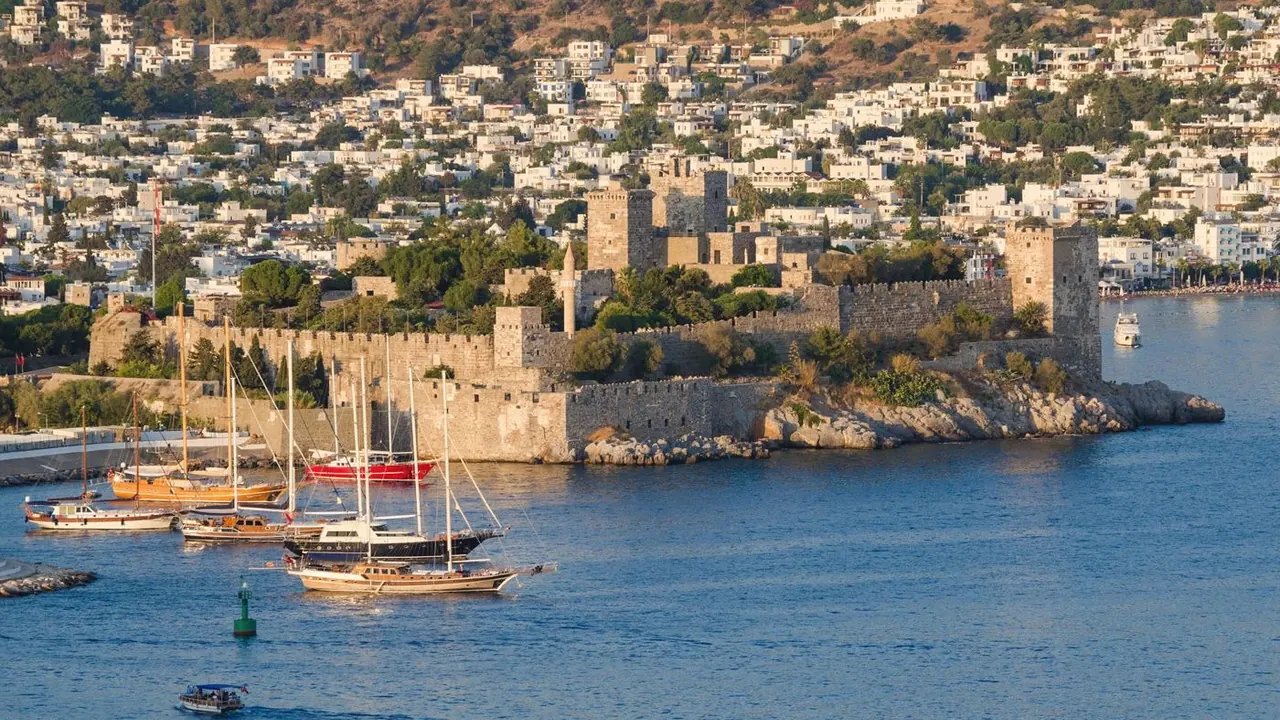
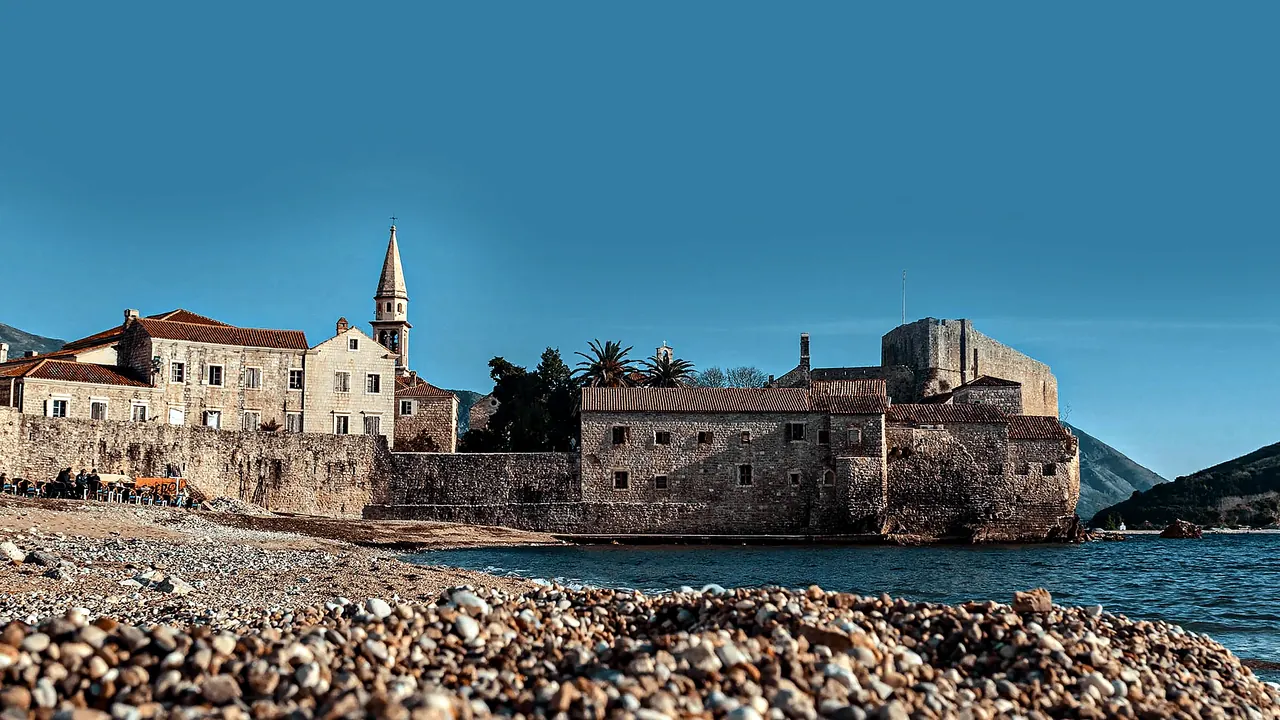
Photos: Bodrum by Serhio Magpie, CC BY 4.0, cropped; Budva by Ender Vatan, Pexels License.
Bodrum or Budva?
Our verdict in twelve categories, each scored against the same fixed benchmark cities, and the climate month by month, so you can choose for your trip.
Choose Bodrum for
- food and drink
- wellness
- shopping
Bodrum is the more rounded resort. Its peninsula of bays comes with a real eating culture of meze, rakı and fish chosen at the market, a nightlife that runs from cheap Gümbet bars to dressed-up beach clubs at Türkbükü, and a castle holding shipwrecks of international importance. Families get resorts built around them, and spa hotels make a slow stay easy. It suits travellers who want the beach plus good dinners, late nights and a little history, and who accept higher prices for that mix.
Choose Budva for
- prices
- nature and the outdoors
- getting around
Budva makes more sense for travellers who care most about the landscape and the budget. Bare mountains rise straight behind the beaches, Lovcen and Lake Skadar are within an hour, and medieval Kotor and Perast are close by. Food, culture and shopping are thinner than in Bodrum, but the sea is just as good and a trip costs noticeably less once you step back from the promenade. It is a strong pick for groups of friends and active couples who plan to spend their days on the water or in the hills.
Scoreboard
Twelve categories on one fixed scale from 0 to 100. The shaded stretch is the gap between the two.
Your match
Pick a travel style or drag the sliders, and both match scores follow your weighting.
Wins on food and drink and wellness with your weighting.
Wins on prices and nature and the outdoors with your weighting.
What matters to you?
Category by category
What the scores mean for a trip.
Beaches & swimming
The beaches are about equally good, but they work differently. Bodrum's peninsula is a string of separate bays: shallow sand at Bitez and Ortakent, wooden jetties and decks rather than beaches on the north coast, and windier, cooler water to the west. The best stretches are often taken over by beach clubs, so a Bodrum beach day usually starts with choosing a bay.
Budva's beaches start right on the seafront. Slovenska Plaza runs along the front, Mogren's coves lie just past the walls, and Becici, Jaz and the sand facing Sveti Stefan are a short ride away. The shore is mostly fine pebble, and the town beaches get crowded and loud in summer, so boat trips to the coves are the way to find space.
Food & drink
Bodrum is the better place to eat. Its Aegean cooking of olive-oil vegetables, wild greens, octopus and long meze evenings with rakı has proper rituals to it: picking fish at the market to be cooked nearby, generous village breakfasts in the hills, and slow dinners at Gümüşlük's water's edge. Yalıkavak and Türkbükü add polished modern Turkish cooking.
In Budva, the promenade restaurants are uneven and largely serve the summer crowds. The rewards are regional: Njegusi ham and mountain cheese, the day's catch at family konobas, and Vranac red from around Lake Skadar. A food-focused traveller will run through it quickly.
Culture & sights
Neither town is a cultural destination, but Bodrum has more to see. The Castle of St Peter, built by the Knights Hospitaller partly from stones of the Mausoleum, holds the Museum of Underwater Archaeology with its Bronze Age and medieval wrecks, a collection worth travelling for. The theatre, the Myndos Gate and the Mausoleum site fill out a second day.
Budva's walled Stari Grad, with its churches, Citadel and small archaeological museum, takes an unhurried hour or two, and much of its stonework was rebuilt after the 1979 earthquake. The region's richer heritage lies in nearby towns.
Nightlife
Both are summer party towns, but Bodrum has the wider range. Its harbour bar street, cheaper and louder Gümbet, and the glamorous beach clubs of Türkbükü and Yalıkavak cover everyone from young package tourists to a dressed-up yachting crowd, often until sunrise.
Budva's nights centre on the beach bars and terrace clubs along Slovenska Plaza, a big open-air club on the hill and small late bars in the old town. It suits groups after long, loud nights rather than anyone looking for variety. Both towns go quiet out of season.
Nature & outdoors
Budva's setting is more striking and easier to explore on foot. Bare limestone mountains climb directly behind the coast, Lovcen's beech forest and high trails look over the Bay of Kotor, and Lake Skadar offers birdwatching and kayaking among water lilies. Coastal paths, sea kayaking and paragliding are on hand near town.
Bodrum's nature is mostly seen from the water: gulet trips to Kara Ada and Orak Island, sailing into the greener Gulf of Gökova, clear water for diving, and steady meltem winds for windsurfing at Bitez. On land there is mainly the dry, scrubby hills and parts of the Carian Trail.
Day trips
Both make excellent bases, for different periods of history. From Bodrum the trips go back to antiquity: the Temple of Apollo at Didyma, Miletus and Priene in one day, Herakleia on Lake Bafa, plus a ferry to the Greek island of Kos with its Asklepion.
From Budva the outings are mostly medieval and later. Walled Kotor is about half an hour away, then baroque Perast and the old royal capital of Cetinje, with wine villages on Lake Skadar and Ottoman-flavoured Ulcinj down the coast. Ephesus from Bodrum and Dubrovnik from Budva are both long, tiring days.
Good for families
Bodrum is the easier choice with children. Many hotels are designed for families, with pools, kids' clubs and slides, there are several large water parks, and Bitez and Ortakent have shallow, calm water. The castle's shipwrecks give a day away from the beach that children will enjoy.
Budva offers gently shelving town beaches, calmer water at Becici and a single water park, but no zoo, aquarium or similar attraction. Both towns welcome children out late, and in both, families sleep better away from the party districts.
Getting around
Getting around is about equally easy, and both centres are walkable, though Bodrum's lanes are steeper. The difference is the layout. Bodrum's dolmuş minibuses run out from the central station to almost every bay, so moving between bays often means going back through town first.
Budva is laid out along one coast road. Buses run along it and on to Kotor, and Becici is a walk along the shore, but that road jams in summer and there is no railway. In both places a car makes the inland and outlying trips much easier, and boat taxis are useful for the coves.
Shopping & style
Bodrum has more to shop for. Leather sandals made to measure in small workshops are a real local craft, the covered bazaar and big weekly markets are lively places to browse, and the Yalıkavak marina has international luxury labels.
Budva covers the vacation basics: souvenirs and beachwear in the old town lanes, silver filigree jewellery, olive oil, honey and rakija, plus a modest shopping centre near the marina. There is little else to shop for.
Affordability
Budva is the cheaper trip. Its seafront and promenade charge resort prices in high summer, but bakeries, grill houses, local buses, ordinary cafés and private apartments a few streets back are all reasonably priced.
Bodrum is Türkiye's most expensive resort area, and Yalıkavak, Türkbükü and Gölköy are priced for a wealthy crowd. Gümbet package hotels, dolmuş rides and pide places make a careful budget workable. In both, June and September bring real savings.
Live music & performing arts
Performance is a summer-only sideline in both, but Bodrum's settings are more memorable. Concerts take place in the restored ancient theatre and the castle courtyards, a long-running ballet festival uses the castle as its stage, and Gümüşlük holds chamber music in an old stone quarry.
Budva has one fixed event, the Grad Teatar festival, with theatre and concerts in the old town squares. Otherwise there are cover bands in the seafront bars.
Wellness & relaxation
Bodrum is the more relaxing choice. Its resort spas include a Turkish hammam with scrub and foam massage, the luxury hotels around Türkbükü have large spa floors, and Gümüşlük and the western villages stay quiet even in August.
Budva's wellness is limited to resort spas in Becici and around Sveti Stefan and massage at beach clubs, and music from the seafront carries late in summer. A restful Budva stay means a village down the coast or the quieter shoulder months.
When should you go?
Pick your month. The climate figures are measured averages, not a forecast.
Bodrum in July
Budva in July
Daytime high, °C
Rainfall in the month, mm
Where the figures come from
Bodrum's temperatures are measured 43 km from the centre, at Kos Airport.
Bodrum has no rain gauge within 25 km of the centre, so its rainfall comes from a gridded climate dataset read at the city rather than from a gauge further away.
Budva has no rain gauge within 25 km of the centre, so its rainfall comes from a gridded climate dataset read at the city rather than from a gauge further away.
Budva's sunshine is measured 40 km from the centre, at Podgorica-Grad.
Temperature and rainfall are climate normals, averaged over the years shown. Bodrum: 1993-2020 (rainfall 1991-2020) normals, Kos Airport (42.7 km from centre). Budva: 1991-2020 normals, Tivat (15.8 km from centre).
The two towns share the same summer. The sea is warm enough for swimming from June into October, and in July and August daytime heat passes 30°C, so Bodrum's steep lanes and Budva's walled old town are best walked in the morning or evening. May, early June and late September are the comfortable months for sightseeing and hill walking in both. Bodrum's summer is almost completely dry, and its sea stays a touch warmer into autumn, still around 22°C in October.
Budva is the wetter of the two. Even in high summer a few showers get through, though the long days are mostly sunny, and from September the rain comes back hard, peaking at around 212mm in November. Bodrum's wet season starts later and is heaviest in midwinter, around 176mm in January, so it is the safer bet for an autumn trip. Neither works as a winter beach destination.
Which traveller are you?
For a food and nightlife trip, Bodrum is the clear choice. Long meze evenings, fish cooked at the market tables and the Gümüşlük waterfront come before nights that run from the harbour bar street to the beach-club parties of Türkbükü. Budva's promenade menus and loud seafront clubs offer less range.
On a tight budget, Budva goes further. Bakeries, grill houses, local buses and apartments a few streets back from the sea keep costs moderate. Bodrum is Türkiye's priciest resort area, where taxis, sunbeds and north-coast dinners add up quickly.
For an outdoors trip, Budva has more to offer. Limestone mountains rise behind the town, Lovcen's trails and Lake Skadar's reeds are an hour away, and paragliding launches above Becici. Bodrum's outdoors is mostly sailing, diving and windsurfing, with lighter walking on land.
Before you go
| Measure | Bodrum | Budva |
|---|---|---|
| Official language | Turkish | Montenegrin |
| Currency | Turkish Lira (TRY) | Euro (EUR) |
| Sockets | CF230 V, 50 Hz | CF230 V, 50 Hz |
| Driving side | Right | Right |
| Time zone | UTC+3 | UTC+1, UTC+2 in summer |
| Emergency number | 112 | 112 |
| Elevation | 10 m | 3 m |
| Main airport | Milas Bodrum International Airport (BJV)32 km from centre83 non-stop destinations | Tivat Airport (TIV)17 km from centre42 non-stop destinations |
| Public holidays this year | 14 days | - |
By the numbers
| Measure | Bodrum | Budva |
|---|---|---|
| City population | 175,000 | 13,338 |
| People per km² | 314 | 109 |
| Museums within 10 km | 4 | 0 |
| UNESCO World Heritage sites within 50 km | 0 | 3 |
| Swim season, months above 21 °C | 5 months | 5 months |
Where else could you go?
Every comparison below shares a destination with this one, so you can follow Bodrum or Budva somewhere new.