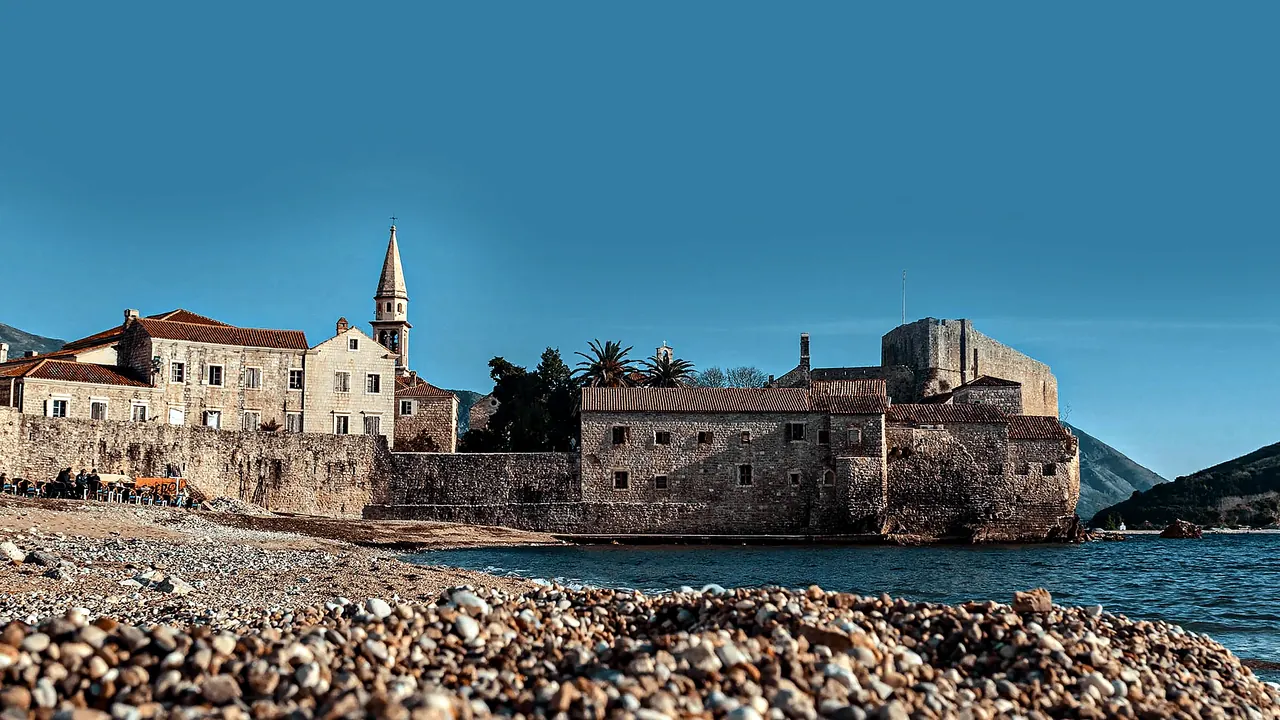
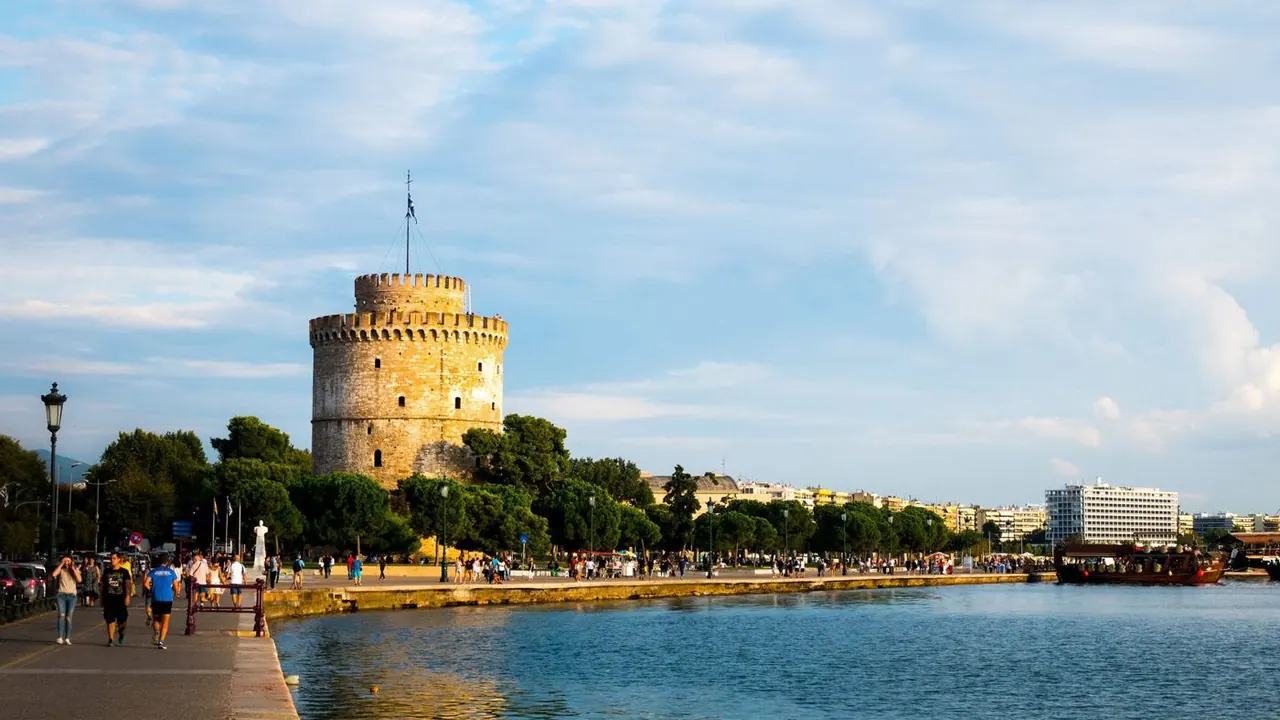
Photos: Budva by Ender Vatan, Pexels License; Thessaloniki by Destinygreece, CC BY-SA 4.0, cropped.
Budva or Thessaloniki?
Our verdict in twelve categories, each scored against the same fixed benchmark cities, and the climate month by month, so you can choose for your trip.
Choose Budva for
- beaches
- nature and the outdoors
- families
Budva is the place for a sea-and-sun vacation. The town beaches lie right below the old walls, there are coves and bays a short ride along the coast, and in summer the nights out are loud and crowded. It also works well as a base for Kotor, Perast and Lovcen. If you want good food, museums or a city with its own life outside the summer season, you'll find it thin.
Choose Thessaloniki for
- culture and sights
- food and drink
- live music and the arts
Choose Thessaloniki if your trip is about eating, sightseeing and going out. It has the Byzantine churches, the treasures of ancient Macedonia, long ouzeri tables and late nights in Ladadika. Everyday costs are gentler and the city runs all year. The catch is swimming, because the good beaches are in Halkidiki, an hour or more away.
Scoreboard
Twelve categories on one fixed scale from 0 to 100. The shaded stretch is the gap between the two.
Your match
Pick a travel style or drag the sliders, and both match scores follow your weighting.
Wins on beaches and nature and the outdoors with your weighting.
Wins on culture and sights and food and drink with your weighting.
What matters to you?
Category by category
What the scores mean for a trip.
Beaches & swimming
In Budva you can walk to the beach. Slovenska Plaza runs along the seafront, the Mogren coves sit under the cliffs, and Becici, Jaz and Sveti Stefan are a short ride away. The shore is pebble and coarse sand and crowded with sunbeds in summer, but you can swim every day.
Thessaloniki's waterfront is for strolling, not swimming, and the suburban beaches nearby are ordinary. The clear coves of Kassandra in Halkidiki are excellent, but they are an hour's drive away and take a day out of their own.
Food & drink
Thessaloniki is by far the better place to eat. Its cooking carries Ottoman, Sephardic and Anatolian influences, from meze at the ouzeri to bougatsa for breakfast. The Kapani and Modiano markets have simple tavernas tucked between the stalls.
Budva's promenade menus are aimed at the summer crowd, and quality is uneven. The best things are regional and simple: Njegusi ham, grilled squid at a family konoba and a glass of Vranac. You have to look for them.
Culture & sights
The gap is wide here. Thessaloniki has its UNESCO-listed Byzantine churches, such as the Rotunda and Agios Dimitrios, plus the Arch of Galerius and the Roman Forum. Add the Macedonian gold in the Archaeological Museum and the Ottoman-era lanes of Ano Poli, and there is enough for several days.
Budva's walled Stari Grad, with its churches, Citadel and small archaeological museum, fills a morning. The region's bigger heritage is in neighbouring towns such as Kotor and Cetinje.
Nightlife
Thessaloniki's nightlife has more variety and runs all year, thanks to its students and the Greek habit of going out late. Ladadika has bars and meze places, the streets around Valaoritou have louder DJ bars, and the Bit Bazaar fills with outdoor tables, even midweek.
Budva is a summer party town of beach bars and a big hilltop club. It suits groups who want loud nights until dawn, but most of it shuts from October to May.
Nature & outdoors
Both have mountains within reach, but they offer different things. In Budva bare limestone rises straight behind the beaches, and much of the outdoor life is on the water: sea kayaking, boat trips along the cliffs and paragliding over Becici. Lovcen and Lake Skadar are about an hour inland.
Thessaloniki's own green space is the Seich Sou pine forest above the city. The big landscapes need a car, above all Mount Olympus with its gorge and hut-to-hut hiking, and there is winter skiing within about two hours.
Day trips
Both are good bases, but the trips are different. From Budva you mostly visit coastal towns: Kotor at the head of its bay half an hour away, baroque Perast, the old royal capital Cetinje and the wine villages on Lake Skadar.
Thessaloniki's excursions lean towards ancient history: the royal tombs at Vergina, Alexander's birthplace at Pella and Dion below Olympus. Edessa's waterfalls and the Halkidiki coast add variety, but the distances are longer and a car helps more.
Good for families
Neither city is built around children, and the difference is in how the day is spent. Budva is a beach vacation, with gently shelving town beaches and a water park, though summer nights are loud. Families often do better staying in Becici or visiting in June.
Thessaloniki offers the seafront promenade with its playgrounds, the Noesis science centre and a small zoo. Against that there are narrow pavements, heavy traffic and no beach in town.
Getting around
Thessaloniki is the easier city to get around. Its sights lie in a flat strip near the waterfront, a metro line runs beneath the centre and taxis are cheap, though buses crawl in traffic and Ano Poli is a steep climb.
Budva's centre is small and walkable. But there is no railway and the one coast road jams in summer, so reaching Lovcen, Cetinje or the quieter bays means a car, a driver or a tour. Boat taxis from the marina cover the nearby coves.
Shopping & style
Thessaloniki is good for a morning's shopping. There are chains along Tsimiski, small independent shops around Valaoritou, and the food markets sell spices, loukoumi and tsipouro to take home. In Budva the old town lanes and promenade stalls offer little beyond souvenirs, beachwear, silver filigree, honey and rakija.
Affordability
Thessaloniki is the cheaper stay because it is priced for students and locals. Taverna plates are generous, nights out are inexpensive and mid-range hotels are sensibly priced, with car hire the main extra cost.
Budva is Montenegro's most expensive resort, and seafront rooms and sunbeds in high summer show it. You can keep costs moderate by staying a few streets back, eating at bakeries and grill houses, or coming in June or September.
Live music & performing arts
Thessaloniki has a performing season that runs through the year. The State Orchestra plays at the waterfront Concert Hall and the National Theatre of Northern Greece stages plays, mostly in Greek. Its most rewarding music is rebetiko, played late at night in tavernas. Budva has the Grad Teatar summer festival on the old town squares and, outside it, little beyond cover bands.
Wellness & relaxation
Neither city has a living bathing culture, so a spa day means a hotel spa in either one. Budva's are in the large resorts at Becici and Sveti Stefan, and the town itself is noisy in high summer and restful only in late spring and late September.
Thessaloniki adds the simple spring-fed baths at Lagadas, half an hour away. Its real calm comes from long hours at seafront cafés and the slow evening walk along the waterfront.
When should you go?
Pick your month. The climate figures are measured averages, not a forecast.
Budva in July
Thessaloniki in July
Daytime high, °C
Rainfall in the month, mm
Where the figures come from
Budva has no rain gauge within 25 km of the centre, so its rainfall comes from a gridded climate dataset read at the city rather than from a gauge further away.
Budva's sunshine is measured 40 km from the centre, at Podgorica-Grad.
Temperature and rainfall are climate normals, averaged over the years shown. Budva: 1991-2020 normals, Tivat (15.8 km from centre). Thessaloniki: 1991-2020 normals, Thessaloniki Airport (14 km from centre).
Budva's dry spell is short: June to August, when the rain all but stops, the sun shines for long hours and the Adriatic is warm enough for long swims. July and August reach about 32°C, too hot for the old town's lanes in the middle of the day. The rain returns in September, at around 125mm, though the sea stays warm into October, so an early autumn trip mixes good swimming with some wet days. From October to March the coast is wet and often grey, with November the rainiest month at over 200mm. Late May and June offer warm, bright days before the peak heat, with the sea warm enough to swim from June.
Thessaloniki is just as hot in July and August, and its gulf warms as much as the Adriatic, but a swim still means a trip to Halkidiki. It is fairly dry in every month, so its season for sightseeing on foot is much longer than Budva's. April and May, then late September and October, are warm and settled, good for walking and evenings outdoors. Winter is colder than on the Montenegrin coast, with January highs around 10°C, but far less wet.
Which traveller are you?
On a beach and sun trip, Budva is the clear choice. Town beaches and the Mogren coves are on the doorstep and the sea is swimmable from June into October. Becici, Jaz and Sveti Stefan are close by, while Thessaloniki's good water is an hour away.
For a culture and arts trip, Thessaloniki is far ahead. It has UNESCO-listed Byzantine churches, the Macedonian gold of the Archaeological Museum, a concert and theatre season, and Vergina and Pella within reach. Budva's walled old town fills only a morning.
On a food and nightlife trip, pick Thessaloniki. Ouzeri meze, morning bougatsa and the Kapani market make every meal worth planning, and Ladadika's bars run late all year at modest cost. Budva's summer clubs are loud, but its food is uneven.
Before you go
| Measure | Budva | Thessaloniki |
|---|---|---|
| Official language | Montenegrin | Greek |
| Currency | Euro (EUR) | Euro (EUR) |
| Sockets | CF230 V, 50 Hz | CF230 V, 50 Hz |
| Driving side | Right | Right |
| Time zone | UTC+1, UTC+2 in summer | UTC+2, UTC+3 in summer |
| Emergency number | 112 | 112 |
| Elevation | 3 m | 6 m |
| Main airport | Tivat Airport (TIV)17 km from centre42 non-stop destinations | Thessaloniki Macedonia International Airport (SKG)14 km from centre90 non-stop destinations |
| Public holidays this year | - | 15 days |
By the numbers
| Measure | Budva | Thessaloniki |
|---|---|---|
| City population | 13,338 | 309,617 |
| People per km² | 109 | 16,042 |
| Museums within 10 km | 0 | 32 |
| UNESCO World Heritage sites within 50 km | 3 | 1 |
| Swim season, months above 21 °C | 5 months | 5 months |
Where else could you go?
Every comparison below shares a destination with this one, so you can follow Budva or Thessaloniki somewhere new.