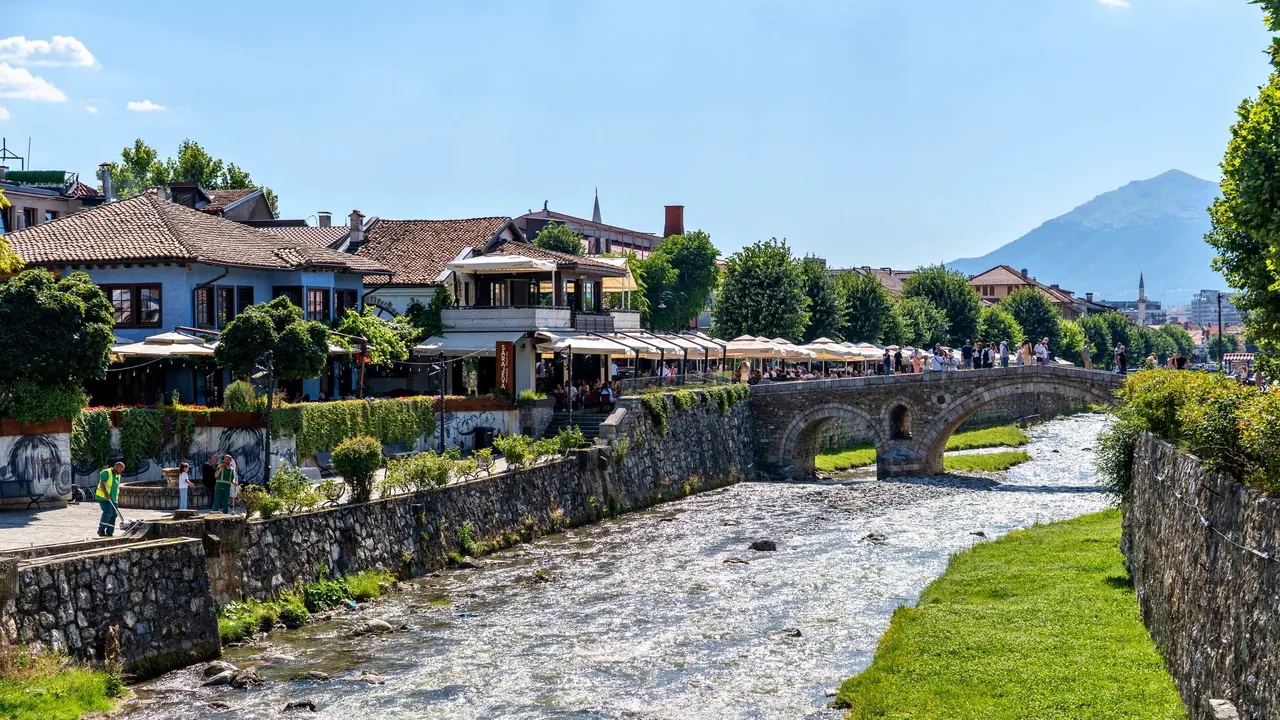
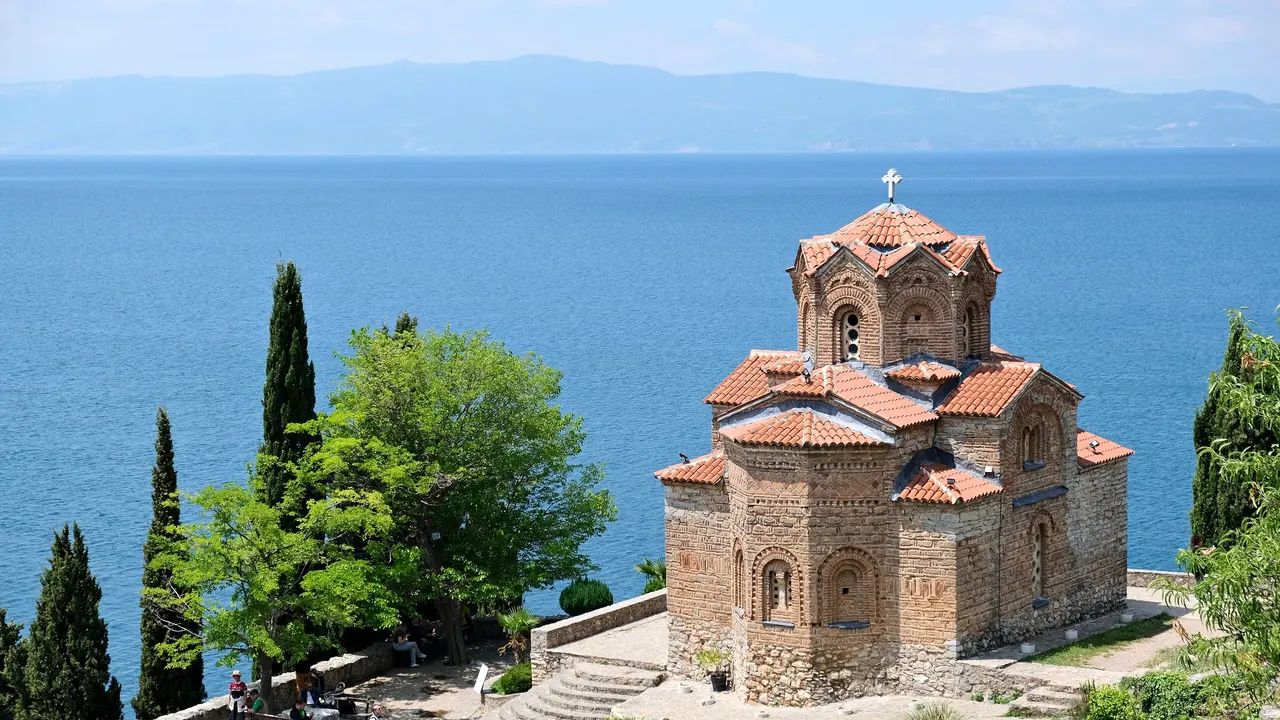
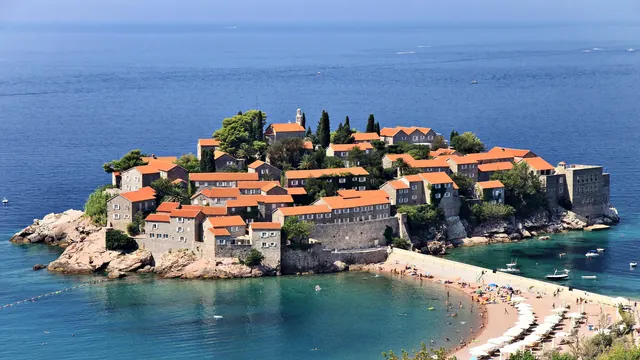
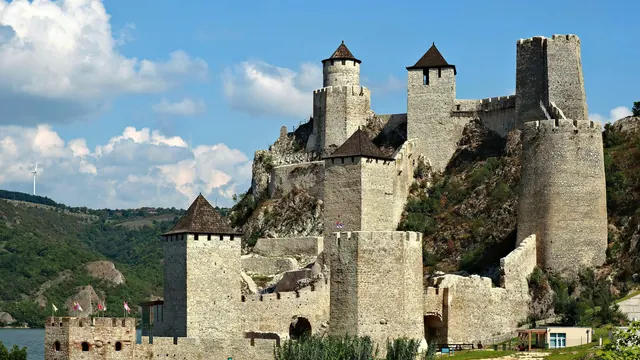
Photos: Kosovo by Filip Chmielecki, Pexels License; North Macedonia by Petar Milošević, CC BY-SA 4.0, cropped.
Kosovo or North Macedonia?
Our verdict in twelve categories, each scored against the same fixed benchmark cities, and the climate month by month, so you can choose for your trip.
Choose Kosovo for
- getting around
- nightlife
- prices
Kosovo suits travellers who want a compact, inexpensive loop with mountains at its heart. Distances are short and buses frequent, so Prishtina, Prizren's Ottoman centre, Peja and the frescoes of Visoki Dečani fit easily into a week. For active visitors, the Rugova gorge and the Accursed Mountains add via ferrata, climbing and serious walking.
Choose North Macedonia for
- beaches
- live music and the arts
- culture and sights
Choose North Macedonia for a fuller summer trip. Lake Ohrid combines one of the region's finest heritage towns with clear water to swim in, and the summer festival brings concerts into its churches. Skopje's bazaar and the Tikveš wine cellars add depth to the food and the evenings. The roads between bases are slower and more winding, but the extra travel time is worth it.
Scoreboard
Twelve categories on one fixed scale from 0 to 100. The shaded stretch is the gap between the two.
Your match
Pick a travel style or drag the sliders, and both match scores follow your weighting.
Wins on getting around and nightlife with your weighting.
Wins on beaches and live music and the arts with your weighting.
What matters to you?
Category by category
What the scores mean for a trip.
Beaches & swimming
Neither country has a coast, but only North Macedonia has real swimming. Lake Ohrid has famously clear water, pebble beaches south of town towards Trpejca and Ljubaništa, and the little cove below St John at Kaneo. A summer stay there settles into a rhythm of swims, sunbeds and boat trips, and quieter Prespa lies over the mountain.
Kosovo has Lake Batllava, a reservoir near Prishtina, and the pools below the Mirusha waterfalls. Both are fine for cooling off on a hot afternoon, but no more than that. Anyone who wants water at the centre of the trip will be happier in Ohrid.
Where in Kosovo: Lake Batllava
Where in North Macedonia: Lake Ohrid, Lake Prespa
Food & drink
Both countries cook generous Balkan home food of grills, burek and baked dishes, and neither has much fine dining. Kosovo's highlights are flija baked under embers in the Rugova mountain inns, Prizren's riverside grills, and a coffee culture in Prishtina that turns the macchiato into a ritual.
North Macedonia gives you a little more to travel for. There is tavče gravče and ajvar, Skopje's Old Bazaar grill houses and the taverns of Debar Maalo, and lake trout in Ohrid. Above all there are the Vranec reds of Tikveš, a more serious wine region than Kosovo's simple Rahovec cellars.
Where in Kosovo: Prishtina, Prizren, Rugova Valley, Rahovec
Culture & sights
Both countries are rich in Orthodox frescoes and Ottoman towns, but North Macedonia has more of both and a stronger centrepiece. Ohrid alone, with St Sophia, St John at Kaneo, Samuel's Fortress and St Naum at the end of the lake, can fill several days. Skopje adds the Stone Bridge, the Kale fortress and one of the largest Ottoman bazaars left in the Balkans, with Stobi and Heraclea Lyncestis further afield.
Kosovo's best sights are outstanding but more scattered: the almost complete fourteenth-century frescoes of Visoki Dečani, the Patriarchate of Peć, Gračanica, and the stone bridges and mosques of Prizren. Prishtina itself is mostly modern, so you see the heritage town by town rather than in one place.
Where in Kosovo: Prizren, Peja, Prishtina, Gjakova
Nightlife
Evenings out are much alike in both countries: café-led and sociable, with most of the action in the capital. In Kosovo it is concentrated in Prishtina, where a very young crowd fills a few central blocks all year, with café-bars along the pedestrian boulevard and a handful of DJ bars that stay open late.
Skopje's scene is more spread out, from the bars of Debar Maalo to summer clubs in the city park and along the Vardar. In July and August, Ohrid's lakefront and the beach clubs towards Struga give North Macedonia a second, summer-only scene. Prizren's riverside terraces play a similar summer role in Kosovo, on a smaller scale.
Where in Kosovo: Prishtina, Prizren
Nature & outdoors
The mountains are a close match on either side of the border. Kosovo's are the wilder. The Rugova gorge behind Peja leads into the Accursed Mountains, with via ferrata, climbing and stages of the Peaks of the Balkans trail, though waymarking and huts are basic enough that a guide helps on the higher routes.
North Macedonia's national parks are closer to where visitors stay. There is Galičica's ridge between Lake Ohrid and Lake Prespa, Pelister's molika pines and glacial lakes above Bitola, the beech forests of Mavrovo, and Matka Canyon, where you can kayak an easy trip from Skopje.
Where in Kosovo: Rugova Valley, Accursed Mountains, Sharr Mountains, Mirusha Waterfalls
Where in North Macedonia: Galičica National Park, Mavrovo National Park, Pelister National Park, Matka Canyon
Day trips
Both countries offer pleasant half-days and a few strong full days out rather than famous excursions. Kosovo's advantage is its size. From Prishtina, you can reach Prizren, Peja with Dečani, and Gjakova each in a day, so one base can be enough, and Skopje is also within reach.
North Macedonia works best from two bases. Ohrid is the base for St Naum by boat, Trpejca and the Heraclea mosaics at Bitola. Skopje is the base for Tetovo's Painted Mosque, Kratovo, Stobi and the Tikveš cellars, and many of those trips are easier by car.
Where in Kosovo: Prizren, Peja, Gjakova, Gračanica
Good for families
Neither country is built around children, with no theme parks or aquariums in either, though children are welcome in restaurants until late. What differs is how a family fills the days. North Macedonia offers a summer week on Lake Ohrid's shallow pebbly shores, a boat trip to St Naum and its peacocks, and Skopje's zoo and funfair.
Kosovo relies on the playgrounds and pool of Germia Park outside Prishtina, the Mirusha waterfalls and Rugova for children who can walk, and gentle ski lessons at Brezovica. Rough pavements make a pushchair hard work in Kosovo's towns.
Where in Kosovo: Prishtina, Rugova Valley, Brezovica
Getting around
Kosovo is the easier country to move around. Its main towns are rarely more than about two hours apart, frequent private buses link Prishtina, Prizren, Peja and Gjakova, and motorways run towards Albania and Skopje.
In North Macedonia, Ohrid and central Skopje are easy on foot, but the bus between them takes about three hours on winding mountain roads. Ohrid's airport helps mainly in summer. In both countries the trains are of little use, and a hire car or taxi makes the monasteries and trailheads far easier to reach.
Where in Kosovo: Prishtina, Prizren, Peja
Shopping & style
Shopping is modest in both countries and comes down to crafts, with silver filigree as the shared speciality. In Kosovo it centres on Prizren's small workshops and Gjakova's bazaar of woodcarvers and qeleshe caps. In North Macedonia it centres on the goldsmiths of Skopje's Old Bazaar, the working Bit Pazar, and Ohrid's pearls and icons, with ajvar and a bottle of Vranec to take home as food souvenirs.
Where in Kosovo: Prizren, Gjakova, Prishtina
Affordability
Both countries are among the cheapest places to travel in Europe, and there is little to choose between them. In Kosovo, prices rise a little in Prizren in July and August, when the diaspora comes home. In North Macedonia they rise in lakeside Ohrid in the same months, while Skopje, Bitola and the mountain villages stay cheaper. A Rugova guesthouse with home-cooked meals and a family room in Ohrid are equally kind to a tight budget.
Where in Kosovo: Prishtina, Peja, Prizren
Live music & performing arts
North Macedonia gives a visitor more to go and see. Skopje has the national opera and ballet, the Macedonian Philharmonic and a long-running autumn jazz festival. In summer, the Ohrid festival holds classical concerts in St Sophia and theatre in the ancient amphitheatre, a setting Kosovo cannot match.
Kosovo's stage is smaller. Prishtina has a National Theatre performing in Albanian, a small orchestra with short opera and ballet seasons, and its own autumn jazz festival, and there are summer concerts in Prizren's fortress.
Where in Kosovo: Prishtina, Prizren
Wellness & relaxation
Neither country is a spa destination, and both have thermal springs of the old treatment kind. North Macedonia comes out ahead because Ohrid and the Prespa shore are genuinely restful outside high season, with long lakeside lunches, quiet monastery grounds and spas in the larger lakeside hotels.
Kosovo's springs at Banja e Pejës and Kllokot are Yugoslav-era rehabilitation centres, and Prizren's hammams are buildings to look at rather than places to bathe. The calmest option there is a few slow days in a Rugova guesthouse.
Where in Kosovo: Banja e Pejës, Kllokot, Rugova Valley
Where in North Macedonia: Ohrid, Lake Prespa, Banja Bansko
When should you go?
Pick your month, and for a country the place in it. The climate figures are measured averages, not a forecast.
Where in North Macedonia
Pristina (Kosovo) in July
Ohrid (North Macedonia) in July
Daytime high, °C
Rainfall in the month, mm
Where the figures come from
Pristina (Kosovo) has no weather station within reach, so its figures come from a gridded climate model rather than a measured record, and read a broad area rather than one spot.
Ohrid (North Macedonia) has no rain gauge within 25 km of the centre, so its rainfall comes from a gridded climate dataset read at the destination rather than from a gauge further away.
Temperature and rainfall are climate normals, averaged over the years shown. Pristina (Kosovo): 2001-2020 normals, NASA POWER reanalysis grid, no weather station within 90 km. Ohrid (North Macedonia): 1999-2017 (rainfall 1991-2020) normals, Ohrid (0.2 km from centre).
Both countries have cold winters and hot summers, and the most comfortable months for walking around towns and monasteries are May, June and September. In winter Prishtina is the colder capital, near 2°C in January, and it reaches 29°C in July and August. Rain falls fairly evenly through the year there, and May is the wettest month.
In North Macedonia, Ohrid is the place to be in high summer. The lake is warm enough to swim from late June to early September, and July and August are its driest months, at around 36mm. Skopje is hotter, reaching 32°C in July and August, and gets the most sunshine then, which makes sightseeing in the middle of the day tiring. Ohrid turns wet in late autumn, with 94mm in both November and December. In both countries the mountains are at their best from June to September, and North Macedonia's hiking season runs on into October.
Which traveller are you?
On a beach and sun trip, North Macedonia is the only real choice. Lake Ohrid has clear water, pebble beaches towards Trpejca and Ljubaništa, and a proper summer routine of swims and boat trips. Kosovo has no coast and offers only a reservoir and waterfall pools.
On an outdoors trip, Kosovo suits hikers and climbers looking for rugged ground. The Rugova gorge leads straight from Peja into the Accursed Mountains, with via ferrata routes and stages of the Peaks of the Balkans trail, and short distances keep the trailheads close.
More comparisons
Each shares a side with Kosovo or North Macedonia.
Where else could you go?
Set Kosovo or North Macedonia against any other country.