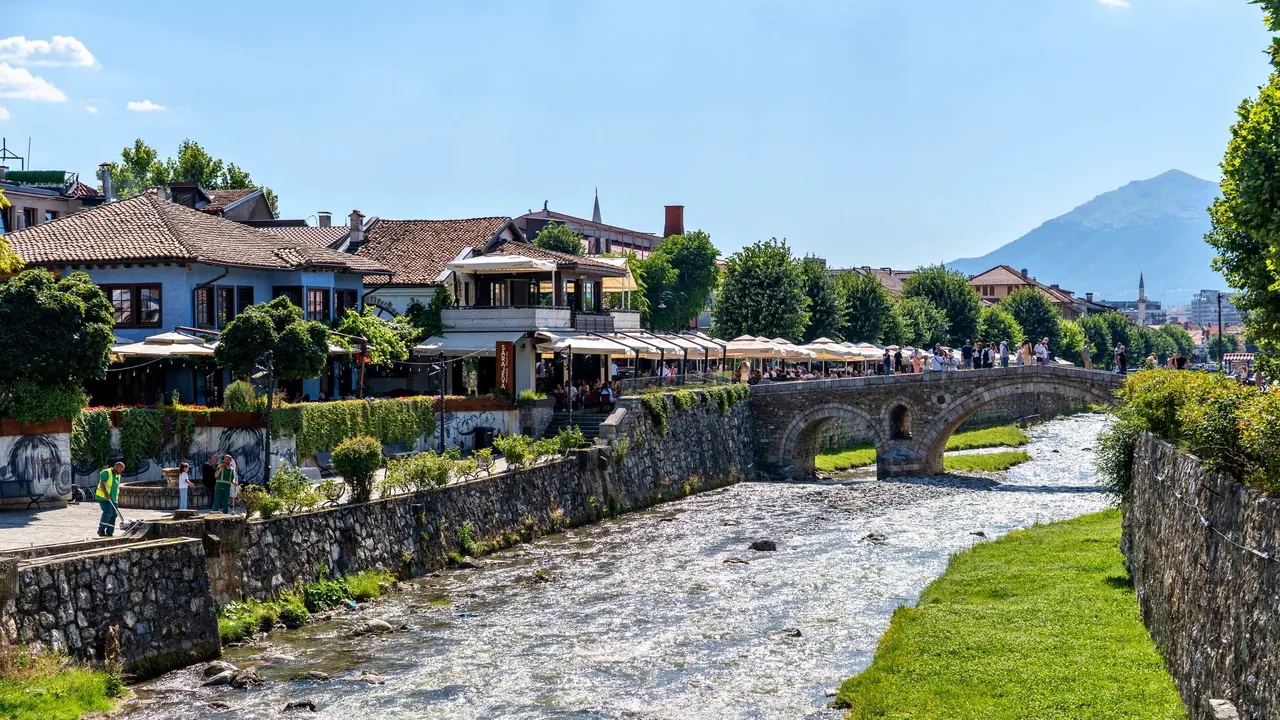
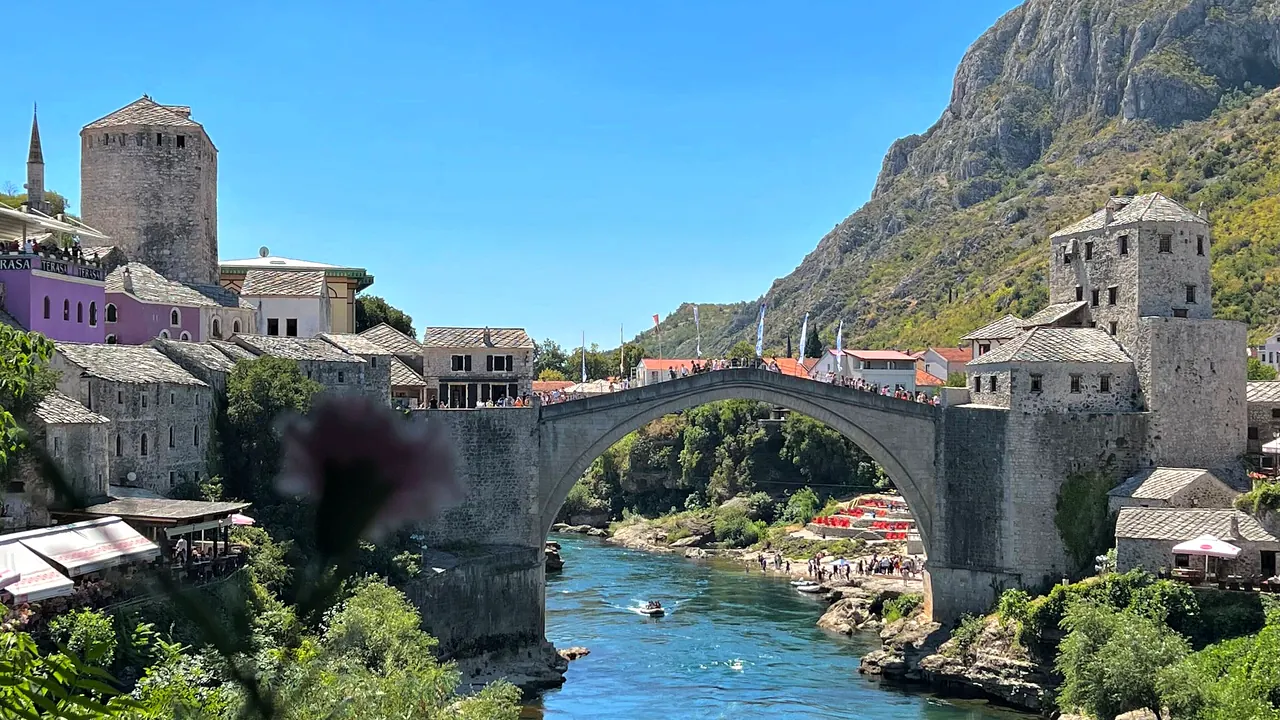
Photos: Kosovo by Filip Chmielecki, Pexels License; Bosnia and Herzegovina by Sharon Hahn Darlin, CC BY 2.0, cropped.
Kosovo or Bosnia and Herzegovina?
Our verdict in twelve categories, each scored against the same fixed benchmark cities, and the climate month by month, so you can choose for your trip.
Choose Kosovo for
- getting around
- prices
- nightlife
Kosovo suits a traveller who wants a compact, easy loop on very little money. Prishtina's café life, Prizren's Ottoman centre, the frescoed monasteries at Dečani and Peć and the Rugova gorge all sit within a couple of hours of one another, linked by frequent buses. It makes a gentle first taste of the Balkans for someone who would rather sit over a macchiato than spend the day on the road.
Choose Bosnia and Herzegovina for
- beaches
- wellness
- nature and the outdoors
For most other trips, Bosnia and Herzegovina is the better choice. Sarajevo and Mostar carry more layered history, and the mountains and rivers are wilder and more varied, from Sutjeska's primeval forest to rafting on the Una and Neretva. It also has spa towns, sevdah in the kafanas and a short stretch of Adriatic at Neum. The roads are slow and winding, so a longer stay or a hired car pays off.
Scoreboard
Twelve categories on one fixed scale from 0 to 100. The shaded stretch is the gap between the two.
Your match
Pick a travel style or drag the sliders, and both match scores follow your weighting.
Wins on getting around and prices with your weighting.
Wins on beaches and wellness with your weighting.
What matters to you?
Category by category
What the scores mean for a trip.
Beaches & swimming
Kosovo has no coast, and summer swimming means a local outing to Lake Batllava's grassy shores near Prishtina or the river pools below the Mirusha waterfalls. Anyone who wants the sea has to cross into Albania or Montenegro.
Bosnia and Herzegovina is better placed, if only a little. At Neum it has a short Adriatic stretch of pebble beaches with warm, clear water in summer. Its freshwater swimming is also better: the green pools under the Kravice falls, the clear Una around Bihac and lakes such as Boracko. Still, these are cool dips to break up a trip, not the reason to go.
Where in Kosovo: Lake Batllava
Where in Bosnia and Herzegovina: Neum, Kravice Falls, Una Valley
Food & drink
The two kitchens are close relatives, built on grilled meat, pies and serious coffee, but Bosnia and Herzegovina offers more of it. In Sarajevo's Bascarsija you can spend whole days on cevapi in somun, spiral burek and slow stews like begova corba. In the south, Herzegovina adds river trout, figs and Zilavka and Blatina wines, tasted at family cellars around Mostar, Citluk and Trebinje.
Kosovo's best food is more scattered. Flija has to be ordered ahead at country restaurants, the Rugova inns serve trout and fresh cheese, and the Rahovec cellars make simple reds. Its strongest point is the carefully made macchiato in Prishtina's cafés. Neither country has much fine dining or variety beyond Balkan cooking.
Where in Kosovo: Prishtina, Prizren, Rugova Valley, Rahovec
Where in Bosnia and Herzegovina: Sarajevo, Mostar, Herzegovina wine country, Banja Luka
Culture & sights
Kosovo has one sight of real international weight. Its UNESCO-listed Serbian Orthodox monasteries, Visoki Dečani above all, keep fourteenth-century frescoes almost intact, and Gračanica and the Patriarchate of Peć are close to Prishtina and Peja. Prizren's stone bridges, mosques and fortress make the most attractive town, while Prishtina itself is mostly modern.
Bosnia and Herzegovina offers more to see. In Sarajevo, mosque, cathedrals and synagogue stand a few streets apart, and the Latin Bridge and the siege tunnel tell the city's 1914 and 1990s stories. Mostar's Stari Most, Visegrad's bridge, Jajce and the stecci tombstones fill out a longer trip. The museums are small in both countries, so in each the pull is history and atmosphere.
Where in Kosovo: Prizren, Peja, Prishtina, Gjakova
Where in Bosnia and Herzegovina: Sarajevo, Mostar, Visegrad, Jajce
Nightlife
Nights out in both countries are sociable rather than slick, and in both they are concentrated in the capital. In Prishtina, with its very young population, the cafés that serve macchiato by day fill up as bars along the boulevard, and a few DJ bars run late at weekends. Prizren's riverside terraces get busy in July and August.
Sarajevo has a more musical night out: rakija in cellar bars, and kafanas where sevdah and folk music carry on into the small hours. Banja Luka has its student bar strip. Choose Prishtina for a young crowd packing the bars, and Sarajevo for long evenings of live music and conversation.
Where in Kosovo: Prishtina, Prizren
Where in Bosnia and Herzegovina: Sarajevo, Banja Luka, Mostar
Nature & outdoors
Kosovo's mountains are well worth the effort. Behind Peja, the Rugova gorge leads into the Accursed Mountains, which rise past 2,600m, with via ferrata routes, paragliding and stages of the Peaks of the Balkans trail, and the Sharr range rises above Prizren. Huts, waymarking and rescue services are basic, though, and the area is fairly small.
Bosnia and Herzegovina has more wild country, and more variety in it. It has Maglic and the primeval Perucica forest in Sutjeska, the travertine falls of Una National Park, whitewater on the Una, Neretva and Tara, and the Olympic mountains above Sarajevo, with the stone village of Lukomir over its canyon. Some areas still have wartime mines, so keep to marked paths.
Where in Kosovo: Rugova Valley, Accursed Mountains, Sharr Mountains, Mirusha Waterfalls
Where in Bosnia and Herzegovina: Sutjeska National Park, Una National Park, Bjelasnica and Jahorina, Herzegovina mountains
Day trips
For day trips the two are broadly level, but they work differently. Kosovo is small enough to see from Prishtina: Gračanica and Ulpiana are close by, Prizren is about an hour and a half away, Peja can be paired with Dečani in a day, and Skopje is within reach.
In Bosnia and Herzegovina, Mostar is the best base. Pocitelj, the dervish house at Blagaj, Stolac and the wine cellars all lie within the hour, and Dubrovnik is about two hours away. The train from Sarajevo down the Neretva canyon is a good day out in itself, but Jajce and Visegrad are a long way on slow roads.
Where in Kosovo: Prizren, Peja, Gjakova, Gračanica
Good for families
Neither country does much for children beyond a warm welcome. Neither has theme parks, aquariums or science museums. Kosovo's advantage is short journeys. It has Germia Park's playgrounds and big summer pool near Prishtina, inexpensive beginner skiing at Brezovica, and walks at Mirusha for older children.
Bosnia and Herzegovina has more water to play in. Children can splash in the Kravice pools, try gentle rafting on the Una or Neretva, or spend a few days by the sea at Neum, and there are horse carriages to Vrelo Bosne. The cost is long, winding drives, and much of the history children will meet is about war.
Where in Kosovo: Prishtina, Rugova Valley, Brezovica
Where in Bosnia and Herzegovina: Sarajevo, Kravice Waterfalls, Jahorina, Neum
Getting around
Kosovo is the easier country to cross. The main towns are rarely more than two hours apart, motorways run west and south, and private buses run often between Prishtina, Prizren, Peja and Gjakova. Rugova and the monasteries off the main road still need a taxi or hire car, and the local driving is erratic.
In Bosnia and Herzegovina, short distances take much longer. Two-lane mountain roads link most places, and the Sarajevo to Mostar railway is the only line most visitors use, though it is a scenic one. Sarajevo's tram and the walkable old centres help, but the national parks and small towns really need a car.
Where in Kosovo: Prishtina, Prizren, Peja
Shopping & style
In both countries, the shopping worth doing is handmade crafts, and Bosnia and Herzegovina has the livelier bazaars. Sarajevo's coppersmiths' street still rings with hammering, and its stalls sell engraved coffee sets, carpets and textiles. Mostar's Kujundziluk lane sells similar things, with more souvenirs among them, and Herzegovina wine, honey and rakija are easy to carry home.
Kosovo has less, but what it has is good. Prizren's silver filigree workshops are the highlight, and Gjakova's bazaar has woodcarvers and the white qeleshe cap. Neither country is a place for fashion or design.
Where in Kosovo: Prizren, Gjakova, Prishtina
Affordability
Both are among the cheapest places to travel in Europe, so the difference lies in where you spend. In Kosovo there is hardly a dear corner at all. Prishtina has plenty of inexpensive hotels, Rugova guesthouses include home cooking, and only Prizren's old town rises a little in July and August.
In Bosnia and Herzegovina, Sarajevo is cheap and Banja Luka cheaper still. Mostar is the place that costs more, particularly near the bridge in high summer. Hiring a car or a mountain guide is the extra cost that is easiest to overlook.
Where in Kosovo: Prishtina, Peja, Prizren
Where in Bosnia and Herzegovina: Sarajevo, Banja Luka, Trebinje, Mostar
Live music & performing arts
Bosnia and Herzegovina offers more to watch and hear, nearly all of it in Sarajevo. The Habsburg-era National Theatre stages drama, opera and ballet, the Philharmonic plays regularly, and there are a theatre festival and an autumn jazz festival. Sevdah in the old-town kafanas is something you will not hear elsewhere.
Prishtina has a National Theatre playing in Albanian, a small orchestra and short opera seasons, and its own autumn jazz festival. Prizren has summer concerts in the fortress. For anyone planning evenings around performances, there is little to go on outside those dates.
Where in Kosovo: Prishtina, Prizren
Where in Bosnia and Herzegovina: Sarajevo
Wellness & relaxation
Both countries' spas are health resorts rather than places to be pampered, but Bosnia and Herzegovina has far more to offer. Ilidza, on Sarajevo's edge, has used its sulphur springs since Roman times and has a leafy avenue out to Vrelo Bosne. Fojnica, Banja Vrucica and Laktasi add pools and treatments in large older hotels.
Kosovo's Banja e Pejës and Kllokot are Yugoslav-era rehabilitation centres, and Prizren's hammams are monuments rather than baths. Its most restful option is a few slow days in a Rugova guesthouse.
Where in Kosovo: Banja e Pejës, Kllokot, Rugova Valley
Where in Bosnia and Herzegovina: Ilidza, Fojnica, Banja Vrucica, Laktasi
When should you go?
Pick your month, and for a country the place in it. The climate figures are measured averages, not a forecast.
Where in Bosnia and Herzegovina
Pristina (Kosovo) in July
Sarajevo (Bosnia and Herzegovina) in July
Daytime high, °C
Rainfall in the month, mm
Where the figures come from
Pristina (Kosovo) has no weather station within reach, so its figures come from a gridded climate model rather than a measured record, and read a broad area rather than one spot.
Temperature and rainfall are climate normals, averaged over the years shown. Pristina (Kosovo): 2001-2020 normals, NASA POWER reanalysis grid, no weather station within 90 km. Sarajevo (Bosnia and Herzegovina): 1991-2020 (rainfall 1971-2000) normals, Sarajevo-Bejelave (2 km from centre).
Inland, both countries have proper continental seasons, and Prishtina and Sarajevo follow almost the same curve. Summer afternoons reach about 29°C in July and August, while January hovers close to freezing and is cold work for walking the streets. Late May to September is the time for the mountains around Rugova, Sutjeska or Bjelasnica, and June and September are the most comfortable months in the towns. Rain falls steadily all year in both capitals, with no real dry season. Sarajevo's wettest spells come in June and November, and Prishtina's in May and late autumn.
Herzegovina is the exception. Mostar gets the longest sunshine in either country and reaches 33°C in July and August, too hot for sightseeing at midday, so May, early June and September suit it best. Those same summer months are when the sea at Neum and the pools at Kravice are good for swimming. Mostar's winters are mild but very wet, with close to 198mm of rain in December.
Which traveller are you?
For an outdoors trip, Bosnia and Herzegovina offers more. It has Sutjeska's peaks and primeval forest, rafting on the Una and Neretva, and summer walking on Bjelasnica, all on a larger scale than Kosovo's Rugova and Sharr mountains, where huts and waymarking are more basic.
On a trip on a tight budget, Kosovo is slightly easier. Both are very cheap, but in Kosovo the main towns are short, frequent bus rides apart, and Rugova guesthouses include meals. In Bosnia, Mostar's summer prices and the hire car you often need add up.
More comparisons
Each shares a side with Kosovo or Bosnia and Herzegovina.
Where else could you go?
Set Kosovo or Bosnia and Herzegovina against any other country.