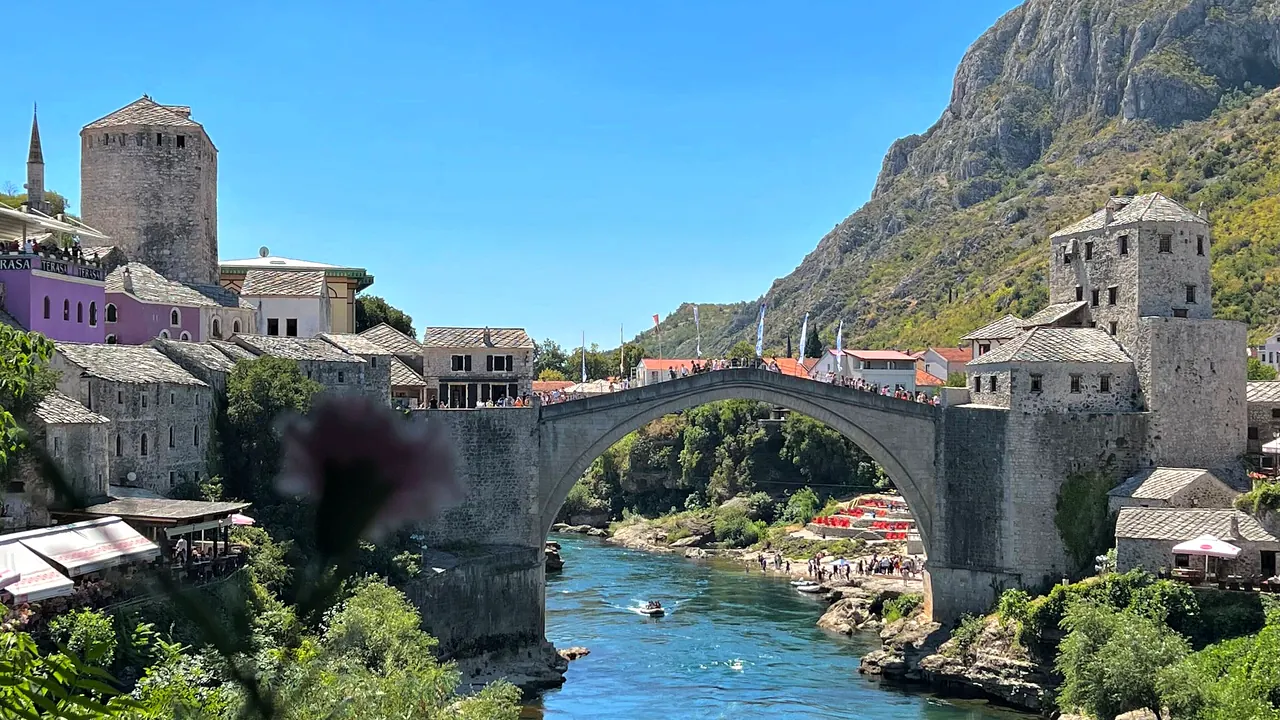
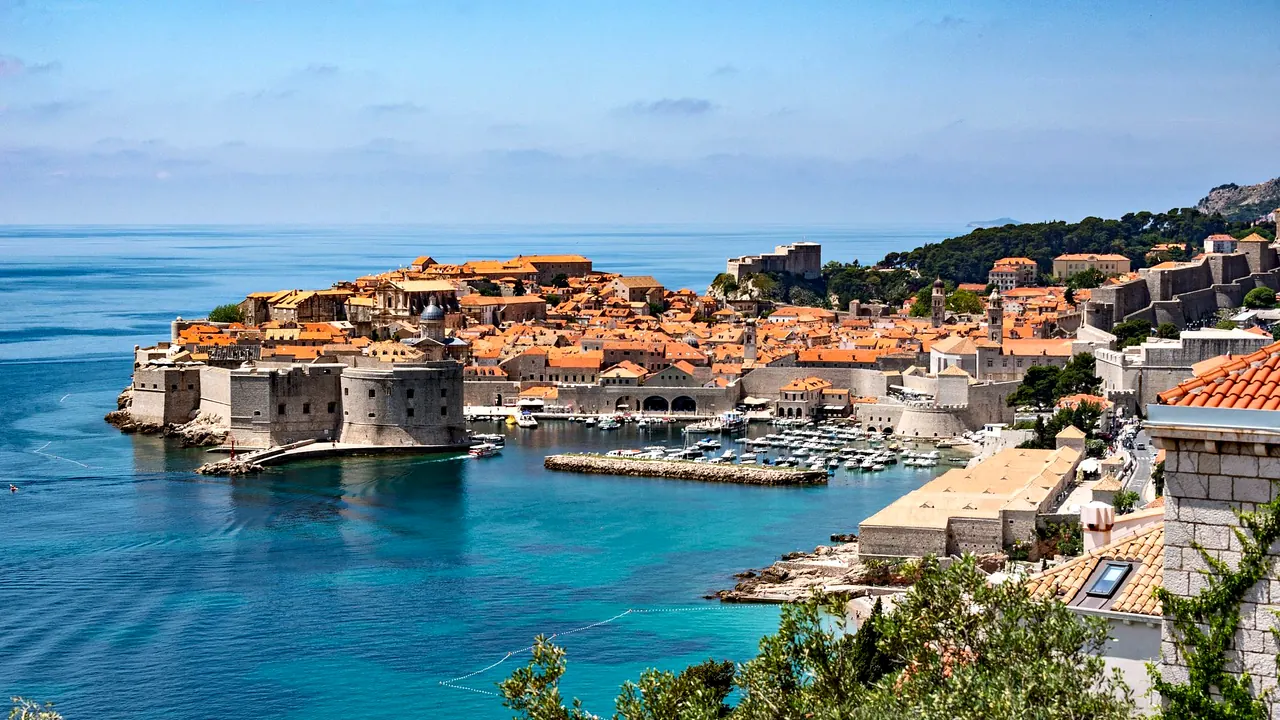
Photos: Bosnia and Herzegovina by Sharon Hahn Darlin, CC BY 2.0, cropped; Croatia by Diego F. Parra, Pexels License.
Bosnia and Herzegovina or Croatia?
Our verdict in twelve categories, each scored against the same fixed benchmark cities, and the climate month by month, so you can choose for your trip.
Choose Bosnia and Herzegovina for
- prices
Bosnia and Herzegovina suits travellers who want a trip that costs little and moves slowly. You get the Ottoman lanes and Habsburg facades of Sarajevo, the bridge at Mostar, rafting on clear rivers and wild mountain parks such as Sutjeska and Una. It rewards an interest in history and long coffees more than a list of attractions, but you have to accept slow roads and a coastline that is barely there.
Choose Croatia for
- beaches
- families
- nightlife
For a summer by the sea, Croatia is the obvious choice. Its islands, walled towns such as Dubrovnik and Split, day trips by boat and resorts set up for children make for an easier and fuller trip, especially for first-timers and families. It costs a good deal more, though, above all on the coast in July and August.
Scoreboard
Twelve categories on one fixed scale from 0 to 100. The shaded stretch is the gap between the two.
Your match
Pick a travel style or drag the sliders, and both match scores follow your weighting.
Wins on prices with your weighting.
Wins on beaches and families with your weighting.
What matters to you?
Category by category
What the scores mean for a trip.
Beaches & swimming
This is where the two countries differ most. Bosnia and Herzegovina reaches the Adriatic only at Neum, a small town of hotels above pebble beaches. Most summer swimming there happens in fresh water: the pools below the Kravice falls, the Una around Bihac and lakes such as Boracko. All of these are cool rather than warm.
For Croatia, the coast is the main reason most people come. The central Dalmatian islands, the long beaches of the Makarska Riviera and the coves off Dubrovnik give endless choice. Most of the shore is pebble and rock, and sand is rare, as at Lopud's Šunj bay.
Where in Bosnia and Herzegovina: Neum, Kravice Falls, Una Valley
Where in Croatia: Central Dalmatian islands, Makarska Riviera, Elaphiti Islands, Istria
Food & drink
The two kitchens overlap in Herzegovina and Dalmatia, where both rely on grilled meat, fish and local wine, but the focus differs. Bosnia and Herzegovina's food centres on Sarajevo's Bascarsija: cevapi in somun flatbread, spiral pies from the buregdzinica, and the slow ritual of coffee from a copper dzezva. Zilavka and Blatina wines come from cellars around Mostar and Trebinje.
Croatia has a little more range. There are truffles, olive oil and Malvazija in Istria, oysters at Ston and seafood in Dalmatian konobas, and Zagreb eats like central Europe. In both countries, fine dining is scarce and there is little beyond local cooking.
Where in Bosnia and Herzegovina: Sarajevo, Mostar, Herzegovina wine country, Banja Luka
Where in Croatia: Istria, Pelješac and Ston, Zagreb, Central Dalmatian islands
Culture & sights
Bosnia and Herzegovina is where empires and faiths meet. In Sarajevo, a mosque, Catholic and Orthodox cathedrals and a synagogue stand a few streets apart, close to the Latin Bridge and the museums of the siege. Beyond the capital there are the Ottoman bridges of Mostar and Visegrad, the fortified hill town of Jajce and the medieval stecci tombstones.
Croatia has more to see, and on a grander scale. You can walk the full circuit of Dubrovnik's walls, people still live inside the Roman palace at Split, Pula has its amphitheatre and Poreč has its Byzantine mosaics. Museums are modest in both countries, so the old towns themselves are the reason to go.
Where in Bosnia and Herzegovina: Sarajevo, Mostar, Visegrad, Jajce
Where in Croatia: Dubrovnik, Split, Istria, Šibenik and Trogir
Nightlife
Nights out in Bosnia and Herzegovina mostly mean Sarajevo, with rakija, cellar bars and kafanas where live sevdah plays late. The mood is sociable rather than polished, and Banja Luka's student strip is the other option. It suits people who like to talk more than people who like to dance.
Croatia offers more, though mostly in summer. Open-air clubs on Zrće beach on Pag run until dawn, Hvar town has its after-beach parties, and the lanes of Split's palace fill with bar crowds. Zagreb's Tkalčićeva keeps going all year, while the coast goes quiet once the season ends.
Where in Bosnia and Herzegovina: Sarajevo, Banja Luka, Mostar
Nature & outdoors
Both countries are outstanding for the outdoors, and the difference is mountain against sea. Bosnia and Herzegovina is wilder and less visited. It has the primeval Perucica forest and Maglic in Sutjeska, the falls at Strbacki Buk on the Una, rafting on the Neretva and the Tara, and the old Olympic mountains above Sarajevo. Trails are less well marked, and mines left from the war mean keeping to marked paths or going with a guide.
Croatia's landscape is largely the coast. You can sail between more than a thousand islands, cross the bare white Kornati or kayak off Dubrovnik. Inland there are Plitvice's terraced lakes, the cascades at Krka and climbing in the Paklenica gorges.
Where in Bosnia and Herzegovina: Sutjeska National Park, Una National Park, Bjelasnica and Jahorina, Herzegovina mountains
Where in Croatia: Plitvice Lakes, Kornati and the Dalmatian islands, Velebit and Paklenica, Krka
Day trips
Mostar is Bosnia and Herzegovina's best base. Pocitelj, the dervish house at Blagaj, Stolac and the wine cellars are all within an hour, and the Neretva canyon train links it with Sarajevo. Beyond that, slow mountain roads leave Jajce and Visegrad at the limit of a day out.
Croatia offers more from every base, and many of the trips are by boat: Hvar and Brač from Split, the Elaphiti Islands and Korčula from Dubrovnik, and the hill towns of Istria from Rovinj or Pula. Mostar is itself a popular day out from Dubrovnik, so the two countries are easy to combine.
Good for families
Children are warmly welcomed in Bosnia and Herzegovina. Families who like the outdoors can enjoy the pools at Kravice, gentle rafting and the beginner slopes on Jahorina, but little is built for children and the long, winding drives soon wear thin.
Croatia is the easier family choice, especially for a beach vacation. The sea is calm and has no tides, the campsites of Istria and Kvarner have pools and play areas, and on the Makarska Riviera apartments sit beside gently shelving beaches. Neither country has much in the way of theme parks or science museums.
Where in Bosnia and Herzegovina: Sarajevo, Kravice Waterfalls, Jahorina, Neum
Where in Croatia: Istria, Kvarner, Makarska Riviera, Plitvice Lakes
Getting around
In both countries you walk around the old towns, and the difficulty is getting between them. Bosnia and Herzegovina has Sarajevo's tram and the scenic railway from Sarajevo to Mostar. Otherwise you depend on buses over two-lane mountain roads, and for the national parks a car is close to essential.
Croatia is easier to get around. A motorway runs from Zagreb to Split, coaches are frequent and ferries serve the islands, and Split has its bus station, port and airport side by side. If you fly into Zagreb and out of Dubrovnik, you avoid travelling the coast twice.
Shopping & style
Neither country is a shopping destination, and in both the best buys are made or grown locally. In Bosnia and Herzegovina they come from the bazaars: engraved copper coffee sets from the coppersmiths' street in Sarajevo, kilims along Mostar's Kujundziluk, and Herzegovina honey and rakija.
Croatia leans more towards produce, with Istrian olive oil and truffles, Pag lace and cheese, and lavender from Hvar. Zagreb also has small design boutiques, which Bosnia lacks.
Affordability
Bosnia and Herzegovina is much the cheaper of the two, and it stays cheap all year. Sarajevo and Banja Luka are its lowest-cost bases, with rooms, taverns and cafés priced for local people. In the south, Trebinje gives access to the wine cellars and to the Croatian coast for far less than a room by the sea. Prices only really climb in Mostar, around the old bridge in high summer.
Croatia's costs depend on where and when you go. Its cheaper options are Zagreb, Zadar instead of Split or Dubrovnik, and farm stays in inland Istria, which are fair value for the food. A July or August stay on the islands, though, costs as much as the big resorts of the western Mediterranean. Going in June or September takes much of the sting out.
Where in Bosnia and Herzegovina: Sarajevo, Banja Luka, Trebinje, Mostar
Live music & performing arts
In Bosnia and Herzegovina, almost all the performing arts are in Sarajevo. There is the Habsburg-era National Theatre, the Philharmonic and an autumn jazz festival. Most memorable of all is sevdah, the slow Bosnian love song, heard in old-town kafanas.
Croatia has more on, much of it staged in its monuments in summer. The Dubrovnik Summer Festival uses the old town's squares and fortresses, Split puts on opera in its palace, and Pula holds concerts in its amphitheatre, with klapa singing heard in the churches of Dalmatia. Outside summer, the Croatian National Theatre in Zagreb carries the year.
Where in Bosnia and Herzegovina: Sarajevo
Wellness & relaxation
Both countries have an old spa tradition that feels practical rather than pampering. In Bosnia and Herzegovina it centres on Ilidza, whose sulphur springs have been used since Roman times, and on spa towns such as Fojnica and Banja Vrucica with their large, older hotels. The Ottoman bathhouses of Sarajevo and Mostar are mostly monuments to look at rather than places to bathe.
Croatia gives more ways to slow down. There are the thermal towns of Zagorje, the seafront promenade of Habsburg-era Opatija, the mild air of Lošinj, and quiet islands such as Vis and Mljet out of season. The catch is that the coast is crowded and far from restful in high summer.
Where in Bosnia and Herzegovina: Ilidza, Fojnica, Banja Vrucica, Laktasi
Where in Croatia: Opatija, Lošinj, Zagorje, Vis
When should you go?
Pick your month, and for a country the place in it. The climate figures are measured averages, not a forecast.
Where in Bosnia and Herzegovina
Where in Croatia
Sarajevo (Bosnia and Herzegovina) in July
Split (Croatia) in July
Daytime high, °C
Rainfall in the month, mm
Temperature and rainfall are climate normals, averaged over the years shown. Sarajevo (Bosnia and Herzegovina): 1991-2020 (rainfall 1971-2000) normals, Sarajevo-Bejelave (2 km from centre). Split (Croatia): 1991-2020 (sunshine 1971-2000, rainfall 1981-2010) normals, Split / Marjan (0.9 km from centre).
In Bosnia and Herzegovina, the two halves of the country keep different seasons. Mostar is at its best in May and June, when the days are warm and the rain has eased. By July and August it reaches about 33°C, too hot for comfortable walking in the middle of the day. The rain returns in September, with 143mm, and stays heavy through the winter. Sarajevo sits higher and stays milder. It is pleasant for walking from May to September and cold in winter, around 4°C in January, which is when the slopes of Jahorina and Bjelasnica come into their own.
Croatia's year is built around the sea. Off Split and Istria the Adriatic is warm enough to swim from June to September, and it reaches about 25°C in August. Split is the sunniest and driest part of the country in high summer. Spring and early autumn are better for Zagreb and for walking the old towns, before the autumn rain reaches the coast in October and November.
Which traveller are you?
For a trip on a tight budget, Bosnia and Herzegovina stretches the money into a longer stay. The best of it costs little: wandering the old towns, swimming in rivers, walking in the mountains. A hired car or a guide is the main extra. Croatia's coast in summer soon eats into a budget.
On a beach and sun trip, Croatia wins easily. You can spend whole days swimming and hopping between islands, then eat by the harbour, all under the long dry Dalmatian summer. In Bosnia and Herzegovina the sea is a short detour, and most swimming is in cool fresh water.
On a family trip with children, Croatia is the easier choice. The days fall into a simple routine of beach, boat trip and an evening stroll through safe old towns, and the greener north spares children the worst heat. Bosnia and Herzegovina suits older, outdoorsy children better, since much of its history is about war.
More comparisons
Each shares a side with Bosnia and Herzegovina or Croatia.
 Albania vs Croatia
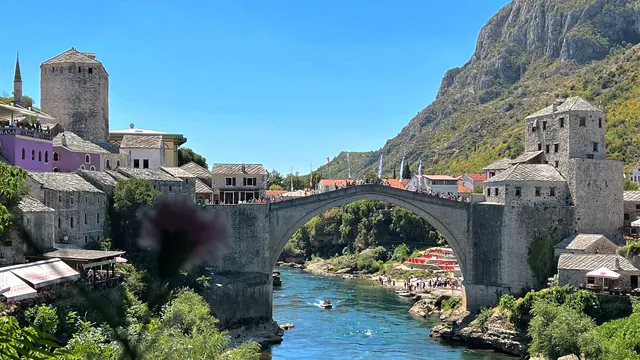 Bosnia and Herzegovina vs Albania
 Bulgaria vs Croatia
 Croatia vs Budapest
 Croatia vs Czechia
 Croatia vs Greece
 Croatia vs Hungary
 Croatia vs Italy
 Croatia vs Portugal
 Croatia vs Prague
 Croatia vs Slovakia
 Croatia vs Slovenia
 Croatia vs Türkiye
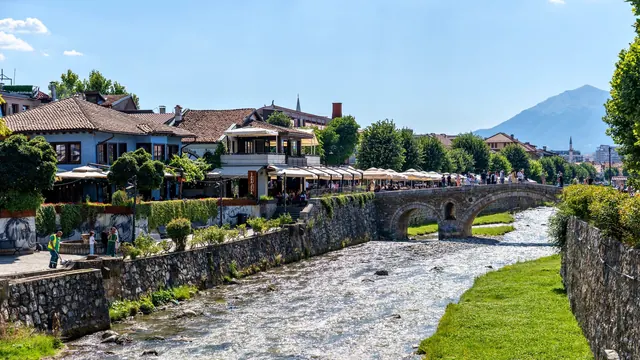 Kosovo vs Bosnia and Herzegovina
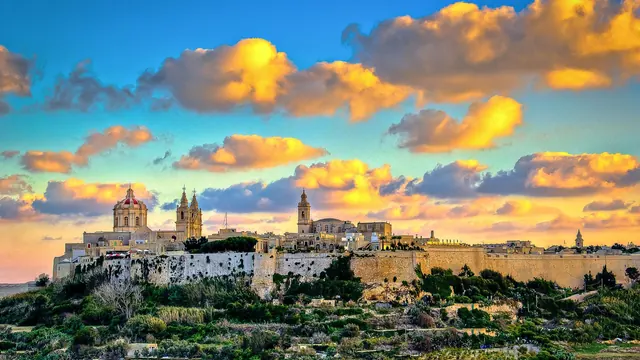 Malta vs Croatia
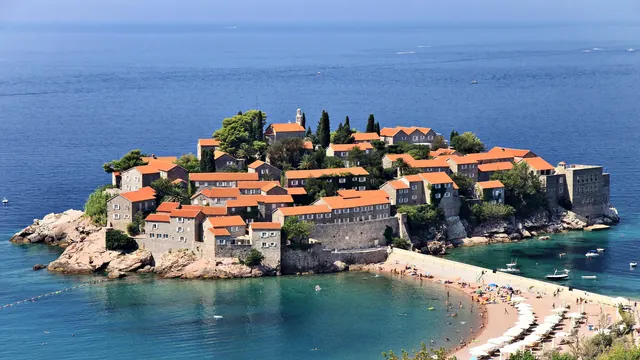 Montenegro vs Bosnia and Herzegovina
- Montenegro vs Croatia
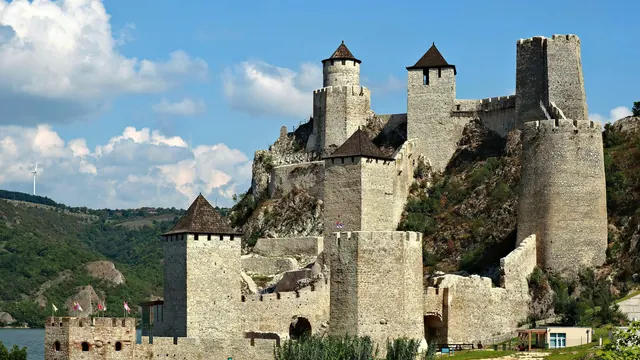 Serbia vs Bosnia and Herzegovina
- Serbia vs Croatia
Where else could you go?
Set Bosnia and Herzegovina or Croatia against any other country.