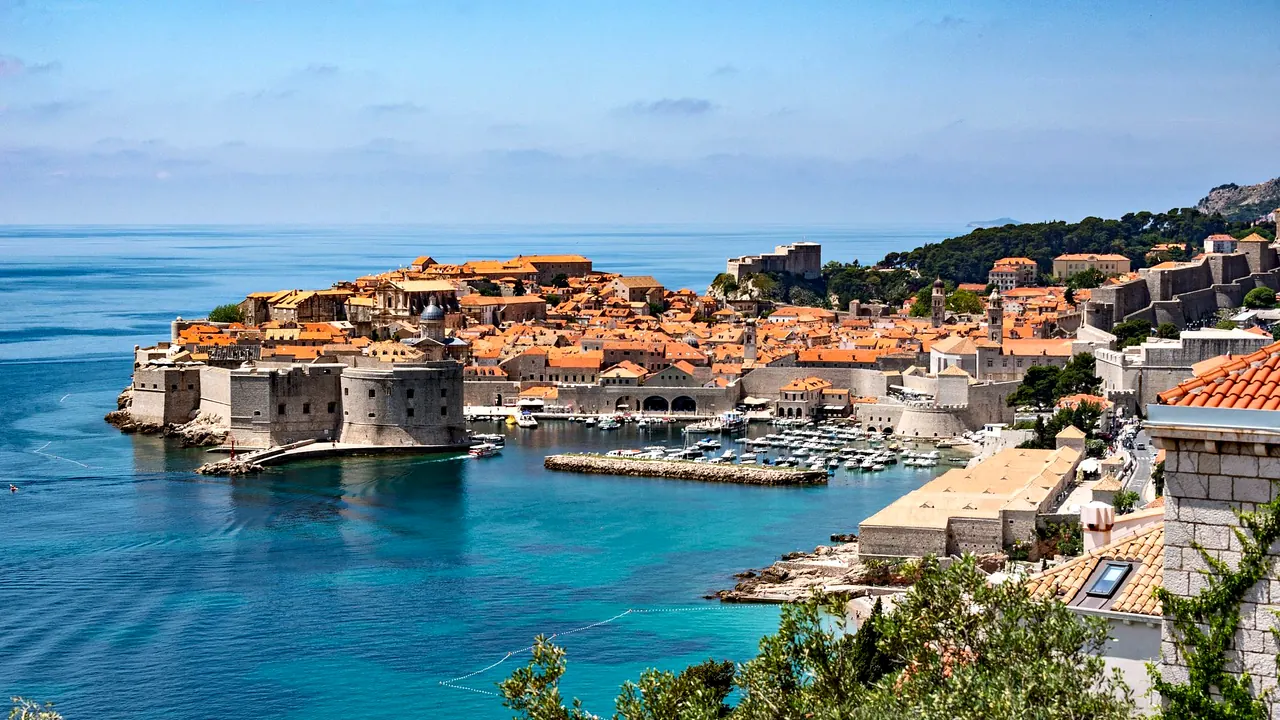
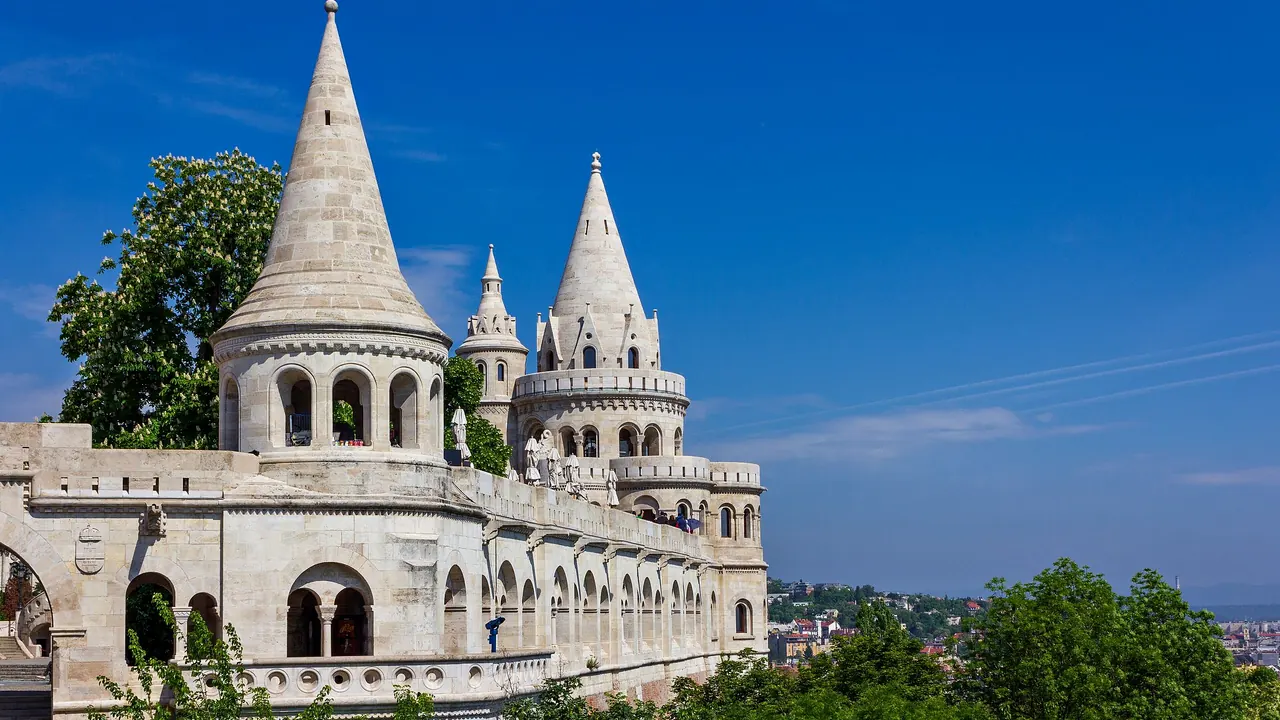
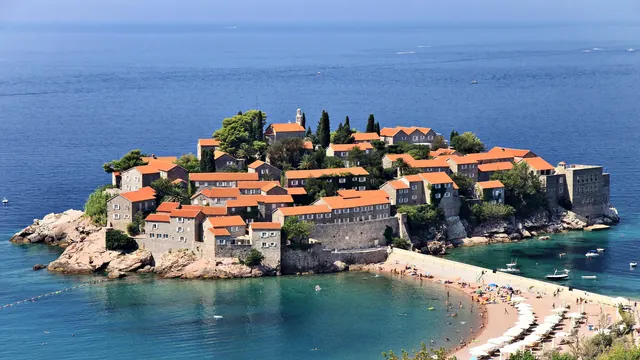
Photos: Croatia by Diego F. Parra, Pexels License; Budapest by Perituss, CC0.
Croatia or Budapest?
Our verdict in twelve categories, each scored against the same fixed benchmark cities, and the climate month by month, so you can choose for your trip.
Choose Croatia for
- beaches
- nature and the outdoors
- day trips
Croatia is the choice for a summer by the sea. It suits travellers who want clear water every day, boat trips between islands, and evenings in walled stone towns like Dubrovnik and Split, with Plitvice or the Velebit range inland for a change of scene. Plan on moving between two or three bases and living outdoors for the week.
Choose Budapest for
- wellness
- live music and the arts
- getting around
Budapest works better as one city that does a lot without a car. Thermal baths, a classical music scene with something on most nights and the ruin bars of District VII make it a strong year-round pick, whether you go for a long weekend or a winter break. It also costs less, and trams take you everywhere, so it suits travellers who want comfort, culture and a soak rather than a beach.
Scoreboard
Twelve categories on one fixed scale from 0 to 100. The shaded stretch is the gap between the two.
Your match
Pick a travel style or drag the sliders, and both match scores follow your weighting.
Wins on beaches and nature and the outdoors with your weighting.
Wins on wellness and live music and the arts with your weighting.
What matters to you?
Category by category
What the scores mean for a trip.
Beaches & swimming
This is where Croatia is far ahead. The Adriatic is clear and has no tides, and you can choose between Zlatni Rat on Brač, the coves of Hvar and the Pakleni islands, the long Makarska beaches under Biokovo and Lopud's sandy bay in the Elaphiti Islands. Most beaches are pebble or flat rock, so pack water shoes.
Budapest is landlocked, and nobody swims in the Danube. Summer bathing means big lidos such as Palatinus on Margaret Island, or a train to shallow Lake Velence. Lake Balaton is about two hours away. These are pleasant days out, but no substitute for the sea.
Where in Croatia: Central Dalmatian islands, Makarska Riviera, Elaphiti Islands, Istria
Food & drink
The two are about level, but you eat in different ways. In Croatia, food depends on the region: truffles, olive oil and Malvazija in Istria's hill-town taverns, grilled fish and peka in Dalmatian konobas, and oysters with Plavac Mali reds around Ston. You have to go to each region for its food, and the busiest old towns fall back on repetitive menus.
Budapest gathers everything in one place. You get paprika-rich goulash and stuffed cabbage, the Great Market Hall, layered cakes in old coffee houses, and wine bars pouring Tokaji and Eger reds, plus a serious modern restaurant scene.
Where in Croatia: Istria, Pelješac and Ston, Zagreb, Central Dalmatian islands
Culture & sights
Croatia's heritage is strung along the coast in walled stone towns, so seeing it means moving from one to the next. You can walk the whole circuit of Dubrovnik's walls, find people still living inside Diocletian's palace in Split, and add Pula's Roman amphitheatre and the Byzantine mosaics of the Euphrasian Basilica in Poreč. Museums are mostly small, so here you go for the townscapes.
Budapest gives you as much in a single city, plus the big collections Croatia lacks. The Parliament faces the Royal Palace and Matthias Church across the Danube, the Museum of Fine Arts holds serious old masters, and the Dohány Street Synagogue, the Ottoman tombs and Memento Park give the city enough layers to fill several days.
Where in Croatia: Dubrovnik, Split, Istria, Šibenik and Trogir
Nightlife
Budapest has the stronger and steadier nightlife. The ruin bars in District VII's courtyard tenements, and the cocktail bars and late clubs on Kazinczy and Király streets, stay loud past 2am all year. Summer adds garden bars and party boats on the Danube.
Croatia's nights belong to summer. The open-air clubs on Zrće beach on Pag run until dawn, and Hvar and Split's palace lanes fill with bars in July and August. Out of season the coast goes quiet early, and only Zagreb keeps a year-round scene.
Nature & outdoors
Croatia is far ahead outdoors. You can sail through more than a thousand islands, from the bare white Kornati to green Mljet with its saltwater lakes, and kayak around Dubrovnik. Inland are the waterfall-linked lakes of Plitvice, the cascades of Krka, and climbing in the Paklenica gorges below the Velebit range.
Budapest offers gentler country. There are forest walks and lookout towers in the Buda Hills, caves carved by thermal water, and the wooded ridges and riverside cycle path of the Danube Bend. It is good walking, but it is not dramatic.
Where in Croatia: Plitvice Lakes, Kornati and the Dalmatian islands, Velebit and Paklenica, Krka
Day trips
Croatia offers more, partly because every base has its own set of trips, many of them by boat. From Split you can reach Hvar, Brač, Trogir and Šibenik. From Dubrovnik you can reach Korčula, Ston and the Elaphiti Islands, with Kotor and Mostar across the border. In Istria, Rovinj, Pula and Motovun are all close together.
From Budapest, the classic day out is the Danube Bend: Szentendre's painters' lanes, Visegrád's citadel and Esztergom's basilica. Eger, Hollókő and Pannonhalma make longer days, at around two hours each.
Good for families
Which one suits you depends on whether the children want a week in the water or a week of outings. Croatia is made for the slow beach week. The sea is calm and has no tides, Istria and Kvarner have waterside campsites with pools and play areas, and on the Makarska Riviera the beaches shelve gently a short walk from the apartments. Beyond Plitvice's boardwalks and boat trips to the islands there is little to visit, and Dubrovnik's crowded lanes in midsummer heat are hard work with small children.
Budapest fills the days with outings instead. There is the old zoo in City Park with its Art Nouveau animal houses, the Children's Railway in the Buda Hills run by schoolchildren, the Palace of Wonders science centre and summer lidos with wave pools. Metro stairs and loud weekend nights in District VII take some planning.
Where in Croatia: Istria, Kvarner, Makarska Riviera, Plitvice Lakes
Getting around
In Croatia the walled old towns are small and car-free once you arrive, but getting between them takes real effort. Trains barely reach the coast, so you rely on coaches, the motorway down to Split and island ferries that thin out in winter. A car makes Istria's hill towns and Plitvice far easier, and many visitors fly into Zagreb or Split and out of Dubrovnik so they don't cover the coast twice.
Budapest is much simpler. Central Pest is flat and easy to walk, one tram runs along the Danube embankment past Parliament like a sightseeing ride, the boulevard trams run all night, and the short metro includes continental Europe's oldest underground line. Nobody needs a car.
Shopping & style
Budapest is the better place to shop, though neither is a reason to go. It has a short run of luxury labels on Andrássy Avenue, Herend and Zsolnay porcelain, Hungarian design boutiques in Districts V and VII, and Ecseri flea market for communist-era objects.
Croatia's best buys are things to eat or keep: Istrian oil and truffles, Pag lace and cheese, Hvar lavender and Dalmatian filigree. Zagreb's Ilica and Split's Pazar market have the widest choice, while the other coastal towns mostly sell souvenirs.
Affordability
Budapest is easier on the wallet. Public transport and wine are cheap, there are plenty of mid-range rooms within walking distance of the centre, and the baths are fairly priced. Costs only climb in the tourist core around Váci utca.
In Croatia, the price depends heavily on where and when you go. The summer coast costs as much as the western Mediterranean, and Dubrovnik and Hvar town are the dearest. June and September are cheaper, and so are Zagreb, Zadar, the Makarska apartments and Istria's inland farm stays.
Live music & performing arts
Budapest is far stronger here. It has the State Opera House on Andrássy Avenue, the great hall of the Liszt Academy, the national concert hall at Müpa, operetta and folk ensembles, so there is music most nights of the year.
Croatia's stages are mostly summer ones: the Dubrovnik Summer Festival in squares and fortresses, opera in Split's palace and concerts in the Pula arena. Its own tradition is klapa singing in Dalmatian churches. Outside summer, the Croatian National Theatre in Zagreb is where you will find performances.
Wellness & relaxation
No contest: Budapest is built on hot springs. You can soak in Széchenyi's neo-Baroque outdoor pools, in the mosaic halls of the Gellért, or under the Ottoman domes of Rudas and Király, then finish with a slow coffee. It is a daily habit here, and it works in any season.
Croatia's thermal towns in the Zagorje hills are practical places with mineral pools. Rest there comes from Opatija's Habsburg promenade and the mild air of Lošinj, or from Vis and Mljet outside high season.
Where in Croatia: Opatija, Lošinj, Zagorje, Vis
When should you go?
Pick your month, and for a country the place in it. The climate figures are measured averages, not a forecast.
Where in Croatia
Split (Croatia) in July
Budapest in July
Daytime high, °C
Rainfall in the month, mm
Temperature and rainfall are climate normals, averaged over the years shown. Split (Croatia): 1991-2020 (sunshine 1971-2000, rainfall 1981-2010) normals, Split / Marjan (0.9 km from centre). Budapest: 1991-2020 (sunshine 1981-2010, rainfall 1981-2010) normals, Budapest Met Center (2.1 km from centre).
Croatia's best season is summer on the coast. The sea off Split and Istria is warm enough to swim from June to September, reaching about 25°C in August, and July and August are the sunniest and driest months. They are also hot, with Split's afternoons around 31°C, so walking the old towns is easiest early or late in the day. May and late September are better for hiking and sightseeing. From October the rain arrives on the coast, with Split getting about 100mm in November. Inland Zagreb has cold winters and a wetter early summer.
Budapest has no sea, so its best months are the good walking months: May, June and September. High summer peaks at around 28°C, which is warm enough for the open-air lidos without the coast's heat. Winter is cold, with highs of about 4°C in January, but this is when the steaming outdoor baths are at their best. Budapest is also much drier than the Croatian coast in autumn, which makes it the safer bet from October onwards.
Which traveller are you?
On a beach and sun trip, Croatia is the clear answer. Its clear, calm Adriatic, the coves of Hvar and the Elaphiti Islands and the long Makarska beaches give you a swim every day, while Budapest can only offer lidos and lakes some way out of town.
For a relaxing and wellness trip, choose Budapest. Its Ottoman and Art Nouveau thermal baths are part of everyday life and open all year. Croatia's quiet islands are restful outside summer, but its spas are plain, practical places by comparison.
For a short city break, Budapest makes more sense. Trams and a simple metro connect everything, and the opera, the river views and the ruin bars all sit within one compact centre. In Croatia, much of a short stay would go on coaches and ferries.
More comparisons
Each shares a side with Croatia or Budapest.
Where else could you go?
Set Croatia against any other country.