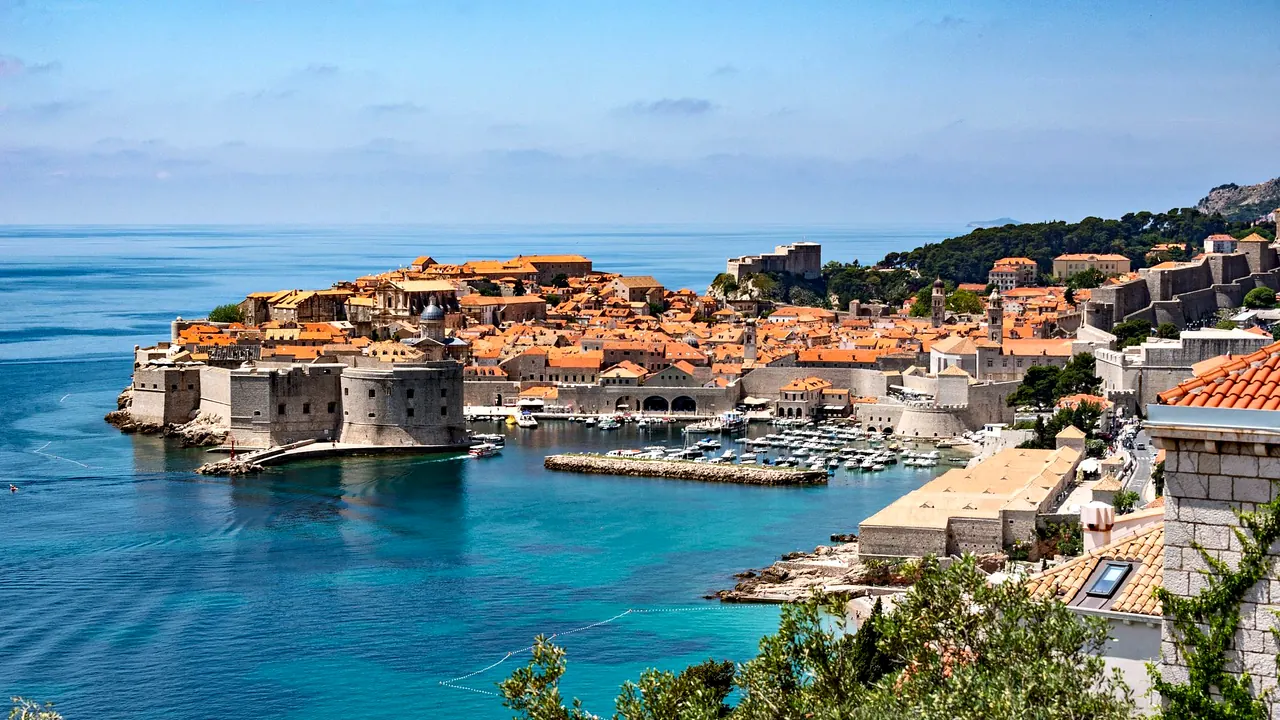
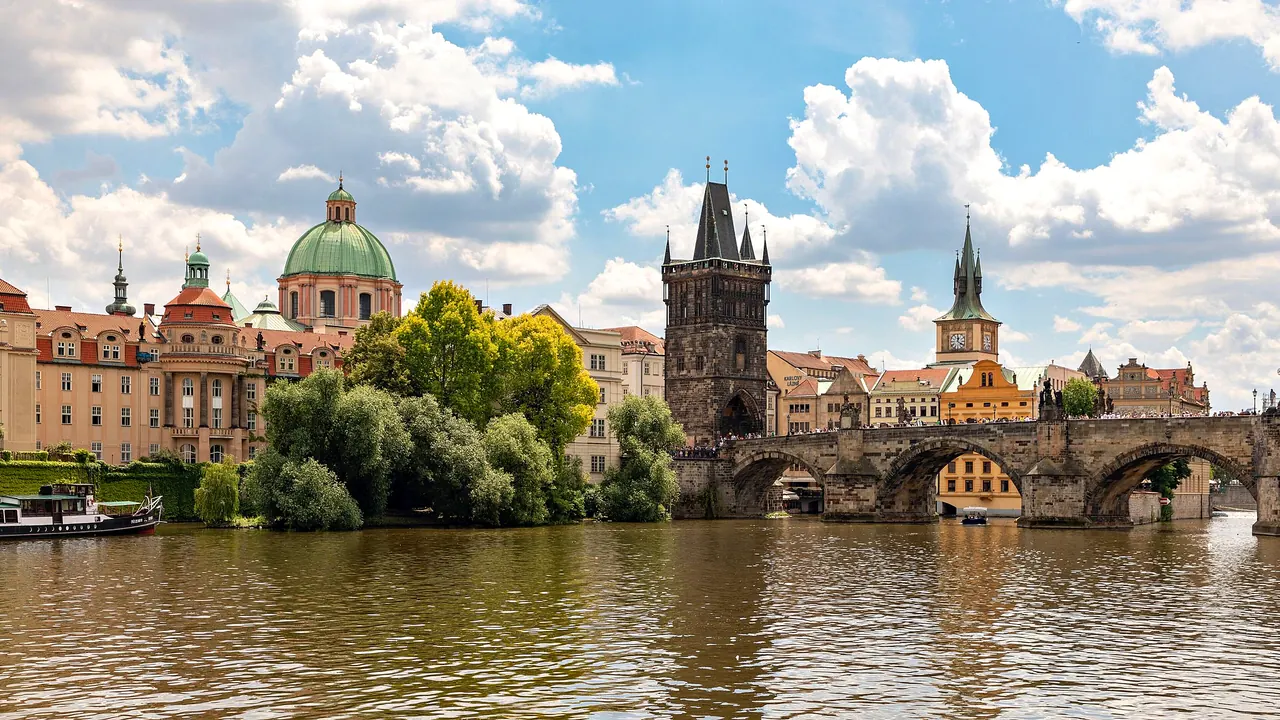
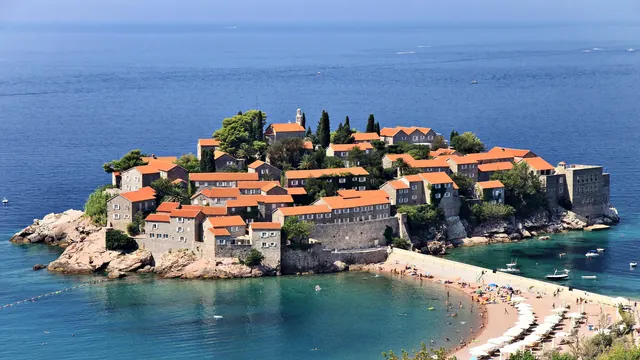
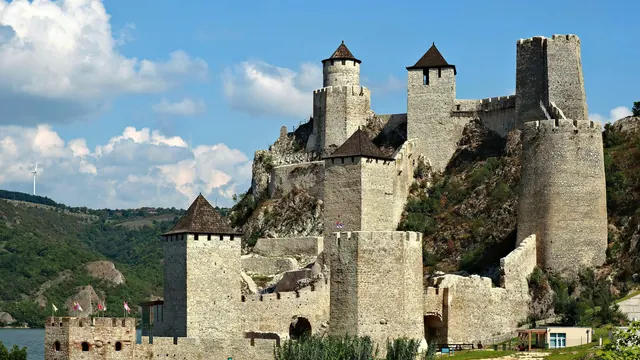
Photos: Croatia by Diego F. Parra, Pexels License; Prague by Dietmar Rabich, CC BY-SA 4.0, cropped.
Croatia or Prague?
Our verdict in twelve categories, each scored against the same fixed benchmark cities, and the climate month by month, so you can choose for your trip.
Choose Croatia for
- beaches
- nature and the outdoors
- families
Croatia is the choice for a summer trip built around the sea: clear Adriatic water, island-hopping from Split or Dubrovnik, a week's sailing among the Kornati, and walled Roman and Venetian towns to stroll through in the evening. It also suits families who want a calm beach week and walkers heading for Plitvice or Velebit. You will need to accept ferries, coaches or a hire car between bases.
Choose Prague for
- live music and the arts
- getting around
- prices
Prague suits travellers who want one base with a lot of sights close together. The Castle, Mala Strana, the Charles Bridge and the Old Town are all a short walk apart, and trams cover everything else. It is the stronger pick for opera and classical concerts, for a few days built around beer, and for a city break in the cooler months. It also costs less once you eat and sleep outside the tourist core.
Scoreboard
Twelve categories on one fixed scale from 0 to 100. The shaded stretch is the gap between the two.
Your match
Pick a travel style or drag the sliders, and both match scores follow your weighting.
Wins on beaches and nature and the outdoors with your weighting.
Wins on live music and the arts and getting around with your weighting.
What matters to you?
Category by category
What the scores mean for a trip.
Beaches & swimming
This is the widest gap between the two. Croatia's coast is built around swimming. The choice runs from Zlatni Rat on Brač, the coves of Hvar and the Pakleni islands and the long Makarska beaches to Lopud's sandy Šunj bay. Most shores are pebble or rock, so water shoes help.
Prague is landlocked. On a hot day you can swim at the Dzban reservoir in the Sarka valley, at outdoor pools or at the Slapy reservoir about an hour south. Locals enjoy them, but they are nothing to plan a trip around.
Where in Croatia: Central Dalmatian islands, Makarska Riviera, Elaphiti Islands, Istria
Food & drink
Croatia has more to eat because its food changes from region to region. Istria's hill towns have truffles, olive oil and Malvazija wine, Dalmatian konobas serve grilled fish and peka, and Ston has its oysters. The weak spot is the repetitive tourist menus in the busiest old towns.
Prague's food is narrower and built around beer: carefully poured Pilsner, roast pork with dumplings, svickova and chlebicky sandwiches. It pleases a beer lover, but the menus around Old Town Square disappoint, and the better meals are in Vinohrady, Karlin or Letna.
Where in Croatia: Istria, Pelješac and Ston, Zagreb, Central Dalmatian islands
Culture & sights
Croatia's heritage is spread along the coast in a chain of walled stone towns, and much of it goes back to Rome. Split grew up inside Diocletian's palace, and people still live within its walls. Pula has its Roman amphitheatre, and Poreč's Euphrasian Basilica has Byzantine mosaics. Dubrovnik is a complete medieval city whose walls you can walk all the way round, with Trogir, Šibenik and Zadar further up the coast. To see them all you have to travel between towns, and apart from Zagreb's national museums, the collections are small.
Prague has the edge because it all comes together in one place. The whole centre is a single UNESCO site, and the Castle with St Vitus Cathedral, the Baroque palaces of Mala Strana, the Gothic lanes of the Old Town and the synagogues of Josefov form one unbroken townscape, with Art Nouveau and Cubist buildings among them. It also has more to see indoors: the National Gallery's collections fill several palaces and the Trade Fair Palace, and the National Museum and the Vysehrad fortress add to them.
Where in Croatia: Dubrovnik, Split, Istria, Šibenik and Trogir
Nightlife
The two are evenly matched for going out, but in very different ways. Croatia's nights follow the summer and the beaches. In July and August there are open-air clubs at Zrće on Pag that run until dawn, yacht-crowd bars in Hvar and crowded bars in Split's palace lanes. Zagreb is the only reliable choice for nights out all year.
Prague is a pub city in every month. There is cheap, excellent beer in Zizkov's plain local bars, wine bars in Vinohrady and summer beer gardens on Letna. Its better clubbing is the techno and alternative circuit in Holesovice rather than the big venues near the Charles Bridge.
Nature & outdoors
Croatia is far stronger outdoors. You can sail among the islands for a week, see Mljet's saltwater lakes and Plitvice's waterfalls, and walk in the Velebit range, which rises straight from the sea. Prague cannot match that variety.
Prague is green for a city, from Petrin Hill to the Divoka Sarka gorge. The sandstone towers of Bohemian Switzerland, about two hours away, make an excellent day's hike. Still, the countryside around it is gentle, with no mountains and no coast.
Where in Croatia: Plitvice Lakes, Kornati and the Dalmatian islands, Velebit and Paklenica, Krka
Day trips
Both make excellent bases for day trips, but the trips are of different kinds. In Croatia many go by boat: from Split to Hvar and Brač, or from Dubrovnik to the Elaphiti Islands and Korčula. In Istria, hill towns such as Motovun lie close to the coast.
From Prague you travel by train or bus to castles and old towns: Kutna Hora, Karlstejn, Terezin and Melnik, with Dresden about two hours away. All of these start from one base. In Croatia each base has its own set of trips, so where you stay decides what you can reach.
Good for families
Croatia is the easier family choice for a relaxed beach week. The sea is calm and has no tides. Istria and Kvarner have campsites and resorts with pools and play areas, and on the Makarska Riviera the apartments are a short walk from beaches that shelve gently.
Prague has the castle, the astronomical clock and one of Europe's best zoos at Troja, but beyond those the choice thins out. Cobbles, steep lanes and summer crowds make pushchairs hard work. Neither place has much in the way of theme parks.
Where in Croatia: Istria, Kvarner, Makarska Riviera, Plitvice Lakes
Getting around
Prague is much simpler to get around. You can walk the centre from end to end. The metro, the trams that run through the night, the Petrin funicular and the river ferries all share one ticket, so no car is needed.
Croatia's old towns are just as easy on foot once you arrive, but moving between them takes planning. Trains are slow, so you rely on coaches, the motorway to Split and ferries that run less often in winter. A car helps for Istria and Plitvice, and many visitors fly into Split or Zagreb and out of Dubrovnik.
Shopping & style
Neither is a reason to travel for shopping, but Prague has a little more range. Parizska has the luxury labels and Na Prikope and Wenceslas Square have the high-street chains. The distinctive buys are Bohemian crystal, garnet jewellery and marionettes.
In Croatia, shopping means produce and crafts: Istrian oil and truffles, Pag lace and cheese, Hvar lavender and Split's Pazar market. Zagreb's Ilica and Dolac market have the most choice, but there is almost no luxury retail anywhere.
Affordability
Prague is the cheaper of the two. Beer, pub lunches and public transport stay inexpensive. Staying a few tram stops out in Vinohrady or Zizkov makes it good value, as long as you avoid the central exchange booths and the restaurants with a view.
Croatia costs about the same as southern Europe. In July and August the coast is priced like the western Mediterranean, and Dubrovnik and Hvar town are the most expensive. You can bring the cost down by travelling in June or September, or by staying in Zadar, in Zagreb or in a Makarska apartment.
Live music & performing arts
Prague is far ahead here. It has three opera stages, including the Estates Theatre where Mozart conducted the premiere of Don Giovanni, and the Czech Philharmonic plays at the Rudolfinum. With the Prague Spring festival and black-light and marionette theatre as well, there is something on most nights through the season.
Croatia's stage is mostly a summer one: the Dubrovnik Summer Festival, opera in Diocletian's palace, concerts in Pula's amphitheatre and klapa singing in Dalmatian churches. Outside summer, the Croatian National Theatre in Zagreb is the main stage that keeps a full programme.
Wellness & relaxation
Croatia has more ways to slow down. There are the thermal spa towns of Zagorje, the Habsburg-era resort of Opatija with its seafront promenade, and Lošinj, known for its mild air. Outside high season, quiet islands such as Vis and Mljet are very calm.
Prague has no bathing tradition of its own, so wellness there means hotel spas, massage studios and novelty beer baths. Its calm moments come from an afternoon in a grand old coffee house, a walk through the Baroque gardens below the castle or a bench on Kampa island.
Where in Croatia: Opatija, Lošinj, Zagorje, Vis
When should you go?
Pick your month, and for a country the place in it. The climate figures are measured averages, not a forecast.
Where in Croatia
Split (Croatia) in July
Prague in July
Daytime high, °C
Rainfall in the month, mm
Temperature and rainfall are climate normals, averaged over the years shown. Split (Croatia): 1991-2020 (sunshine 1971-2000, rainfall 1981-2010) normals, Split / Marjan (0.9 km from centre). Prague: 1991-2020 normals, Praha-Libus (8.1 km from centre).
Croatia is at its best in summer. The coast around Split is warm enough to swim from June to September, with the sea reaching about 25°C in August. July and August are hot, with highs near 31°C and very little rain. Istria stays a degree or two cooler, so it is the gentler choice in midsummer. From October the coast turns wet, and Split's rain peaks at about 100mm in November. Inland, Zagreb is cold and grey in winter.
Prague never has beach weather. Summer highs of about 25°C make June to August comfortable for long days on foot, though showers are common. May and September are the best months for walking. January, at about 2°C with little sun, is only for visitors who wrap up well. In midsummer, when Split is too hot for long sightseeing, Prague is the cooler city to explore. In spring and autumn both work, and Prague is the drier of the two in October.
Which traveller are you?
On a beach and sun trip, Croatia is the obvious choice. The central Dalmatian islands, the Makarska Riviera and the Elaphiti Islands have clear, calm sea from June to September. On a hot day Prague can offer only reservoirs and outdoor pools.
For a culture and arts trip, Prague is the better fit. Its intact UNESCO centre holds castle, cathedral, Baroque palaces and Cubist buildings within walking distance. In the evenings you can see opera at the Estates Theatre or hear the Czech Philharmonic at the Rudolfinum.
On an outdoors trip, Croatia gives far more: sailing through the Kornati, kayaking off Dubrovnik, Plitvice's lakes and climbing in Paklenica. Prague's sandstone towers in Bohemian Switzerland make fine day hikes, but the landscape is gentler and there are no mountains.
More comparisons
Each shares a side with Croatia or Prague.
Where else could you go?
Set Croatia against any other country.