Croatia
Zagreb
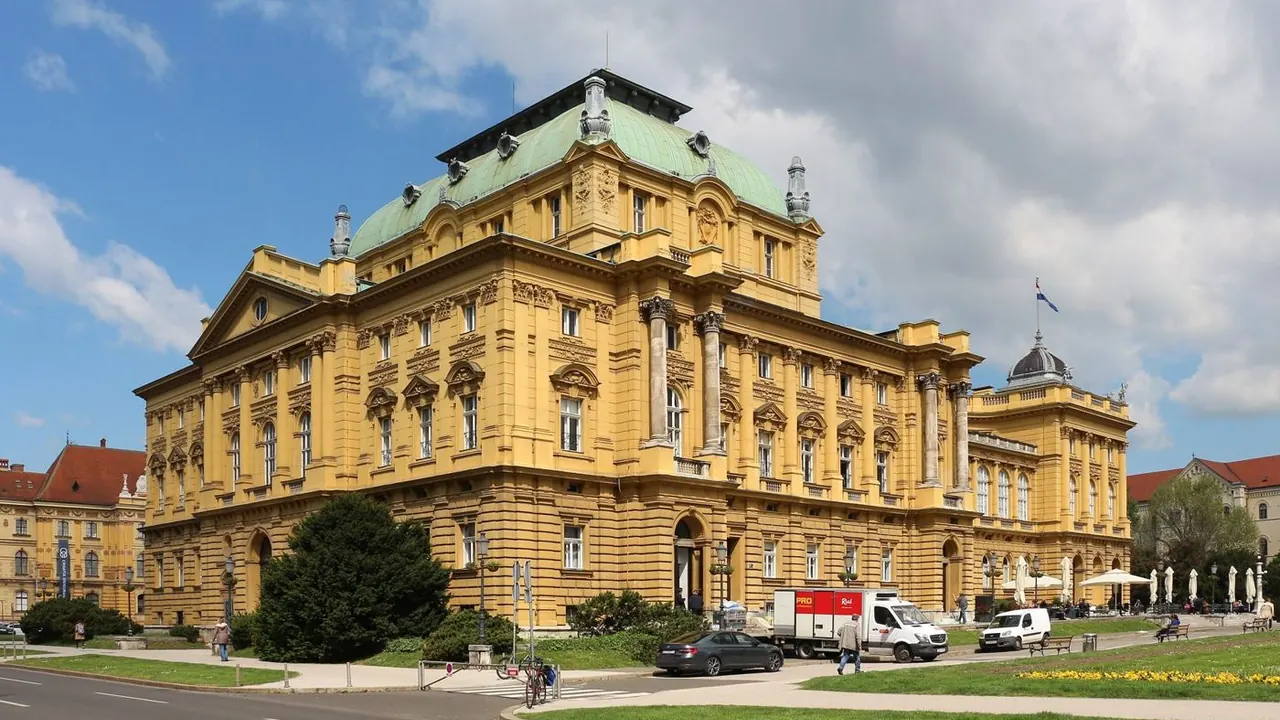
The Croatian National Theatre
- Getting around70
- Nature & outdoors62
- Day trips60
Photo: Bernard Gagnon, CC BY-SA 4.0, cropped
Match
50
Every category weighted equally
- Beach & sun45
- Culture & arts54
- Food & nightlife51
- Family trip50
- Outdoors52
- Relax & unwind46
- Shopping & style51
- On a budget51
Zagreb in twelve categories
Our verdict on each, scored 0 to 100 against the same fixed benchmark cities, so a score means the same thing on every page.
Beaches & swimming. Scores 10 out of 100.
Food & drink. Scores 55 out of 100.
Culture & sights. Scores 56 out of 100.
Nightlife. Scores 47 out of 100.
Nature & outdoors. Scores 62 out of 100.
Day trips. Scores 60 out of 100.
Good for families. Scores 52 out of 100.
Getting around. Scores 70 out of 100.
Shopping & style. Scores 40 out of 100.
Affordability. Scores 60 out of 100.
Live music & performing arts. Scores 52 out of 100.
Wellness & relaxation. Scores 33 out of 100.
Zagreb category by category
Beaches & swimming
10Zagreb is an inland city, and the Adriatic is about two hours' drive away over the hills, so a beach day means a long day out or a separate stay on the coast. In summer, locals swim at Lake Jarun in the south-west of the city, a former gravel pit with pebbly shores, lifeguarded areas and rowing lanes, and at the smaller Bundek lake across the Sava. Both are fine for cooling off on a hot afternoon. Neither is a reason to come, and visitors who want sea and sand usually add a coastal stop to the trip.
Food & drink
55Eating in Zagreb is hearty continental cooking, closer to Central Europe than to the coast. Look for štrukli, a baked cheese pastry, turkey with mlinci flatbread, Zagorje sausages and fresh cheese with cream. Dolac market, under red umbrellas just above the main square, is the heart of it, with farmers selling cheese, vegetables and flowers each morning. Seafood comes up from the Adriatic but is a coastal thing at heart.
The real local ritual is coffee. Café terraces fill the Lower Town streets, and the Saturday morning promenade around Flower Square is a social occasion of its own. Wine from the Plešivica hills and the Zagorje and Slavonia regions is good, and the craft beer is decent. The range of cooking is modest, with fine dining limited to a small number of serious kitchens.
Culture & sights
56Zagreb's heritage is in two parts. The Upper Town, the medieval Gradec and Kaptol on their hill, has St Mark's Church with its tiled coat-of-arms roof, the Stone Gate shrine, the Lotrščak Tower and the neo-Gothic cathedral with its twin spires. Below it, the Lower Town is a grid of Austro-Hungarian blocks laid around the Green Horseshoe, a chain of parks and squares lined with theatres, galleries and the Art Pavilion.
The museums are good rather than famous: the Mimara collection, the Strossmayer Gallery of old masters, the Museum of Contemporary Art, the Croatian Museum of Naive Art and the quirky Museum of Broken Relationships. Mirogoj, an arcaded cemetery with ivy-covered domes, is one of the most beautiful sights in the city. Two unhurried days cover most of it.
Nightlife
47Going out in Zagreb starts at the café-bars, which turn from coffee to drinks as the evening goes on. Tkalčićeva, the old street running down below the Upper Town, is the main strip, lined with terraces that are full on warm nights. The streets around Flower Square and the Lower Town courtyards hold smaller cocktail and craft beer bars. In summer the crowd moves out to the lakeside clubs at Jarun, and a student population keeps alternative venues going through the year. It is relaxed and friendly rather than wild, and most weeknights wind down well before dawn.
Nature & outdoors
62Medvednica, a forested mountain range rising to about 1,030m at Sljeme, starts at the northern edge of the city. A tram and short bus ride reach its trailheads, and there are marked hiking paths through beech woods, mountain huts and, on snowy winters, a small ski slope. Maksimir is a large old landscaped park with lakes and oak woods, and the Sava embankments are good for cycling and running.
Further out, the Samobor and Žumberak hills are easy for walking and cycling, and the lakes and waterfalls of Plitvice are about two hours' drive south, a long but popular day. The landscape is gentle and green. There is no coast and no high mountain country within easy reach.
Day trips
60The best of what lies around Zagreb is to the north, in the hills of Zagorje: Trakošćan castle above its lake, the baroque pilgrimage church at Marija Bistrica, the village museum at Kumrovec and a scattering of manor houses. Varaždin, a former capital with a baroque centre and a moated castle, is about an hour and a quarter away. Samobor, a little town known for its cream cake and old square, is half an hour west.
To the south-west, Karlovac has its star-shaped fortress and rivers, and the Plešivica wine roads make a pleasant afternoon. Ljubljana is a little over two hours by car or train, so it works as a long day. There is a good range here, but no single destination of the first rank.
Good for families
52Zagreb is an easy, safe city to walk with children, with flat Lower Town streets, plenty of parks and trams that take pushchairs. The zoo sits inside Maksimir park, the Technical Museum Nikola Tesla has old trams, planes and a mock mine, and the short funicular up to the Upper Town is fun for younger children. In summer, Jarun and Bundek give a place to swim and play outdoors, and Medvednica works for gentle family walks. There is no theme park or large aquarium, so it suits a few relaxed days better than a trip built around children's attractions.
Getting around
70The centre is compact. The main square, the Upper Town, Dolac market and the Lower Town galleries are all within a short walk, and most of the Lower Town is flat. Blue trams cover the city in a dense web, and the funicular, one of the shortest in the world, saves the climb to the Upper Town. Buses connect the trams to Medvednica and the airport. The Upper Town's cobbles are steep in places, and trams slow down in rush-hour traffic. A car only matters for the Zagorje castles and Plitvice.
Shopping & style
40Shopping in Zagreb is everyday, not a draw. Ilica, the long main street running west from the main square, and the streets around it have international chains, local fashion and a few small design shops, with large malls on the edge of town. Local things to take home are the red painted licitar honey-dough hearts, neckties (the cravat comes from Croatia), lace, wine, olive oil and truffle products. Dolac market and its covered hall are good for food to take home, and a flea market runs at Britanski trg on Sunday mornings. There is little luxury shopping.
Affordability
60Zagreb is one of the more affordable capitals in the European Union, and noticeably cheaper than the Croatian coast in summer. Central apartments and small hotels are reasonably priced, and so are tram fares and museum entry. Market food, bakery snacks and simple local dishes are easy on the budget, and a coffee on a terrace is part of daily life rather than a treat. Upmarket restaurants, cocktails and the best hotels cost about what they would elsewhere in Western Europe, so a comfortable stay is good value without being a budget trip.
Live music & performing arts
52Zagreb has a proper season of its own. The ochre Croatian National Theatre, standing on its square in the Lower Town, stages opera, ballet and drama, while the Vatroslav Lisinski Concert Hall is home to the Zagreb Philharmonic and hosts visiting orchestras. Chamber ensembles such as the Zagreb Soloists play in churches and halls, and the Komedija theatre does operetta and musicals in Croatian. Smaller clubs offer jazz and rock, and summer brings open-air concerts in Upper Town courtyards and a large rock festival at Jarun. Much of the spoken theatre is in Croatian, and the city has little of international fame.
Wellness & relaxation
33There is no bathing tradition in the city itself, and spa options in town are mostly hotel wellness floors. The thermal springs are in the hills to the north. Tuheljske, Krapinske and Stubičke Toplice are spa resorts in Zagorje within about an hour, with warm mineral pools that locals use for a weekend soak. What Zagreb does offer is a slow pace: long café mornings, quiet Upper Town lanes and shaded parks make it a calm city to spend a few days in.
When should you go?
Pick a month to see what it is like. The climate figures are measured averages, not a forecast.
Zagreb in July
Daytime high, °C
Rainfall in the month, mm
The whole year
Shaded against this city’s own year: the deepest cell is its best month for that figure and the palest its weakest.
Temperature and rainfall are climate normals, averaged over the years shown. Zagreb: 1991-2020 normals, Zagreb / Gric (0.6 km from centre).
Before you go
| Measure | Zagreb |
|---|---|
| Official language | Croatian |
| Currency | Euro (EUR) |
| Sockets | CF230 V, 50 Hz |
| Driving side | Right |
| Time zone | UTC+1, UTC+2 in summer |
| Emergency number | 112 |
| Elevation | 127 m |
| Main airport | Zagreb Franjo Tuđman International Airport (ZAG)11 km from centre64 non-stop destinations |
| Public holidays this year | 14 days |
By the numbers
| Measure | Zagreb |
|---|---|
| City population | 767,131 |
| Museums within 10 km | 27 |
| UNESCO World Heritage sites within 50 km | 0 |
Compare Zagreb with
Every comparison with a written verdict behind it.