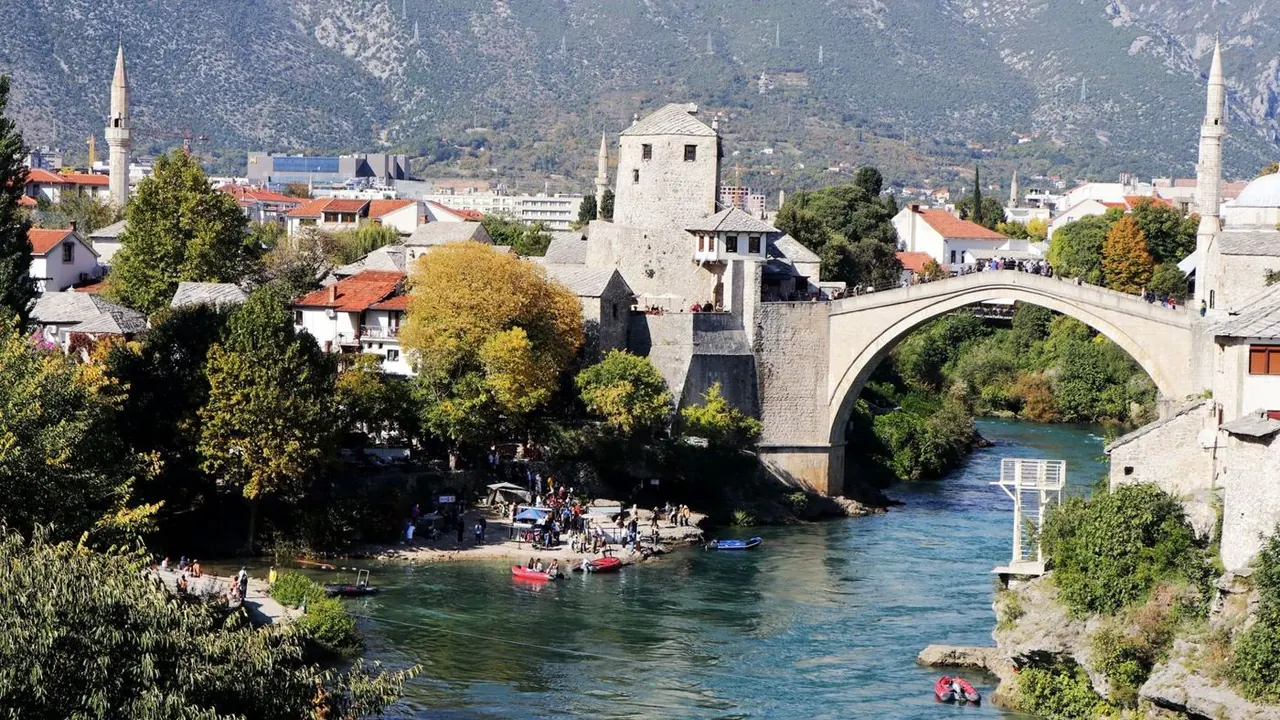
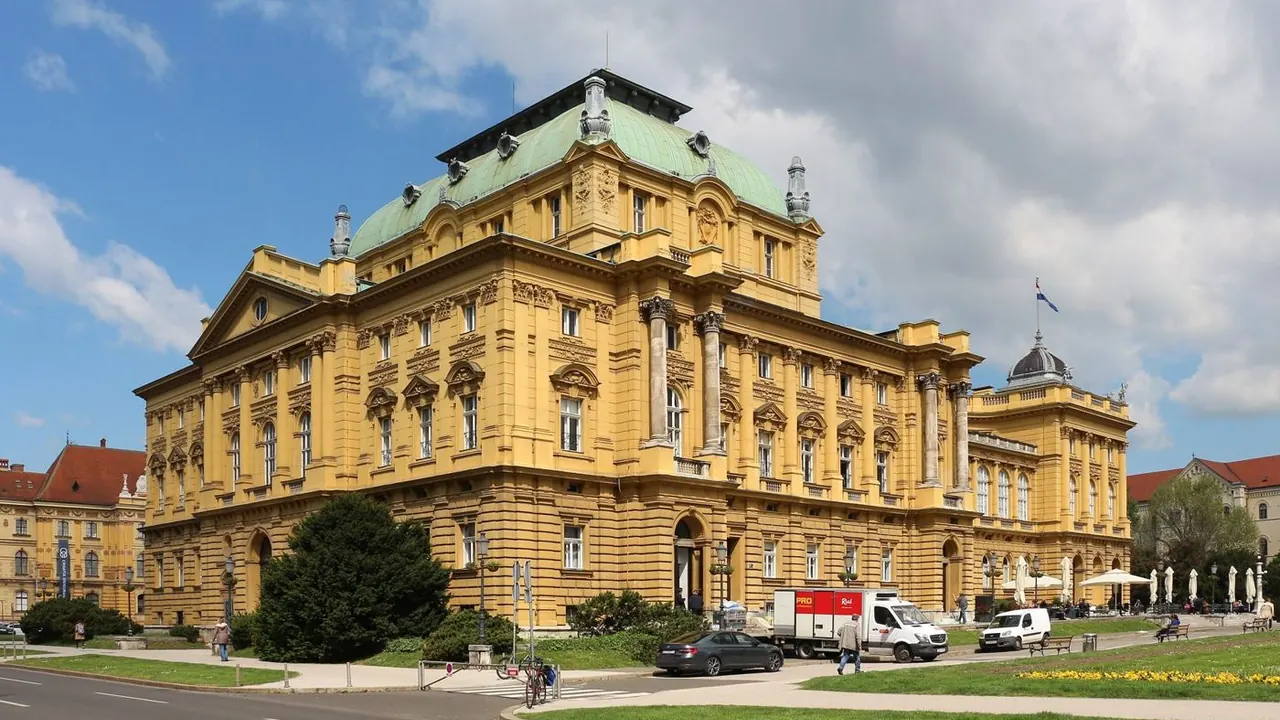
Photos: Mostar by Alan Wang, Pexels License; Zagreb by Bernard Gagnon, CC BY-SA 4.0, cropped.
Mostar or Zagreb?
Our verdict in twelve categories, each scored against the same fixed benchmark cities, and the climate month by month, so you can choose for your trip.
Choose Mostar for
- prices
- beaches
- nature and the outdoors
Mostar suits a traveller who wants a short, inexpensive stop built around one extraordinary sight: the Ottoman bridge and the old town around it, with wild karst country, river canyons and the Kravica falls close by. It works best as two or three days on a wider Balkan route, ideally with a car. It also suits anyone happy to spend the evening on a terrace rather than out late.
Choose Zagreb for
- live music and the arts
- getting around
- nightlife
Choose Zagreb for a fuller city stay. It has an easy tram network, a real season of opera, ballet and concerts, livelier bars along Tkalčićeva, and a market and café culture worth lingering over. Families will find it gentler, with flat streets, parks and a zoo. It costs more than Mostar without ever feeling expensive.
Scoreboard
Twelve categories on one fixed scale from 0 to 100. The shaded stretch is the gap between the two.
Your match
Pick a travel style or drag the sliders, and both match scores follow your weighting.
Wins on prices and beaches with your weighting.
Wins on live music and the arts and getting around with your weighting.
What matters to you?
Category by category
What the scores mean for a trip.
Beaches & swimming
Neither city has a beach, but Mostar is closer to water worth a day out. The pool beneath the Kravica waterfalls is about 40km south, and the Adriatic at Neum is a little over an hour away. The cold Neretva also gives a bracing plunge from the rocks below the old town.
From Zagreb the coast is about two hours over the hills, so locals cool off at Jarun and Bundek instead. These are pleasant lakes for a hot afternoon, not a reason to come.
Food & drink
Zagreb gives you more to eat your way through. Dolac market fills each morning with farmers' cheese and vegetables, and there is štrukli, turkey with mlinci, Zagorje sausages, wine from Plešivica and decent craft beer. A handful of serious kitchens lift the top end.
Mostar's table is narrower but full of character: charcoal-grilled ćevapi in somun, burek and slow-cooked stuffed vegetables, plus Herzegovina's Žilavka and Blatina. Bosnian coffee from a copper džezva is the ritual to slow down for. Beyond that the choice runs out quickly, and the riverside terraces trade more on the view than the cooking.
Culture & sights
The two are about level, but they offer different kinds of sightseeing. Mostar is one concentrated scene: the sixteenth-century Stari Most, rebuilt after 1993, the divers on its crown, the Kujundžiluk bazaar, the Koski Mehmed Pasha minaret, and Ottoman houses with carpeted rooms. The war-scarred façades along the old front line add a sobering layer.
Zagreb spreads its heritage across the medieval Upper Town and the Austro-Hungarian Lower Town, and it has more to do indoors. There are museums from the Strossmayer old masters to Naive Art and the Museum of Broken Relationships, and Mirogoj's arcaded cemetery is among its loveliest corners.
Nightlife
Zagreb has a real evening out. Café-bars on Tkalčićeva turn from coffee to drinks, smaller cocktail and craft beer bars hide around Flower Square and in Lower Town courtyards, and in summer the crowd heads to the lakeside clubs at Jarun. It stays friendly rather than wild.
In Mostar the evening is mostly dinner and a drink facing the floodlit bridge. Once the day visitors leave, the old town falls quiet, with only a few bars and student clubs busy on weekends.
Nature & outdoors
Both have good outdoors within reach, but the landscapes could hardly be more different. Mostar's is harsh and dramatic: bare limestone mountains, the jagged Prenj range, rafting and kayaking in the Neretva canyons, the Buna spring bursting from the cliff at Blagaj, and birdlife at Hutovo Blato. The summer heat confines serious walking to spring and autumn.
Zagreb's countryside is green and gentle. Medvednica's beech woods and mountain huts are a tram and bus ride from the centre, Maksimir and the Sava embankments suit a run or a ride, and Plitvice's lakes make a long day south.
Day trips
There is as much to see around one as the other, but the trips differ in kind. Around Mostar you visit small Ottoman and medieval places: the dervish tekke at Blagaj, hillside Počitelj, the stećci tombstones at Stolac, and Tito's bunker at Konjic. Most need a car or a tour, though the train ride to Sarajevo through the Neretva gorge is a highlight in itself.
Zagreb's excursions lean towards castles and baroque towns, such as Trakošćan above its lake, moated Varaždin and little Samobor. Ljubljana is in range for a long day.
Good for families
Zagreb is the easier city with children. The Lower Town is flat, the trams take pushchairs, and there is the zoo in Maksimir, the old trams and mock mine at the Tesla technical museum, and the funicular ride up the hill. Summer adds swimming at Jarun.
Mostar fills a day or two: the bridge divers, climbing a minaret, and a swim at Kravica that children remember. After that, the steep, polished lanes and the valley heat begin to tell, though restaurants welcome children warmly.
Getting around
Zagreb is simpler to move around. A dense web of blue trams covers the city, the funicular saves the climb to the Upper Town, and buses run on to Medvednica and the airport. You only need a car for the Zagorje castles or Plitvice.
Mostar's sights all lie within a short riverside walk, but its cobbles are slippery, and once you leave the centre, the city buses are of little use to visitors. Blagaj, Počitelj and Kravica mean a hire car, a taxi or a tour.
Shopping & style
Neither city is a shopping destination, but Zagreb offers a broader everyday mix. Ilica has chains and local fashion, a few design shops are scattered nearby, and there are distinctly Croatian things to take home: licitar honey hearts, cravats and lace. The Sunday flea market at Britanski trg is worth a browse.
Mostar's shopping is essentially one street, the Kujundžiluk. Hand-hammered copper coffee sets and kilims are the prize, if you find a craftsman at work among the imported souvenirs.
Affordability
Mostar is clearly the cheaper stay. Family guesthouses, grilled meat, local wine and coffee all cost little, and only bridge-view terraces and midsummer old-town rooms push prices up.
Zagreb is reasonable for an EU capital, especially compared with the Croatian coast. Trams, museums and market food are kind to a budget, but smart restaurants, cocktails and good hotels cost what they would further west.
Live music & performing arts
Zagreb has a real cultural calendar. The Croatian National Theatre stages opera, ballet and drama, the Lisinski hall hosts the Zagreb Philharmonic and visiting orchestras, and the Zagreb Soloists play in churches. Summer adds concerts in Upper Town courtyards.
Mostar has a national theatre and a youth theatre, but both perform mainly in local languages. Apart from summer open-air events, an evening of music usually means a band in a café bar.
Wellness & relaxation
Mostar has no bathing culture. The Ottoman hammam near the bridge survives as a historic building rather than a working bath, and spa treatments are limited to a few hotels. The rest you get here comes from the river itself, early in the morning and again in the evening, when the coach groups have left.
Zagreb offers more for a restful stay, though the city itself has little beyond hotel wellness floors. The difference lies in the Zagorje hills to the north, where spa resorts such as Tuheljske, Krapinske and Stubičke Toplice are within about an hour. That makes a day in hot spring water an easy addition, which Mostar cannot match. Back in town, long café mornings and shady parks keep the pace slow.
When should you go?
Pick your month. The climate figures are measured averages, not a forecast.
Mostar in July
Zagreb in July
Daytime high, °C
Rainfall in the month, mm
Temperature and rainfall are climate normals, averaged over the years shown. Mostar: 1991-2020 normals, Mostar (0.9 km from centre). Zagreb: 1991-2020 normals, Zagreb / Gric (0.6 km from centre).
Mostar sits in a hot southern basin, and its weather runs to extremes. July and August reach 33°C, dry and very sunny but too fierce for long walks on the stone lanes, though ideal for a swim at Kravica. May and early June are the best time for sightseeing, warm at around 25°C, with the spring rain easing off. From September the rain returns hard and keeps building through a mild, damp winter that peaks near 198mm in December, so autumn there is warm but often wet.
Zagreb is cooler and more even through the year. Summer peaks around 29°C, which is comfortable for the streets and warm enough for a dip at Jarun, and good walking weather runs from late April into early October. Winter is colder, about 5°C in January, and duller than in Mostar, but it is also Zagreb's driest season. The wettest months run from early summer through autumn, with September the wettest of all, so a light raincoat earns its place then.
Which traveller are you?
On a tight budget, Mostar is the clear pick. Its main attraction, the bridge and old town, costs nothing to wander, and daily living stays cheap enough that a few days barely dent your funds. Zagreb is fair value but suits a comfortable spend.
For a food and nightlife trip, Zagreb is the better choice. It has the morning crowd at Dolac market, štrukli and Zagorje cooking, and evenings that move from Tkalčićeva terraces to cocktail bars and summer clubs at Jarun. Mostar goes quiet soon after dinner.
On a family trip with children, Zagreb is far easier. It is safe, calm and simple to get around without a car, and it has enough to keep children busy for several days at their own pace. Mostar fills a day or two, and its summers are hard on small children.
Before you go
| Measure | Mostar | Zagreb |
|---|---|---|
| Official language | Croatian, Serbian, Bosnian | Croatian |
| Currency | Convertible Mark (BAM) | Euro (EUR) |
| Sockets | CF230 V, 50 Hz | CF230 V, 50 Hz |
| Driving side | Right | Right |
| Time zone | UTC+1, UTC+2 in summer | UTC+1, UTC+2 in summer |
| Emergency number | 112 | 112 |
| Elevation | 60 m | 127 m |
| Main airport | Sarajevo International Airport (SJJ)68 km from centre38 non-stop destinations | Zagreb Franjo Tuđman International Airport (ZAG)11 km from centre64 non-stop destinations |
| Public holidays this year | 8 days | 14 days |
By the numbers
| Measure | Mostar | Zagreb |
|---|---|---|
| City population | 105,448 | 767,131 |
| People per km² | 90 | - |
| Museums within 10 km | 3 | 27 |
| UNESCO World Heritage sites within 50 km | 1 | 0 |
Where else could you go?
Every comparison below shares a destination with this one, so you can follow Mostar or Zagreb somewhere new.