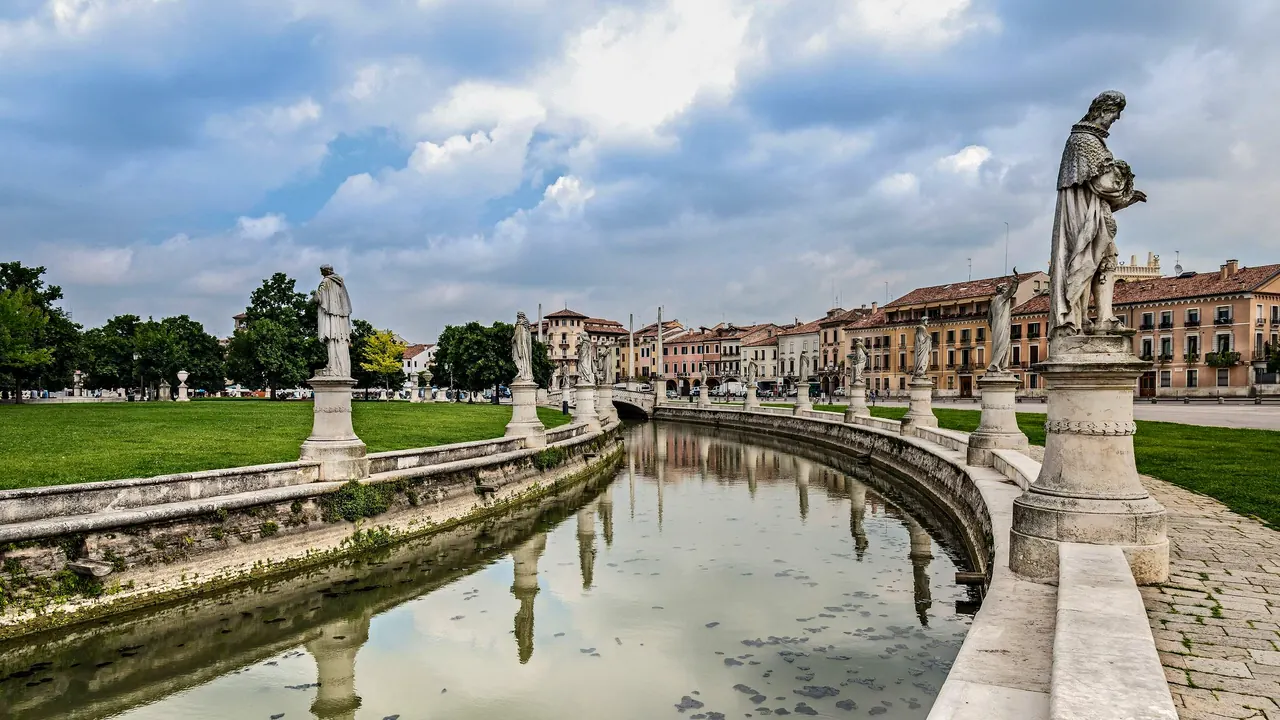
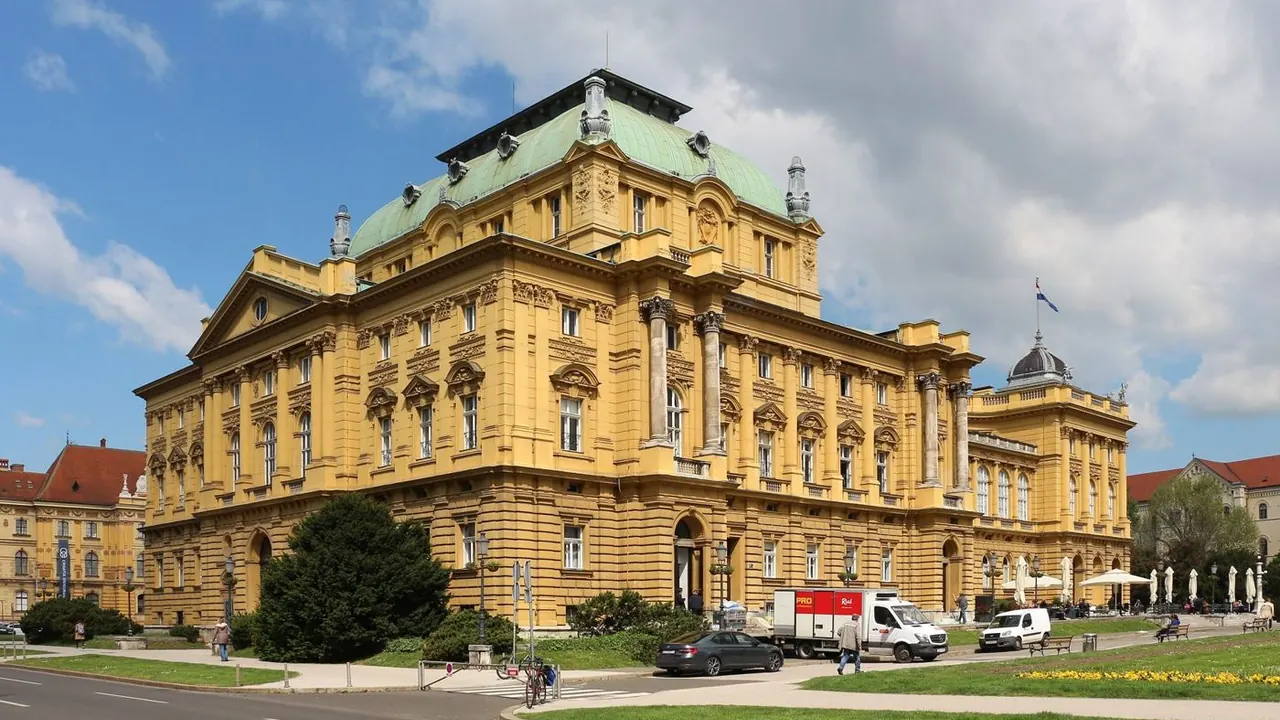
Photos: Padua by Didier Descouens, CC BY-SA 4.0, cropped; Zagreb by Bernard Gagnon, CC BY-SA 4.0, cropped.
Padua or Zagreb?
Our verdict in twelve categories, each scored against the same fixed benchmark cities, and the climate month by month, so you can choose for your trip.
Choose Padua for
- wellness
- day trips
- beaches
Padua is the choice for travellers who come for art and want a base for the whole region. Giotto's frescoes in the Scrovegni Chapel and the Basilica of Saint Anthony give it weightier sights than Zagreb, and Venice, Vicenza and Verona are close enough by train for a different trip each day. The thermal pools of Abano are a short ride away for a soak after sightseeing.
Choose Zagreb for
- live music and the arts
- families
- nature and the outdoors
Zagreb suits travellers who would rather settle into one capital than use it as a base. Its evenings are richer, with opera and ballet at the National Theatre and a philharmonic season. The forests of Medvednica start at the city's edge, and the zoo, the technical museum and the summer lakes give children more to do. It also runs a little easier on the budget.
Scoreboard
Twelve categories on one fixed scale from 0 to 100. The shaded stretch is the gap between the two.
Your match
Pick a travel style or drag the sliders, and both match scores follow your weighting.
Wins on wellness and day trips with your weighting.
Wins on live music and the arts and families with your weighting.
What matters to you?
Category by category
What the scores mean for a trip.
Beaches & swimming
Neither city is on the coast, but Padua is much nearer the sea. The beaches at Sottomarina and the Lido of Venice are about an hour away by car or by train and boat. The Adriatic there is shallow, calm and warm in high summer, good for paddling children, though the long rows of umbrellas are practical rather than pretty.
From Zagreb the coast is about two hours over the hills, which makes it a separate stay rather than a day out. In the city itself, swimming means the pebbly lakes at Jarun and Bundek. They are fine for cooling off, but they are not the sea.
Food & drink
Padua eats a little better, thanks to Venetian home cooking such as bigoli with duck sauce, baccalà and spring risotto. Its twin markets around the Palazzo della Ragione are the place to shop, and the early-evening spritz with small bites, taken standing in the squares, is a daily ritual. Wines from the Euganean Hills are grown just outside town.
Zagreb's cooking is heavier and more Central European: štrukli, turkey with mlinci and Zagorje sausages, with Dolac market at its centre. Its ritual is coffee rather than the aperitivo. Neither city offers much fine dining or a wide choice of foreign food.
Culture & sights
Padua has the more important art. Giotto's Scrovegni Chapel changed European painting, and around it are a UNESCO-listed group of fourteenth-century fresco cycles, the pilgrimage basilica with Donatello's bronzes, the university's anatomical theatre and the oldest botanical garden still in its original place.
Zagreb's appeal lies more in its townscape than in famous works. The medieval Upper Town, with St Mark's tiled roof and the Stone Gate, sits above the Austro-Hungarian grid of the Green Horseshoe. Its museums are solid rather than famous, and Mirogoj cemetery is a quiet highlight. Both cities can be seen in a couple of days.
Nightlife
Evenings are much alike in both cities: sociable and student-driven, without much clubbing. In Padua people stand with a spritz in Piazza delle Erbe and Piazza dei Signori, then move to wine bars around the old ghetto. Zagreb's café-bars along Tkalčićeva switch from coffee to cocktails and craft beer as the night goes on.
The real difference is summer. Padua goes quiet when the university breaks up. Zagreb's crowd moves out to the lakeside clubs at Jarun, so a warm July night has more going on there.
Nature & outdoors
Zagreb has the outdoors closer to hand. The beech forests of Medvednica rise to about 1,030m right at the northern edge of the city, and a tram and short bus ride reach trails and mountain huts. Maksimir's oak woods are inside town, and the lakes of Plitvice make a long day trip.
Padua stands on a flat plain, so you have to leave town for scenery. The Euganean Hills, about 15km away, have vineyard trails and roads good for cycling, and the Brenta towpaths make easy rides. Real mountain walking means driving to the pre-Alps.
Day trips
For day trips Padua is far ahead, and its position is the main reason many visitors stay there. Venice is under half an hour by train, Vicenza's Palladian buildings a quarter of an hour, and Verona, Treviso, Bologna and Ferrara about an hour or less. Closer still are the Brenta villas and the walled towns below the Euganean Hills.
Zagreb's outings are pleasant but less famous. To the north are the castles and pilgrimage churches of Zagorje and baroque Varaždin, with Samobor and Karlovac to the west and south-west. Ljubljana is a long day, and nothing nearby compares with Venice.
Good for families
Zagreb gives children more to do. The zoo inside Maksimir park, the Tesla technical museum with its trams and mock mine, the short funicular ride and summer swimming at Jarun and Bundek fill several easy days, and the trams take pushchairs.
Padua is safe, flat and mostly free of traffic, and Prato della Valle is a good place for children to run. Beyond that, the sights are mostly frescoes, so families tend to drive to Gardaland, Lake Garda or the Adriatic.
Getting around
Both centres are compact and easy, but they work differently. Padua is flat and shaded by arcades, with everything within about a 20-minute walk, and people get around on foot or by bike. Its main asset is the station, with fast lines to Venice, Verona and Bologna, so a car is rarely needed.
Zagreb relies on a dense network of blue trams, and the funicular saves the climb to the Upper Town. The Upper Town's cobbles are steep in places, and trams slow down in rush hour.
Shopping & style
Neither city is a shopping destination, and both are best for food and small local things. Padua's arcades have Italian shoe and fashion shops and university bookshops, and a large antiques market fills Prato della Valle one Sunday a month.
Zagreb's Ilica is mostly chain stores. Its souvenirs are more distinctive: red licitar honey-dough hearts, lace and the necktie, which Croatia claims as its own invention. A flea market runs at Britanski trg on Sunday mornings.
Affordability
Zagreb is the cheaper of the two. Trams, museum entry, bakery snacks and terrace coffee all cost little, but upmarket meals and the best hotels cost what they would in Western Europe.
Padua is moderately priced for northern Italy. Its real value is as a cheaper place to sleep than Venice. Market produce and a standing spritz are cheap, but the Scrovegni Chapel and the museums charge normal fees, and rooms cost more during trade fairs and graduation season.
Live music & performing arts
Zagreb has the fuller cultural calendar. The ochre Croatian National Theatre puts on opera, ballet and drama, and the Lisinski Concert Hall is home to the Zagreb Philharmonic. The Zagreb Soloists play in churches, and summer brings concerts in Upper Town courtyards. Spoken theatre is mostly in Croatian.
Padua's programme is smaller: plays and some opera at Teatro Verdi, and chamber concerts in the Sala dei Giganti and the basilica. For major opera, Paduans travel to the Fenice in Venice or the Arena in Verona.
Wellness & relaxation
Padua is far ahead on spas. Abano and Montegrotto Terme, about 12km away, sit on hot springs that rise at up to 87°C, and their mud has been used since Roman times. Dozens of spa hotels open their pools to day visitors, so you can visit after a morning of sightseeing.
Zagreb's thermal resorts are in Zagorje, about an hour north, and in town there are only hotel wellness floors. Its calm comes from long café mornings and quiet Upper Town lanes rather than from the baths.
When should you go?
Pick your month. The climate figures are measured averages, not a forecast.
Padua in July
Zagreb in July
Daytime high, °C
Rainfall in the month, mm
Where the figures come from
Padua's temperatures are measured 35 km from the centre, at Treviso / Istrana.
Padua has no rain gauge within 25 km of the centre, so its rainfall comes from a gridded climate dataset read at the city rather than from a gauge further away.
Padua's sunshine is measured 36 km from the centre, at Treviso / S. Angelo.
Temperature and rainfall are climate normals, averaged over the years shown. Padua: 1991-2020 normals, Treviso / Istrana (35.4 km from centre). Zagreb: 1991-2020 (sunshine 1981-2010, rainfall 1981-2010) normals, Zagreb / Gric (0.6 km from centre).
The two cities follow a similar inland year, but Padua is a little warmer at both ends. Spring from April to early June and September into October are the best months for walking either city. In July and August Padua reaches about 31°C, and humid days on the plain make sightseeing tiring. Zagreb stays slightly cooler, but June and August are its wettest months at over 100mm, mostly as summer storms. For the beach, Padua's nearby Adriatic is warm from late June to September and reaches 26°C in August.
Winter favours Padua slightly. Zagreb's January high is around 5°C and its December days are very dull, with about 49 hours of sunshine. Padua is a few degrees milder in winter, but fog often settles over the plain, and November is its wettest month. Padua's sunniest stretch, July and August, is also when it is hottest. Zagreb's sunny months come with more frequent rain.
Which traveller are you?
On a relaxing and wellness trip, Padua is the clear pick. Abano and Montegrotto, one of Europe's largest thermal districts, lie just outside town with hot mineral pools and mud treatments. Zagreb's spas are an hour away in Zagorje.
On a family trip with children, Zagreb has more to offer. There is a zoo in Maksimir park, the Tesla technical museum has trams and planes, the funicular is fun, and there are lakes to swim in during summer. In Padua, children mostly face frescoes and churches.
For a culture and arts trip, Padua has the greater sights. These include Giotto's chapel, a UNESCO-listed group of fresco cycles and the oldest anatomical theatre in the world, with Venice and Vicenza close by. Zagreb is stronger only for evenings at the opera or ballet.
Before you go
| Measure | Padua | Zagreb |
|---|---|---|
| Official language | Italian | Croatian |
| Currency | Euro (EUR) | Euro (EUR) |
| Sockets | CFL230 V, 50 Hz | CF230 V, 50 Hz |
| Driving side | Right | Right |
| Time zone | UTC+1, UTC+2 in summer | UTC+1, UTC+2 in summer |
| Emergency number | 112 | 112 |
| Elevation | 12 m | 127 m |
| Main airport | Venice Marco Polo Airport (VCE)39 km from centre103 non-stop destinations | Zagreb Franjo Tuđman International Airport (ZAG)11 km from centre66 non-stop destinations |
| Public holidays this year | 13 days | 14 days |
By the numbers
| Measure | Padua | Zagreb |
|---|---|---|
| City population | 206,496 | 767,131 |
| People per km² | 2,220 | - |
| Museums within 10 km | 29 | 27 |
| UNESCO World Heritage sites within 50 km | 5 | 0 |
| Swim season, months above 21 °C | 4 months | - |
Where else could you go?
Every comparison below shares a destination with this one, so you can follow Padua or Zagreb somewhere new.