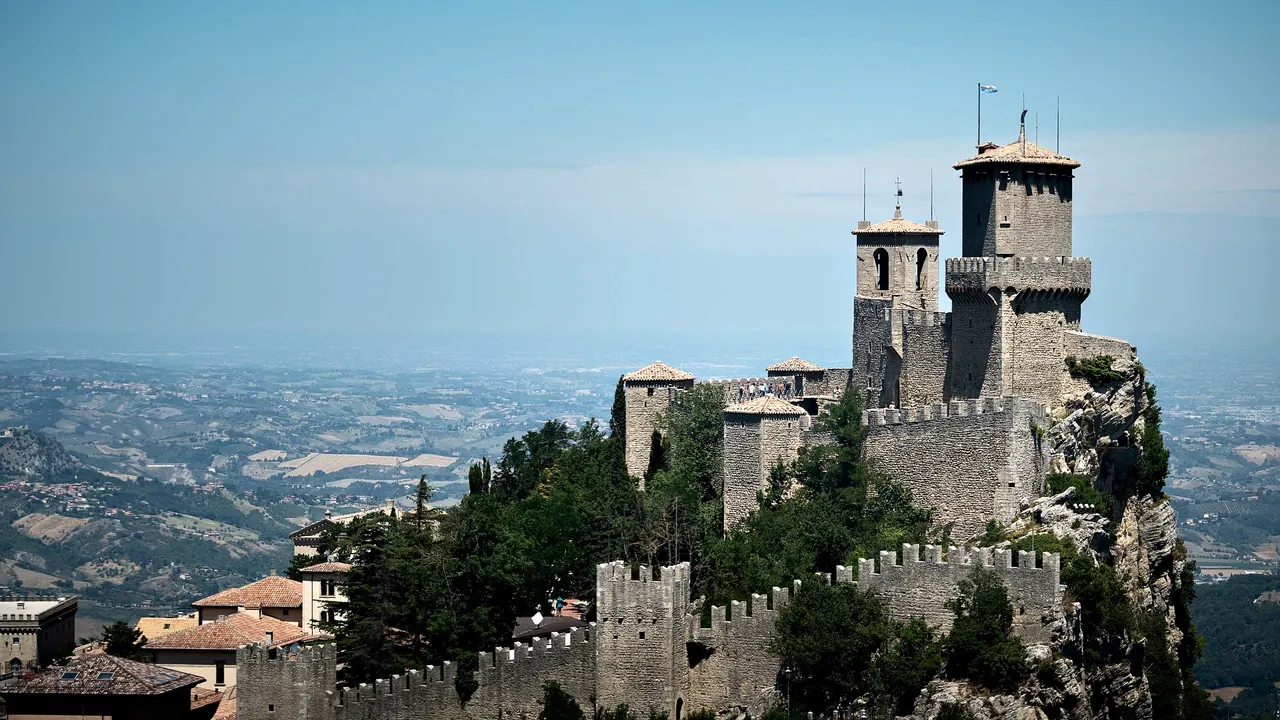
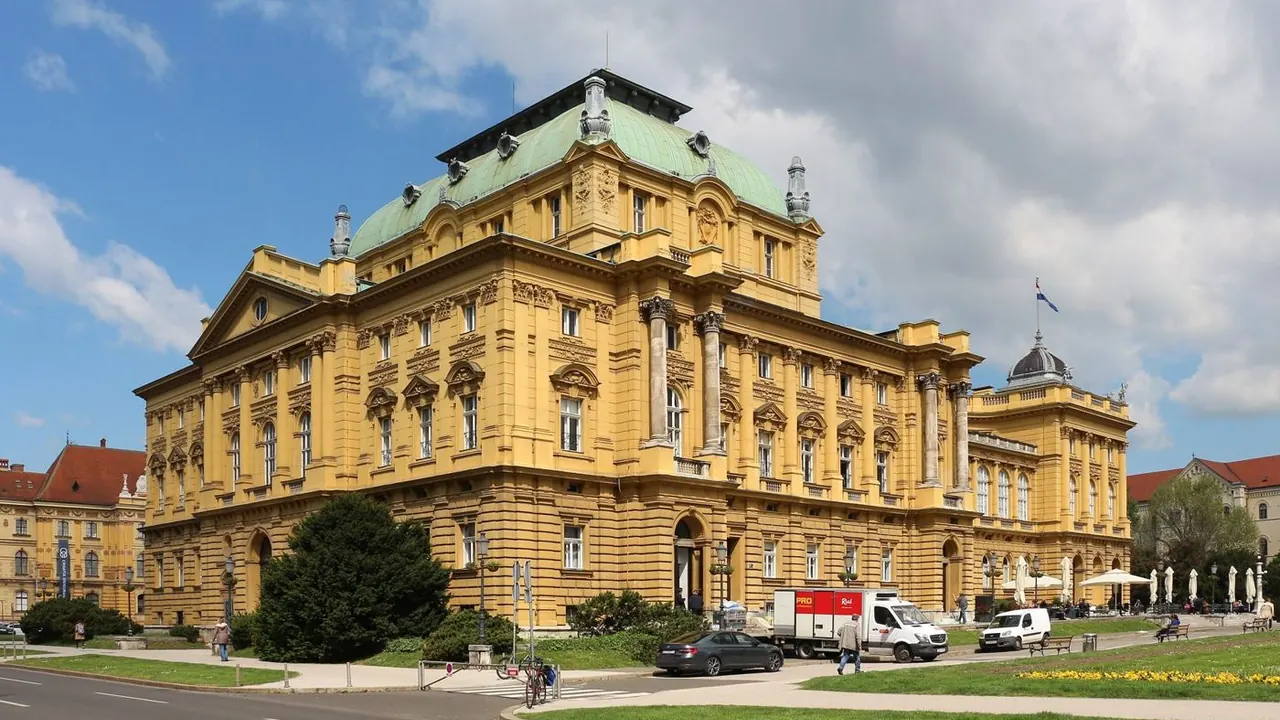
Photos: San Marino by Tibor Szabo, Pexels License; Zagreb by Bernard Gagnon, CC BY-SA 4.0, cropped.
San Marino or Zagreb?
Our verdict in twelve categories, each scored against the same fixed benchmark cities, and the climate month by month, so you can choose for your trip.
Choose San Marino for
- beaches
- day trips
San Marino suits a traveller who wants a base rather than a city. The walled summit of Monte Titano is a striking place to wake up and a quiet one after dark, and from it you can reach Urbino, San Leo, Ravenna and the sandy Romagna shore. Choose it for a touring trip with a car, mixing hill towns and fortresses with afternoons at the beach, and accept that the evenings are for a glass of wine on the walls rather than a night out.
Choose Zagreb for
- live music and the arts
- nightlife
- getting around
Zagreb is the better choice if you want a proper small capital to live in for a few days. It has a walkable centre threaded with trams, a market and café life that sets the rhythm of the day, opera and concerts in the evening, and bars along Tkalčićeva that stay busy on warm nights. It also costs less and puts forest trails at the end of a tram line. The one thing it cannot give you is the sea.
Scoreboard
Twelve categories on one fixed scale from 0 to 100. The shaded stretch is the gap between the two.
Your match
Pick a travel style or drag the sliders, and both match scores follow your weighting.
Wins on beaches and day trips with your weighting.
Wins on live music and the arts and nightlife with your weighting.
What matters to you?
Category by category
What the scores mean for a trip.
Beaches & swimming
San Marino has the better of this, even though it sits on a mountain. The long sandy Riviera at Rimini and Riccione is about half an hour away, with warm, shallow water in high summer, rows of umbrellas and beach clubs. It works well as an afternoon out from July into September.
Zagreb's sea is two hours away over the hills, so its summer swimming happens in Lake Jarun and Bundek, two former gravel pits with pebbly shores. They are fine for cooling off but no substitute for the coast.
Food & drink
Zagreb eats better, and more of its food culture is part of everyday city life. Mornings at Dolac market under its red umbrellas, baked štrukli, turkey with mlinci and the long Saturday coffee around Flower Square give a visitor a real sense of the place, backed by Plešivica and Slavonian wines.
San Marino's Romagna cooking, with passatelli, hand-rolled pasta, piadina and the Tre Monti wafer cake, is honest and appealing. The trouble is that the summit terraces sell the view more than the meal, and the better trattorias are down in Borgo Maggiore or across the Italian border.
Culture & sights
Zagreb has more to see and more time to spend on it. The medieval Upper Town, with St Mark's tiled roof and the twin-spired cathedral, sits above the Austro-Hungarian Lower Town and its Green Horseshoe of parks and galleries. Add museums from the Mimara to the Museum of Broken Relationships, and the arcades of Mirogoj, and you have two unhurried days.
San Marino is a single, dramatic sight: three towers on a cliff edge, a walk linking Guaita and Cesta, and the Palazzo Pubblico telling the story of an ancient republic. It is unforgettable, but a morning or afternoon covers it.
Nightlife
There is no real contest here. Zagreb's café-bars turn into drinking spots as the evening goes on, Tkalčićeva fills with terraces, the Lower Town courtyards hide cocktail and craft beer bars, and in summer the crowd moves to the clubs at Jarun. It is friendly rather than wild.
San Marino's summit simply goes quiet after the day visitors leave, apart from a few terraces looking down on the lights of the coast. A night out there means driving down to the Riviera.
Nature & outdoors
Zagreb has more to offer outdoors because Medvednica starts at the city's edge. A tram and a short bus ride bring you to beech-wood trails, mountain huts and Sljeme summit at about 1,030m, and Maksimir park, the Sava embankments and the Samobor hills add easy walking and cycling. Plitvice's lakes make a long day trip.
Monte Titano is lower and smaller, a limestone ridge with cliff views over the plain to the Adriatic and paths that circle the mountain. Beyond it, the Marecchia valley offers pleasant drives and quiet cycling, but walks here last a morning, not a day.
Day trips
San Marino is the stronger base, provided you have a car. Within about an hour you have San Leo's fortress on its rock, Renaissance Urbino, Gradara's castle and the hill towns of Verucchio and Santarcangelo, with Ravenna's mosaics a little further and Rimini right below. Few small places have that much of real quality so close.
Zagreb's surroundings are pleasant rather than exceptional. They include the Zagorje castles such as Trakošćan, baroque Varaždin, cream cake in Samobor and Karlovac's star fortress, with Ljubljana a long day away by train.
Good for families
Both work for a few days with children, but in different ways. San Marino offers spectacle in the battlements, cliff edges and the cable car from Borgo Maggiore, though its steep steps defeat pushchairs. The proper family attractions, Italia in Miniatura, Fiabilandia, waterparks and shallow beaches, are down on the coast and best reached by car.
Zagreb is gentler and easier day to day, with flat streets, trams that take pushchairs, the zoo in Maksimir and the Tesla technical museum with its old trams and mock mine. It has no theme park, so the days are more relaxed.
Getting around
Zagreb is far easier to move around. Its flat Lower Town, dense web of blue trams and tiny funicular to the Upper Town mean you rarely need a car until you head for the Zagorje castles or Plitvice.
San Marino's centre is small but almost entirely slopes and steps, with a cable car down to Borgo Maggiore. The bus from Rimini is the one dependable public link, so the hill towns that make it worth staying are realistically reached only by car.
Shopping & style
Neither is a shopping destination, but Zagreb has a little more range. Ilica mixes chains with local fashion and a few design shops, and the souvenirs have real roots: licitar honey-dough hearts, Croatian neckties, lace and Dolac's cheeses and truffle products. There is also a Sunday flea market at Britanski trg.
San Marino's streets are a mix of crossbow and ceramic souvenirs and lower-tax perfume, watches and spirits aimed at Italian day-trippers. Collectors come for its stamps and coins, and an outlet centre on the valley floor fills out the choice.
Affordability
Zagreb gives more for the money. Apartments, tram fares, museum entry, bakery snacks and terrace coffee are all easy on the budget, and the city is noticeably cheaper than the Croatian coast in summer.
San Marino is middling, priced like provincial Italy. You pay extra for the summit hotels and view terraces, while the lower villages are fairer, and fuel and spirits are cheaper thanks to its lower taxes.
Live music & performing arts
Zagreb is the only one of the two with a real season. The ochre Croatian National Theatre stages opera and ballet, the Lisinski hall is home to the Zagreb Philharmonic, and the Zagreb Soloists play in churches, with jazz clubs and summer courtyard concerts besides.
San Marino has a small theatre and some open-air music. Its high point is the summer Medieval Days festival of flag-throwers, crossbows and costumed musicians, which is great fun but is pageantry rather than a concert programme. For opera, people go to Pesaro or Bologna.
Wellness & relaxation
Zagreb is slightly better for unwinding. The thermal resorts of Tuheljske, Krapinske and Stubičke Toplice lie within about an hour in Zagorje, and the city's long café mornings and shaded parks set an easy pace.
San Marino's calm comes after the day visitors leave, with evening walks along the walls above the plain. Its summer days are crowded around the towers, and beyond a few hotel spas, a proper thermal soak means a separate trip off the mountain.
When should you go?
Pick your month. The climate figures are measured averages, not a forecast.
San Marino in July
Zagreb in July
Daytime high, °C
Rainfall in the month, mm
Where the figures come from
San Marino's temperatures are measured 52 km from the centre, at Frontone.
San Marino has no rain gauge within 25 km of the centre, so its rainfall comes from a gridded climate dataset read at the city rather than from a gauge further away.
Temperature and rainfall are climate normals, averaged over the years shown. San Marino: 1991-2020 normals, Frontone (51.5 km from centre). Zagreb: 1991-2020 (sunshine 1981-2010, rainfall 1981-2010) normals, Zagreb / Gric (0.6 km from centre).
The two share a similar temperature curve. Winters are cold in both, May brings highs in the low 20s, and June to August is hot, with San Marino's summit touching 30°C in July. For San Marino the beach season below the mountain runs from July to early September, when the Adriatic is at its warmest, around 26°C in August. Spring and early autumn are the pleasant months for walking the steep lanes and the path between the towers. From September the rain builds, and October and November are the wettest stretch.
Zagreb's wet season comes at the other end of the year. Early summer brings heavy showers, with June the wettest month at about 108mm and August nearly as wet, though July is also the sunniest month, with long bright days. Late April, May and September are the most comfortable months for walking the Upper Town and hiking on Medvednica. In winter both cities are cold and grey, and neither is at its best.
Which traveller are you?
On a beach and sun trip, San Marino is the clear pick. The sandy, shallow Romagna beaches at Rimini and Riccione are half an hour below the walls, while Zagreb's swimming is lake water at Jarun and a two-hour drive to the coast.
For a food and nightlife trip, Zagreb wins easily. Dolac market, štrukli and terrace coffee fill the day, and Tkalčićeva and the Jarun lakeside clubs fill the night. San Marino's summit goes quiet once the coaches leave.
On a culture and arts trip, Zagreb gives you two full days of Upper Town churches, Lower Town galleries, Mirogoj and an evening at the opera or the Philharmonic. San Marino's towers and Palazzo Pubblico are memorable, but they take half a day.
Before you go
| Measure | San Marino | Zagreb |
|---|---|---|
| Official language | Italian | Croatian |
| Currency | Euro (EUR) | Euro (EUR) |
| Sockets | CFL230 V, 50 Hz | CF230 V, 50 Hz |
| Driving side | Right | Right |
| Time zone | UTC+1, UTC+2 in summer | UTC+1, UTC+2 in summer |
| Emergency number | 112 | 112 |
| Elevation | 675 m | 127 m |
| Main airport | Bologna Guglielmo Marconi Airport (BLQ)114 km from centre98 non-stop destinations | Zagreb Franjo Tuđman International Airport (ZAG)11 km from centre66 non-stop destinations |
| Public holidays this year | 18 days | 14 days |
By the numbers
| Measure | San Marino | Zagreb |
|---|---|---|
| City population | 4,040 | 767,131 |
| People per km² | 569 | - |
| Museums within 10 km | 19 | 27 |
| UNESCO World Heritage sites within 50 km | 2 | 0 |
| Swim season, months above 21 °C | 4 months | - |
Where else could you go?
Every comparison below shares a destination with this one, so you can follow San Marino or Zagreb somewhere new.
- Assisivs San Marino
- Florencevs San Marino
- Bolognavs San Marino
- Sienavs San Marino
- Ljubljanavs Zagreb
- Grazvs Zagreb