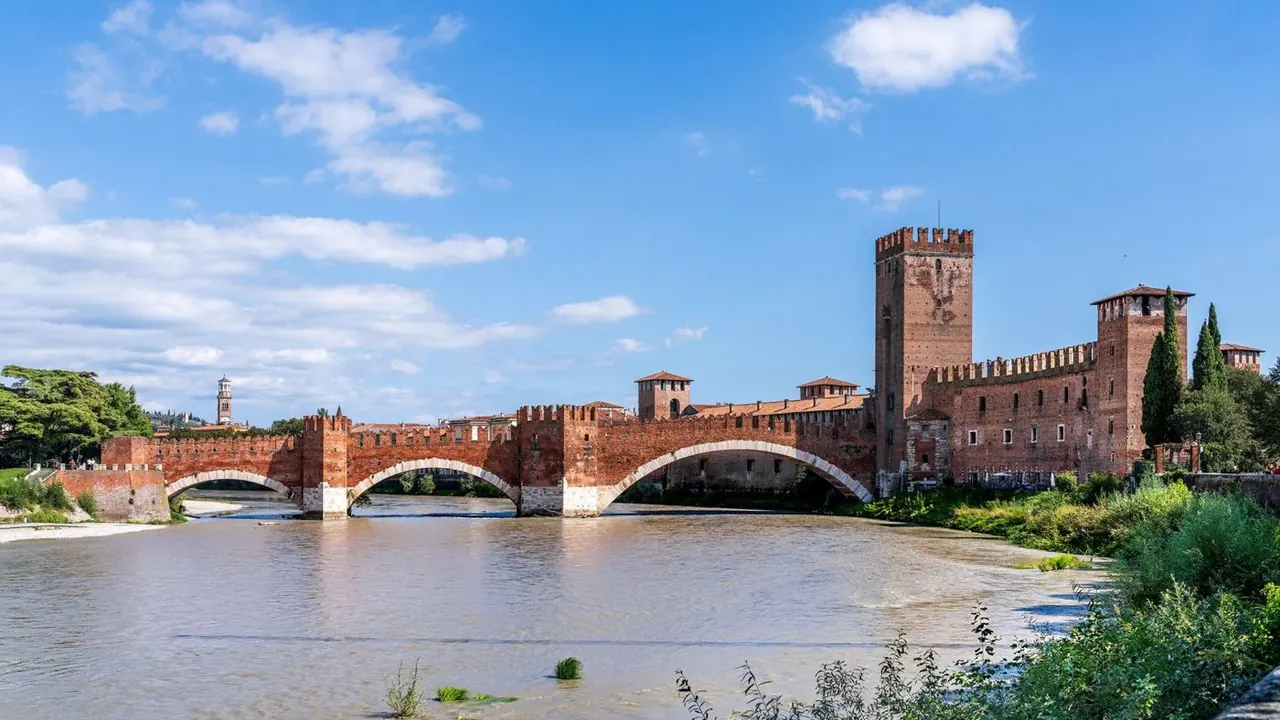
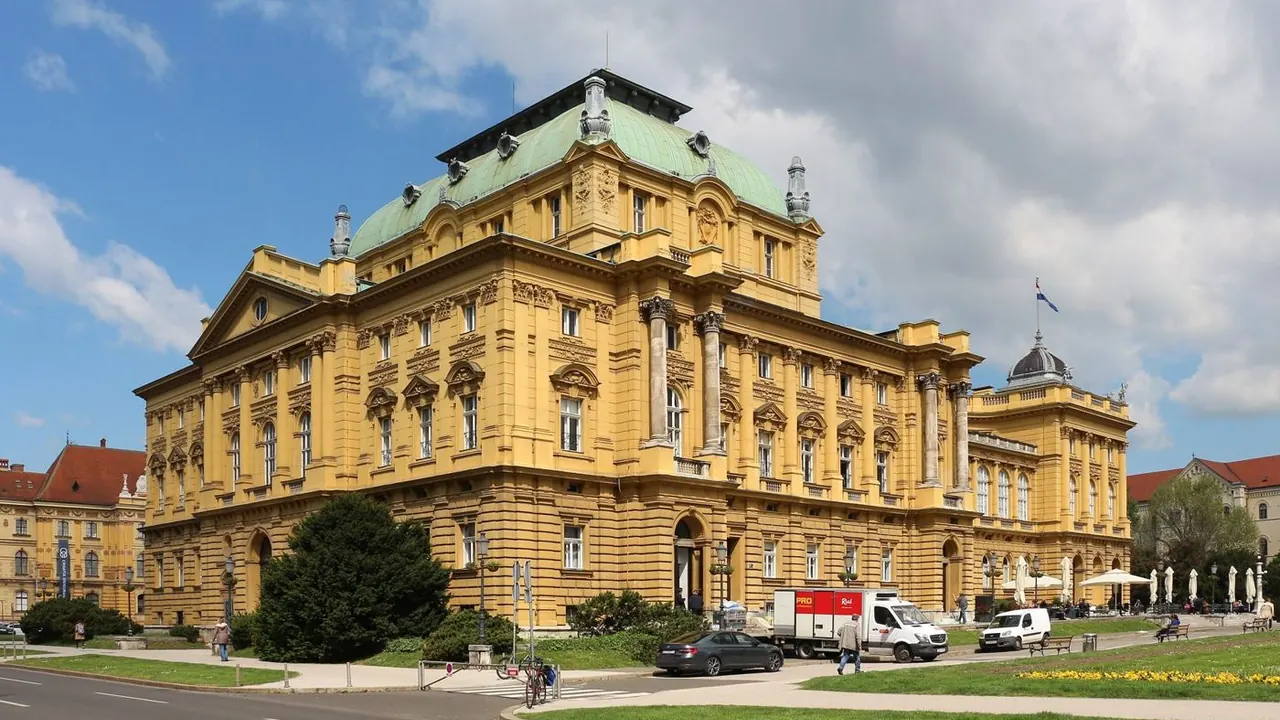
Photos: Verona by NorbertNagel, CC BY-SA 4.0, cropped; Zagreb by Bernard Gagnon, CC BY-SA 4.0, cropped.
Verona or Zagreb?
Our verdict in twelve categories, each scored against the same fixed benchmark cities, and the climate month by month, so you can choose for your trip.
Choose Verona for
- beaches
- day trips
- culture and sights
Verona is the stronger pick if you want a lot of history in a small space and plenty of places to go from it. The Roman Arena, San Zeno and Castelvecchio sit inside a centre you can cover on foot. Summer evenings bring opera on the Arena's stone tiers, and the wine country starts at the edge of town. Venice, Padua, Vicenza and the Lake Garda shore are all easy outings. Expect to pay well for a central room.
Choose Zagreb for
- prices
- nightlife
- getting around
Zagreb rewards travellers who want an easy-going Central European capital that costs less. Days revolve around café terraces, Dolac market and the Upper Town lanes, and evenings move to the bars along Tkalčićeva. The trams cover the whole city and Medvednica's forests start at its northern edge. The sights are good rather than famous, and the beach and the best day trips are some way off, but the slow pace suits a few calm days.
Scoreboard
Twelve categories on one fixed scale from 0 to 100. The shaded stretch is the gap between the two.
Your match
Pick a travel style or drag the sliders, and both match scores follow your weighting.
Wins on beaches and day trips with your weighting.
Wins on prices and nightlife with your weighting.
What matters to you?
Category by category
What the scores mean for a trip.
Beaches & swimming
Neither city is on the coast, but Verona has a real swimming option within easy reach. Lake Garda's southern towns, Peschiera, Lazise, Bardolino and Sirmione, are about half an hour away by car or a short train ride. There you swim from lidos, grassy lawns and small pebble beaches in calm, clear water from June to September. It is still a side trip, and the shore is crowded on summer weekends.
Zagreb offers little more than a way to cool off. Locals swim at Lake Jarun, a former gravel pit with pebbly shores, and at the smaller Bundek. The Adriatic is a two-hour drive over the hills, so anyone who wants the sea needs to add a stay on the coast.
Food & drink
Verona eats better, mainly because of its wine. Risotto made with Amarone, bigoli with duck and bollito misto with peppery pearà are served in wood-panelled osterie around Piazza delle Erbe and in Veronetta. Valpolicella, Soave and Bardolino are all made within a short drive. The weak spots are the tired tourist cooking around the Arena and the lack of street food.
Zagreb's food is heavier and Central European: štrukli, turkey with mlinci and Zagorje sausages. Its best moments are a morning at Dolac market and a long coffee on a Lower Town terrace. Plešivica wines and craft beer are decent, but the range is modest and there are only a handful of serious kitchens.
Culture & sights
Verona's sights are of a higher order. The Arena is among the best-preserved Roman amphitheatres anywhere, and the Roman theatre climbs the hill across the Adige. San Zeno's bronze doors and the Scaliger tombs record the city's medieval peak, and Castelvecchio's art collection is shown in Carlo Scarpa's celebrated setting. You can see it all in two or three unhurried days.
Zagreb has more charm than grandeur. The hilltop Upper Town has St Mark's tiled roof, the Stone Gate and the cathedral's twin spires, and below it lie the Austro-Hungarian squares of the Green Horseshoe. Its museums, from the Mimara to the Museum of Broken Relationships, are enjoyable but not famous. The arcaded Mirogoj cemetery is the sight that lingers.
Nightlife
Zagreb has more going on after dark. Tkalčićeva's terraces fill on warm nights, and the courtyards around Flower Square hide small cocktail and craft beer bars. In summer the crowd moves out to the lakeside clubs at Jarun, and students keep alternative venues open all year. It is friendly rather than wild.
Verona's evenings are built around the aperitivo: a spritz or a glass of Valpolicella on Piazza delle Erbe or by the river, then the cheaper student bars of Veronetta. There is no dance scene in the centre and the streets empty early. The exception is summer, when the opera crowd leaving the Arena near midnight brings the centre back to life.
Nature & outdoors
Both cities have good countryside nearby, but of different kinds. Verona looks to vineyards and lake. The cypress-dotted Valpolicella hills are good for gentle walks and cycling, and the Adige valley route runs north towards Trento. About an hour away, Monte Baldo offers ridge walks and paragliding above Garda, the lake's northern end has reliable wind for sailing, and the Lessinia plateau has beech woods and gorges.
Zagreb's green escape starts right at the edge of the city. A tram and a short bus ride take you to the beech-wooded trails of Medvednica, and Maksimir's oak woods and lakes are closer still. Plitvice's waterfalls make a long but popular day out. The landscape is gentler, with no lake or high mountains close by.
Day trips
For days out, Verona is far ahead. Venice is a little over an hour by train, close enough for an early start and a late return. Vicenza's Palladian villas and Teatro Olimpico, Giotto's Scrovegni Chapel in Padua and lake-ringed Mantua are all nearer. The Garda harbours of Sirmione and Malcesine and the walled wine town of Soave add lake and vineyard outings, and the railway handles most of the travel.
Zagreb's outings are pleasant but smaller in scale. The Zagorje hills to the north hold Trakošćan castle above its lake, the pilgrimage church at Marija Bistrica and the village museum at Kumrovec. Baroque Varaždin, Samobor's old square and Karlovac's star-shaped fortress are all within easy range, and Ljubljana works as a long day. None of them is in the same league as Venice or Padua, and the castles are much easier with a car.
Good for families
Verona has the bigger draws for children, though they lie outside town. Gardaland, Italy's biggest theme park, is about half an hour away, along with water parks and Parco Natura Viva's drive-through safari. The flat, pedestrian centre and the Arena itself are easy to enjoy with a pushchair, but most of these outings need a car.
Zagreb is a gentler family city with nothing on that scale. Families can visit the zoo in Maksimir park, see the old trams and planes at the Nikola Tesla Technical Museum and ride the tiny funicular. In summer Jarun and Bundek are good for swimming and play. It suits a few relaxed days rather than a trip planned around attractions.
Getting around
Both cities have compact, walkable centres, so the difference lies in what happens beyond the old town. In Verona you walk almost everywhere inside the river loop, and buses are mainly for the station and the airport. Trains are excellent for Venice, Milan and the lake, but the Valpolicella and Lessinia villages are much easier by car.
Zagreb has a proper tram network covering the city, and the funicular spares you the climb to the Upper Town. Expect steep cobbles up the hill and slow trams at rush hour. A car only matters for the Zagorje castles and Plitvice.
Shopping & style
Verona is the better place to shop, though neither city is a shopping destination. Marble-paved Via Mazzini is lined with Italian fashion and accessory labels, and Corso Porta Borsari has smaller boutiques and jewellers. The best things to take home are edible: Amarone, Garda olive oil and the star-shaped pandoro. For serious fashion, people go to Milan.
Zagreb's main street, Ilica, is mostly chains and everyday shops, with little luxury. Its souvenirs are distinctive, though: red licitar honey-dough hearts, Croatian neckties and lace. Truffle products from Dolac and the Sunday flea market on Britanski trg are worth a look.
Affordability
Zagreb is the cheaper city. Central apartments, small hotels, tram fares and museum entry are all reasonably priced, and market food and a terrace coffee cost little. Only upmarket restaurants, cocktails and the top hotels approach Western European prices.
In Verona, the room is the big expense. Hotels in the historic centre are expensive for a provincial city and become scarce on summer opera nights and during trade fairs. You save by staying across the river or near the station, eating in Veronetta's student osterie and drinking the local wine.
Live music & performing arts
Verona has the headline event. On most summer evenings, grand productions of Verdi, Puccini and Bizet fill the Roman Arena, with thousands seated on the stone tiers, and summer Shakespeare, dance and jazz play in the Roman theatre. Between autumn and spring, though, the Teatro Filarmonico offers only a modest programme.
Zagreb has nothing to match the Arena, but its season runs more evenly through the year. The Croatian National Theatre stages opera and ballet, the Lisinski hall is home to the Zagreb Philharmonic, and the Zagreb Soloists play chamber music in churches. Summer brings courtyard concerts in the Upper Town. A visitor in winter may well find more on in Zagreb.
Wellness & relaxation
Verona has the better thermal waters close by. Sirmione's sulphurous springs feed a thermal centre with pools facing Lake Garda, a thermal park near Lazise surrounds a warm spring-fed lake in an old villa garden, and Caldiero's springs east of the city have been used since Roman times. In town, the Giardino Giusti's terraces offer the quietest corner.
In Zagreb, relaxing in the city mostly means its slow pace, with long café mornings and shaded parks, while the spas in town are largely hotel wellness floors. A proper soak means a trip of about an hour to the Zagorje resorts of Tuheljske, Krapinske or Stubičke Toplice.
When should you go?
Pick your month. The climate figures are measured averages, not a forecast.
Verona in July
Zagreb in July
Daytime high, °C
Rainfall in the month, mm
Temperature and rainfall are climate normals, averaged over the years shown. Verona: 1991-2020 normals, Verona / Villafranca (11.6 km from centre). Zagreb: 1991-2020 normals, Zagreb / Gric (0.6 km from centre).
The two cities follow a similar shape through the year, but Verona is a little warmer and noticeably drier and sunnier in summer. In Verona, May to September is warm enough for Lake Garda, and July and August peak around 30°C with long sunny days. Those afternoons are hot for sightseeing, so late spring and September are the most comfortable months for walking. Rain is fairly even through the year, rising a little in autumn.
Zagreb is slightly cooler at every season, and its summer is wetter, with regular showers from June onwards. September is the wettest month at about 104mm. Winters are colder and greyer than in Verona, with December highs near 6°C and little sun, so the city is at its best for strolling in May, June and early September.
Which traveller are you?
On a beach and sun trip, Verona is clearly the better choice. The southern shore of Lake Garda is about half an hour away, with lidos, lawns and Sirmione's limestone shelves. Zagreb has only its city lakes, and the Adriatic is two hours away.
For a culture and arts trip, Verona offers more. It has a UNESCO-listed centre, a great Roman amphitheatre, a Romanesque masterpiece in San Zeno and summer opera in the Arena. Venice, Padua and Vicenza are all an easy train ride away.
On a trip with a tight budget, Zagreb makes the money go further. Central rooms, tram fares and museum entry are reasonably priced, and market food and terrace coffee are cheap. In Verona, hotels inside the old centre are expensive, especially on opera nights.
Before you go
| Measure | Verona | Zagreb |
|---|---|---|
| Official language | Italian | Croatian |
| Currency | Euro (EUR) | Euro (EUR) |
| Sockets | CFL230 V, 50 Hz | CF230 V, 50 Hz |
| Driving side | Right | Right |
| Time zone | UTC+1, UTC+2 in summer | UTC+1, UTC+2 in summer |
| Emergency number | 112 | 112 |
| Elevation | 59 m | 127 m |
| Main airport | Verona Villafranca Valerio Catullo Airport (VRN)10 km from centre96 non-stop destinations | Zagreb Franjo Tuđman International Airport (ZAG)11 km from centre64 non-stop destinations |
| Public holidays this year | 13 days | 14 days |
By the numbers
| Measure | Verona | Zagreb |
|---|---|---|
| City population | 255,588 | 767,131 |
| People per km² | 1,285 | - |
| Museums within 10 km | 18 | 27 |
| UNESCO World Heritage sites within 50 km | 5 | 0 |
Where else could you go?
Every comparison below shares a destination with this one, so you can follow Verona or Zagreb somewhere new.